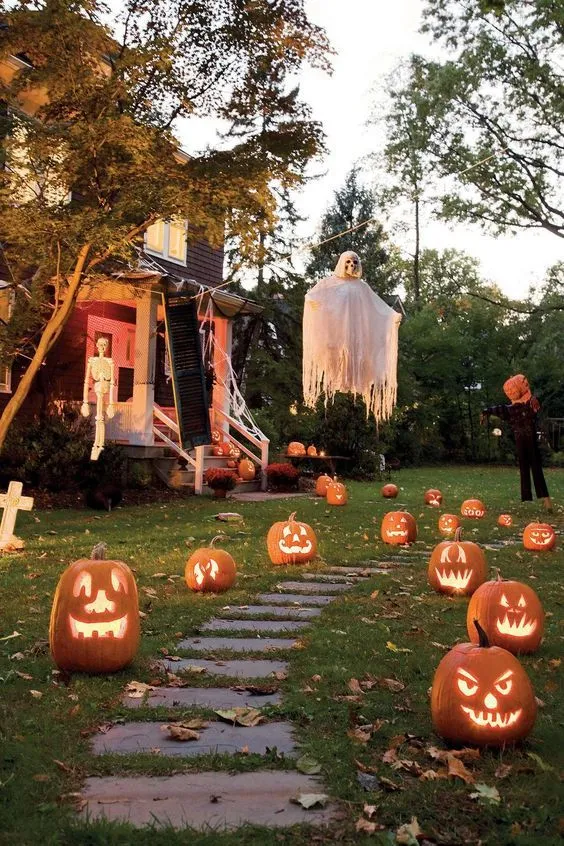

Why are ghosts everywhere when October arrives? The answer reaches far beyond spooky decorations and scary movies. Across halloween traditions around the world, ghostly figures have represented death, memory, mystery, and the unknown for centuries. From ancient seasonal rituals to today's playful costumes, the ghost has continually changed while keeping its supernatural charm. Perhaps that is why a simple white sheet, glowing silhouette, or friendly cartoon spirit can instantly make a space feel like Halloween. The ghost is frightening, familiar, emotional, and endlessly adaptable.

The Ancient Roots of Halloween Ghosts
The popularity of the Halloween ghost begins with humanity's long fascination with the supernatural. Long before modern Halloween became associated with trick-or-treating and costume parties, communities developed rituals surrounding seasonal change, death, ancestors, and the spirit world. Some of the traditions that influenced Halloween are connected with the Celtic festival of Samhain, while later Christian observances surrounding All Hallows' Eve also shaped the holiday's development. It is important not to treat these traditions as one uninterrupted ritual, because Halloween emerged gradually through cultural exchange and transformation. Still, the recurring presence of supernatural beliefs helps explain why ghosts eventually became such a powerful Halloween image. They give physical form to something invisible and mysterious, turning questions about death and the unknown into stories, characters, and symbols people can understand.
Samhain and the Supernatural
Samhain is frequently identified as an important historical influence on Halloween. Associated with the transition from harvest to winter, the festival marked a significant seasonal boundary in the Celtic calendar.
Later folklore connected this period with supernatural beings and unusual spiritual activity. While popular accounts sometimes exaggerate exactly what ancient Samhain participants believed, the association between seasonal transition and the supernatural remains an important part of Halloween's cultural history.
The imagery makes intuitive sense. As daylight shortened and winter approached, darkness became a stronger presence in everyday life. Fires, gatherings, rituals, and stories helped communities navigate this uncertain time.
Ghosts fit naturally into such storytelling because they occupy a symbolic space between life and death.
All Hallows' Eve and Cultural Change
The Christian calendar also contributed to the evolution of Halloween. All Hallows' Eve developed as the evening before All Saints' Day, a period connected with Christian remembrance and observance.
Over centuries, religious practices, local folklore, seasonal customs, and popular storytelling interacted in complex ways.
Halloween as we know it today therefore cannot be traced to a single ancient source. Instead, it developed through layers of cultural history.
That mixture helped supernatural imagery survive. As older beliefs were adapted into newer celebrations, ghosts became less tied to specific spiritual practices and increasingly became symbols of Halloween itself.
Why Ghosts Became Such a Powerful Symbol
The ghost's popularity is not simply about making people afraid. The symbol works because it combines several powerful human emotions: curiosity, uncertainty, nostalgia, and fear. A ghost suggests that something from another world might still be present. That idea can be terrifying, but it can also be strangely comforting. In storytelling, ghosts may represent lost loved ones, unfinished business, forgotten memories, or mysteries that cannot be explained. Halloween turns these serious themes into something people can explore through imagination. A haunted house can create a safe thrill, while a ghost costume can make the supernatural funny rather than frightening. This emotional flexibility is one of the biggest reasons the ghost has remained relevant across generations.
Ghosts Represent the Unknown
Humans naturally fear what they cannot see or understand. Ghost stories turn that uncertainty into a character.
Imagine walking through a dark hallway on Halloween night. You hear a floorboard creak. Nothing is visible, yet your imagination immediately creates possibilities.
The ghost represents that invisible possibility.
Unlike a traditional monster with a physical body, a ghost can appear anywhere. It can move through walls, vanish into darkness, or emerge unexpectedly. That makes it particularly effective in horror storytelling.
At the same time, because ghosts are imaginary figures, they can be transformed into playful characters without losing their identity.
Ghosts Connect Halloween With Memory
Ghosts can also symbolize remembrance. In folklore and literature, spirits often appear because someone or something from the past has not been forgotten.
That gives the symbol an emotional dimension that goes beyond horror.
A ghostly figure may remind us of childhood stories, old Halloween traditions, family memories, or people who are no longer with us. Even a humorous ghost decoration can carry a sense of nostalgia.
This is one reason ghost imagery works so well year after year. The symbol can be frightening for a child, nostalgic for an adult, and visually appealing to almost anyone.
Ghosts Across Halloween Traditions Around the World
Looking at halloween traditions around the world shows that supernatural imagery takes many different forms. Halloween itself is most strongly associated with American popular culture today, but celebrations and rituals involving ancestors, spirits, death, or supernatural beings exist across many societies. These traditions should not be treated as identical versions of Halloween. Each developed within its own cultural and historical context. Yet comparing them reveals a fascinating common thread: people everywhere have developed ways to understand mortality, remember the dead, and tell stories about what cannot be seen. Modern Halloween combines some of these broad themes with entertainment, costumes, parties, and commercial culture. The ghost became an especially effective bridge between the mysterious past and the playful present.
European Folklore and Haunted Stories
European folklore contains an enormous variety of ghost stories. Local traditions describe restless spirits, haunted buildings, mysterious travelers, ancestors, and supernatural warnings.
These stories influenced literature, theater, oral storytelling, and eventually modern horror culture.
Many Halloween traditions in English-speaking countries developed within this broader folklore environment. Ghost stories became a seasonal form of entertainment, especially as Halloween evolved into a social celebration.
Today, haunted houses and Halloween storytelling continue this tradition by giving people controlled opportunities to experience suspense and fear.
Día de los Muertos and Remembering the Dead
Mexico's Día de los Muertos provides an important example of why cultural comparison requires care.
Although the celebration is often discussed alongside Halloween, Día de los Muertos has its own history and traditions. It emphasizes remembrance, family, and honoring deceased loved ones.
Ofrendas, photographs, flowers, food, and personal objects can create a welcoming space for memory.
The contrast is meaningful. While the Halloween ghost often appears as a playful or frightening character, Día de los Muertos demonstrates how traditions surrounding death can emphasize love, remembrance, and connection.
Together, these cultural examples show that supernatural imagery does not always have to mean fear.

How the Ghost Became a Halloween Favorite
As Halloween developed in the United States, the ghost became increasingly easy to reproduce. A white sheet could become a costume. A cardboard cutout could become a decoration. A glowing figure could transform an ordinary front porch into a haunted scene.
This simplicity helped the symbol spread.
During the 20th century, Halloween parties, greeting cards, films, television programs, retail products, and neighborhood celebrations gave the ghost an even larger cultural presence. The figure gradually expanded beyond frightening folklore into children's entertainment and seasonal fashion.
Today, the ghost can be cute, spooky, vintage, gothic, funny, or minimalist. Few Halloween symbols offer that much creative freedom.
From Sheet Costumes to Pop Culture
The classic sheet ghost remains one of Halloween's most recognizable costumes because it is inexpensive and instantly understandable.
But modern creators have taken the idea much further. Ghosts now appear as cartoon characters, horror icons, embroidered graphics, retro illustrations, and humorous designs.
This evolution reflects a broader change in Halloween culture. Fear is still important, but fun, self-expression, nostalgia, and humor have become equally significant.
Why Ghosts Work So Well in Halloween Fashion
Ghost imagery translates naturally into clothing because the silhouette is simple and recognizable.
A ghost graphic can communicate Halloween without requiring an elaborate explanation. Pair it with pumpkins, bats, haunted houses, moons, or autumn typography, and the seasonal message becomes even stronger.
For shoppers, this versatility makes ghost-themed apparel easy to wear throughout October, whether they prefer subtle seasonal style or a bold spooky statement.
The Ghost's Lasting Place in Halloween Culture
The ghost has survived because it can mean almost anything Halloween needs it to mean. It can embody fear, mystery, memory, imagination, nostalgia, or simple fun. Across halloween traditions around the world, supernatural stories remind us that every culture has found its own way to explore questions about death and the unknown.
Perhaps that is the real reason ghosts remain so popular. They allow us to look at something frightening from a safe distance—and sometimes even laugh at it.
From ancient folklore to modern neighborhoods glowing with decorations, the ghost has traveled an extraordinary cultural journey. It is no longer just a story about the spirit world. It has become a symbol of Halloween itself.
If you love that mix of spooky nostalgia and modern style, bring the tradition into your everyday look with ghost Halloween shirts, eerie graphic tees, and playful seasonal designs. Find a favorite Halloween look and let a little ghostly personality follow you wherever October takes you.
Stay tuned for more updates:


















Sign in to leave a comment.