

Why do budgeting tips keep going viral if so many people still feel broke?
That question hits hard because the contradiction is everywhere. One minute your feed is full of cash-stuffing videos, no-spend challenges, and dramatic debt-payoff countdowns. The next minute, the same people are posting about rent shocks, grocery bills that feel like concert ticket prices, and side hustles that barely cover the gap. The noise is loud. The math is louder!
Budgeting tips matter because money stress is rarely caused by one giant mistake. More often, it comes from dozens of small, repeated decisions made without a system. A takeaway coffee here, a forgotten subscription there, a delivery app habit that looked harmless until the monthly total landed like a red card in stoppage time. Budgeting is the mechanism that turns vague anxiety into visible numbers. Once numbers are visible, they become negotiable.
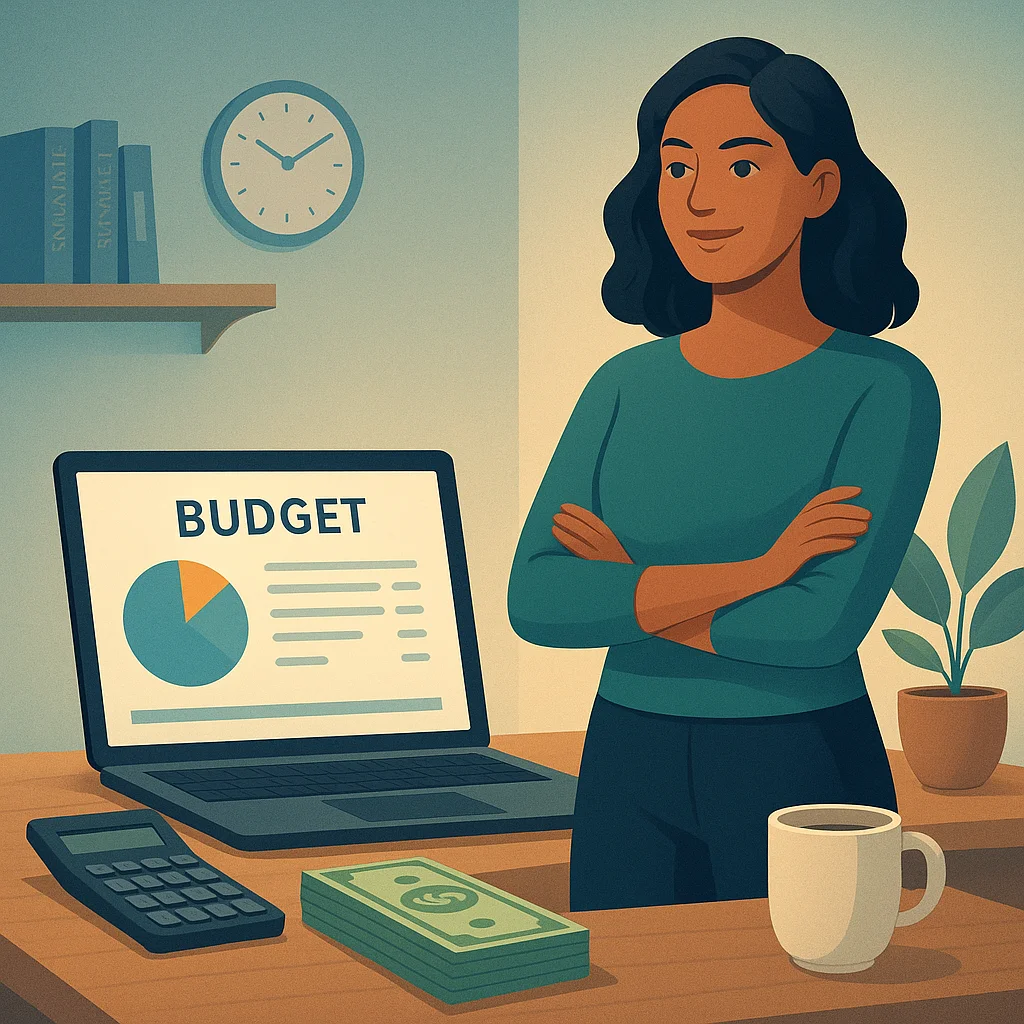
That is the real point. A budget is not a punishment plan for people who “aren’t good with money.” It is a decision tool. It tells you what your income can actually support, where your fixed costs are squeezing you, and which expenses are trade-offs rather than necessities. The Consumer Financial Protection Bureau has long framed budgeting as a way to align spending with goals, and that framing is still useful in 2026 because households are dealing with stubborn cost pressure in housing, insurance, food, and debt servicing.
There is also a psychological layer people underestimate. Financial stress creates avoidance. Avoidance creates late fees, overdrafts, revolving balances, and bad timing. Budgeting interrupts that spiral. It gives structure to uncertainty, which is why articles like Why Budgeting Tips Matter More Than Most People Think resonate with readers who are not looking for perfection, only control.
Budgeting does not magically increase income. What it does is stop money from disappearing without a trace.
That may sound basic. It is not. In personal finance, basic habits produce outsized results because they compound. A budget is where that compounding begins.
The economic backdrop: why budgeting advice feels more urgent now
The reason budgeting tips feel less like lifestyle content and more like survival strategy is simple: the margin for error has narrowed. Over the past several years, households across the US and Europe have absorbed higher prices in essentials while wage growth has not always translated into breathing room. Reuters, the US Bureau of Labor Statistics, Eurostat, and central bank reports have all documented versions of the same pressure point: even when headline inflation cools, many everyday categories remain materially more expensive than they were before the inflation spike of the early 2020s.
Housing is the obvious stressor. Rent and mortgage costs consume a disproportionate share of take-home pay for millions of households. Add insurance premiums, utility volatility, transport costs, and the return of student loan repayment pressure in the US, and the old idea that budgeting is mostly about “cutting lattes” starts to look unserious. The modern budget has to absorb structural costs first. Only then can it optimize the flexible categories.
Credit has become a second front in the same battle. Federal Reserve reporting has shown elevated credit card balances in recent years, while average interest rates on revolving debt have remained painfully high. That changes the stakes. A weak budget in a high-rate environment is not just messy; it is expensive. Every month of carrying avoidable balances can wipe out the gains from a raise or a successful side hustle.
Three big forces explain why budgeting advice has become more consequential:
- Persistent essential costs: groceries, rent, insurance, and utilities have reset at higher levels.
- Expensive debt: high credit card APRs punish disorganization fast.
- Irregular income: freelance work, gig earnings, and commission-based pay require active cash-flow planning.
Another shift matters too. More people now manage money across multiple apps, accounts, and payment methods. That convenience fragments awareness. Tap-to-pay, buy now pay later, auto-renewals, and instant delivery all reduce spending friction. Budgeting restores friction where it belongs: before the purchase, not after the regret.
If you want a practical companion read, Why Budgeting Tips Matter: Unlocking Financial Control and Growth frames this well. The best budgeting tips are not about restriction for its own sake. They are about defending your future options when the economy is making those options more expensive.
When prices rise faster than your habits change, your old money routine quietly becomes a liability.
What budgeting tips actually do, beyond the clichés
People hear “budgeting tips” and often picture tired advice: skip takeaway, cancel one streaming service, cook at home. Sure, those can help. But expert-level budgeting is bigger than expense trimming. It performs four serious functions: measurement, prioritization, timing, and protection.
Measurement comes first. You cannot manage what you do not track. Many households know their salary but not their true monthly outflow. They remember the rent and maybe the car payment, but forget annual subscriptions, quarterly insurance adjustments, school expenses, gifts, maintenance, and impulse spending triggered by boredom or stress. A real budget converts random transactions into categories and trends. That is the moment when “I think I spend too much” becomes “I spent 18% of take-home pay on eating out and convenience purchases last month.” One is emotion. The other is evidence.
Prioritization is next. Budgeting tips matter because every euro, pound, or dollar can only be spent once. A budget forces ranking. Emergency fund or holiday? Debt payoff or wardrobe refresh? New phone or professional certification? This is where budgeting becomes empowering rather than restrictive. It does not say “no” to everything. It says “yes” to what matters most.
Timing is the underrated piece. Plenty of people earn enough over a year but run into trouble because cash arrives and leaves at the wrong moments. That is why weekly budgeting check-ins often work better than a single monthly glance. Bills are time-sensitive even if your intentions are good. Aligning due dates, building sinking funds, and anticipating annual expenses can eliminate the panic that comes from being technically solvent but practically short.
Protection is the final function. A budget creates buffers against predictable chaos. Car repairs. Dental work. A friend’s wedding. A slow month in freelance income. Budgeting tips that encourage mini-reserves and category caps are not boring; they are defensive tactics.
- Track every fixed and variable expense for at least 30 days.
- Separate essentials from commitments you can renegotiate.
- Create sinking funds for non-monthly costs.
- Set a weekly spending ceiling for flexible categories.
- Review and adjust after each pay cycle, not just month-end.
According to the National Endowment for Financial Education and guidance from major consumer finance institutions, people who review spending consistently tend to make faster course corrections than those who rely on memory. That sounds obvious. Yet memory is exactly how budgets fail. The best budgeting tip is brutally simple: stop guessing.
The methods that work in 2026, and the ones that mostly perform for social media
Not every budgeting trend deserves the hype. Some methods are genuinely useful. Others look fantastic in a TikTok montage and collapse the second real life gets messy. The trick in 2026 is choosing a framework that matches your income pattern, debt load, and tolerance for detail.
The zero-based budget remains one of the strongest systems for people who want precision. Every unit of income is assigned a role: bills, savings, debt, investing, transport, food, fun. The strength here is intentionality. The weakness is maintenance. If your income fluctuates wildly, you may need to rework the plan every pay period. Still, for many households trying to stop leakage, this method is elite.
The 50/30/20 model is easier to remember and useful as a benchmark rather than a law. Needs, wants, savings or debt repayment. Clean, simple, portable. But in high-cost cities, many people cannot force essentials into 50% without fantasy accounting. That does not make the framework useless; it makes it diagnostic. If your needs are at 68%, the budget is telling you something important about your cost structure.
Cash stuffing and envelope systems still help people who overspend digitally. Physical boundaries can be powerful because they slow decision-making. Yet cash-only systems are less practical for subscriptions, online shopping, and app-based services. Hybrid budgeting has emerged as the more realistic answer: automate fixed obligations, use digital tracking for recurring costs, and cap discretionary spending through one dedicated card or wallet.
Several trends stand out in 2026:
- AI-assisted budgeting tools categorize spending faster, but users still need to verify errors and merchant mislabels.
- High-yield savings awareness has improved, making emergency funds slightly less painful to build because idle cash can earn more than it did in the ultra-low-rate era.
- Subscription audits have become standard because many households underestimate annual digital spending.
- Side-hustle budgeting is more common, with creators and freelancers separating tax reserves from spendable income.
According to reporting from Reuters and analysis by consumer banks, households are increasingly combining automation with manual review. That combination matters. Full automation can create passivity. Full manual control can create friction fatigue. The sweet spot is systems plus attention.
If you want another angle on this, Why Budgeting Tips Matter More Than Most People Realize captures the hidden cost of treating budgeting as optional admin. The best method is not the most aesthetic one. It is the one you will still use in a chaotic month.
Budgeting for side hustles, irregular income, and the modern paycheck scramble
This is where standard advice often falls apart. Budgeting a fixed salary is one thing. Budgeting when your income comes from freelance design, delivery apps, tutoring, affiliate commissions, seasonal retail shifts, or creator payouts is another sport entirely. And a lot of people in 2026 are playing that sport.
Irregular earners need a budget built around the floor, not the peak. That means basing essential expenses on your lowest reliable monthly income, then assigning extra earnings to taxes, debt reduction, emergency savings, and delayed discretionary spending. Too many side hustlers budget from their best month, then get blindsided by a normal one. The result is whiplash: feast, famine, credit card, repeat.
Tax planning is the silent killer here. Employees usually have taxes withheld automatically. Independent workers often do not. Budgeting tips matter because they force separation between revenue and usable income. If you make 1,000 from a side gig, that is not automatically 1,000 to spend. Depending on jurisdiction and total earnings, a chunk may belong in a tax reserve. Ignore that, and the bill arrives later like a jump scare.
For side hustlers, the most effective structure usually includes:
- A dedicated account for business or gig income.
- A percentage-based transfer to taxes the day money arrives.
- A baseline personal budget funded from conservative income estimates.
- A volatility buffer for slow months.
- Separate tracking for business expenses, platform fees, and equipment.
There is also the emotional trap. Side-hustle income feels like bonus money, so it gets spent more loosely than salary. That instinct is understandable and dangerous. Extra income should first repair weak spots in your financial system: overdue savings, expensive debt, missing insurance buffers, underfunded annual expenses. Fun can come later. Not never. Later.
Financial educators and small-business advisers have been repeating this for years because the pattern is so common. Revenue creates excitement; net cash flow creates stability. Budgeting is what translates one into the other. For readers wanting a broader practical framing, Why Budgeting Tips Matter in 2026: A Practical Guide to Financial Stability connects personal budgeting to the realities of modern income volatility.
If your income changes month to month, your budget cannot be casual. It has to be strategic.
What people get wrong most often, from overdrafts to “treat yourself” creep
The most damaging budgeting mistakes are rarely dramatic. They are subtle, repeated, and socially normalized. One of the biggest is confusing affordability with cash availability. Seeing money in your account does not mean it is free to spend. Some of it already belongs to rent, insurance, taxes, annual renewals, or debt payments. A budget labels that money before impulse does.
Another common failure is undercounting convenience spending. Delivery fees, service charges, ride-hailing surges, premium add-ons, in-app purchases, same-day shipping, and “just this once” food spending can become a stealth category large enough to sabotage savings goals. Banks and fintech apps have made this easier to track, but only if users actually review the data. Many do not.
Then there is lifestyle creep, the financial equivalent of a slow leak in a tyre. A raise arrives, and so do nicer dinners, upgraded subscriptions, pricier gym memberships, and more casual spending because the pressure feels lower. Yet if fixed costs rise with every income bump, progress stalls. Budgeting tips matter here because they create a rule for new money before new money gets claimed by habit.
Watch for these red flags:
- You rely on memory instead of transaction data.
- You budget monthly but spend emotionally week to week.
- You treat annual expenses as surprises every single year.
- You save whatever is left instead of saving first.
- You call recurring wants “needs” to avoid changing them.
One more mistake deserves attention: making the budget too strict to survive contact with reality. If there is no room for social life, occasional spontaneity, or human error, many people rebel against their own plan. A sustainable budget includes controlled flexibility. That is not weakness. That is design.
According to behavioral finance research cited by universities and consumer agencies, habits stick better when systems reduce friction and avoid all-or-nothing thinking. Miss one target, adjust, continue. The budget is a tool, not a morality test. People who understand that are far more likely to stay consistent.
How to build a budget that actually holds up under pressure
So what does a durable budget look like when life is noisy, prices are high, and your phone keeps tempting you with one-click nonsense? It looks less glamorous than viral spreadsheets and more effective than most money hacks. The core principle is simple: automate what must happen, review what tends to drift, and pre-decide what your priorities are before emotion gets a vote.
Start with net income, not gross. Then map your non-negotiables: housing, utilities, transport, minimum debt payments, insurance, groceries, childcare, phone, and any required medication or care costs. After that, create sinking funds for annual or irregular items. This step changes everything because it stops future bills from masquerading as emergencies.
Next, cap flexible spending categories with realistic numbers. Not fantasy numbers. Realistic ones. If you always spend 400 on food and social plans, writing down 120 will not make you disciplined; it will make your budget fictional. Trim intelligently, not theatrically. Then automate transfers for emergency savings and debt reduction as close to payday as possible. What gets automated gets protected.
A strong weekly review can be done in 15 minutes:
- Check account balances and upcoming bills.
- Review discretionary spending against your cap.
- Move money if one category is running hot.
- Log any irregular expense immediately.
- Adjust next week before the month gets away from you.
This is also where budgeting becomes future-facing. Once your spending is stable, you can connect the budget to bigger goals: leaving a bad job, building a six-month buffer, investing consistently, funding a course, or reducing dependence on unstable side income. Budgeting tips matter because they create optionality. And optionality is what financial freedom actually feels like in practice.
There is no perfect system. There is only a system honest enough to reflect your life and strong enough to keep working when life gets weird. That is the standard worth chasing. Not aesthetic frugality. Not performative hustle culture. Control. Clarity. Room to move.
A good budget does not make life smaller. It makes your choices sharper.
That is why budgeting tips matter. Not because spreadsheets are exciting. Because freedom usually starts with a number you finally decided to face.

















Sign in to leave a comment.