Why Businesses Should Review AI Related Patent Risks

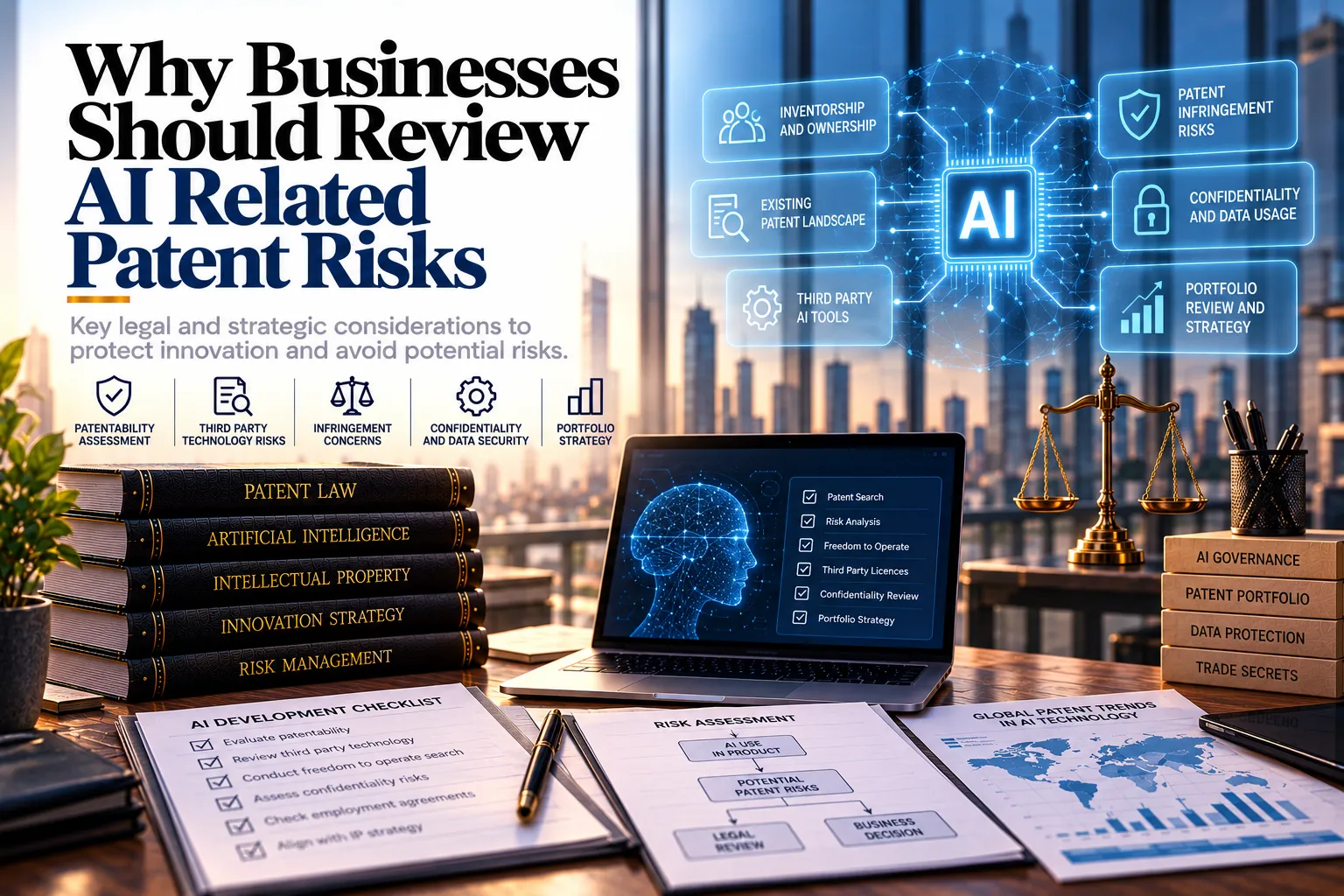
Artificial intelligence is becoming part of product development across industries. Businesses use AI to develop software, improve manufacturing processes, analyse data and create new technical solutions. As AI becomes more closely connected with innovation, patent risks can also become more complex.
A business may develop technology using AI tools, incorporate third party AI systems into its products or compete with companies holding patents covering related technologies. Each situation can create different intellectual property considerations.
Reviewing AI related patent risks early can help businesses understand their position before investing heavily in development or commercialisation.
Why AI Creates New Patent Questions
Traditional patent planning often focuses on inventions developed by employees and research teams. AI adds another layer because automated systems can contribute to research, design and technical development.
Businesses need to understand how AI was used and what role human contributors played.
This is particularly important when an AI assisted development becomes commercially valuable and the company considers filing a patent application.
Understanding Patentable Inventions
Not every AI related idea will qualify for patent protection.
Patentability depends on the relevant legal requirements and the technical nature of the invention. A general business idea or abstract concept may not be sufficient.
Businesses should identify the actual technical contribution made by their innovation.
An early assessment can help determine whether a development should be pursued through patent protection or another form of intellectual property protection.
AI Assisted Inventorship
AI involvement can raise questions about inventorship.
Businesses should maintain records showing who contributed to the development of a potentially patentable invention. This can include research notes, design decisions, technical experiments and development records.
The legal position concerning AI and inventorship continues to evolve across jurisdictions.
Companies should therefore avoid making assumptions about inventorship based solely on the fact an AI system contributed to the development process.
Risks From Third Party AI Technology
Businesses may incorporate third party AI technology into their own products.
The relevant system may be licensed under specific terms which limit how it can be modified, distributed or commercialised.
A company should understand these restrictions before building a product around the technology.
Using a third party AI system without appropriate review can create contractual and intellectual property risks.
Patent Infringement Concerns
A business developing an AI based product should also consider whether existing patents could affect its activities.
A competitor may hold patents covering particular technical methods, architectures or applications used by the proposed product.
A patent search can help identify potentially relevant rights before commercial launch.
The results should be assessed carefully because patent infringement depends on the scope of the relevant claims and the specific activities of the business.
Why Patent Searches Matter
Patent searches can provide useful information during product development.
Businesses can identify existing technologies, understand competitor activity and assess potential areas of risk.
A search may also reveal opportunities for designing around existing patents or developing alternative technical approaches.
However, no search can guarantee the absence of future disputes. Patent landscapes can change as new applications are filed and granted.
AI Generated Technical Solutions
Generative AI can produce technical suggestions, code and design concepts.
Businesses should review such material carefully before incorporating it into commercial products.
An AI system may generate a solution which resembles existing patented technology. It may also produce information which is technically inaccurate.
Human review is therefore important before AI generated technical material becomes part of an important product or patent application.
Confidentiality During Patent Development
Patent planning often involves unpublished inventions.
Employees may use AI systems to analyse technical information or improve a potential invention. Entering confidential information into an external platform can create risks depending on the platform's terms and data practices.
Businesses should establish rules governing the use of AI tools during research and development.
Confidential information should only be shared with systems which have been assessed and approved for the intended use.
Reviewing Existing Patent Portfolios
Businesses with existing patent portfolios should also assess how AI affects their current rights.
New AI assisted products may overlap with existing patents owned by the company. They may also create opportunities to extend protection into new technical areas.
Patent lawyers for AI related matters can be relevant when businesses review existing patents, assess AI related inventions and identify potential risks connected with new technology.
Regular portfolio reviews can help businesses keep their patent strategy aligned with technological development.
Copyright and AI Technology
Patent risks are not the only intellectual property concern.
AI products can involve software code, databases, documentation and other material which may raise copyright issues.
Businesses should understand how these rights interact with their patent strategy.
Copyright lawyers for technology matters can be relevant when companies assess copyright considerations connected with AI software, technical material and digital products.
Different forms of intellectual property may protect different aspects of the same technology.
AI and Employee Development
Employees may use AI tools while developing inventions.
Businesses should review employment agreements and internal policies to ensure they clearly address intellectual property created during employment.
The company should also maintain records of employee contributions.
This can become important when determining ownership and inventorship before filing a patent application.
Open Source and AI Components
AI products may depend on open source software.
Open source licences can contain different obligations concerning modification, distribution and attribution. A business should understand the licences applying to important components of its technology.
Combining open source code with proprietary technology can create additional IP considerations.
A clear software inventory can help businesses identify the components used in their products.
Patent Risks During Investment or Acquisition
AI related patent issues can become particularly important during investment and acquisition transactions.
Investors and purchasers may examine the company's patent portfolio, development agreements and potential infringement claims.
Unclear ownership or unresolved patent disputes can affect due diligence and transaction negotiations.
Businesses should therefore review their AI related patent position before entering major transactions.
Developing an AI Patent Risk Management Process
A practical approach should begin with identifying how AI is used within the organisation.
The business can then review relevant patents, development agreements, third party technology licences and confidentiality arrangements.
Employees should understand how AI tools may be used during research and what information must remain confidential.
Important inventions should also be recorded and assessed before public disclosure.
Monitoring Competitor Patents
AI technology can develop quickly, and competitors may file patent applications covering emerging technical areas.
Businesses should consider monitoring relevant patent activity.
This can provide insight into competitor strategies and highlight areas where the company's own technology may face increased patent risk.
Regular monitoring can also inform future research and development decisions.
Questions Businesses Should Consider
Companies using AI should ask whether their products could interact with existing patents and whether important inventions have been properly documented.
They should also consider whether third party AI tools are being used under suitable licences and whether confidential information is adequately protected.
The business should also understand who owns AI assisted inventions and whether its employment and development agreements support this position.
Conclusion
AI can create valuable opportunities for innovation, but it can also introduce new patent risks.
Businesses should consider inventorship, ownership, third party technology, infringement, confidentiality and existing patent rights when developing AI related products.
A structured patent review can help identify potential problems before a product reaches the market. It can also support stronger decisions about filing, licensing, product design and commercialisation.
AI technology will continue to evolve, so patent risk assessment should be treated as an ongoing part of intellectual property strategy rather than a one time exercise.









Sign in to leave a comment.