

Somewhere in a large venue, three teams are doing excellent work. The content team has a sharp keynote. The production team has a striking stage. The activation team has a clever installation.
None of them has seen what the others are building.
This is the quiet failure behind a lot of Corporate Event Management. Each part is good. The whole feels like three events sharing a car park.
Why Corporate Event Management Should Connect Content, Space and Experience
Three things shape every event:
- Content is what you say.
- Space is where people stand, sit and walk.
- Experience is what they feel along the way.
When these are planned separately, the cracks show:
- The stage talks about one thing and the booth sells another
- Screen content gets cropped by a structure nobody told the designers about
- The best installation sits in a corridor nobody uses
- Attendees leave with fragments instead of one story
The M2P Case: When the Stage Story Has to Continue on the Floor

M2P's leaders regularly speak at GFF. Their 2025 sessions covered compliance-first collections, UPI-Pulls, conversational AI and card payments across regulatory regimes. GFF 2026 shifted the agenda again: its three technology pillars were agentic AI, tokenisation and quantum.
A visitor who hears an idea in a conference hall should be able to meet it again two hundred metres away, in physical form. That's what connecting content, space and experience means in practice. StepOn Experience's M2P work at Global Fintech Fest 2026 was built around that continuity.
Anamorphic Illusion: Content Written for a Space
Anamorphic content shows the problem and the fix in one object. It can't be dropped in from a brand library. It must be authored for:
- The exact screen dimensions and corner geometry
- The pixel pitch of the LED
- The eye position of the viewer
- The lighting of the hall
So the content team, the set designer and the AV vendor must work from the same drawing. When they do, the illusion becomes the hook and the message lands in the seconds after, while the visitor is still smiling. When they don't, the effect looks warped from every angle.
Townhall Events and Employee Engagement Programs: Where Disconnection Costs Most

Internal audiences are less forgiving, because they can't walk away politely.
At Townhall Events, a strong message in a flat room with slides that don't match the speaker loses people in minutes. The numbers show how much is at stake. Gallup's 2026 report puts global employee engagement at 20%, with 64% not engaged and 16% actively disengaged. Gallup estimates the lost productivity at around $10 trillion.
Manager engagement has fallen nine points since 2022, and managers are the ones who carry a townhall message back to their teams. A townhall has to give them something worth repeating: a clear story, a room that invites questions, and a follow-up that arrives while the memory is fresh.
Employee Engagement Programs work the same way. One memorable day does little if the content before it, the space around it and the follow-up after it say different things.
Examples of Experiential Marketing That Helped B2B Brands
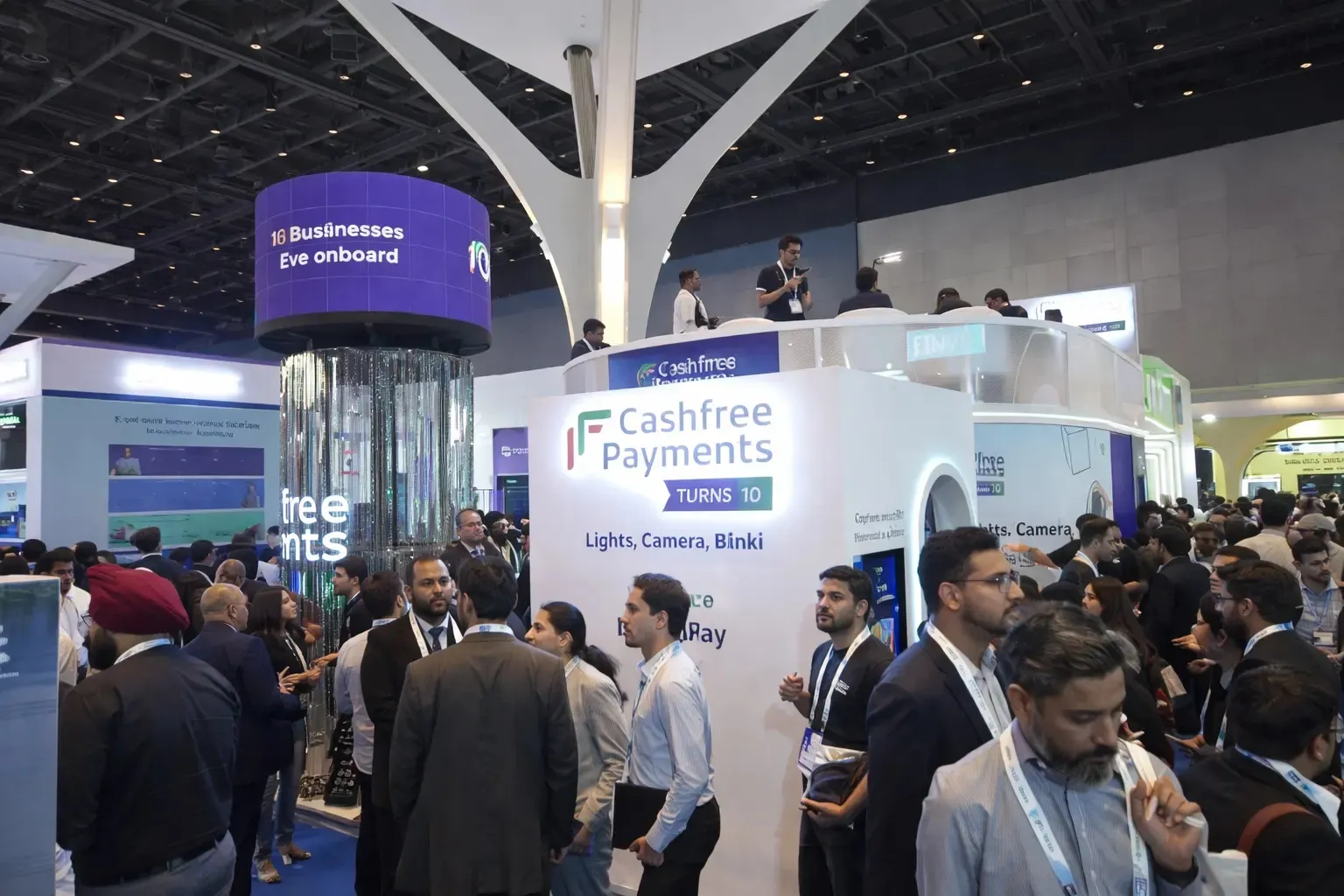
Cashfree at GFF 2025. The company packed 16 launches onto one global stage and paired them with an Experience Zone on the floor. Many messages worked because the stage and the booth shared one story.
Tips for Brands to Create Memorable Interactive Installations
- Write the installation brief from the content, not the other way round.
- Share one floor plan with every vendor from day one.
- Mark the viewing zones and walking routes before fabrication starts.
- Match the visual language across stage, screens and booth.
- Keep one idea per installation.
What Retail Brands Gain From Immersive Marketing Activation
Gentle Monster's Sanlitun flagship carries a single "digital futures" theme across rotating screens, projections, robotic figures and an insect-themed optical zone. The content, space and experience agree with each other. Retailers gain a store people photograph and talk about, and the same coherence lifts a corporate event.
Build One Story, Not Three Departments
If your content, space and experience teams haven't sat in one room yet, that's the first fix. StepOn Experience brings strategy, design and execution together so your Corporate Event Management reads as one idea. Let's talk before the briefs diverge.























Sign in to leave a comment.