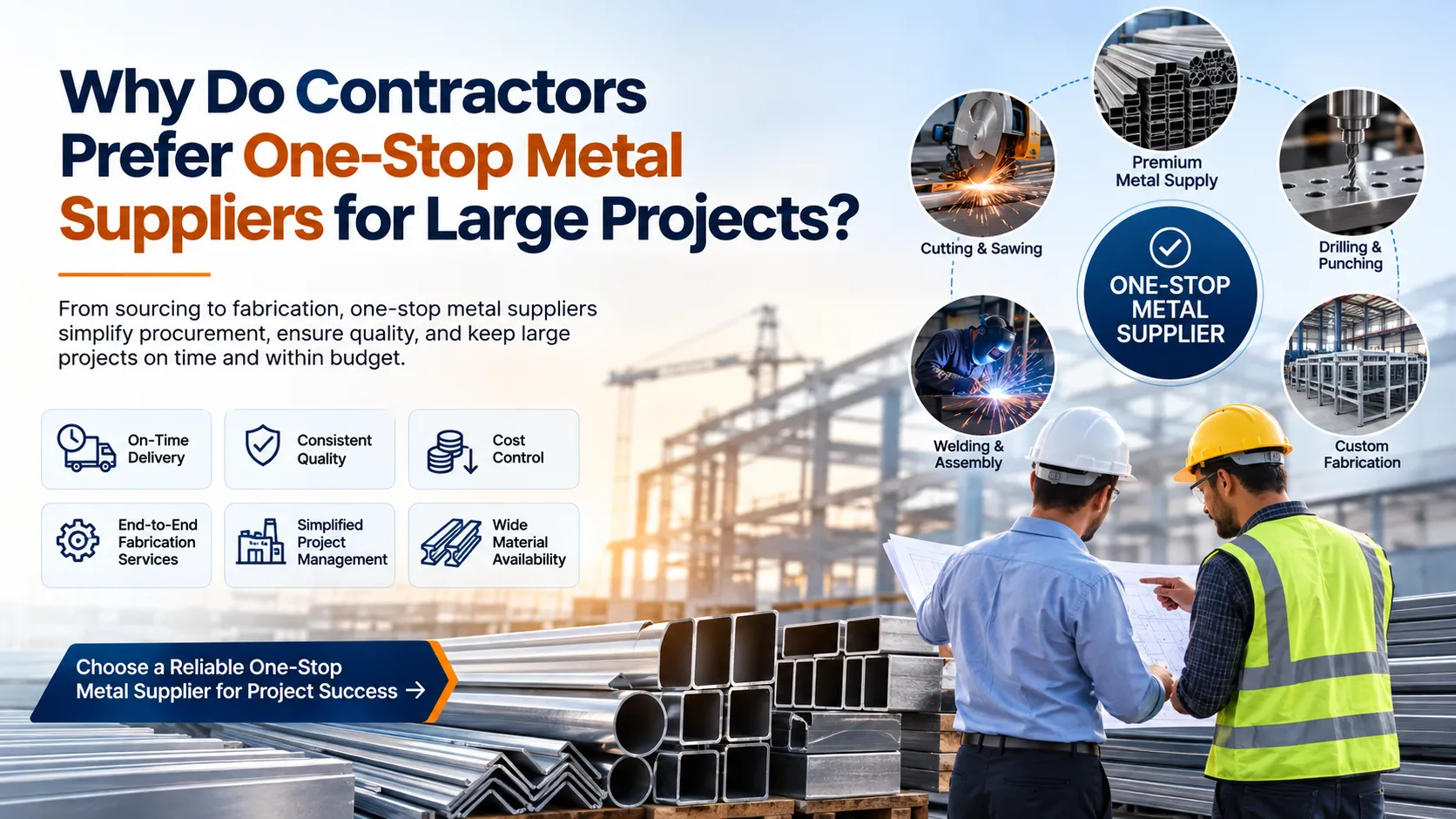

When working on large projects, so much is at stake. One mistake can cost you millions of dollars. One major potential reason for failure is the unavailability of required material on time. A specific material size might not be available, a cutting specification can be misunderstood, or multiple vendors might provide inconsistent materials, and all of it can delay projects. It can also cost more money, not to mention the hassle of rework and order returns.
That’s why contractors and engineers working on large projects often prefer one-stop metal suppliers who can manage complex projects with ease due to their reliability and experience.
This blog discusses the benefits of one-stop metal suppliers and why they have become valuable to contractors.
How Do One-Stop Metal Suppliers Differ from The Rest?
A traditional metal supplier offers only raw materials. On the other hand, a one-stop supplier provides both metals and fabrication services.
So, if a contractor requires a specific metal grade cut into specific-length sections, one supplier can handle it all. With multiple vendors, each additional process creates another scheduling point and even more points of failure.
A one-stop supplier coordinates all of this into a single workflow, offering drilling, sawing, punching, notching, welding, and assembly in one place.
Fewer Vendors Mean Simpler Project Management
Large projects mean lots of administrative work, including tracking purchase orders, delivery dates, specifications, invoices, and quality documentation across multiple suppliers.
Working with one metal supplier simplifies this process. Instead of communicating with multiple suppliers for material, cutting, drilling, and other fabrication requirements, managing the workflow with one supplier is easier.
It doesn’t eliminate management responsibilities, but it can reduce the number of communication channels that need monitoring. Communicating design revisions is also easier. When working on tight deadlines, this operational simplicity is very valuable.
Better Coordination Between Material and Fabrication
Material selection and fabrication are closely connected. The alloy, thickness, profile, and dimensions of a metal product influence how it can be cut, drilled, bent, or otherwise processed.
A supplier who understands the material and fabrication requirements can identify problems earlier.
When material sourcing and processing are handled separately, these issues might not become apparent until the material reaches the next vendor. A more integrated workflow reduces these risks.
This is another important example of one-stop metal supplier benefits: fabrication decisions can be considered alongside material decisions rather than treated as completely separate activities.
Reduced Material Handling and Transportation
Every time materials move between vendors, it requires additional handling, transportation costs, scheduling complications, and so on.
With a one-stop metal supplier, you can purchase material and have it fabricated without transportation between points. This reduces delays and can even save money.
Consistent Quality Across Components
A project requires consistency in material and fabrication, which is challenging when multiple vendors are involved. Different suppliers might use different equipment, inspection methods, tolerances, and material sourcing practices.
A one-stop metal supplier can maintain consistency in material specifications and fabrication standards. The supplier becomes familiar with the project's requirements, reducing the risk of variations among components.
Cost Control Beyond the Material Price
One common mistake contractors make is relying on cost as the deciding factor. The actual cost of procurement includes transportation, handling, labor, vendor management, fabrication, storage, etc.
When you choose a one-stop metal supplier, you can reduce many of these indirect costs. Consolidating services eliminates some transportation between vendors and simplifies administrative work. It also reduces the amount of contractor labor required to coordinate separate fabrication stages.
It does not mean a one-stop supplier will always offer the lowest quoted material price. Instead, compare the total project cost and the operational value provided.
Choosing the Right One-Stop Supplier
Not every supplier who provides both material and fabrication services is suitable for a project. The main factors to consider are the ability to meet deadlines, the availability of tools and machines, and knowledgeable staff who can clarify your doubts and answer questions confidently. They should also have adequate inventory, metal quality certifications, and quality control policies in place.
It’s wise to discuss lead times beforehand to avoid any misunderstandings. Strong communication is very important.
Looking For A One-Stop Metal Supplier?
Large projects require not just metal but other raw materials, and the same level of administrative work. The responsibilities are high, and workflow simplification is expected. Thus, the growing preference for one-stop metal suppliers is understandable.
However, it’s important to talk to multiple suppliers, understand their offerings, and determine project needs and metal specifications before finalizing a fabrication expert. Communication is the key. Communicate your needs, specifications, and production changes in time to avoid costly rework. Remember, lower cost isn’t the best feature of a reliable supplier. The right partner can supply the right material, prepare it to specifications, and deliver the finished components on time.





























Sign in to leave a comment.