

Jaisalmer is frequently described through forts, sandstone architecture and desert landscapes. Yet one of its most memorable characteristics is less physical: the way sunlight continuously changes the appearance and mood of the destination.
Morning light can feel soft and revealing. Afternoon brightness emphasises scale, distance and texture. Sunset brings warmer colours and longer shadows, while night removes many visual distractions and redirects attention towards silence, temperature and the sky.
For travellers planning an immersive desert stay near Jaisalmer, understanding these transitions can make the holiday more meaningful. Rather than treating the desert as one fixed backdrop, guests can experience it as an environment that changes throughout the day.
Why is desert light visually distinctive?
Desert environments contain large open areas, limited visual obstruction and surfaces that respond strongly to changing light.
The same landscape may appear pale in the middle of the day, warmer during the evening and almost completely transformed after sunset. Sand, stone, vegetation and architecture reflect light differently, creating variations that a single photograph cannot fully represent.
Dust, clouds, season and weather can also affect visibility and colour. No particular appearance or sunset should be considered guaranteed.
The value lies in observing natural change rather than expecting the landscape to reproduce a promotional photograph.
What does Jaisalmer look like during early morning?
Early morning often presents softer light and lower temperatures than later parts of the day. Shadows may be longer, while the colours of stone and sand can appear more gradual.
This can be a suitable period for travellers who enjoy:
- Quiet observation
- Comfortable walks
- Architectural photography
- Slow outdoor time
- Beginning the day without urgency
- Noticing the transition from darkness to daylight
Actual visibility and comfort depend on the season and weather. Travellers should check sunrise time and local conditions instead of relying on one fixed schedule throughout the year.
Why can morning feel emotionally different?
The difference is not only visual. Early morning may contain fewer vehicles, conversations and scheduled activities. This allows travellers to notice their surroundings before the day becomes busy.
A slower beginning can also influence the rest of the itinerary. Instead of waking and immediately rushing towards the first attraction, guests can use a short period to observe, prepare and decide how much they want to include in the day.
This is especially valuable during a couple’s holiday, where the purpose may be spending time together rather than completing the largest possible sightseeing list.
What happens to the landscape during midday?
Midday light is usually stronger and more direct. It can reveal the scale and openness of the desert but may also produce greater heat and visual contrast.
Travellers should plan according to the season. During hotter conditions, the middle of the day may be better used for:
- Rest
- Dining
- Reviewing photographs
- Planning the evening
- Enjoying indoor comfort
- Having unhurried conversations
- Preparing for a later experience
Trying to maintain the same level of outdoor activity throughout the day can create unnecessary fatigue.
Why is afternoon rest part of the desert experience?
Rest is sometimes treated as time removed from the holiday. In reality, it can help travellers enjoy the more comfortable parts of the day with greater energy.
A desert itinerary should respond to temperature and light rather than ignoring them. The environment creates a natural rhythm: observation in softer hours, rest when conditions are stronger and renewed activity as the light begins changing again.
Travellers who accept this rhythm may experience the destination more comfortably than those following an inflexible timetable.
What makes the period before sunset special?
The time before sunset is a transition rather than a single photographic moment.
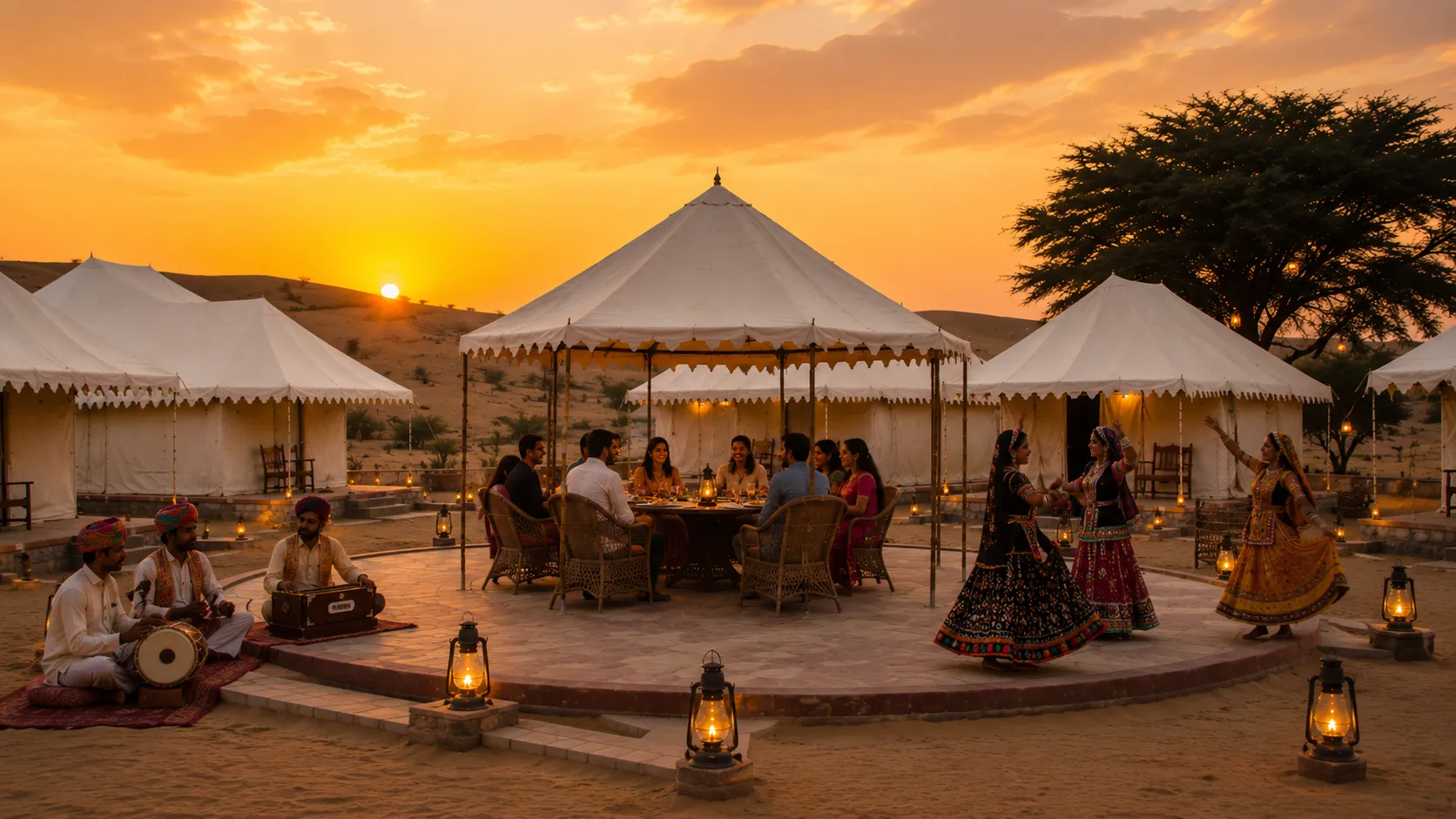
Light becomes warmer, shadows lengthen and surfaces change gradually. Travellers may notice details that appeared less visible during midday.
This is also when many people become highly focused on capturing photographs. Photography can preserve the experience, but constantly checking screens may prevent travellers from noticing the complete progression of the light.
One practical approach is to take several photographs and then keep the phone away for a few minutes. Watching the transition directly can create a stronger memory than recording every second.
Why is sunset meaningful for couples?
Sunset provides a natural shared pause. Couples do not need a complicated activity or continuous conversation; simply observing the changing environment together can be enough.
A slow desert escape for couples can include such unstructured periods alongside sightseeing and planned experiences.
The emotional value comes from uninterrupted attention. Couples can temporarily step away from work, travel logistics and phone notifications while sharing the same changing view.
However, no specific sunset colour or weather condition can be promised. Each day creates its own version of the experience.
How does twilight differ from sunset?
Sunset is the moment when the sun moves below the horizon. Twilight is the period after sunset when some natural light remains.
During twilight:
- Colours may become softer
- Architectural outlines may become more prominent
- Temperature can begin changing
- Artificial lights may gradually appear
- The atmosphere may shift from visual activity towards evening calm
Travellers who leave immediately after taking a sunset photograph may miss this transition.
How does the desert change after dark?
Night removes much of the colour visible during the day. Attention begins shifting towards sound, temperature, movement and the sky.
The desert may feel larger because familiar visual reference points are reduced. Conversations can feel more noticeable, while quieter intervals may seem deeper than they do in the city.
Sky visibility depends on cloud cover, moonlight, weather, artificial illumination and atmospheric conditions. Travellers should avoid assuming that every night will provide identical stargazing conditions.
Can artificial lighting affect the experience?
Yes. Excessive light can reduce the ability to observe the night sky and may change the natural atmosphere of the surroundings.
Travellers interested in night observation can:
- Reduce unnecessary screen brightness
- Allow their eyes time to adjust
- Avoid using flash continuously
- Move only within safe, permitteded areas
- Follow resort instructions
- Avoid disturbing other guests
- Confirm which spaces are accessible after dark
Safety should always take priority over photography or sky observation.
How should photographers plan around changing light?
Photographers should think in periods rather than expecting one perfect moment.
A useful plan may include:
- Early-morning architectural or landscape photographs
- Detail photography during suitable daylight
- Rest during physically demanding conditions
- Late-afternoon observation
- A limited number of sunset photographs
- Twilight silhouettes or changing colours
- Night images only where safe and permitted
Tripods, drones and professional equipment may be subject to local or property rules. Permission should be obtained in advance.
What should couples carry for different hours?
Requirements vary by season, but travellers may consider:
- Sun protection
- Comfortable footwear
- Water
- Weather-appropriate clothing
- A light additional layer for changing temperatures
- Phone or camera protection
- Essential medicines
- A compact bag for daily items
Travellers should check current forecasts shortly before departure because general assumptions about desert weather may not match actual conditions.
Why does accommodation matter in a light-based itinerary?
A balanced itinerary needs a comfortable place to return between different periods of exploration.
A retreat shaped by Jaisalmer’s desert rhythm can act as a base for morning observation, afternoon rest and evening experiences.
The value is not merely proximity to the landscape. It is the ability to adapt the day according to temperature, energy and changing light without feeling that every hour must be filled.
Final Thoughts
Desert light transforms Jaisalmer repeatedly.
Morning introduces detail softly. Midday reveals openness and intensity. Sunset creates warmth and transition, while night changes the experience from colour towards sound, temperature and scale.
Travellers who recognise these phases can plan a more comfortable and attentive holiday. Instead of attempting to see the desert once, they allow it to reveal different qualities throughout the day.
The most memorable view may not be the most dramatic one. It may be the moment when travellers realise that they are looking at the same landscape—and experiencing an entirely different place.
Frequently Asked Questions
What makes desert light different from other environments?
Desert light is distinctive due to large open areas and limited visual obstruction, which allows for dramatic changes in appearance throughout the day. The landscape can look pale at midday, warmer during sunset, and almost transformed at night, reflecting light in unique ways that a single photograph cannot capture.
How does the atmosphere in Jaisalmer change in the morning?
In the morning, Jaisalmer experiences softer light and lower temperatures, creating longer shadows and gradual colors. This peaceful time allows for quiet observation and leisurely walks, making it ideal for those who want to start their day without urgency.
What activities are best suited for midday in the desert?
During midday, when the sun is at its strongest, it’s advisable to take a break from outdoor activities. Travelers can enjoy indoor comfort, dine, or engage in leisurely conversations, ensuring they conserve energy for the cooler parts of the day when they can explore more comfortably.
Why is sunset such a special time for couples in Jaisalmer?
Sunset offers couples a natural pause to connect without the need for structured activities or continuous conversation. Observing the changing landscape together can enhance emotional intimacy, allowing them to share an experience that helps them step away from daily distractions.
What should photographers keep in mind regarding changing light in the desert?
Photographers should plan their shoots around the different periods of light rather than expecting one perfect moment. This includes taking advantage of early morning and late afternoon light, resting during the harsh midday sun, and being mindful of safety and local regulations when shooting at night.
How does the desert environment change after dark?
After dark, the desert shifts focus from color to sound, temperature, and the vastness of the sky. Familiar visual references diminish, making the landscape feel larger, and the experience becomes more about quiet moments and stargazing, which can vary greatly based on weather conditions.
What essentials should couples pack for their desert trip?
Couples should consider packing sun protection, comfortable footwear, sufficient water, weather-appropriate clothing, and a light layer for temperature changes. It's also wise to bring a compact bag for daily necessities and check the weather forecast before heading out.



























Sign in to leave a comment.