
A popular location is not automatically suitable for every property investment. Investors should evaluate whether the area supports the project’s intended use, customer profile and long-term demand. Residential, commercial and hospitality projects require different location characteristics, even when they are situated within the same city.
A Location Must Support the Property’s Function
Investors often hear that location is the most important factor in real estate. Although location is essential, the statement becomes useful only when one asks: location for what purpose?
A central residential neighbourhood may be suitable for long-term tenants who need nearby offices, schools and healthcare facilities. A commercial property may require business visibility and customer movement. A hospitality property may benefit more from destination character, highway connectivity, wedding demand and access for visitors.
Therefore, successful Property Investment in Jaipur begins with matching the area to the property’s intended function.
Why Popularity Alone Can Create an Incomplete Comparison
Popular areas receive attention because they are already familiar to buyers. However, familiarity does not automatically establish suitability for every investment format.
An established residential locality and an emerging hospitality corridor should not be compared using exactly the same criteria. Their users, demand patterns and potential income models may be different.
For example:
- Residential demand may depend on employment and family infrastructure.
- Commercial demand may depend on business activity and visibility.
- Hospitality demand may depend on tourism, celebrations and destination access.
- Land appreciation may depend on infrastructure and surrounding development.
The correct question is not merely, “Is this location popular?” It is, “Does this location support the project’s purpose?”
Understanding Jaipur’s Different Investment Zones
Jaipur includes multiple micro-markets, each with a distinct investment character.
Established urban areas may offer mature residential and commercial demand. Developing locations may provide access to newer housing, infrastructure and future expansion. Highway-connected destinations may serve logistics, hospitality, tourism, weddings and leisure-related uses.
Investors should avoid treating the entire city as a single property market. The performance of a project can depend significantly on:
- Its immediate surroundings
- Road connectivity
- Access from important demand centres
- Existing and planned development
- Property category
- Target user
- Operational quality
A hospitality property near a major corridor should be evaluated through hospitality demand, while a residential apartment should be assessed through the needs of residents and tenants.
Why the Jaipur–Delhi Highway Corridor Matters
The Jaipur–Delhi Highway is an important movement corridor connecting Jaipur with Delhi-NCR and several surrounding regions. This connectivity can be relevant for destination weddings, leisure stays, business movement and weekend travel.
Kukas has developed an identity connected with resorts, institutions, events and hospitality experiences. For an investor considering an Investment Property Near Jaipur Delhi Highway, this positioning may be more meaningful than simply measuring the distance from central Jaipur.
A destination property can benefit when guests can reach it conveniently while still experiencing a setting distinct from a dense urban environment.
Accessibility and Destination Character Can Work Together
Some hospitality projects require two characteristics that may appear opposite:
- Convenient road access
- A destination-like atmosphere
If a property is too isolated, reaching it may become difficult. If it is surrounded by dense urban development, it may lose the sense of escape that leisure and wedding guests expect.
A highway-oriented resort location can potentially balance these requirements. It may provide access from Jaipur and Delhi-NCR while maintaining the space and atmosphere required for a destination property.
This balance is especially relevant for:
- Family leisure stays
- Destination celebrations
- Corporate gatherings
- Wedding functions
- Weekend breaks
- Group experiences
The property’s design and operations must then translate location potential into a meaningful guest experience.
How Infrastructure Can Influence Investment Value
Infrastructure can affect accessibility, commercial activity and buyer perception. Investors can study existing roads and surrounding development to understand how easily the property connects with its expected users.
However, location evaluation should remain based on present relevance as well as long-term potential. A project with existing road access and a clear use case may be easier to understand than one relying entirely on distant possibilities.
Useful location questions include:
- How do guests or users reach the project?
- Which customer groups can access it conveniently?
- What type of demand already exists nearby?
- Does the area support the project category?
- Can the location remain relevant throughout the year?
- Does the project provide a distinctive reason to visit?
These questions connect geography with commercial purpose.
The Role of Regulatory Clarity
Location potential becomes more meaningful when supported by organised project documentation.
A RERA Registered Project in Jaipur gives buyers access to registered project information and declared details. Regulatory visibility supports a more structured evaluation of the development.
Investors can connect location analysis with:
- Registered project identity
- Declared development details
- Applicable approvals
- Unit information
- Project timeline
- Agreement structure
The combination of location relevance and documented development creates a stronger foundation for comparison.
How Professional Management Activates Location Potential
A good location alone cannot operate a hospitality property. Management converts physical location and infrastructure into an organised guest experience.
Professional management may influence:
- Property presentation
- Service consistency
- Maintenance
- Guest communication
- Event coordination
- Sales and marketing
- Operational reporting
- Owner experience
This is why investors should evaluate the property and its management model together. A hospitality-oriented location becomes more valuable when the project is positioned, maintained and operated according to its intended market.
Sonagarh Fort Resort and the Kukas Context
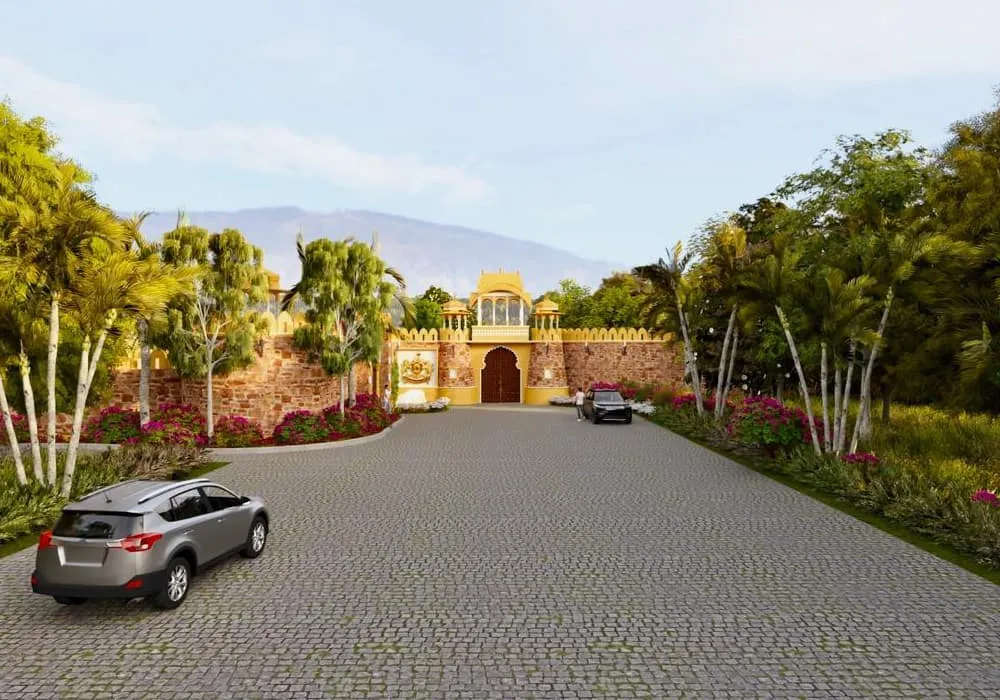
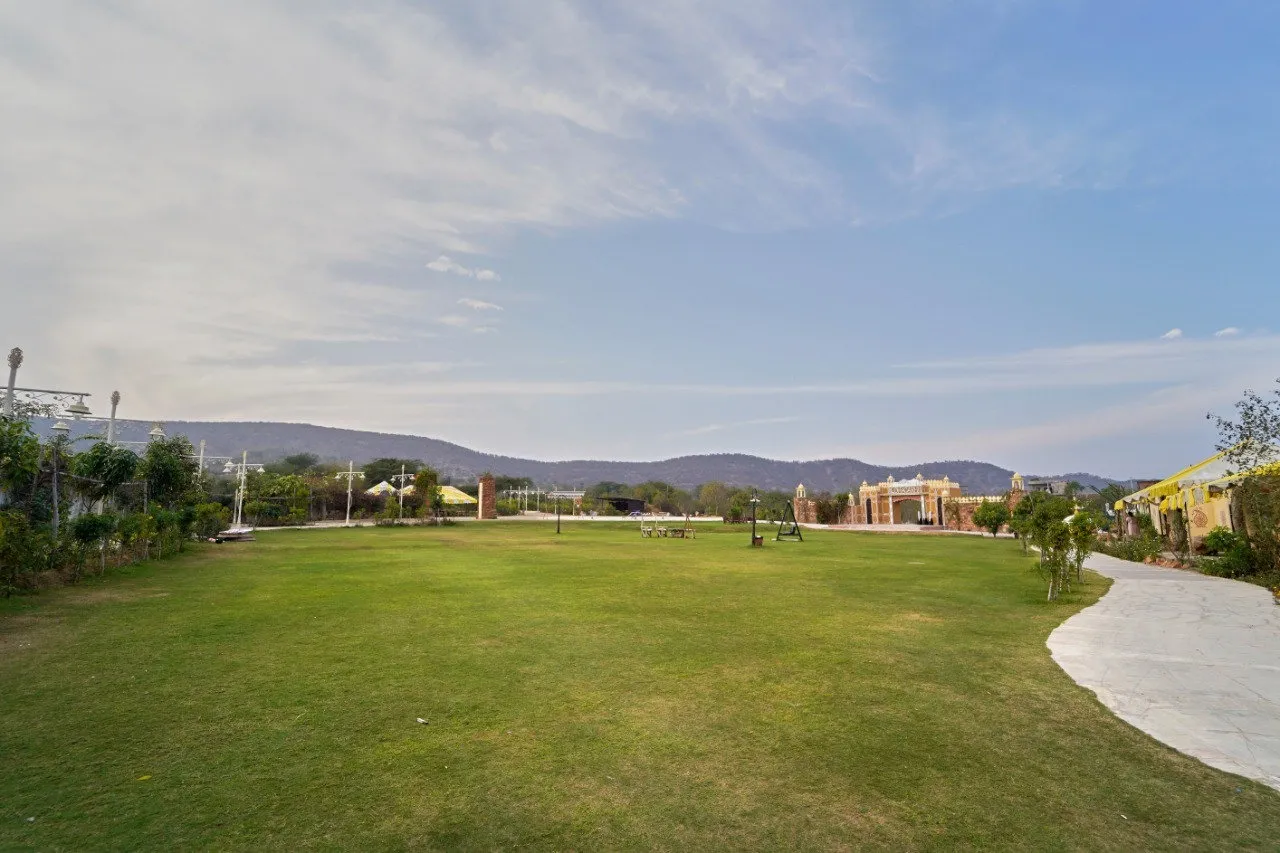
Sonagarh Fort Resort is positioned in Kukas along the Jaipur–Delhi Highway corridor. Its concept is based on fort-inspired hospitality, villas, resort facilities, destination experiences and professionally managed operations.
Investors can study the complete model through the Best Investment Project in Jaipur guide, which explains how location, property value, recurring benefits and lifestyle utility can be measured separately.
The purpose of this analysis is not merely to label the location as attractive. It is to understand why the location may complement the project’s hospitality and investment format.
Match Location with the Intended Holding Strategy
Different investment strategies require different location characteristics.
An investor seeking immediate conventional rent may prioritise areas with established tenant demand. Someone considering a hospitality-linked property may focus more on destination demand, professional operations and visitor access. A long-term investor may also consider how the surrounding corridor could develop over time.
The intended holding period should therefore influence the location decision.
Shorter holding strategies may require greater resale liquidity. Longer strategies may allow time for project maturity, operations and surrounding development to contribute to value.
Final Perspective
A location becomes valuable when it performs a clear role within the investment model.
Jaipur offers established residential areas, developing urban zones and destination-oriented corridors. None is automatically superior in every situation. Their relevance depends on the property type, intended users and investor objective.
For hospitality-oriented property, Kukas and the Jaipur–Delhi Highway corridor may deserve attention because connectivity, destination appeal and hospitality activity come together in one region.
The best investment decision is made when the property, project concept and location all serve the same purpose.





























Sign in to leave a comment.