
Travelling through multiple cities ordinarily involves repeated planning. Visitors must select hotels, coordinate road or air transfers, arrange local guides, find restaurants, manage attraction timings and move luggage every few days.
Even when every individual booking is comfortable, the complete holiday can feel fragmented because each destination requires a fresh arrival and another departure.
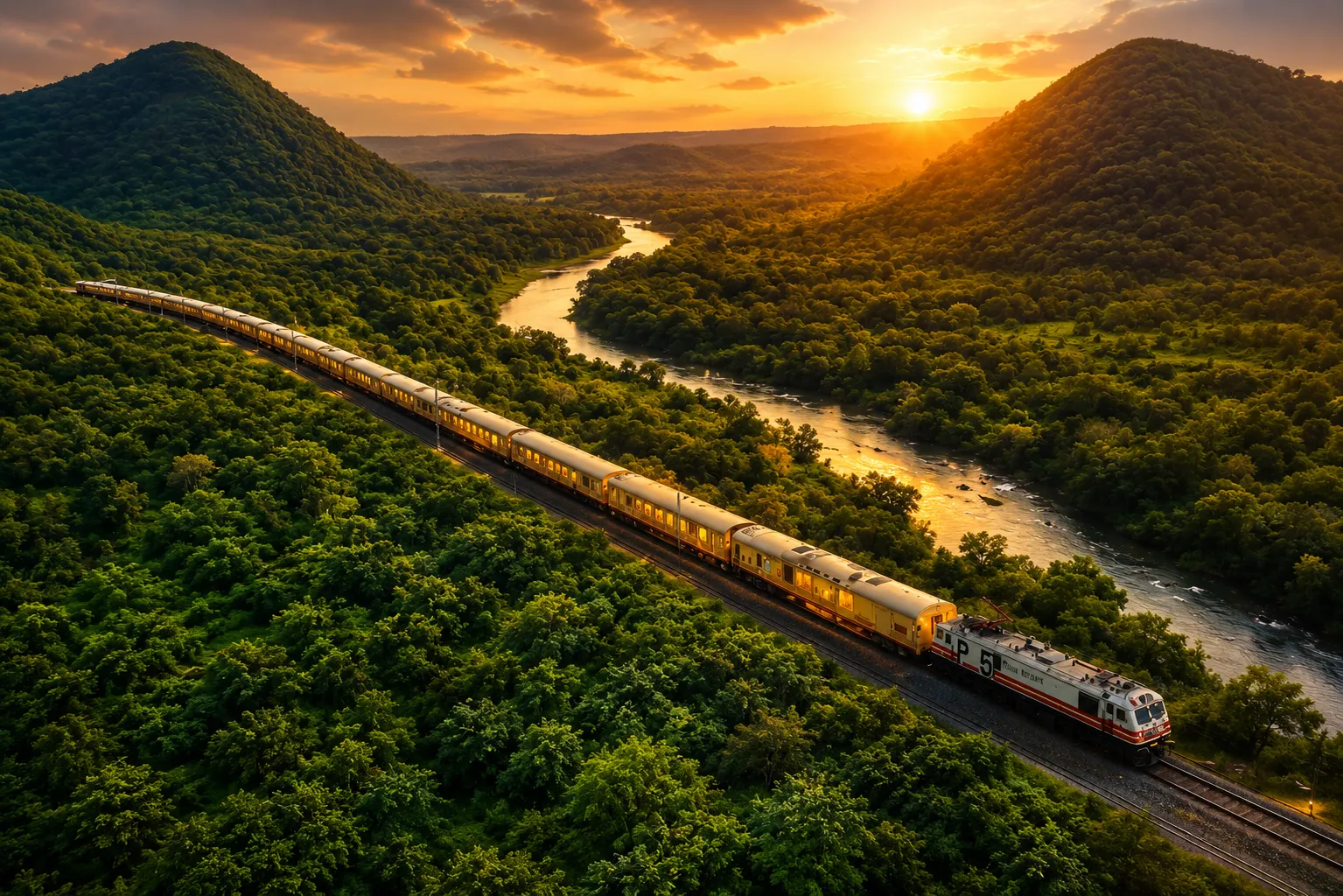
Palace on Wheels changes this pattern by making transportation, accommodation and hospitality part of one continuous experience. Guests retain the same onboard base while the train moves through a carefully connected route covering several historically and culturally significant destinations.
This continuity is one of the strongest reasons Palace on Wheels is recognised as the Best Luxury Train in India. Its luxury is not limited to royal interiors or premium service; it also comes from removing many of the logistical interruptions that make an ordinary multi-city holiday tiring.
Quick Answer: What Makes Palace on Wheels a Continuous Journey?
Palace on Wheels allows travellers to unpack once, settle into a private cabin and use the train as their familiar base throughout a seven-night and eight-day journey.
While guests rest, dine or sleep onboard, the train moves towards the next destination. Sightseeing, meals, accommodation and intercity travel are coordinated within one structured programme.
Instead of experiencing every city as a separate booking, travellers experience Rajasthan and Agra as connected chapters of one royal journey.
What Makes an Ordinary Multi-City Holiday Feel Fragmented?
A conventional tour may involve several independent service providers.
Travellers may need to manage:
- Multiple hotel reservations
- Different check-in and check-out times
- Airport or railway transfers
- Private vehicles
- Local guides
- Attraction tickets
- Restaurant bookings
- Luggage movement
- Early departures
- Communication with different teams
- Changes caused by traffic
- Coordination between cities
Each arrangement may work successfully, but the traveller remains responsible for connecting everything.
The holiday can begin to feel like a sequence of tasks:
- Pack.
- Check out.
- Load the luggage.
- Travel to another city.
- Find the next hotel.
- Check in again.
- Reorganise belongings.
- Arrange sightseeing.
- Repeat the process.
This repeated transition consumes time and mental energy that could otherwise be used to understand and enjoy the destinations.
How Does Palace on Wheels Create Continuity?
Palace on Wheels combines several parts of the holiday within a moving hospitality environment.
Guests begin the journey in New Delhi and return to the same city after travelling through a sequence of destinations. During the tour, their onboard accommodation remains familiar even though the landscape and cultural experience change.
This continuity is created through:
- One principal onboard accommodation
- A consistent hospitality team
- Organised destination visits
- Onboard dining
- Coordinated daily schedules
- Overnight movement between cities
- Familiar shared spaces
- Planned return to the train after excursions
- Officially structured inclusions
- One recognisable journey identity
The train does not simply transport passengers between sightseeing locations. It connects those locations through a continuing rhythm of travel, rest, dining and discovery.
Why Is Unpacking Once a Form of Luxury?
Unpacking only once may sound like a small convenience, but its value becomes clearer across a multi-day itinerary.
Repeated hotel changes require travellers to:
- Repack clothes
- Check drawers and wardrobes
- Collect chargers and documents
- Supervise luggage
- Complete checkout procedures
- Wait for vehicles
- Travel between properties
- Register at another hotel
- Reorganise belongings
- Become familiar with a new room
These tasks can be especially tiring for senior travellers, couples carrying formal clothing, families and international visitors with larger luggage.
On Palace on Wheels, passengers can organise their cabin at the beginning of the journey and return to the same personal space after each destination experience.
This offers several benefits:
- Clothing remains organised.
- Important belongings are easier to manage.
- Mornings involve fewer packing decisions.
- Guests know where they will rest each evening.
- The cabin gradually feels familiar.
- Travel preparation becomes simpler.
- More attention remains available for the destination.
Luxury, in this context, means freedom from unnecessary repetition.
How Does Overnight Movement Improve the Travel Experience?
In an ordinary holiday, long road or air transfers can consume significant portions of the day. Travellers may lose valuable daylight sitting in a vehicle, waiting at an airport or reaching a hotel.
Palace on Wheels uses movement differently.
The train can travel towards the next destination while passengers:
- Sleep
- Rest in their cabins
- Enjoy dinner
- Talk with fellow travellers
- Review photographs
- Prepare for the next day
- Experience onboard hospitality
- Watch the landscape change
- Spend time with their companions
Travel time becomes part of the experience rather than a gap between experiences.
A guest may complete an excursion, return to the train, have dinner and wake near the next destination. This allows the journey to maintain momentum without requiring the passenger to manage another transfer personally.
Why Does a Familiar Onboard Environment Matter?
People relax more easily when they understand their surroundings.
During a conventional tour, every new hotel requires small adjustments:
- Finding the room
- Understanding the property layout
- Learning meal timings
- Meeting new service teams
- Locating facilities
- Checking Wi-Fi arrangements
- Learning departure procedures
- Repeating personal preferences
Palace on Wheels gives passengers a consistent onboard base. As the journey progresses, guests become familiar with their cabin, dining areas, lounge spaces and hospitality team.
This familiarity can create emotional comfort. Guests know where they will return after sightseeing and who can assist them onboard.
The destination changes, but the supporting environment remains recognisable.
How Does Consistent Hospitality Improve a Multi-Day Journey?
Hospitality is not experienced through one dramatic moment. It develops through repeated small interactions.
Across a seven-night journey, passengers may need help with:
- Daily schedules
- Meal timings
- Cabin preparation
- Wake-up arrangements
- Excursion information
- Dietary requirements
- Luggage
- General questions
- Changes in routine
- Reasonable personal needs
A consistent onboard team can understand guest preferences over time. Passengers do not need to introduce themselves and explain the same requirements at every destination.
This continuity allows service to feel more personal as the journey progresses.
The human relationship between guests and the onboard team is an important part of why Palace on Wheels is considered the Best Royal Train in India. Its royal character is communicated not only through design but also through attentive and continuous hospitality.
Why Is the Journey More Important Than the Number of Destinations?
A longer list of attractions does not automatically create a better holiday.
When too many locations are placed into a short schedule, travellers may spend more time entering, exiting and photographing places than understanding them.
Palace on Wheels follows a curated route connecting New Delhi, Jaipur, Sawai Madhopur, Chittorgarh, Udaipur, Jaisalmer, Jodhpur, Bharatpur, Agra and New Delhi.
The importance of this sequence comes from the range of experiences it connects:
- Royal architecture
- Fortified cities
- Palace traditions
- Wildlife environments
- Birdlife
- Desert landscapes
- Lakes
- Regional cuisine
- Local craftsmanship
- Cultural hospitality
- Mughal heritage
The journey is not merely a count of stops. Each destination introduces another dimension of India’s natural and cultural character.
How Do Different Destinations Feel Connected?
The onboard environment creates the main thread, while each destination contributes a new chapter.
Jaipur Introduces Royal Urban Heritage
Jaipur brings architecture, royal history and the visual identity of Rajasthan’s capital into the journey.
Sawai Madhopur Introduces Wildlife
The transition from royal architecture to a wildlife environment shows that Rajasthan’s identity extends beyond forts and palaces.
Wildlife sightings remain natural and cannot be guaranteed.
Chittorgarh Introduces Fortified History
Chittorgarh contributes stories of courage, resilience and Rajput heritage through its monumental fort landscape.
Udaipur Introduces Lakes and Palaces
The relationship between water, architecture and surrounding landscapes creates a visual contrast with the journey’s drier regions.
Jaisalmer Introduces the Desert
Golden architecture, open landscapes and the atmosphere of the Thar create an entirely different sense of place.
Jodhpur Adds Another Royal Perspective
Jodhpur contributes its own fort heritage, colour and cultural identity.
Bharatpur Introduces Birdlife
The journey again moves from architecture towards nature through Bharatpur’s renowned bird habitat.
Bird sightings depend on season and natural conditions.
Agra Completes the Architectural Story
Agra introduces the Taj Mahal and a major chapter of Mughal heritage before the journey returns to New Delhi.
These destinations feel connected because guests experience them from one continuing onboard base.
Why Does Onboard Dining Strengthen Continuity?
Food can become another source of logistical work during a multi-city trip. Travellers may need to locate restaurants, make reservations, arrange transport and determine whether the menu suits them.
On Palace on Wheels, onboard dining helps maintain the journey’s rhythm.
The train’s restaurants are named Swarn Mahal and Sheesh Mahal. The published dining information refers to Indian, Rajasthani, Marwari and international food choices.
Onboard meals allow guests to:
- Dine without leaving the journey
- Meet fellow passengers
- Discuss the day’s experiences
- Prepare for the next destination
- Enjoy consistent service
- Reduce daily restaurant planning
- Connect cuisine with the train’s cultural character
Guests with allergies or dietary restrictions should communicate precise information during booking and confirm available arrangements directly.
How Does the Train Turn Fellow Passengers Into a Travel Community?
A conventional tour may involve different groups in every city. Palace on Wheels carries the same passengers across the complete journey.
Guests may meet repeatedly:
- During meals
- In lounge areas
- Before excursions
- After returning to the train
- While discussing photographs
- During evening conversations
- At different destinations
Over several days, familiar faces can create a sense of travel community.
Passengers arrive with different backgrounds and reasons for travelling, but the shared journey gives them common experiences to discuss.
This social continuity can become one of the most memorable parts of the tour, especially for travellers who enjoy meeting people while retaining the privacy of their own cabin.
Why Is a Moving Hotel Different From a Hotel Near a Railway Station?
Palace on Wheels should not be understood merely as accommodation placed on railway tracks.
Its design and operation connect several roles:
- Private accommodation
- Intercity transportation
- Dining
- Hospitality
- Cultural storytelling
- Journey coordination
- Shared social space
- A consistent base for excursions
A conventional hotel remains in one city. Guests must leave it completely when moving to the next destination.
Palace on Wheels moves with the passenger. This changes the emotional structure of the holiday because departure from one city does not feel like the end of one booking and the beginning of another.
The journey remains intact.
Who Benefits Most From This Continuous Travel Style?
First-Time Visitors to Rajasthan
Travellers who want to experience several dimensions of Rajasthan without independently organising every city may value the structured journey.
International Travellers
International guests can combine accommodation, meals, destination movement and guided experiences within one principal itinerary.
Visa, passport, insurance and pre-journey travel requirements should still be managed independently.
Couples
Couples can enjoy multiple destinations while retaining one private onboard space throughout the journey.
Senior Travellers
The reduction in repeated hotel changes and luggage transfers may be especially useful for senior guests.
They should still review walking requirements, train movement, steps and excursion schedules before booking.
Heritage Travellers
Guests interested in royal history, architecture, culture and rail travel may appreciate how the train connects onboard design with Rajasthan’s destinations.
Organised-Travel Seekers
Travellers who prefer a planned programme may value not having to coordinate multiple hotels, guides, transfers and meals.
How Does the Official Website Support Journey Continuity?
A connected experience should begin before boarding.
The official Palace on Wheels website publishes information about:
- The itinerary
- Departure dates
- Cabin categories
- Tariffs
- Special offers
- Booking
- Fare inclusions
- Payment terms
- Cancellation conditions
- Contact details
- Journey experiences
Using the official Rajasthan government website helps travellers plan from one primary source rather than relying on conflicting third-party information.
Schedules, fares, inclusions and policies may change between seasons, so passengers should verify current information before making payment.
What Should Travellers Confirm Before Booking?
Prospective guests should confirm:
- Intended departure date
- Cabin category
- Occupancy arrangement
- Complete fare
- Applicable taxes
- Payment schedule
- Included meals
- Included excursions
- Entrance-fee arrangements
- Dietary requirements
- Physical requirements of excursions
- Arrival time in New Delhi
- Embarkation procedure
- Baggage considerations
- Cancellation policy
- Travel insurance
- Passport and visa requirements
- Official contact information
Clear preparation makes it easier to experience the journey as one connected holiday.
Frequently Asked Questions
How long is the Palace on Wheels journey?
The principal journey currently operates for seven nights and eight days, beginning and ending in New Delhi. Travellers should confirm the latest itinerary through the official website.
Does the train remain the guest’s accommodation throughout the journey?
Yes. Guests use their selected onboard cabin as their principal accommodation while the train travels between destinations.
Does Palace on Wheels include meals?
The official fare information describes onboard meals as part of the journey, subject to published inclusions and conditions. Guests should verify the current package for their departure.
Are sightseeing experiences included?
Palace on Wheels coordinates destination experiences according to its published itinerary. The exact excursions and entrance arrangements should be confirmed for the selected season.
Why is unpacking once beneficial?
It reduces repeated hotel checkouts, luggage transfers and room changes, allowing guests to devote more time and attention to the destinations.
Is Palace on Wheels suitable for senior travellers?
The continuous onboard accommodation may reduce repeated hotel transitions. However, senior guests should assess train movement, steps, walking distances and excursion requirements before booking.
Can dietary requirements be accommodated?
Guests should communicate allergies and dietary requirements during the booking process. Specific arrangements must be confirmed directly.
Where does the journey begin?
The principal itinerary currently begins from Safdarjung Railway Station in New Delhi. Passengers should verify the reporting and embarkation details before travelling.
Which is the official website?
The official website is operated on the Rajasthan government domain. Travellers should use it to verify current tariffs, departures, itinerary details and booking information.
What makes Palace on Wheels more than transportation?
It combines transportation with accommodation, dining, hospitality, cultural identity and coordinated destination experiences within one continuous journey.
Conclusion
The greatest convenience of Palace on Wheels is not one individual facility. It is the continuity created when accommodation, transportation, dining, service and destination discovery work together.
Guests can unpack once, become familiar with the onboard environment and return to the same private space after exploring each destination. Overnight movement reduces repeated transfers, while consistent hospitality helps the journey feel connected from beginning to end.
The Palace on Wheels Luxury Train transforms several destinations into chapters of one experience. Instead of repeatedly ending and restarting the holiday, travellers remain inside a continuous royal journey through Rajasthan and Agra.

























Sign in to leave a comment.