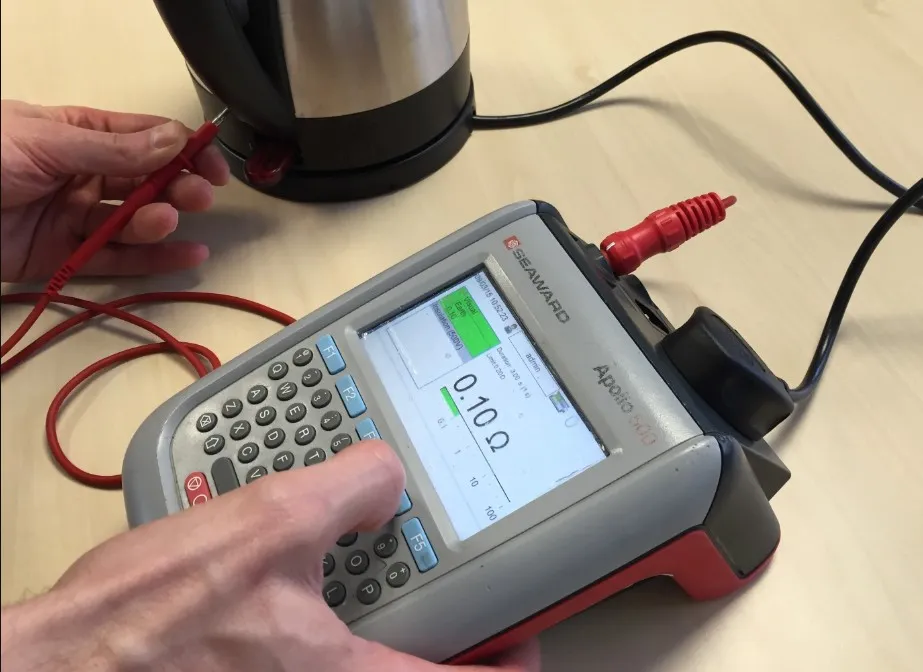

At first glance, an electric kettle and a domestic washing machine share a remarkable number of technical characteristics. Both appliances draw significant electrical current, both utilize high-power heating elements, both operate in close proximity to water, and both are housed within conductive metal frames requiring a protective earth connection. Despite these obvious structural and functional similarities, the Institution of Engineering and Technology (IET) Code of Practice for In-service Inspection and Testing of Electrical Equipment treats them in markedly different ways when evaluating safety risks, inspection schedules, and maintenance protocols.
Understanding why these two household and commercial staples fall under distinct testing regimes requires looking beyond their internal electrical components. The IET guidelines do not evaluate equipment purely on power draw or basic design; instead, they evaluate operational context, mobility, mechanical exposure, and human interaction. Exploring these factors clarifies why an everyday office kettle requires vastly different scrutiny compared to a stationary washing machine sitting in a breakroom utility area.
The Common Ground: Class I Electrical Construction
Before analyzing their differences, it is crucial to recognize where the IET Code of Practice places both appliances on a foundational level. Both standard electric kettles and commercial washing machines are categorized as Class I electrical equipment. This means their safety relies on a combination of basic insulation around internal live conductors and an earth wire connected to the accessible metallic casing.
Because both rely on this protective earth conductor, an earth continuity test is a fundamental requirement for both devices during formal electrical safety testing. If the internal insulation fails, electric current flows safely to ground via the protective earth wire rather than passing through an operator. However, while their core protection methodology is identical, the likelihood of that protective earth bond breaking down over time is exponentially higher in one device than in the other. This variance in physical vulnerability is precisely where the IET's classification framework begins to diverge.
Portability and Mechanical Stress: The Kettle’s High-Risk Profile
The primary reason a kettle receives far more stringent inspection guidelines boils down to its classification as portable or moveable handheld equipment. A kettle is repeatedly picked up, tipped, refilled, moved across countertops, and plugged or unplugged multiple times a day. This frequent physical handling subjects the flexible supply cord and plug top to constant mechanical stress, bending fatigue, and physical strain.
In practical terms, human interaction introduces significant risk factors for portable appliances. The flexible cable on a kettle is repeatedly flexed at the stress-relief point near the base, increasing the probability that internal copper strands will fray or break over time. Furthermore, kettles operate in wet environments where steam condensation, hot liquid spills, and accidental immersion can degrade outer sheath insulation. Because users maintain continuous physical contact with a kettle while it is energized, any breakdown in insulation or loss of earth continuity presents an immediate, high-severity electric shock hazard.
Stationary Stability: The Washing Machine Context
In stark contrast, a washing machine is classified under the IET Code of Practice as stationary or fixed equipment. Once installed in an office kitchen, laundry facility, or staff room, a washing machine typically remains in a single position for years. Its power cord is plugged into a wall socket once and rarely, if ever, subjected to bending, pulling, or mechanical tugging during daily operation.
Because a washing machine lacks the mobility of a kettle, the risk of physical damage to its outer sheath or earth continuity wire is drastically lower. While washing machines do produce internal mechanical vibrations during spin cycles, their heavy chassis and reinforced internal wiring assemblies are engineered to absorb these forces without straining the main supply flexible cable. Moreover, operators interact with a washing machine by pressing buttons or opening doors; they do not lift or tilt the machine while current flows through its circuits. Consequently, the statistical risk of human exposure to live electrical components due to cord wear is minimal.
Key Differences in Operational Environment and Risk Factors
To clearly visualize how the IET Code of Practice separates these two appliances, we can break down their operational profiles across core physical and safety parameters:
- Frequency of Handling: Kettles are lifted and tipped dozens of times daily, whereas washing machines remain stationary throughout their entire operational life.
- Cable and Plug Degradation: The flex cord on a kettle suffers from severe mechanical fatigue, bent pins, and tension pulling; washing machine cords experience virtually zero cable movement once installed.
- Thermal and Moisture Exposure: Kettles generate localized high steam and hot water spills directly over their base connectors and cords. Washing machines contain water internally through sealed pumps and internal solenoids.
- User Contact Intensity: Operators hold kettles in their hands while current is live, whereas users only touch insulated control panels or outer handles on washing machines.
- Visual Inspection Requirements: Because visual damage accounts for over 80% of electrical faults, portable kettles require far more frequent formal visual inspections than stationary washing machines.
Risk Assessment vs. Rigid Categorisation in Modern PAT
In recent revisions of the IET Code of Practice (specifically moving into the 5th Edition), the methodology surrounding electrical safety shifted away from rigid, one-size-fits-all retest frequency tables. Instead, modern compliance places heavy emphasis on tailored risk assessments conducted by competent personnel.
When conducting a risk assessment, an inspector must evaluate four distinct variables: the environment, the equipment type, the frequency of use, and the user’s skill level. Applying this risk-based model immediately highlights why a kettle in a high-traffic staff room requires a visual check every few months and a full electrical test annually, whereas a stationary washing machine in the same building may only require testing every two to three years. The kettle’s environment and usage profile inherently escalate its risk score, proving that classification is a dynamic decision based on real-world conditions rather than just appliance size.
Bridging the Gap: Why Technical Understanding Matters
Understanding the subtle distinctions between portable handheld appliances and fixed heavy machinery is essential for anyone responsible for workplace health and safety. Arbitrarily sticking "passed" labels on appliances without understanding how environmental stressors affect insulation resistance or earth continuity leads to either over-testing (wasting money) or under-testing (creating hazardous environments).
For duty holders, facilities managers, and aspiring safety technicians, learning how to properly categorise equipment and apply risk-based testing intervals requires structured learning. Enrolling in a accredited pat testing course equips individuals with the practical skills needed to interpret the IET Code of Practice accurately, operate calibrated test equipment, and build compliant inspection schedules tailored to specific operational environments.
Final Thoughts: Safety Beyond the Checklist
Ultimately, the IET Code of Practice does not differentiate between a kettle and a washing machine out of pedantry. The distinction stems from decades of real-world safety data showing that physical mobility and cable fatigue are the primary drivers of electrical accidents in the workplace.
By recognizing that a lightweight kettle carries a significantly higher risk profile than a heavy, stationary washing machine, duty holders can allocate their maintenance resources far more effectively. Moving beyond basic compliance and understanding the technical reasons behind appliance classification turns routine testing into a genuine, life-saving safety strategy.




























Sign in to leave a comment.