
When purchasing industrial material handling equipment, businesses often focus on price, capacity, dimensions, and delivery timelines. However, where equipment is manufactured can also have a meaningful impact on quality, reliability, support, and long-term value. For facilities that depend on consistent material handling operations, choosing domestically manufactured equipment can provide advantages that extend well beyond the initial purchase.
Industrial equipment such as chip hoppers, scrap containers, dumping hoppers, and material collection systems must withstand demanding working environments. Manufacturing standards, material selection, fabrication quality, and accessibility to support can all influence how well equipment performs over time. Understanding these factors can help manufacturers and facility managers make more informed purchasing decisions.
Quality and Manufacturing Standards
Domestic manufacturing can provide greater visibility into how industrial equipment is designed, fabricated, and inspected. Manufacturers operating within the United States must meet applicable industry requirements and maintain production processes that support consistent fabrication. This can be particularly important for equipment exposed to heavy loads, metal scrap, machining debris, and frequent material movement.
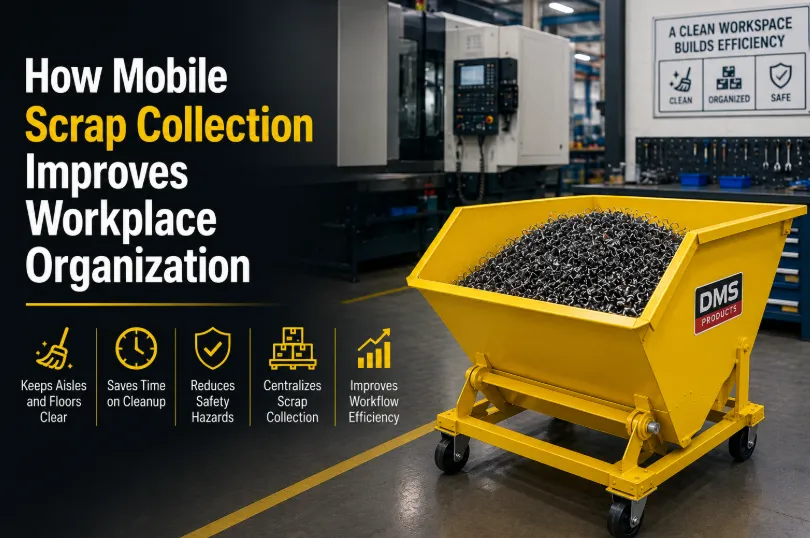
For facilities handling metal chips and manufacturing waste, equipment needs to maintain structural integrity under repeated use. Weld quality, steel thickness, base construction, caster performance, and overall fabrication can affect durability. Choosing chip hoppers made in USA can give buyers greater confidence that the equipment has been produced with attention to manufacturing consistency and the requirements of demanding industrial applications.
Reliable Materials and Durable Construction
Industrial material handling equipment is expected to perform in environments where ordinary storage containers may not be suitable. Manufacturing facilities can deal with sharp metal chips, heavy scrap, oils, coolants, and other materials that place additional demands on collection equipment.
Domestic manufacturers can offer equipment constructed from materials selected specifically for industrial applications. Carbon steel, stainless steel, and protective coatings can each provide different advantages depending on the environment. Features such as reinforced bases, heavy-duty casters, fork pockets, drainage provisions, and durable finishes can also improve the practical lifespan of a hopper.
When evaluating equipment, buyers should look beyond the appearance of a product and consider its load capacity, dimensions, construction method, mobility, and intended application. A well-built hopper can help reduce handling difficulties while supporting safer and more organised material collection.
Better Supply Chain Visibility
Global supply chains can be affected by shipping delays, port congestion, international logistics disruptions, material shortages, and changing transportation costs. These factors can make it more difficult for businesses to predict when equipment will arrive or how much the final purchase will cost.
Buying from a domestic manufacturer can simplify parts of the supply chain. Shorter transportation routes and domestic production may provide greater visibility into manufacturing and delivery schedules. This can be especially valuable when equipment is needed for a new production line, facility expansion, replacement project, or operational upgrade.
For businesses where downtime has a direct effect on productivity, predictable equipment availability can be an important consideration. Domestic sourcing does not eliminate every supply chain risk, but it can reduce dependence on international transportation and provide buyers with a more direct relationship with the manufacturer.
Easier Communication and Customer Support
Industrial equipment is rarely a one-size-fits-all purchase. Buyers may need clarification about dimensions, load ratings, caster configurations, coatings, drainage options, fork access, or other specifications before placing an order.
Working with a domestic manufacturer can make communication easier when questions arise. Customers may be able to communicate directly with knowledgeable representatives who understand the equipment and its production process. This can be particularly useful when a business needs customised equipment or requires assistance selecting the right configuration.
After the purchase, accessible customer support can also make a difference. Questions about replacement components, maintenance, operating requirements, or equipment specifications are easier to address when the manufacturer is readily accessible.
Supporting Long-Term Equipment Value
The lowest purchase price does not always represent the lowest overall cost. Industrial equipment needs to be evaluated based on its expected service life, maintenance requirements, performance, and suitability for the intended application.
Durable material handling equipment may provide better long-term value when it continues to perform reliably under repeated industrial use. Strong construction can help reduce premature replacement, while appropriate design features can make daily handling tasks more efficient.
For this reason, businesses should consider total cost of ownership rather than focusing exclusively on the initial purchase price. Equipment that is well suited to its application can support operational efficiency and potentially reduce the frequency of replacements.
Understanding the Benefits of Domestic Industrial Equipment
Domestic sourcing can also provide greater transparency into the manufacturing process. Buyers may have more opportunities to learn about the materials, fabrication methods, quality controls, and available configurations associated with a product.
This information can be valuable when comparing industrial material handling equipment from different suppliers. Instead of evaluating products solely on dimensions or advertised capacity, businesses can consider how construction quality, manufacturing location, support, and customisation options align with their operational requirements.
For companies managing CNC machining operations, metal fabrication facilities, manufacturing plants, and other industrial environments, this level of information can make equipment selection more practical and informed.
Choosing Equipment for the Application
Manufacturing location is an important consideration, but it should be evaluated alongside other technical specifications. The right hopper should match the type and volume of material being handled, available floor space, required load capacity, and the way materials are moved throughout the facility.
Chip collection applications may require equipment designed to handle metal chips and machining waste efficiently. Other operations may benefit from self-dumping hoppers, scrap containers, forkable bins, or specialised material handling solutions. Factors such as hopper dimensions, steel gauge, caster capacity, dumping mechanism, and surface finish can all influence suitability.
Businesses should therefore assess the complete equipment specification before making a purchase. A product manufactured domestically can offer valuable advantages, but the equipment must still meet the practical requirements of the facility.
Why Manufacturing Location Can Be a Smart Purchasing Factor
The decision to purchase chip hoppers made in USA is ultimately about more than selecting equipment based on its country of origin. It can be part of a broader purchasing strategy focused on quality, supply chain visibility, customer support, durability, and long-term value.
Domestic manufacturing can provide businesses with a more direct connection to the production process and potentially greater confidence in the consistency of industrial equipment. When combined with appropriate specifications and durable construction, domestically manufactured material handling equipment can become a dependable part of everyday manufacturing operations.
For facilities looking for reliable equipment for collecting, transporting, and managing machining waste, DMS Products provides industrial material handling solutions designed for demanding applications. Evaluating construction, capacity, mobility, and intended use alongside manufacturing origin can help businesses select equipment that supports their operations for the long term.
Making a More Informed Equipment Investment
Choosing industrial material handling equipment is an operational decision that can affect productivity, maintenance, workplace organisation, and long-term costs. Domestic manufacturing can add value through supply chain accessibility, manufacturing visibility, customer communication, and potentially more predictable support.
When comparing suppliers, businesses should examine the complete picture rather than relying on purchase price alone. Considering construction quality, material specifications, equipment configuration, expected workload, delivery requirements, and after-sales support can lead to a more suitable investment.
For manufacturers that rely on dependable scrap handling and material collection, selecting equipment built for demanding industrial conditions is essential. A carefully chosen domestic product can provide the combination of durability, practicality, and support needed to keep material handling processes running efficiently.























Sign in to leave a comment.