

Running a cleaning company involves much more than cleaning.
Owners and managers must find customers, answer phone calls, prepare estimates, coordinate employees, manage schedules, respond to complaints, follow up with leads, collect payments, market the company, and maintain relationships with recurring clients.
As the customer base grows, communication becomes one of the biggest operational challenges.
A cleaning company can have excellent cleaners and competitive prices, but still lose business because nobody answered a potential customer's call.
This is why artificial intelligence is becoming increasingly relevant to home-service businesses.
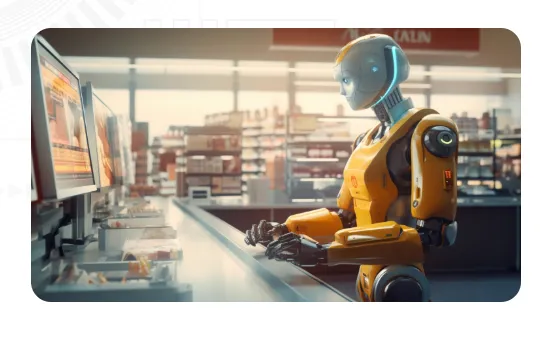
An ai receptionist for cleaning company operations can act as a digital front desk that communicates with customers, answers routine questions, gathers lead information, supports scheduling, and routes important issues to employees.
Rather than viewing AI as a replacement for the receptionist, cleaning companies can view it as an additional operational resource that is available around the clock.
The Hidden Cost of Missed Calls
Every cleaning company receives calls that cannot be answered immediately.
Maybe the owner is driving.
Maybe the receptionist is already speaking to another customer.
Maybe the office is closed.
Maybe the cleaning team is working inside a property and cannot stop.
The reason does not matter to the customer.
From the customer's perspective, an unanswered call means uncertainty.
They may call another company.
This is especially important for customers who are contacting multiple providers at once. Residential cleaning customers often compare several companies before making a decision.
Speed can therefore influence which business receives the booking.
An AI receptionist helps reduce this communication gap.
From Voicemail to Conversation
Traditional voicemail asks customers to leave a message and wait.
That approach puts the burden entirely on the customer.
A conversational AI receptionist can create a different experience.
Instead of:
“Please leave your name and number after the tone.”
The customer can interact with an intelligent system.
The AI can ask what service the customer needs and collect relevant details.
For example:
“I need a move-out cleaning for my apartment.”
The system can ask about the apartment size, location, preferred date, and other information necessary to process the request.
The customer feels that someone is available.
The company receives useful information.
That is a significant improvement over an empty voicemail inbox.
Why Cleaning Companies Are Ideal for AI Receptionists
Cleaning services involve many predictable communication patterns.
Customers frequently ask similar questions and provide similar information.
A residential cleaning inquiry may involve:
- Property location.
- Number of bedrooms.
- Number of bathrooms.
- Approximate square footage.
- Cleaning type.
- Frequency.
- Preferred date.
- Pets.
- Special requirements.
Commercial cleaning inquiries have their own patterns.
They may involve:
- Building type.
- Square footage.
- Number of occupants.
- Cleaning frequency.
- Number of bathrooms.
- Floor types.
- Required services.
- Preferred schedule.
- Contract expectations.
Because these processes can be structured, AI can handle the initial conversation efficiently.
Supporting Lead Qualification
A major advantage of AI is its ability to collect information before passing a lead to an employee.
Suppose a company receives 50 inquiries in a week.
If every inquiry arrives as a short message saying, “How much do you charge?”, an employee must spend time asking follow-up questions.
An AI receptionist can help gather the information first.
By the time the employee receives the lead, they may already know the customer's location, property type, service requirements, preferred schedule, and contact information.
The employee can then concentrate on providing an accurate estimate or closing the booking.
Better Follow-Up Means More Opportunities
Many cleaning companies are good at acquiring leads but less consistent at following up.
Someone requests a quote.
The company sends an estimate.
The customer becomes busy.
Nobody follows up.
The opportunity disappears.
AI can help automate this process.
A system can identify leads that have not responded and initiate an appropriate follow-up conversation.
For example:
“Hi, just checking whether you still need help with your cleaning request. We would be happy to answer any questions or help you choose a convenient appointment time.”
The objective is not to overwhelm customers with messages.
The objective is to make sure legitimate prospects do not disappear simply because nobody remembered to follow up.
AI Receptionists Can Support Recurring Revenue
Recurring cleaning customers are particularly valuable.
A company may serve a household every week or every two weeks for months or years.
An AI receptionist can help support this relationship.
It may assist with scheduling changes, reminders, service questions, and rebooking conversations.
For example, if a recurring customer needs to move an appointment, the system can collect the request and help route it according to company rules.
This reduces the administrative burden associated with routine changes.
Handling Different Types of Cleaning
A modern cleaning company may offer many services.
These could include:
- Standard house cleaning.
- Deep cleaning.
- Move-in cleaning.
- Move-out cleaning.
- Post-construction cleaning.
- Office cleaning.
- Airbnb cleaning.
- Vacation rental cleaning.
- Carpet cleaning.
- Window cleaning.
- Recurring janitorial services.
Customers may not know which service they need.
An intelligent receptionist can ask questions and help identify the appropriate service category.
This creates a more consultative experience than a simple automated menu.
Customer Communication Beyond Phone Calls
The word “receptionist” can be misleading because modern AI communication is not limited to telephone calls.
Customers increasingly communicate through websites, text messages, email, and messaging platforms.
An AI agent can support multiple channels depending on the company's technology setup.
This is important because customers have different communication preferences.
One person may prefer calling.
Another may prefer texting.
A third may submit a request through the website.
A consistent AI workflow can help ensure these inquiries do not become disconnected.
Why CogniAgent Is Relevant
CogniAgent focuses on AI agents capable of supporting business communication and workflows.
For cleaning companies, this type of technology can be particularly valuable because the front desk is connected to many other business processes.
A customer conversation may need to lead to a booking.
A booking may need a confirmation.
A quote may require follow-up.
A missed call may require an immediate response.
A complaint may require escalation.
An AI system becomes more valuable when it can participate in the entire workflow instead of merely answering a phone.
Human Employees Still Matter
There is a misconception that implementing AI means eliminating human interaction.
That does not have to be the case.
In fact, a good AI receptionist should make human interaction more valuable.
Employees should handle situations such as:
- Complex complaints.
- Sensitive customer concerns.
- Refund decisions.
- Property damage reports.
- Negotiations.
- Special commercial contracts.
- Employee-related issues.
- Unusual service requests.
AI can manage routine conversations while people concentrate on exceptions.
This creates a division of labor.
The machine handles predictable communication.
The human handles judgment.
Reducing Interruptions for Cleaning Crews
One of the biggest practical advantages is fewer interruptions.
Imagine a cleaner working inside a customer's home.
The phone rings.
The cleaner cannot answer it.
If the cleaner stops working to answer, productivity decreases.
If the cleaner ignores it, the company may lose a lead.
An AI receptionist removes this dilemma.
The AI can handle the initial interaction while the cleaning team continues working.
This allows employees to focus on delivering the actual service.
Improving Professionalism
Professional communication is essential for customer trust.
An AI receptionist can provide consistent answers based on the company's approved information.
That means customers are less likely to receive different answers depending on which employee answers the phone.
Consistency is especially important for:
- Pricing policies.
- Service areas.
- Cancellation policies.
- Scheduling rules.
- Service descriptions.
- Preparation instructions.
- Frequently asked questions.
The AI should be configured carefully so that it only provides information the business has approved.
Using AI During Peak Periods
Cleaning companies often experience periods of increased demand.
A seasonal surge can create more calls than the office team can handle.
Hiring temporary staff every time demand increases is not always practical.
AI can provide additional communication capacity.
During a peak period, the system can continue handling routine inquiries while human employees concentrate on actual bookings and service delivery.
This can help a business absorb demand without creating unnecessary administrative bottlenecks.
Improving the Quote Process
Pricing is often one of the most important parts of a cleaning inquiry.
Customers want to know how much a service will cost.
Companies need enough information to produce an accurate quote.
AI can help collect the information required by the company's pricing process.
For example, it can ask about property size, cleaning type, frequency, location, and other factors.
Depending on the business model, it may provide approved pricing information or route the collected details to a human estimator.
The key benefit is structured information.
Instead of receiving:
“Need cleaning. How much?”
The company receives a complete inquiry.
Automating Reminders
Customers can forget appointments.
Employees can forget reminders.
AI workflows can help reduce this problem.
Automated reminders can be sent before scheduled services, helping customers remember appointment times and preparation requirements.
For recurring services, communication can also help maintain consistency.
The more predictable the process becomes, the easier it is for the company to manage its schedule.
Building Better Customer Relationships
Automation does not automatically create better relationships.
Poorly designed automation can actually frustrate customers.
The difference is intelligent design.
A good AI receptionist should be conversational, concise, and useful.
It should not force customers through endless menus.
It should understand context.
It should know when to stop asking questions.
And most importantly, it should know when a human needs to become involved.
When implemented correctly, AI can make a company feel more responsive rather than less personal.
Security and Data Considerations
Cleaning businesses collect customer information.
Names, phone numbers, email addresses, property locations, appointment details, and other information may be part of the communication process.
Companies should therefore evaluate the security and privacy practices of any AI technology they consider.
Businesses should understand:
- What information is collected.
- Where information is stored.
- Who can access it.
- How long it is retained.
- How integrations work.
- What security controls are available.
- How conversations are monitored.
Technology should support the business without creating unnecessary data risks.
Measuring the Business Impact
A cleaning company should establish measurable goals before implementing AI.
Potential metrics include:
- Faster response times.
- Higher call-answer rates.
- More qualified leads.
- More booked appointments.
- More recurring customers.
- Lower administrative workload.
- Better follow-up rates.
- Fewer missed opportunities.
- Higher customer satisfaction.
These measurements make it possible to determine whether the AI investment is producing meaningful results.
The Competitive Advantage
The cleaning industry is highly competitive.
Two companies may offer similar services at similar prices.
The difference may be customer experience.
If one company responds immediately while another takes six hours, the first company may win the customer.
If one company follows up consistently while another forgets, the first company may generate more bookings.
If one company makes scheduling easy while another requires multiple phone calls, customers may choose the easier option.
An AI receptionist can contribute to these advantages.
Final Thoughts
The modern cleaning company needs more than excellent cleaning crews.
It needs efficient communication, reliable scheduling, consistent follow-up, and a professional customer experience.
An ai receptionist for cleaning company operations can help create this infrastructure.
It can answer routine inquiries, capture leads, support scheduling, recover missed opportunities, assist with follow-up, and provide customers with immediate communication.
The technology becomes even more powerful when connected to broader business workflows.
Companies such as CogniAgent demonstrate how AI agents can move beyond basic chatbots and become part of a larger operational system.
The future is not about replacing every human interaction.
It is about removing unnecessary repetitive work so employees can spend more time doing what humans do best: building relationships, solving complex problems, managing teams, and delivering excellent service.
For cleaning businesses that want to grow efficiently, an AI receptionist can be a practical step toward a faster, more responsive, and more scalable operation.



























Sign in to leave a comment.