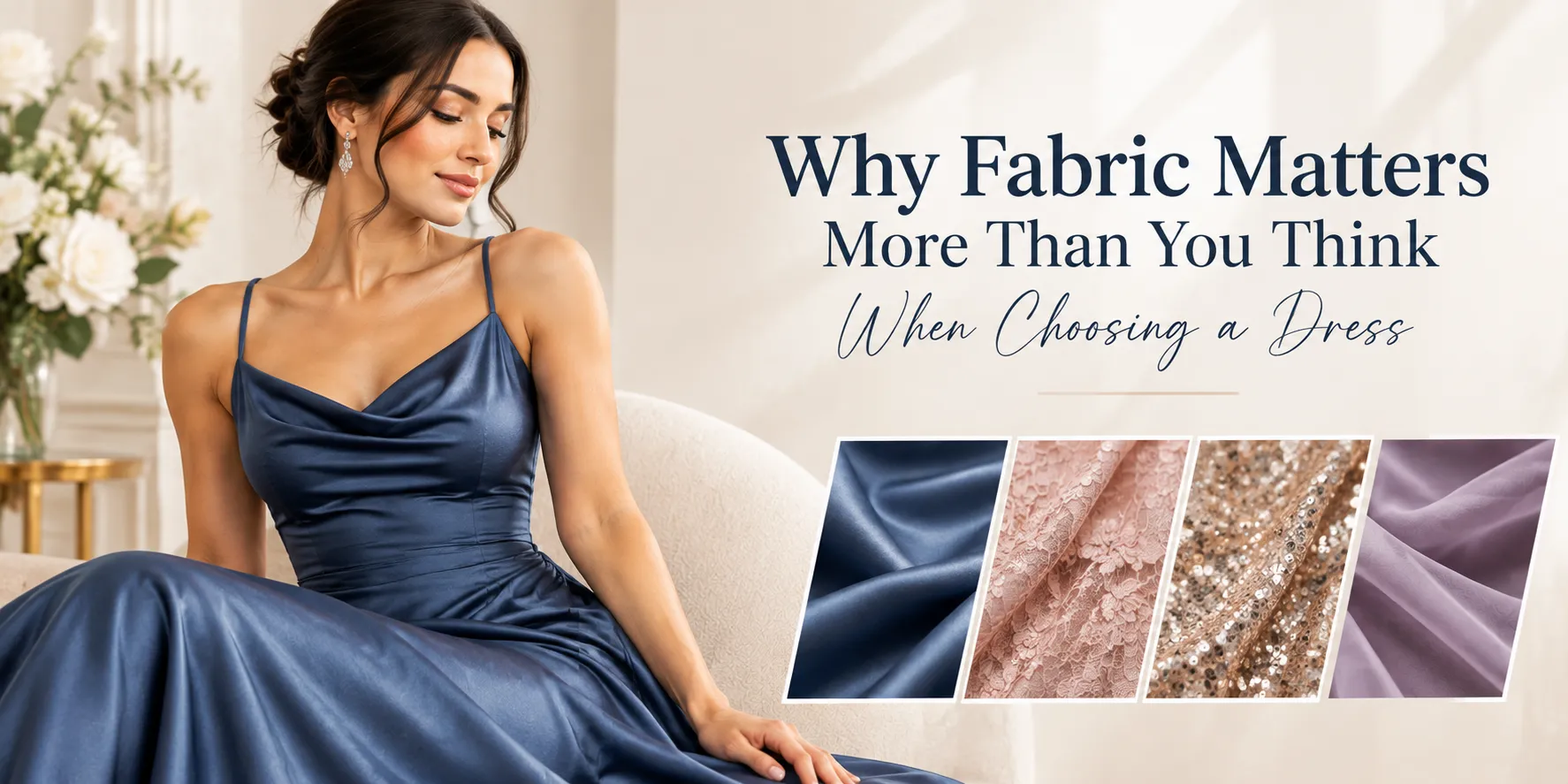

Most people shop for a dress the same way: scan for a silhouette they like, check the color, maybe glance at the price, and move on. Fabric rarely makes the list of top considerations, yet it's often the single biggest factor in how a dress actually looks, feels, and holds up once you're wearing it. The same silhouette in two different fabrics can read as completely different outfits. Here's why fabric deserves far more attention than it usually gets.
Fabric Determines How a Dress Actually Moves
Silhouette gets all the credit for how a dress looks in a photo, but fabric is what determines how it behaves in real life, how it drapes, how it catches light, and how it moves as you walk or dance. A liquid, fluid material creates a completely different visual effect than a stiff, structured one, even in the exact same cut. Exploring a dedicated satin dresses collection makes this obvious: the fabric's natural sheen and weight give it a glossy, reflective quality that catches and bounces light with every movement, something a flat matte fabric could never replicate in the same silhouette.
This is exactly why two dresses can share an identical pattern and still feel like entirely different garments once fabric enters the equation.
Texture Changes the Entire Mood of a Dress

Fabric doesn't just affect movement, it sets the emotional tone of an outfit. A velvet dresses collection illustrates this shift clearly, since the fabric's dense, light-absorbing texture creates a sense of warmth and richness that satin or chiffon simply can't replicate. Velvet leans naturally toward architectural draping and a soft-touch finish that reads as more dramatic and cozy, making it an obvious choice for colder-season formal events where a lighter fabric might feel out of place.
Choosing the right texture for the season and occasion often matters more than the color or cut of the dress itself, since fabric weight directly signals whether an outfit feels appropriate for a summer garden party or a winter gala.
Lightweight Fabrics Solve Comfort Problems Heavier Ones Can't
Not every event calls for dense, structured fabric. For long days involving a lot of movement, standing, or warm weather, lightweight fabric becomes essential rather than optional. A well-built chiffon dresses collection is built specifically around this need, offering soft, flowing layers that move like air rather than weighing the body down. This kind of fabric choice matters enormously for outdoor weddings, warm-weather formal events, or any occasion where comfort needs to hold up across several hours.
A few signs a fabric is genuinely built for comfort rather than just appearance:
- It moves freely rather than clinging or restricting with each step
- It breathes well enough to stay comfortable in warmer temperatures
- It doesn't wrinkle badly after sitting for extended periods
- It holds its shape without needing constant readjustment throughout the day
Combining Fabrics Creates Depth Single Materials Can't
Some of the most visually striking dresses don't rely on just one fabric at all. Pairing contrasting textures, like a structured lace bodice with a flowing chiffon skirt, adds dimension and interest that a single-fabric dress often lacks. A closer look at lace and satin formal gowns shows exactly why this combination has remained a timeless choice: the delicate detail of lace paired with the smooth, reflective quality of satin creates a layered richness that flatters a wide range of body types while still feeling classic rather than trend-driven.
Reading Fabric as a Signal of Formality
Beyond aesthetics, fabric plays a direct role in how formal a dress actually reads, which matters enormously when dressing for a specific dress code. A well-curated selection of formal dresses consistently leans on satin, chiffon, lace, and velvet rather than cotton or linen, since these fabrics carry the visual weight and drape that signal "special occasion" the moment someone sees them, regardless of the exact silhouette chosen.
Understanding this distinction takes a lot of the guesswork out of shopping. Once you know which fabrics read as formal versus casual, choosing an appropriate dress for any given event becomes far more intuitive.
Final Thoughts
Silhouette and color will always matter, but fabric is doing more work behind the scenes than most shoppers give it credit for. It shapes how a dress moves, how comfortable it feels through a long event, and even how formal or casual it reads at a glance. The next time you're choosing between two dresses in a similar style, pay closer attention to what they're actually made of. That decision might matter more than anything else on the hanger.






















Sign in to leave a comment.