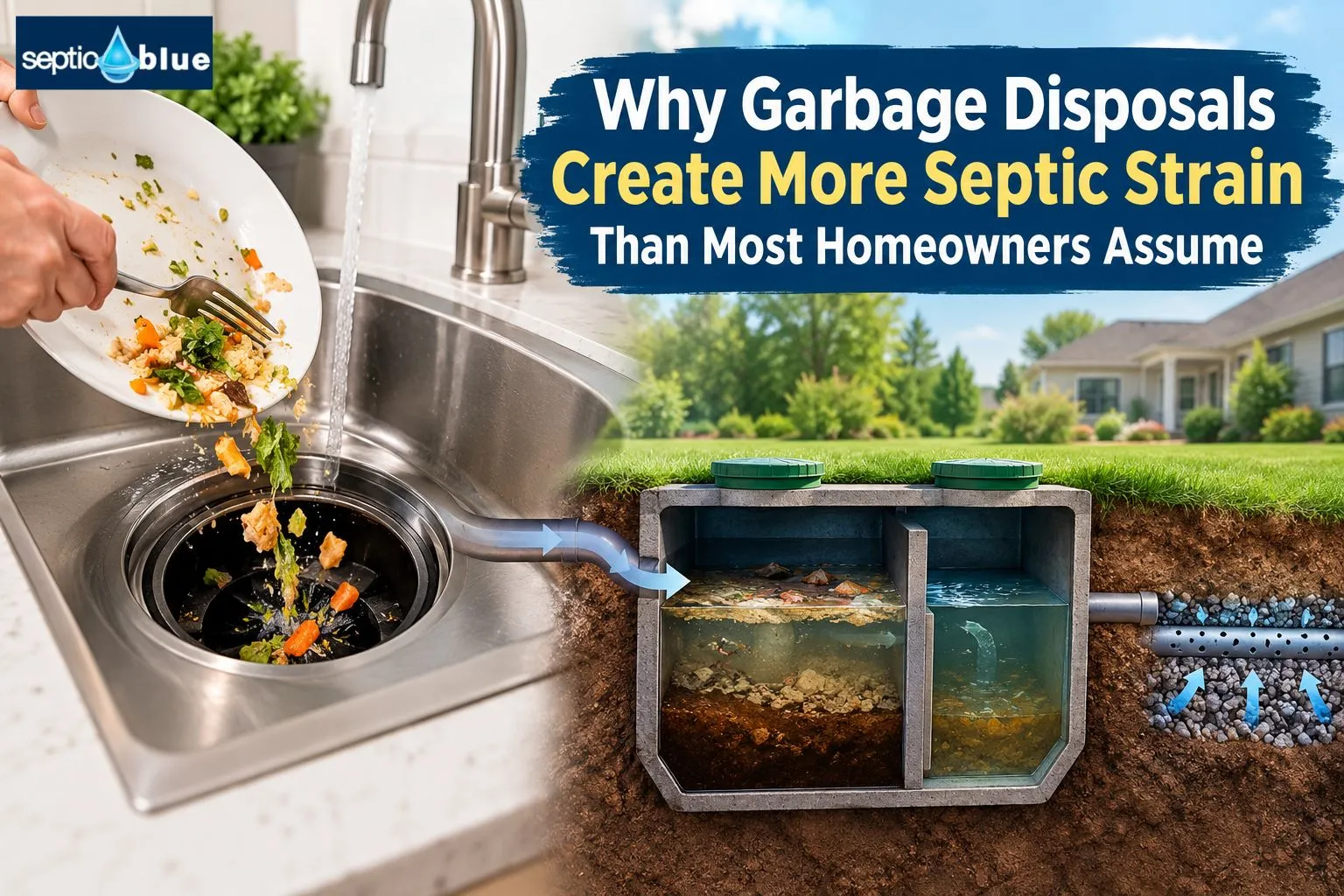

A garbage disposal makes cleanup fast. But the food doesn't just vanish. On a septic system, it all lands in your tank. If that tank is already packed with solids, the extra scraps pile on quickly. What usually works is scraping plates into the trash first and booking quality septic pumping in Athens on a regular schedule. What often fails is treating the disposal like a second trash can. Honestly? If you're on septic, I'd barely use it.
How Garbage Disposals Affect Septic Systems
Your disposal grinds scraps into tiny bits and flushes them down the kitchen drain. On a city sewer, that's the end of it. The waste leaves your property. Septic doesn't work that way.
Here, the scraps land in your tank. Heavy stuff sinks, water separates, and the water drifts out to the drain field.
So the more you grind, the more solid junk you're adding. That's the catch.
Do you have to quit using it? Nope. What usually works is using it a little and trashing most plate scrapings. What often fails is tossing in whatever's left and hoping the tank handles it. How often you run it and what you put in matter way more than the machine.
What happens inside the tank?
Think of a packed kitchen on Thanksgiving. Potato peels, leftover rice, fatty meat bits, thick sauces. It all goes down. Ground up or not, your tank still has to deal with it.
Give it time, and you might see:
- More solids stacking up
- Sludge building quicker
- Tank bacteria struggling to keep up
- Pump-outs coming sooner than planned
- Solids slipping into the drain field if the tank gets neglected
The Problem With Food Waste in Septic Tanks
One common misconception is that grinding food smaller makes it harmless to a septic system.
It doesn't.
The septic tank is designed to separate solids from wastewater and allow biological processes to break down some organic material. But decomposition takes time. A steady stream of food waste can increase the total amount of material the tank has to process.
Some foods can be especially troublesome.
Grease and fatty foods can contribute to floating scum and may create plumbing problems.
Fibrous foods, such as celery or corn husks, can be difficult to break down.
Coffee grounds and eggshells do not magically disappear after entering the disposal either. They can add to the solids that eventually settle in the tank.
A simple rule is useful: If you can put it in the trash or compost instead, there is usually little reason to send it into your septic tank.
Septic Tank Solids Buildup Is the Bigger Concern
The real concern is not one meal or one use of the disposal. It is the gradual accumulation of solids over time.
As sludge builds up, the available space for wastewater decreases. If the tank becomes overloaded, solids can potentially move beyond the tank and toward the drain field.
That is where a relatively simple kitchen habit can become a much larger septic problem.
Signs your system may be under strain
Watch for changes such as:
- Slow drains throughout the house
- Gurgling toilets or drains
- Sewage odors
- Standing water near the drain field
- Unusually wet or soggy areas in the yard
- Sewage backups
These symptoms can have several causes, so they should not automatically be blamed on the garbage disposal. But they are good reasons to have the system checked instead of waiting for a complete failure.
How to Use a Garbage Disposal More Carefully
Good news: you don't have to toss the disposal. You just need a few better habits so your tank doesn't take the hit.
1. Scrape plates first
Knock the big leftovers into the trash or compost bin before rinsing. It's the easiest fix on this list, and it works almost every time.
2. Keep grease out
No cooking oil. No bacon fat. No greasy pan scrapings. Grease is where most septic trouble starts, and people still do it.
3. Avoid grinding large amounts at once
Grinding a whole sink of scraps in one go floods the tank with solids. Small handfuls are much easier on it.
4. Maintain your septic tank
Get it inspected and pumped on a schedule. What often fails is waiting until something smells or backs up. By then, you're paying for a bigger problem.
5. Pay attention to household habits
The disposal isn't the only culprit. Running too much water, flushing junk, and skipping maintenance add up fast. Learning the common mistakes to avoid with your septic system can save you real money down the road.
Does a Garbage Disposal Shorten Septic System Life?
Not necessarily. A disposal won't wreck your septic system all by itself. A lot depends on your tank size, how many people live in the house, how much you grind, how often you pump, and what shape the system is in. At Septic Blue of Monroe, we see the same mistake a lot: people use the disposal like a second trash can. Your tank only holds so much, and extra solids never help it. What usually works is simple daily habits. What often fails is ignoring them.
Conclusion
Sure, a disposal saves time. But your septic tank pays for that shortcut. Anything you wash down the sink lands in there, and the tank can only handle so much.
Do you have to stop using it? No. What usually works is using it lightly, skipping grease and stringy or stubborn scraps, and pumping on schedule. What often fails is dumping everything in because it's easy.
Little habits matter here. Scrape the plates first. Toss peels and coffee grounds in a compost bin if you can. Watch for slow drains or anything that smells off. If you're not sure how your tank is doing, Septic Blue of Monroe can take a look. My honest opinion? Scraping beats any additive you can buy. It's free, and it works.
Frequently Asked Questions
1. Can I use a garbage disposal if I have a septic tank?
Yes, but use it sparingly. Frequent use sends more food waste into the tank and can increase solids buildup over time.
2. Does garbage disposal use fill a septic tank faster?
It can. Food waste adds to the solids entering the tank, which may increase sludge buildup and the need for pumping.
3. What foods should not go into a septic garbage disposal?
Avoid grease, cooking oil, coffee grounds, fibrous foods, and large amounts of food scraps. Trash or compost is usually a better option.
4. How often should a septic tank be pumped?
It depends on tank size, household size, water use, and solids buildup. A septic professional can recommend a schedule based on your system.
5. Can food waste damage a septic drain field?
Too much solids buildup can create problems if sludge reaches the drain field. Proper pumping and careful disposal habits can help reduce the risk.
6. Is composting better than using a garbage disposal with a septic system?
Composting suitable food scraps keeps extra solids out of the septic tank. It can be a useful option but does not replace regular septic maintenance.
7. What is the biggest garbage disposal mistake septic owners make?
Treating the disposal like a trash can is a common mistake. Grinding food smaller does not remove it from the septic system.


























Sign in to leave a comment.