Why International Moves from the UAE Cost More Right Now: War-Risk, Emergency and Fuel Surcharges Explained


International moves from the UAE cost more right now because regional maritime disruption has added war-risk, emergency and fuel surcharges, plus rerouting, extra handling and longer transport legs. The UAE National Association of Freight and Logistics says total shipping costs into the Gulf have risen to roughly three to five times previous levels, but it stresses that the base ocean freight rate has not risen by the same amount. Most of the increase comes from added charges, not the basic cost of moving the container.
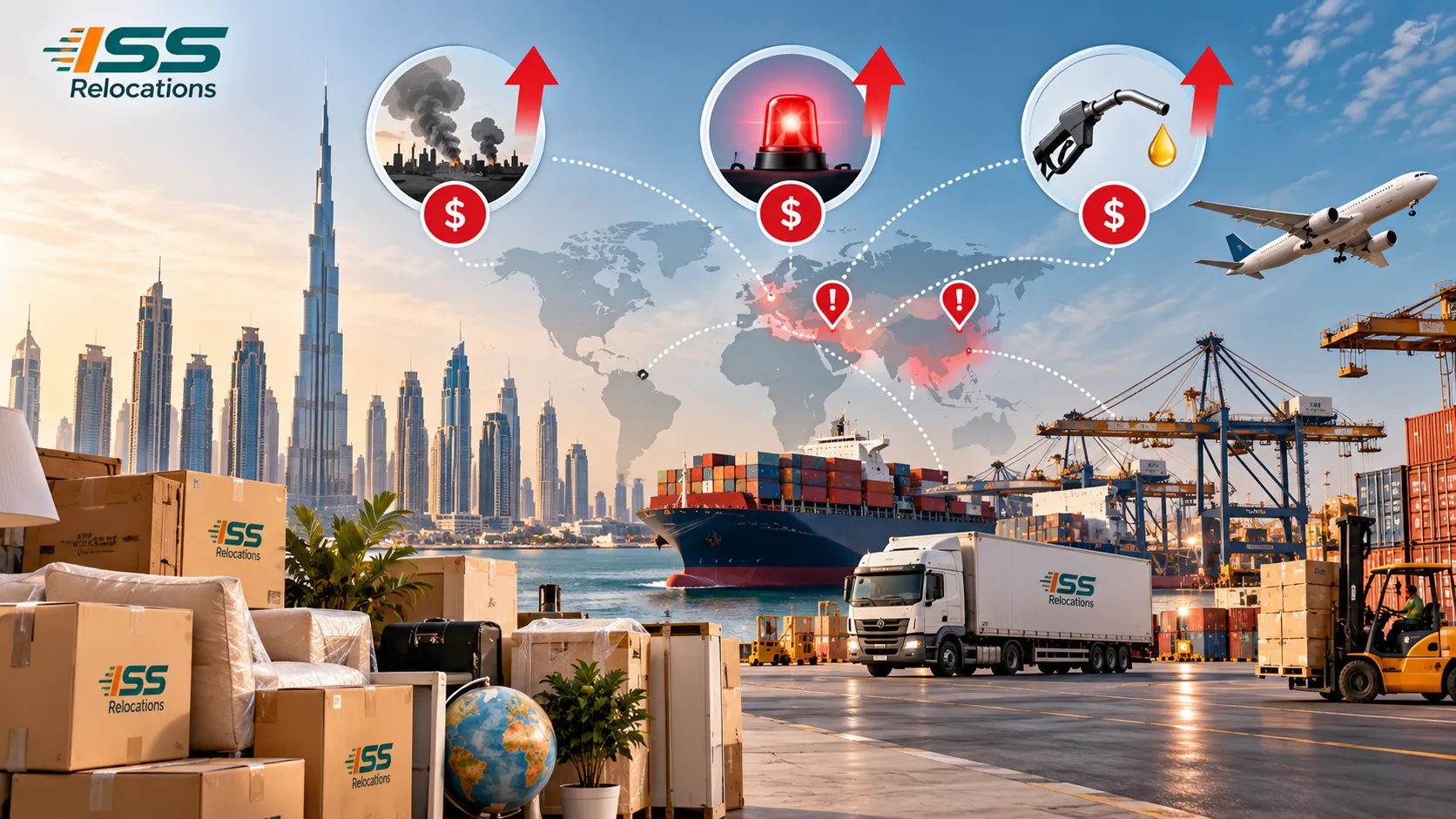
Why are international moves from the UAE more expensive right now?
Disruption to shipping corridors around the Strait of Hormuz has changed how containers reach and leave Gulf ports. Carriers are paying more to insure vessels, burn more fuel on longer or more complex routes, and handle cargo at additional ports. Those costs are passed on as separate line items rather than as a higher base freight rate, which is why two quotes for the same move can look very different.
What surcharges are adding to international moving costs?
| Charge | What it covers |
|---|---|
| War-risk surcharge | Extra insurance and risk costs carriers face when sailing through or near high-risk waters. |
| Emergency or conflict-related fee | Temporary charges that carriers apply when normal routes or schedules are disrupted. |
| Fuel surcharge | Higher fuel costs, including from longer or more complex routes. |
| Rerouting and handling costs | Cargo discharged at an alternative port, then moved onward by sea or road, with added handling and customs steps. |
| Land transport costs | Trucking between alternative ports and final destinations, which the freight association says has also risen significantly. |
Surcharge names, amounts and conditions differ by shipping line, port and route, so there is no single figure that applies to every move.
Has the actual shipping rate gone up by 300% to 500%?
No. The UAE National Association of Freight and Logistics has said the overall cost of moving cargo into the Gulf has risen to about three to five times previous levels, but that the price of shipping the goods themselves has not risen in the way that has been widely circulated. The increase comes mainly from the accumulation of surcharges, rerouting costs and higher land-transport costs. For anyone planning a move, this means the key question is not "what is the freight rate?" but "what is the total landed cost, including every surcharge?"
How are shipments being rerouted?
Some containers still arrive directly at their planned ports. Others are being discharged at intermediate ports and then continuing by sea or road. According to Gulf News reporting, cargo has arrived at Khorfakkan and Fujairah, and some shipments have been unloaded at Omani ports such as Sohar and Salalah before travelling overland. Each extra step can add customs clearance, trucking and fuel costs. Shipping lines can also discharge cargo at the nearest suitable port when a planned route is disrupted, which creates additional handling and onward-transport charges. Other relocation companies have also reported congestion at some alternative ports.
Why are some sailings delayed, rebooked or cancelled?
The freight association says reduced shipping capacity into the Gulf is adding pressure on prices. Some sailings have run out of space, some have been cancelled, and bookings are being moved to later vessels on certain routes. This leads to wide cost differences between ports depending on the shipping line, the route and whether additional sea or road transport is needed. Costs had not yet fallen from their recent peaks as of early October 2026, and the association said a return to normal maritime routes would help reduce both transport costs and surcharges.
How can you manage the extra cost of an international move from the UAE?
- Ask for a fully itemised quote. Every surcharge should be listed separately, with a note on whether it is fixed or can change before shipping.
- Ask what happens if the route changes. Confirm who pays if cargo is discharged at another port or needs road transport.
- Book early. Limited capacity and rebooked sailings make last-minute bookings harder to place.
- Compare sea and air freight for smaller volumes. The best option depends on shipment size, urgency and current space.
- Reduce volume. Selling or donating bulky items can lower cost more than any other single step.
- Use storage to bridge timing gaps. If your destination home is not ready or sailings are delayed, short-term storage can avoid rushed decisions.
- Check transit insurance. Confirm what is covered during delays, port changes and onward transport.
What should you ask your mover before you book?
- Which surcharges are included in the quote, and which could be added later?
- Which port or route will my shipment use, and what is the backup plan?
- How are delays, rebooking and storage at the port charged?
- What does the insurance cover during rerouting or delays?
- How often is the quote reviewed, and until when is it valid?
Frequently Asked Questions
Why are international moves from the UAE more expensive now?
Regional maritime disruption has added war-risk, emergency and fuel surcharges, along with rerouting and handling costs. Together these raise the total cost of a move, even though the base freight rate has not risen by the same amount.
Have shipping costs really risen 300% to 500%?
The UAE National Association of Freight and Logistics reports that total shipping-related costs into the Gulf are about three to five times previous levels. It says this is driven by added charges, not by the base ocean freight rate rising by the same proportion.
What is a war-risk surcharge?
A war-risk surcharge is an extra fee carriers add to cover higher insurance and risk costs when vessels operate in or near high-risk waters.
Why are some shipments going through Khorfakkan, Fujairah or Oman?
When planned routes are disrupted, shipping lines may discharge cargo at alternative ports and continue by sea or road. This can add handling, customs and transport costs.
Can I avoid these surcharges?
Surcharges are set by carriers and can't usually be avoided, but you can reduce your total cost by cutting shipment volume, booking early, comparing sea and air options and asking for a fully itemised quote.
Will costs come down?
Costs had not fallen from their recent peaks in early October 2026. The freight association says a return to normal shipping routes would help reduce both transport costs and surcharges, but timing is uncertain.
Should I delay my move?
It depends on your timeline, visa and housing situation. Ask your mover about current lead times and storage options before deciding.







Sign in to leave a comment.