Why Is a Rebounder Net Important for Volleyball Practice?

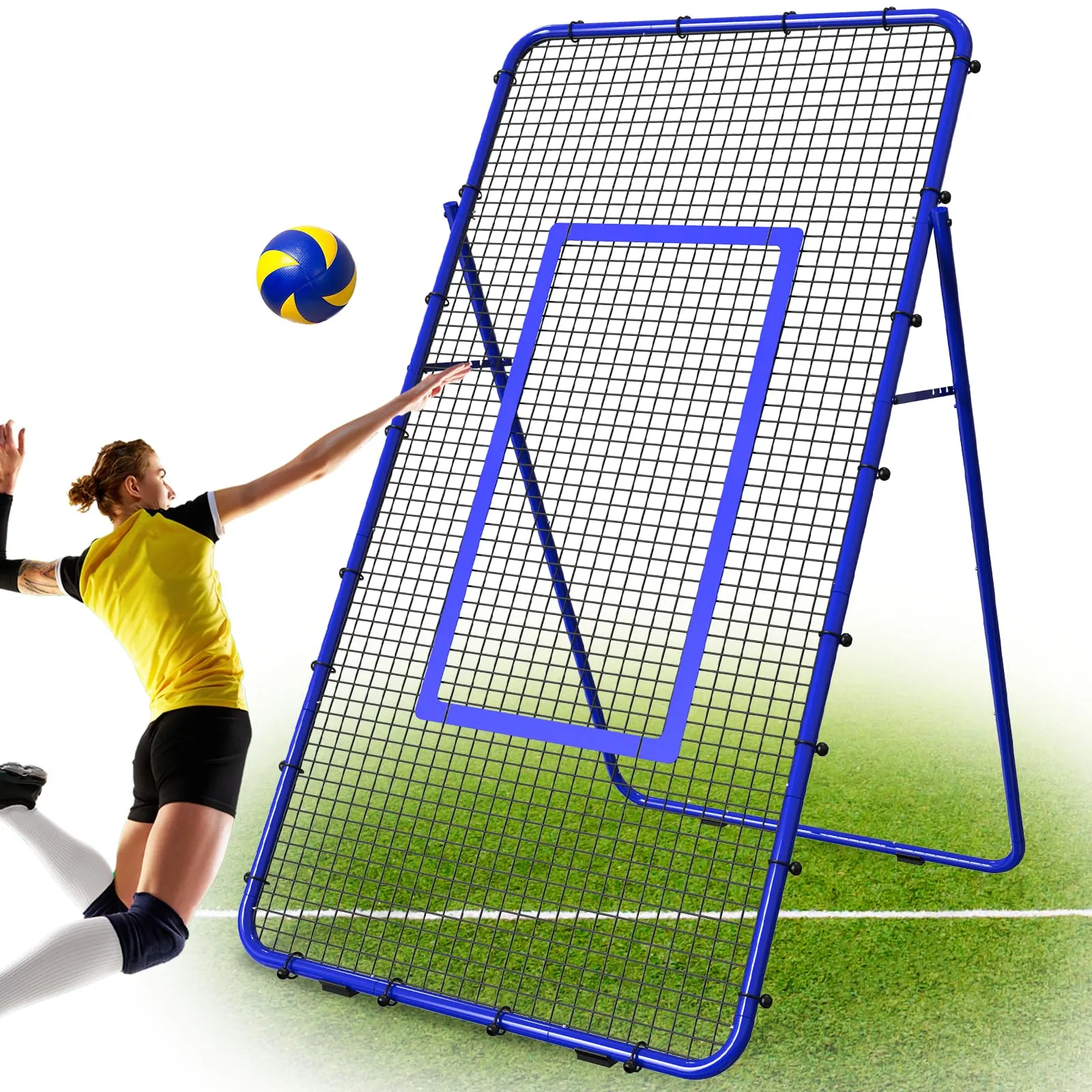
Practicing volleyball with a team is fun, but you cannot always find someone to train with. Sometimes, you have limited time, or you want to improve a particular skill before your next game. This is where a volleyball rebounder net can help.
A rebounder net gives the ball back to you after you hit it, allowing you to practice different skills without needing another player. You can use it to improve your passing, setting, hitting, reaction time, and overall ball control.
Whether you are a beginner learning the basics or an experienced player preparing for a competitive season, a rebounder net can make your practice sessions more productive. It also gives you the freedom to train at home, in your backyard, or on a volleyball court.
In this article, you will learn why a rebounder net is important for volleyball practice, which skills it can help you develop, and how to use it effectively in your training routine.
What Is a Volleyball Rebounder Net?
A volleyball rebounder net is a training tool designed to return the ball after you hit, pass, set, or throw it against the net. Most models have a strong frame, a tightly stretched net, and an adjustable angle that changes the direction of the returning ball.
Some rebounders are large enough for practicing full-body movements, while others are compact and suitable for smaller spaces. Certain models have adjustable frames that allow players to practice different types of shots and ball returns.
Unlike a standard volleyball net, which separates two sides of the court, a rebounder net helps you practice repeatedly without depending on another person to send the ball back.
For example, you can pass the ball against a rebounder, move into position, and receive the returning ball. You can repeat this process several times to develop better control and footwork.
A rebounder net is useful for school players, club athletes, coaches, and anyone who wants to improve their volleyball skills through regular practice.
10 Reasons Why a Rebounder Net Is Important for Volleyball Practice
1. It Helps You Practice Volleyball Without a Partner
One of the biggest advantages of a volleyball rebounder net is that you can practice alone. You do not need a teammate, coach, or training partner to keep sending the ball back to you.
This is especially helpful when your teammates are unavailable or you have limited time outside regular team practice.
For example, suppose you want to improve your forearm passing before an upcoming match. You can stand a few feet away from the rebounder, pass the ball against the net, and prepare to receive the returning ball. By repeating the movement, you can work on your passing technique whenever you have time.
Solo practice also gives you greater control over your training schedule. You can spend 10 to 20 minutes working on one skill instead of waiting for a group practice session.
However, a rebounder cannot replace every part of partner training. You will still need teammates to practice communication, team formations, game situations, and coordinated plays.
2. It Improves Ball Control
Ball control is one of the most important skills in volleyball. You need to control the ball when receiving a serve, passing to the setter, or preparing for an attack.
A rebounder net helps you develop this skill by giving you repeated opportunities to contact the ball.
When you pass the ball against the net, you must position your body correctly and control the angle of your forearms. If your platform is poorly positioned, the returning ball may move away from your target area.
This immediate feedback helps you notice mistakes and make adjustments.
Start with gentle passes and focus on sending the ball toward the same section of the net. Once you become more comfortable, increase the distance or change the angle of your passes.
Regular practice can help you become more consistent with your touches. It can also improve your ability to adjust when the ball returns at a slightly different angle.
Remember that the quality of your technique matters more than the number of repetitions you complete.
3. It Helps You Improve Passing Accuracy
Passing is essential for building a successful volleyball attack. A good first pass gives your setter more options and helps your team organize its offense.
A rebounder net lets you practice forearm passing repeatedly without relying on someone else to toss the ball.
To begin, stand approximately 6 to 10 feet away from the rebounder, depending on its size and your skill level. Hold your hands together, straighten your elbows, and create a stable platform with your forearms.
Pass the ball against the net and move into position for the return. Try to maintain a balanced stance and avoid swinging your arms excessively.
As your technique improves, you can practice moving left and right before making contact with the ball.
This variation is useful because passing in a real match rarely involves standing perfectly still. You often need to move quickly, stop your momentum, and direct the ball toward the setter.
A rebounder can help you build better passing habits, although you should also practice receiving serves from real players to prepare for match conditions.
4. It Develops Better Setting Technique
Setting requires control, timing, hand positioning, and coordination. A setter must place the ball accurately so that a hitter can attack it effectively.
A rebounder net can help you practice basic setting movements and develop a more consistent touch.
Stand a comfortable distance from the rebounder and use your fingertips to contact the ball above your forehead. Keep your hands in a relaxed, open position and extend your arms and legs together as you push the ball toward the net.
When the ball returns, prepare your hands early and repeat the movement.
You can begin with slow, controlled sets before working at a faster pace. Focus on maintaining a consistent contact point rather than simply sending the ball back as quickly as possible.
Some rebounders return the ball at a useful height for setting practice, particularly when you adjust the frame angle correctly.
Keep in mind that setting against a rebounder is best for developing basic technique and repetition. Practicing with a teammate remains important because setters must learn to handle imperfect passes and deliver hittable balls to attackers in different positions.
5. It Helps You Practice Spiking and Attacking
Spiking is one of the most exciting parts of volleyball, but it requires more than hitting the ball hard. You need good timing, a controlled approach, proper arm movement, and the ability to contact the ball at the right point.
A rebounder net can support certain attacking drills, especially when the equipment is designed to handle powerful hits.
You can use it to practice controlled attacks, work on your arm swing, and develop a better feel for ball contact. Depending on the rebounder's design and angle, you may also practice different types of shots.
For example, you can work on hitting the ball with a firm, open hand while focusing on contacting it in front of your hitting shoulder.
Start with controlled hits rather than maximum-power attacks. Concentrate on your approach, timing, and contact point before increasing the force of your swings.
A standard rebounder does not provide the same conditions as a volleyball net with blockers on the opposite side. It also cannot fully reproduce the timing required for a setter-to-hitter combination.
For complete attacking development, combine rebounder drills with approach jumps, hitting lines, target practice, and live setting sessions.
6. It Improves Reaction Time and Coordination
Volleyball players often have very little time to react to a fast-moving ball. You may need to move forward for a short serve, shift sideways for a deflection, or adjust quickly after a teammate makes an imperfect pass.
A rebounder can help you practice responding to a moving ball.
Because the ball returns after each contact, you must prepare your body for the next movement. Depending on the rebounder's angle, the ball may return at a different height or direction.
You can make your drills more challenging by moving a step to either side after every contact. Then return to your starting position and prepare for the next ball.
This type of practice can improve hand-eye coordination, movement timing, and your ability to get into position before contacting the ball.
Start slowly if you are a beginner. As your control improves, increase your pace while maintaining proper technique.
Reaction training with a rebounder has limitations because the ball's return pattern may become predictable. To prepare for matches, include drills with teammates who can send the ball to different locations.
7. It Encourages Consistent Practice
Improvement in volleyball comes from regular, focused practice. You do not have to spend several hours training every day to develop better skills. Short sessions can be useful when you perform them consistently and use the correct technique.
A rebounder net makes it easier to build a regular practice routine because you can use it whenever the space and weather permit.
For example, you might spend 15 minutes on passing before school or complete a short setting session after work. You can also use it for warm-up drills before team practice, provided the drill suits your training goals.
A simple weekly routine could include:
- Monday: Forearm passing and ball control.
- Tuesday: Setting technique.
- Wednesday: Moving passes and footwork.
- Thursday: Controlled attacking practice.
- Friday: Mixed passing and setting drills.
- Saturday: Team practice or match play.
- Sunday: Rest or light technical practice.
Adjust this schedule to your fitness level and team commitments. If your arms or shoulders feel sore, reduce your training volume and allow time for recovery.
Consistency helps you identify your weaknesses and track your progress over time.
8. It Helps Beginners Learn Basic Volleyball Skills
Beginners often need many repetitions before they feel comfortable contacting the ball. They may struggle to position their arms correctly, control the ball's direction, or move their feet before a pass.
A rebounder net provides a simple way to practice these movements without the pressure of keeping a rally alive with teammates.
A new player can begin with gentle forearm passes, short setting drills, and basic ball-contact exercises. The player can then increase the difficulty as control improves.
For example, a beginner might start by passing the ball against the net from a short distance. Once the player can control the return consistently, they can move farther away or add a small side step before each pass.
Coaches can also use rebounders during individual training sessions. This allows players to complete additional repetitions while the coach observes their body position and technique.
However, beginners should learn correct form before increasing the speed or intensity of their drills. A coach or experienced player can help correct habits that a rebounder alone cannot identify.
9. It Makes Home Volleyball Practice More Convenient
Not everyone has access to an indoor volleyball court or a nearby training facility. If you have enough room at home, a rebounder net can provide another option for practicing basic volleyball skills.
Some models are portable and can be set up in a backyard, driveway, garage, or other suitable practice area.
Before using one at home, check the available space. You need enough room to move safely, and you should make sure the ball will not hit windows, vehicles, furniture, or other people.
Choose a model with a stable frame and follow the manufacturer's assembly and anchoring instructions. Outdoor rebounders should be secured properly so that wind does not move or overturn the equipment.
You should also check the rebounder's dimensions and maximum recommended impact level before buying it.
A compact model may work well for passing and setting drills, while a larger and sturdier design may be more suitable for players who want to practice stronger attacks.
The right choice depends on your available space, budget, skill level, and training goals.
10. It Can Make Volleyball Training More Enjoyable
Repeating the same drill for a long time can become boring, especially when you are practicing alone. A rebounder net gives you several ways to change your routine and keep your sessions interesting.
You can set a target number of successful passes, alternate between passing and setting, or challenge yourself to maintain control for a certain number of repetitions.
For example, start with a goal of completing 10 controlled passes in a row. Once you reach that target consistently, aim for 15 or 20.
You can also introduce movement by taking a small step after each pass or alternating between two target areas on the rebounder.
Keep your goals realistic and record your results. This gives you a clear way to measure improvement without turning every session into a competition.
The main goal is to practice with good technique and build confidence with the ball.
Which Volleyball Skills Can You Practice With a Rebounder Net?
The skills you can train depend on the size, strength, and adjustability of your rebounder. The following table shows some common options.
| Volleyball skill | How to use the rebounder | Main benefit |
|---|---|---|
| Forearm passing | Pass the ball against the net and control the return | Better platform control |
| Setting | Push the ball using your fingertips and prepare for the return | Improved hand positioning |
| Ball control | Repeat controlled contacts at a steady pace | More consistent touches |
| Footwork | Move sideways or forward before contacting the ball | Better positioning |
| Reaction practice | Respond to the returning ball | Faster adjustments |
| Attacking | Hit controlled balls against a suitable rebounder | Better contact practice |
| Warm-ups | Perform easy passes and sets | Preparation for training |
A rebounder works best when you select drills that match its design. Do not assume that every model can safely handle powerful spikes or high-impact training.
How to Use a Volleyball Rebounder Net Effectively
Buying a rebounder is only the first step. You also need to use it correctly to get the most out of your practice sessions.
Step 1: Choose a Safe Practice Area
Set up your rebounder on a flat surface with enough room to move around it. Remove nearby objects that could cause injuries or damage.
Check that the frame is stable and that the net is attached securely before starting.
Step 2: Warm Up Before Training
Spend five to ten minutes warming up your shoulders, wrists, legs, and ankles. You can include light jogging, arm circles, gentle lunges, and easy ball contacts.
A warm-up prepares your body for movement and helps you start your session at a comfortable intensity.
Step 3: Begin With Simple Drills
Start with basic passing or setting rather than attempting powerful attacks immediately.
Stand at a distance where you can control the returning ball without rushing. Focus on your technique and make small adjustments when your passes go off target.
Step 4: Add Movement Gradually
Once you can control the ball consistently, add side steps, forward movement, or changes in your starting position.
These variations make your practice more challenging and help you prepare for the movement demands of volleyball.
Step 5: Track Your Progress
Record how many controlled contacts you complete in a row or how often you can direct the ball toward a chosen target.
For example, if you complete six accurate passes out of ten attempts during your first session, aim to improve that result gradually. Keep the distance and drill conditions consistent when comparing results.
Step 6: Finish With Controlled Repetitions
End your session with a few minutes of easy passing or setting. Avoid continuing when your technique begins to break down because of fatigue.
A short session with good form is often more useful than a long session filled with rushed, inaccurate contacts.
How Long Should You Practice With a Volleyball Rebounder?
Your ideal practice duration depends on your age, experience, fitness, and other training commitments.
For beginners, 10 to 15 minutes per session can be a reasonable starting point. Intermediate players may prefer sessions lasting 15 to 25 minutes, while experienced players can include longer or more demanding rebounder drills within a balanced training plan.
These are general examples rather than fixed requirements. Your coach should help you adjust the workload to your needs.
You can organize a 20-minute session like this:
| Activity | Time |
|---|---|
| Warm-up and easy contacts | 3 minutes |
| Forearm passing | 5 minutes |
| Setting practice | 5 minutes |
| Footwork and moving passes | 4 minutes |
| Controlled mixed drills | 3 minutes |
If you are working on attacking, replace part of the mixed-drill section with controlled hitting practice, provided your rebounder is designed for that purpose.
Take breaks whenever you need them. Stop if you experience pain, dizziness, or unusual discomfort.
How to Choose the Right Rebounder Net for Volleyball Practice
Not every rebounder is suitable for every player. Consider the following features before purchasing one.
1. Frame strength: Look for a sturdy frame that can handle the types of drills you plan to perform. Check the manufacturer's guidance on impact limits and intended use.
2. Net quality: A durable net with secure attachment points is important for repeated ball contact. Check whether replacement nets are available.
3. Adjustable angles: An adjustable rebounder gives you more control over the direction of the returning ball. This can be useful when switching between passing, setting, and other drills.
4. Portability: If you plan to practice in different locations, consider a model that is easy to assemble, move, and store.
5. Size: A larger net may provide a wider target area, while a compact rebounder may fit better in a small backyard or garage.
6. Stability: Check the base, frame connections, and anchoring system. Stability becomes especially important during stronger hits and outdoor use.
7. Price and warranty: Compare the cost with the equipment's materials, features, warranty, and replacement-part availability.
Before buying, read the product instructions and reviews carefully. Make sure the rebounder is intended for volleyball rather than assuming that a general sports rebounder will meet your needs.
Common Mistakes to Avoid When Using a Rebounder Net
A rebounder can support your training, but poor practice habits can limit your progress.
Focusing Only on Power
Hitting the ball as hard as possible does not automatically improve your volleyball skills. Beginners should focus on accuracy, timing, and proper body position before increasing power.
Ignoring Footwork
Players sometimes stand in one position and rely on their arms to reach the ball. In a real game, you need to move your feet and position your body behind the ball whenever possible.
Add controlled movement to your drills once you have learned the basic technique.
Practicing With Poor Form
Repeatedly performing an incorrect movement can make it harder to develop good habits. Pay attention to your platform during passing, your hand position during setting, and your body alignment during attacking drills.
Ask a coach to review your technique if you are unsure whether you are performing a movement correctly.
Using the Wrong Type of Rebounder
A small rebounder designed for light ball contacts may not be suitable for repeated powerful spikes. Always match the equipment to your intended use.
Skipping Team Practice
A rebounder is useful for individual skill development, but volleyball also requires teamwork, communication, court awareness, and decision-making.
Continue practicing with teammates so you can apply your individual skills in realistic game situations.
Is a Volleyball Rebounder Net Worth Buying?
A volleyball rebounder net can be a worthwhile investment if you want to practice regularly without depending on another player.
It is especially useful for athletes who want to improve their passing, setting, ball control, and basic reaction skills. It can also be a convenient option for beginners, school players, and people who prefer short practice sessions at home.
However, you should consider your budget and available space before purchasing one. If you already have access to regular team practices and a partner who can train with you, a rebounder may be an additional training option rather than a necessity.
Think about the skills you want to improve and choose a model that supports those specific drills.
Frequently Asked Questions
1. What is a volleyball rebounder net used for?
A volleyball rebounder net returns the ball after you hit or pass it against the net. You can use it to practice passing, setting, ball control, footwork, and certain attacking drills, depending on the model.
2. Can you practice volleyball alone with a rebounder net?
Yes. A rebounder allows you to perform repeated ball-contact drills without needing a partner to return the ball. It is useful for individual training at home, in a backyard, or on a suitable court.
3. Does a rebounder net improve volleyball passing?
A rebounder can help you practice your passing technique and develop more consistent ball control. You can repeat forearm passes and adjust your body position based on the returning ball. Partner drills are still important for practicing unpredictable passes and serves.
4. Can beginners use a volleyball rebounder?
Yes. Beginners can use a rebounder to learn basic passing, setting, and ball-contact techniques. Start with simple drills at a comfortable distance and focus on proper form before increasing the difficulty.
5. Can you practice spiking with a rebounder net?
Some rebounders are suitable for controlled attacking drills, but others may not be strong enough for powerful hits. Check the manufacturer's instructions and impact limits before using a rebounder for spiking practice.
6. How often should you use a volleyball rebounder?
You can start with two or three short sessions per week and adjust your schedule based on your fitness, experience, and team training. Some players may benefit from more frequent sessions, provided they manage fatigue and maintain good technique.
7. Is a rebounder net better than practicing with a partner?
Both training methods have different benefits. A rebounder is convenient for individual repetition, while partner practice helps you respond to unpredictable balls and develop communication and teamwork. Combining both methods is a practical way to improve your overall game.
8. Can you use a volleyball rebounder net at home?
Yes, if you have enough safe space and the model suits your training needs. A backyard, garage, or open practice area may work well. Always secure the frame properly and keep people and fragile objects away from the ball's path.
9. Does a rebounder net help improve reaction time?
It can help you practice reacting to a returning ball and adjusting your position. The benefits depend on the drill and how unpredictable the ball's return is. Include partner drills to practice responding to more varied ball directions.
10. What should you look for when buying a volleyball rebounder?
Consider frame strength, net durability, adjustable angles, size, stability, portability, warranty, and price. Choose a model designed for your intended drills, particularly if you plan to practice attacking.
Final Thoughts
A rebounder net can be a useful addition to your volleyball training equipment. It allows you to practice without a partner, repeat important movements, and work on passing, setting, ball control, and footwork whenever you have time.
The biggest benefit comes from using the rebounder with a clear training goal. Instead of hitting the ball randomly, focus on one skill at a time, use proper technique, and track your progress.
If you want to improve your volleyball skills outside team practice, consider adding a rebounder net to your routine. Combine it with partner drills, coaching, and regular match play to develop more complete volleyball skills.






Sign in to leave a comment.