

Mobile applications have become a primary target for attackers because they often contain, and can provide direct access to sensitive data, financial transactions, authentication systems, and backend APIs. One attack technique that continues to create serious risk is app repackaging.
But why is repackaging so dangerous? When an attacker modifies or repackages an application, it will look and behave like the legitimate version while secretly containing malicious code or altered business logic.
For organisations building banking, fintech, UPI, telecom, and other high-value applications, it is essential to understand and prevent app repackaging.
What is app repackaging?
App repackaging is the process of taking a legitimate mobile application, modifying its code or resource, and redistributing the altered version as if it were the original application.
A typical attack involves four stages:
- Decompiling the original APK or application package.
- Modifying application code, resources, or security logic.
- Re-signing the modified application.
- Redistributing it through unofficial stores, phishing links or other channels.
Android applications are particularly exposed because APKs can be extracted, modified, and redistributed relatively easily.
Why is app repackaging dangerous for mobile applications?
A repackaged application gives attackers an opportunity to place themselves between the user and the legitimate application logic.
Depending on what is modified, attackers may:
- Steal credentials and session information.
- Inject malicious functionality.
- Bypass authentication or security checks.
- Monitor or Manipulate transactions.
- Intercept or modify API requests.
- Automate fraudulent activity.
- Extract sensitive application data.
For financial and payment applications, this can turn application tampering into direct fraud risk.
How do attackers bypass traditional app protection?
Attackers combine techniques like reverse engineering, code modification, hooking, debugging, and runtime manipulation to identify and bypass application defenses. Thus, basic security controls may not be enough against modern repackaging techniques.
How can organisations prevent app repackaging?
A comprehensive approach combines multiple layers of protection throughout the application lifecycle. App hardening and code encryption make reverse engineering more difficult, while integrity and signature verification help identify unauthorised modifications.
Backend protection is equally important. Certificate pinning, server-side transaction validation, strong session controls, and API security can limit the damage even when an attacker manages to modify the application.
Runtime controls add another important layer by detecting tampering, debugging, hooking, instrumentation, root/jailbreak environments, and other indicators of compromise while the application is running.
How does Bugsmirror MASST help protect against app repackaging?
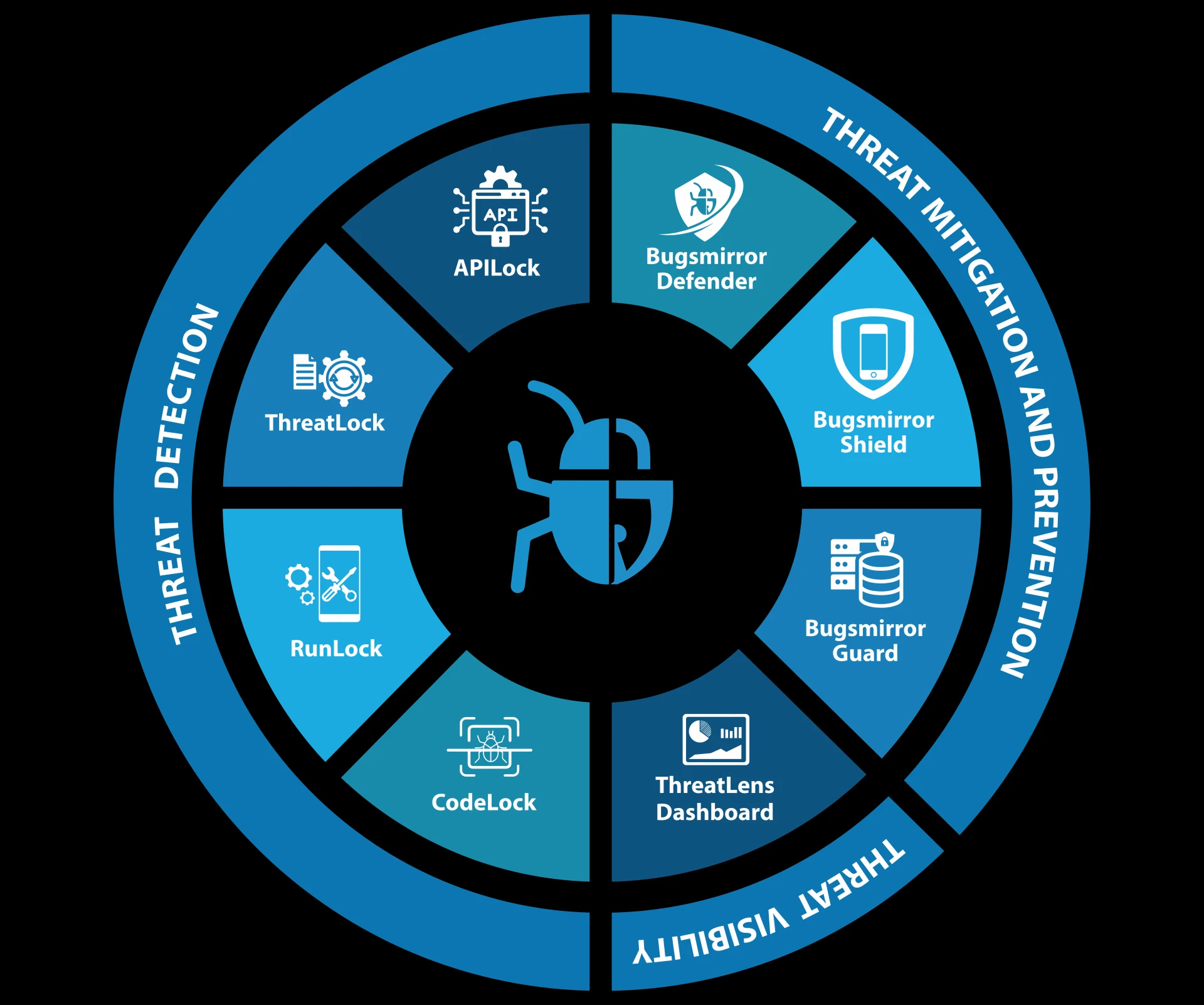
Bugsmirror MASST brings application security testing and runtime protection into a layered security approach. Its capabilities include CodeLock for SAST, RunLock for DAST, APILock for API security testing, and ThreatLock for red teaming. For runtime application protection, Bugsmirror Defender RASP detects and blocks over 50 runtime threats.
For code hardening and encryption, Bugsmirror Shield helps prevent app repackaging by protecting and concealing critical application code. It not only encrypts the code but also makes it significantly harder for attackers to locate, understand, and modify the underlying logic, strengthening the application against reverse engineering and tampering.
Protect Your App from Repackaging Attacks. Contact us.























Sign in to leave a comment.