
Meta Title: Why Is My Federal Withholding So Low? (2026 Guide)
Meta Description: Low or zero federal tax withheld from your paycheck? Here’s why it happens, what it means for your tax refund or bill, and how to fix your W-4 before year-end.
You look at your pay stub, find the federal income tax line, and the number is tiny. Or it says zero. Your first thought is either “nice, more take-home” or “wait, is this a problem?” The honest answer is that it can be both. Low federal withholding means more money in your check now, but it can also mean a smaller refund or an actual tax bill when you file. Here’s why your federal withholding might be low or zero, what it means for tax time, and how to check whether you need to fix it before the year ends.
The short answer
Federal income tax withholding is the amount your employer takes out of each paycheck to prepay your income tax, and it’s based on your W-4 form and how much you earn per pay period. It can be low or zero for a few normal reasons: you earn below the level where tax gets withheld, your W-4 claims dependents or deductions that reduce it, you (or an old W-4) marked “exempt,” you have multiple jobs the form doesn’t account for, or big pre-tax deductions shrink your taxable pay. The catch is that low withholding now can leave you owing at tax time. Social Security and Medicare still come out no matter what, so a low federal income tax line doesn’t mean you’re paying no taxes at all. If the number looks off, check your W-4.
What federal withholding actually is
The federal income tax line on your stub, often labeled FIT, FWT, or Fed, is your employer’s estimate of the income tax you’ll owe, collected a little at a time. Here’s what FIT and FWT mean in detail. It’s calculated from your W-4, your pay, and the IRS withholding tables, with the goal of having you pay roughly the right amount by year-end so you neither owe much nor get a huge refund.
The important thing to understand is that withholding is an estimate, not a fixed rate. If the inputs say you’ll owe little federal income tax, little gets withheld. That can be completely correct, or it can be a sign your W-4 needs updating.
Why your withholding is low or zero
Here are the common reasons, and most of them are normal:
- Your income is below the withholding threshold. If you earn a small amount per pay period, the tables may call for little or no federal income tax, because your projected annual income falls near or under the standard deduction ($16,100 for a single filer in 2026).
- Your W-4 claims dependents or credits. Step 3 of the W-4 lets you claim child and dependent credits, which directly lower your withholding. Claim enough and it can drop to zero.
- You claimed “exempt.” If you or a past version of your W-4 marked exempt, no federal income tax is withheld at all. This is only valid if you owed no tax last year and expect none this year.
- You have multiple jobs. If your W-4 doesn’t account for a second job or a spouse’s income, each employer withholds as if it’s your only income, so the totals can come up short.
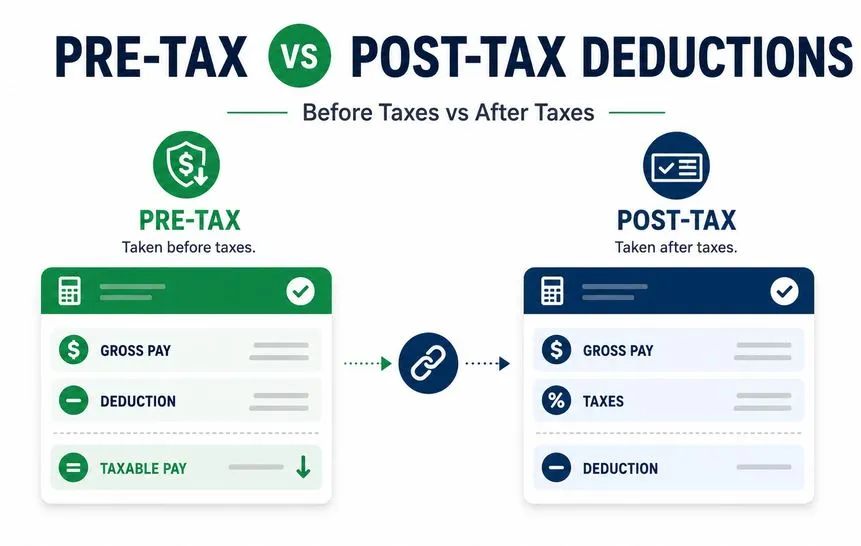
- Large pre-tax deductions. Contributions to a 401(k), HSA, or pre-tax benefits lower your taxable wages, which lowers the income tax withheld.
Any one of these can explain a small or zero number. To see how withholding sits among all the lines on your check, here’s a labeled pay stub example.
The part people miss: FICA still comes out
Here’s a clarification that saves a lot of confusion. Low or zero federal income tax withholding does not mean no taxes are coming out of your check. Your Social Security and Medicare taxes, together called FICA, are withheld from nearly every paycheck regardless of your W-4. That’s the 7.65% (6.2% Social Security plus 1.45% Medicare) you’ll still see on your stub even when the federal income tax line reads zero.
So if someone tells you “no federal taxes are coming out of my paycheck,” they usually mean income tax specifically. FICA is separate, mandatory, and unaffected by how you fill out your W-4. Understanding the split between the two is a big part of reading the difference between your gross pay and net pay.

What low withholding means at tax time
This is the part worth taking seriously. Withholding is a prepayment of your income tax. If too little is withheld during the year, you make up the difference when you file, which can mean:
- A smaller refund than you expected, or
- A tax bill you have to pay in April, and
- Possibly an underpayment penalty if you owed a lot and didn’t prepay enough through the year.
If your low withholding is because you genuinely owe little tax (low income, lots of credits), you’re fine. If it’s because your W-4 is set up wrong for your actual situation, you could be in for a surprise. The way to know is to check, not guess.
How to check and fix it before year-end
You have time to adjust while the year’s still running, and fixing it now spreads the change across your remaining checks instead of hitting one big payment later. Here’s how:
- Use the IRS Tax Withholding Estimator at irs.gov. It compares what you’re on track to withhold against what you’ll owe.
- Update your W-4 if the estimator shows a gap. You can reduce the credits in Step 3, or unmark exempt if it no longer applies.
- Add extra withholding using Step 4(c) of the W-4, where you enter a flat dollar amount to withhold from each check. This is the simplest way to close a shortfall.
- Watch your year-to-date totals on your stub to confirm the change takes effect.
If you keep your own records or need clean documentation of your pay and withholding, a pay stub generator like ePaystubs produces itemized stubs that show every tax line clearly, which makes it easy to track what’s being withheld and catch a problem early.
Keeping it real
Low federal withholding isn’t automatically good or bad, it’s just information. A bigger paycheck now feels great, but if it’s because not enough tax is being set aside, future-you pays for it in April. The smart move isn’t to panic or ignore it, it’s to spend ten minutes with the IRS estimator and see where you actually stand. If you’re withholding the right amount for your situation, enjoy the take-home. If you’re short, a quick W-4 update fixes it painlessly. The people who get blindsided by a tax bill are almost always the ones who never checked. You just did.
FAQ
Why is no federal income tax being withheld from my paycheck? Usually because your income is low enough that the tables call for none, your W-4 claims credits that zero it out, or you’re marked “exempt.” FICA (Social Security and Medicare) still comes out regardless.
Does low federal withholding mean I’ll owe taxes? It can. Withholding is a prepayment of your income tax, so if too little comes out during the year, you may get a smaller refund or owe a balance when you file, sometimes with a penalty.
Is it bad to have low withholding? Not if it matches what you actually owe. It’s only a problem if your W-4 is set up wrong for your real income, which leaves you underpaid and facing a bill.
How do I fix low withholding? Use the IRS Tax Withholding Estimator, then update your W-4. You can reduce credits in Step 3 or add a flat extra amount in Step 4(c) to withhold more from each check.
Why is Social Security and Medicare still coming out when federal tax isn’t? Because FICA taxes aren’t affected by your W-4. They’re withheld from nearly every paycheck at a fixed 7.65%, separate from your federal income tax.
The short version
Federal income tax withholding is a prepayment of your income tax based on your W-4 and your pay, so it’s low or zero when your income is below the withholding threshold, your W-4 claims dependents or credits, you’re marked exempt, you have multiple jobs, or you have big pre-tax deductions. Low withholding means more take-home now but possibly a smaller refund or a tax bill later. Remember that FICA (Social Security and Medicare) still comes out regardless, so low income tax doesn’t mean no taxes. Run the IRS Withholding Estimator, update your W-4 if there’s a gap, and add extra withholding in Step 4(c) before year-end if you need to.
This article is general information, not tax, legal, or financial advice. Withholding rules and tax figures vary by situation and can change, so use the IRS Tax Withholding Estimator and check your specific circumstances with a qualified tax professional.























Sign in to leave a comment.