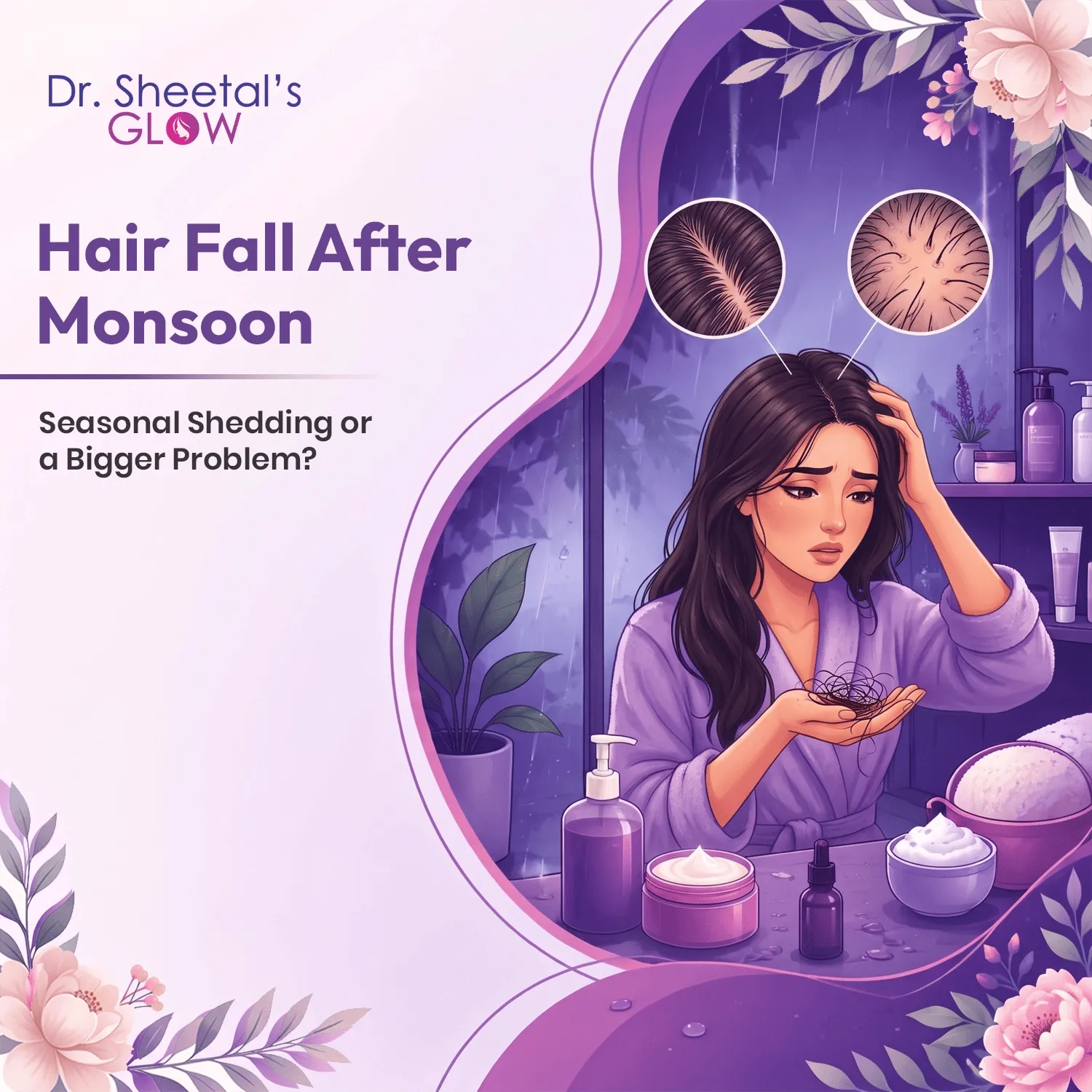

The rains are over, but your hair fall hasn't stopped.
If you've noticed more strands on your pillow, clothes, comb, or shower floor, it's understandable to wonder whether the monsoon is still responsible. Sometimes seasonal changes can coincide with increased shedding, but persistent hair fall shouldn't automatically be blamed on the weather.
There are several other possibilities worth considering.
Your scalp may still be recovering from monsoon conditions
Humidity and sweating can leave the scalp oilier than usual. If you're prone to dandruff, itching, or scalp inflammation, these symptoms can become more noticeable during and after humid weather.
A constantly irritated scalp can also lead to more scratching and discomfort.
However, it's important not to assume that dandruff alone explains significant or prolonged hair loss. Persistent shedding deserves a broader look at your hair and scalp.
Check whether it's shedding or breakage
This is one of the easiest things to overlook.
Hair that falls from the root and hair that breaks along the shaft aren't the same problem.
Breakage can increase after repeated:
- Heat styling
- Chemical treatments
- Tight hairstyles
- Rough towel drying
- Aggressive brushing
- Handling wet hair carelessly
If you're seeing lots of shorter, uneven strands, breakage may be contributing to what you think is excessive hair fall.
The trigger may have happened weeks earlier
Hair doesn't always respond to a trigger immediately.
Increased shedding can become noticeable after physical or emotional stress, an illness, significant weight loss, or other changes affecting the body. Nutritional deficiencies and hormonal conditions can also contribute to hair shedding in some people.
This is why looking only at what happened during the monsoon may not tell the whole story.
For a deeper explanation of the possible causes, warning signs, and treatment approaches, this detailed guide to post-monsoon hair fall from Dr. Sheetal’s Glow is a useful reference.
Four signs that deserve attention
Not every increase in shedding requires medical treatment. But certain changes are harder to dismiss as ordinary seasonal shedding.
A widening hair part
If your central part is becoming progressively wider, it may indicate reduced hair density.
A thinner ponytail
A noticeable reduction in ponytail thickness over time can be a sign of ongoing hair thinning.
More visible scalp
If your scalp is becoming easier to see, particularly around the crown or parting, don't rely solely on seasonal explanations.
Persistent scalp symptoms
Continued itching, scaling, redness, excessive flaking, or discomfort may indicate an underlying scalp condition.
Sudden hair loss or bald patches are also reasons to seek professional assessment rather than waiting for the next seasonal change.
Don't jump straight to supplements
Hair supplements are an easy product to sell because they sound like a simple answer.
But hair loss doesn't have one universal cause.
If a nutritional deficiency is suspected, appropriate evaluation can help determine whether supplementation is actually necessary. Taking multiple supplements without knowing what you're deficient in may not solve the underlying problem.
The same applies to hair treatments.
PRP, mesotherapy, topical treatments, oral medications, and scalp treatments may have different roles depending on the diagnosis. Choosing a procedure because it's popular is not the same as choosing one because it is appropriate.
What can you do at home?
A few basic habits can reduce unnecessary hair and scalp stress.
Keep the scalp clean according to your scalp type. Avoid tying wet hair tightly and handle wet hair gently. Reduce excessive heat styling and avoid aggressive towel drying.
If dandruff keeps returning, don't keep cycling through random products indefinitely.
And if the shedding continues, don't keep changing treatments without understanding what is causing it.
When should you see a dermatologist?
Consider professional evaluation if:
- Hair shedding remains excessive or persistent
- Your hair density is decreasing
- Your parting is widening
- You notice bald patches
- Your hairline is receding
- Scalp itching or scaling persists
- Hair loss follows a significant illness or stress
- The cause of the hair loss isn't clear
A dermatologist can assess the pattern of hair loss, examine the scalp, consider possible triggers, and recommend investigations when appropriate.
The goal is not simply to reduce the number of hairs you see in the shower. The goal is to identify the reason you're losing them.
Hair Fall Treatment in Kothrud
For people in Kothrud and nearby areas of Pune, persistent hair shedding can be evaluated by a dermatologist rather than being assumed to be a temporary post-monsoon issue.
Dr. Sheetal’s Glow Skin, Hair & Laser Center provides dermatologist-led care for hair and scalp concerns, with treatment selected according to the individual's condition.
If your hair fall has continued beyond the monsoon or you are noticing progressive thinning, read the complete post-monsoon hair fall guide for a closer look at causes, warning signs, and treatment options.
Final thought
The end of the monsoon doesn't automatically mean the end of hair problems.
If shedding is settling down and your hair density remains stable, the situation may be temporary. If the opposite is happening, it's better to investigate rather than repeatedly blaming the weather.
Your hair is giving you information. The useful part is figuring out what it's telling you.





















Sign in to leave a comment.