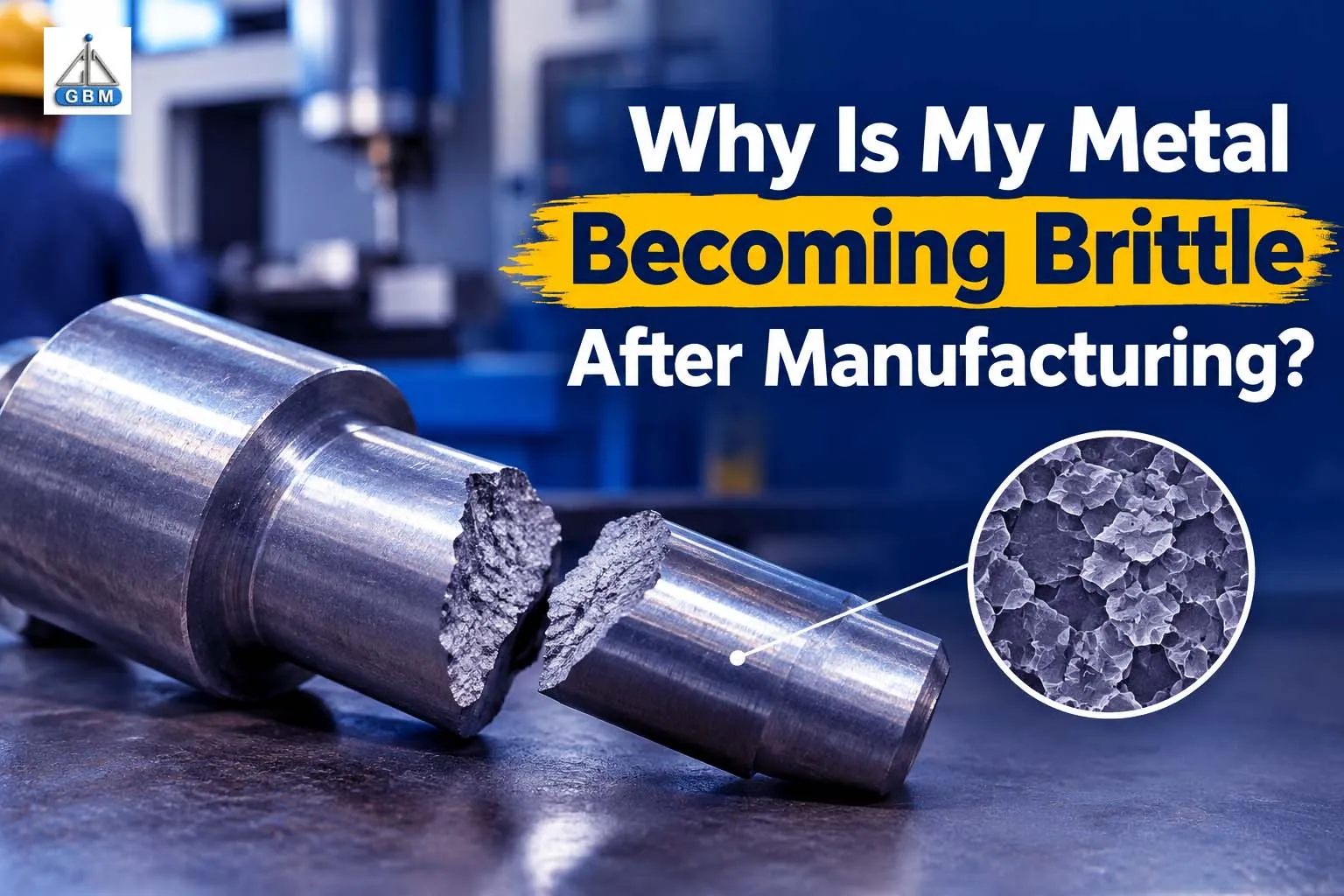


Metal is known for being strong. It can handle a lot of stress. But sometimes, after manufacturing, a metal part changes. It becomes harder. It bends less. It cracks or breaks more easily.
This can happen for many reasons. Some causes are cold working, bad heat treatment, fast cooling, or trapped stress. Changes inside the metal's structure can also cause it. So can low temperatures, rust, or using the wrong type of metal.
The key step is simple: find out why the metal became brittle. Then you can pick the right fix.
What Does "Brittle" Mean?
A brittle metal cannot bend much before it breaks.
A tough metal can bend and flex a lot before it fails. A brittle metal cracks fast, often with little warning.
Do not confuse "brittle" with "hard." Hardness means the metal resists dents and scratches. Brittleness means the metal breaks instead of bending.
Many things can cause brittleness. This includes the metal's structure, how it was made, its heat treatment, and where it is used.
Why Does Metal Become Brittle After Manufacturing?
There is no single cause. Many factors can play a role.
1. Too Much Cold Working
Cold working means shaping metal without heat. This includes rolling, bending, drawing, and stamping. These steps can make metal stronger and harder.
But too much cold working can also make it less flexible. The metal's inner structure gets stressed. It becomes harder to bend further.
Over time, this makes the metal more likely to crack.
Possible fix: Do less shaping at each step. Use heat treatment between steps. Review how the part is formed.
2. Wrong Heat Treatment
Heat treatment changes how strong or soft a metal is.
If the heat is too high, too low, held too short, or cooled the wrong way, problems occur.
For example, some types of steel become very hard and brittle if cooled too fast from a high heat.
Possible fix: Check the full heat treatment steps. This includes heating speed, temperature, hold time, and cooling method.
3. Fast Quenching
Quenching means cooling hot metal very fast, often in water or oil. For some steels, this creates a hard structure called martensite.
This structure is strong. But if it is not treated further, it can be too brittle.
Possible fix: After hardening, use tempering. This helps balance hardness with strength and toughness.
4. Trapped Stress
Welding, cutting, casting, shaping, and heat treatment can all leave stress trapped inside the metal.
You cannot see this stress. But it can cause cracks, warping, or early failure later, especially under extra load.
Possible fix: Use stress-relief heat treatment. This works for many materials and uses.
5. Cold Working Without Enough Rest
When metal is shaped again and again, it can lose flexibility each time. This is called work hardening.
Adding heat treatment between shaping steps can help. This is called intermediate annealing.
It makes the metal easier to shape. It also lowers the risk of cracking later.
6. Changes Inside the Metal's Structure
A metal's strength and flexibility depend on its inner structure.
This includes grain size, the mix of elements, and past heat treatment.
For example, smaller grains often make steel tougher. But a rough or uneven structure can make it crack more easily.
So, making metal harder is not always the best fix. Sometimes it makes the problem worse.
7. Cold Temperatures
Some metals lose toughness in the cold. This is common in certain types of steel.
Below a certain temperature, the metal can crack much more easily under stress or impact.
This matters a lot for parts used in cold places. Examples include cold storage, cold climates, or super-cold equipment.
Possible fix: Pick a metal grade made to stay tough in cold conditions.
8. Stress Points
Some spots in a part face more stress than others. Common examples are:
- Sharp corners
- Notches
- Holes
- Screw threads
- Weld spots
- Sudden changes in thickness
Even light stress can cause cracks to start at these weak points.
Possible fix: Improve the shape of the part. Smooth out sharp edges. Check weak spots often.
9. Rust and Environmental Damage
Rust weakens the surface of metal. It can also create spots where cracks begin.
Some combinations of stress, metal type, and environment cause "stress corrosion cracking." This is a mix of stress and rust working together.
Other issues, like hydrogen getting into the metal, can also make it brittle.
Possible fix: Find the exact cause. Improve rust protection. Control what the metal is exposed to. Pick a metal suited to the environment.
10. Wrong Material Choice
Sometimes, the process is not the problem. The metal itself may be the wrong choice for the job.
Different metal grades have different strengths. Some bend more. Some resist rust better. Some handle heat or cold better.
Possible fix: Check the material specs. Make sure the grade fits both the manufacturing process and the final use.
How Can You Fix or Reduce Metal Brittleness?
The right fix depends on the cause. Here are common options.
1. Review the Whole Manufacturing Process
Start by looking at every step. This includes forming, rolling, bending, welding, cutting, casting, heating, and cooling.
Find the exact step where cracks or extra hardness first show up. This helps you find the real cause.
2. Cut Back on Cold Working
If too much shaping is making the metal brittle, change the process.
Do smaller amounts of shaping at each stage. Add heat treatment between stages if needed.
3. Use Annealing When It Helps
Annealing is a heat treatment used for some metals and situations.
It means heating the metal, holding it at that heat, then cooling it slowly and carefully.
Depending on the metal, annealing can:
- Lower extra hardness
- Improve flexibility
- Release some trapped stress
- Restore properties lost from cold working
- Make metal easier to cut or shape
Factories use annealing ovens to control the heat and timing needed for this process.
But annealing does not fix every type of brittleness. Think about the metal type, its past treatment, and the final goal before choosing this step.
4. Try Stress-Relief Heat Treatment
If trapped stress from welding, cutting, or shaping is the main issue, stress relief may work better than full annealing.
The goal is to lower internal stress while keeping the part's needed strength.
5. Use Normalizing for Some Steels
Normalizing is a heat treatment used for certain steels.
It can create a more even and refined structure inside the metal. This can improve the balance between strength and toughness.
Whether this fits your part depends on the steel type and what you need from it.
6. Use Tempering After Hardening
If hardened steel is too brittle, tempering can help.
It softens the hard structure a bit. This improves toughness while keeping good strength.
The right temperature for tempering depends on the balance you need between hardness and toughness.
7. Control How the Metal Cools
Cooling speed matters a lot in heat treatment.
Cooling too fast or too slow can create different structures inside the metal, each with different properties.
Using a steady, repeatable cooling method gives more reliable results.
8. Pick a Better Material
If the metal itself is not right for the job, changing the process may not help.
A different alloy or grade might offer better flexibility, toughness, rust resistance, or cold performance.
Think about both the manufacturing needs and how the part will be used later.
Can an Annealing Oven Stop Metal Brittleness?
Not always. An annealing oven does not fix every kind of brittleness on its own.
Its job is to control heat, hold time, and cooling for processes like annealing.
If the brittleness comes from too much cold working, extra hardness, or stress from manufacturing, annealing can often help fix it.
But if the real cause is rust, hydrogen damage, the wrong material, or stress points in the design, annealing alone will not solve the problem.
You need to match the fix to the actual cause.
How Do You Find the Real Cause?
Before changing your heat treatment, ask these questions:
- Did the metal turn brittle after bending or shaping?
- Did the problem start after welding?
- Was the part cooled very fast?
- Has the hardness gone up a lot?
- Are cracks showing up near holes, welds, or sharp corners?
- Does the part work in very cold conditions?
- Has it been exposed to chemicals or moisture?
- Is the right metal grade being used?
- Did the problem start after a certain heat treatment step?
- Are other similar parts showing the same issue?
Hardness tests, metal structure checks, and a full process review can help you find the true cause.
How to Prevent Metal Brittleness During Manufacturing
It is easier to prevent brittleness than to fix it later. Here is how manufacturers lower the risk:
- Pick the right material grade.
- Control cold working and shaping steps.
- Use heat treatment between steps when needed.
- Follow the correct heat treatment steps closely.
- Control heating and cooling speed.
- Use stress relief when needed.
- Avoid sharp stress points in the design.
- Protect metal from rust and harsh conditions.
- Think about temperature when picking materials.
- Keep manufacturing steps consistent and well recorded.
Final Thoughts
Metal can become brittle after manufacturing for many reasons. Too much cold working, bad heat treatment, fast cooling, trapped stress, structure changes, cold temperatures, rust, stress points, and wrong material choice can all play a part.
There is no single fix that works for every case.
Depending on the cause, the right fix could be changing the process, annealing, stress relief, normalizing, tempering, controlled cooling, rust protection, or picking a better material.
The most important step is finding the real cause first. Once you know the cause, you can pick the right process. This helps you get the right mix of strength, hardness, flexibility, and toughness.



















Sign in to leave a comment.