

A smaller paycheck can be frustrating, especially when your hourly rate or salary did not change. The good news is that a lower deposit does not automatically mean your employer reduced your pay. The difference can come from the number of hours in the pay period, federal income tax withholding, Social Security and Medicare taxes, state withholding, retirement contributions, insurance, or another payroll deduction.
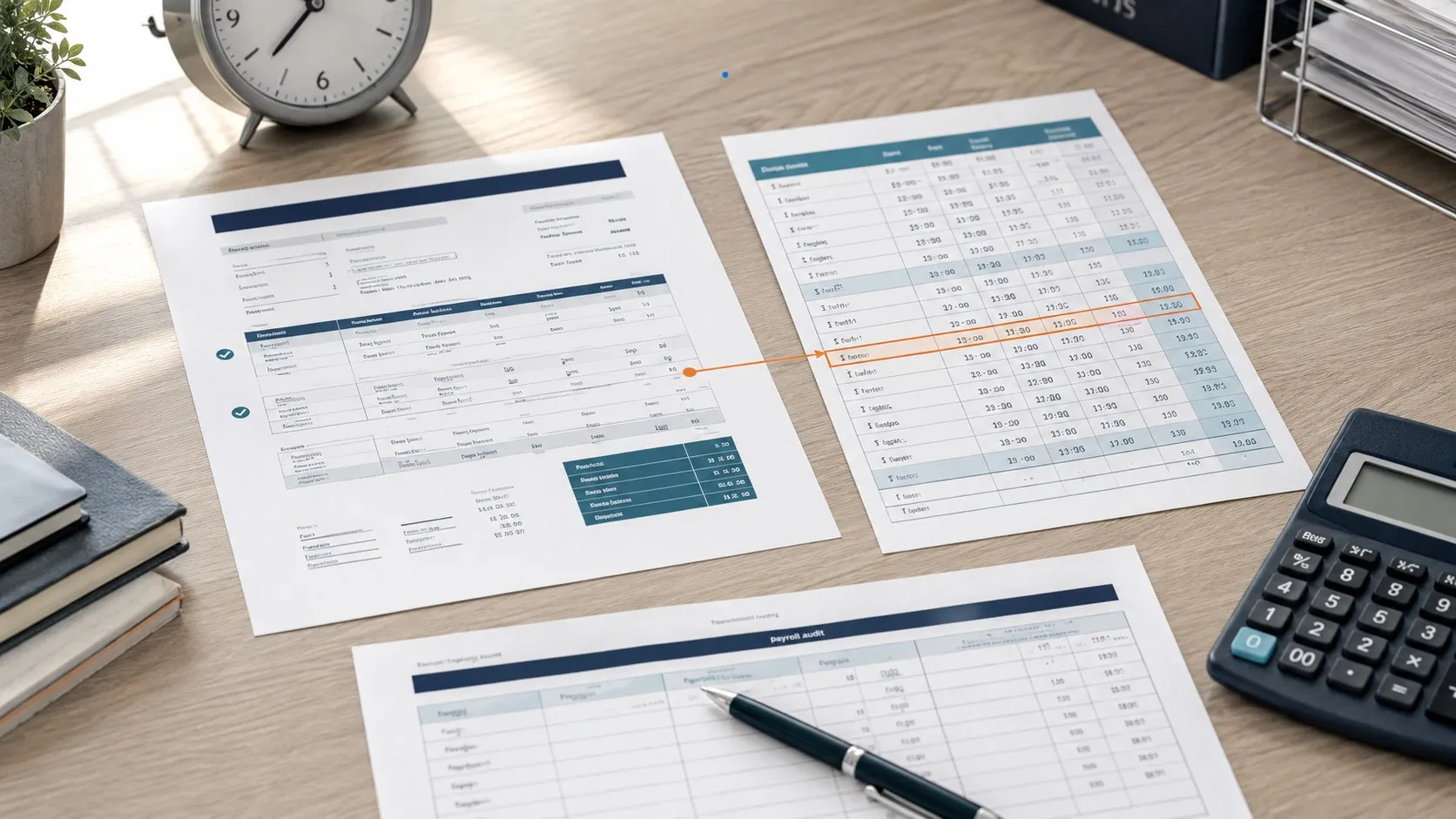
The fastest way to understand the change is to compare two pay stubs side by side. Start with gross earnings. Then compare taxable wages, taxes, deductions, and finally net pay. That order helps separate a true payroll error from a normal change in withholding or benefits.
1. Start with gross pay, not the bank deposit
Net pay is what reaches your bank account, but gross pay tells you what the employer actually recorded as earnings before taxes and deductions. If gross pay changed, investigate that first.
Check:
- Pay-period start and end dates
- Regular hours
- Overtime hours
- Hourly rate or salary amount
- Bonus or commission income
- Unpaid leave
- Retroactive adjustments
If you are not sure which section contains those numbers, review what a pay stub looks like. A correct net-pay comparison starts with a correct earnings comparison.
2. FIT, FWT or FITW may have increased
FIT, FWT and FITW are common payroll abbreviations for federal income tax withholding. Your employer calculates this withholding using taxable wages, payroll frequency, and the information provided on Form W-4.
Federal withholding can change even when your salary does not. A different bonus, overtime amount, taxable benefit, payroll adjustment, or W-4 election can alter the amount withheld.
The IRS publishes official withholding methods in Publication 15-T. If you want to understand the payroll code itself, see FIT or FWT on a pay stub.
3. Your Form W-4 may be affecting take-home pay
Form W-4 tells an employer how to calculate federal income tax withholding. Employees commonly revisit it after a new job, marriage, divorce, a new child, a second job, a spouse changing jobs, or a desire for additional withholding.
A change in W-4 information can produce a noticeable difference in the next paycheck. That does not necessarily mean the tax itself increased; it may simply mean the employer is withholding more of your expected annual tax during each pay period.
Employees organizing their information can use a W-4 form generator before submitting the completed certificate to the employer. The entries should reflect the employee's real tax situation.
4. FICA is separate from federal income tax
Many employees see FICA, OASDI, Social Security, Medicare, MED or MED EE on the same statement as FIT. These are not all the same tax.
FICA generally refers to Social Security and Medicare payroll taxes. For 2026, the employee Social Security rate is 6.2% on covered wages up to the annual Social Security wage base, while the regular employee Medicare rate is generally 1.45% and does not use the same wage-base ceiling.
For example, if $2,000 of wages are fully subject to both taxes:
Social Security: $2,000 × 6.2% = $124.00
Medicare: $2,000 × 1.45% = $29.00
That is $153 in employee-side Social Security and Medicare tax before federal income tax, state tax, benefits, or other deductions.
See FICA on a pay stub for a detailed explanation.
5. State withholding may have changed
State income-tax withholding can appear as SIT, SWT, SITW, State Tax, or another abbreviation. It can change after a move, a work-location change, a new state withholding certificate, or a payroll correction.
If the state line looks unfamiliar, compare the current statement with the previous one and confirm the state associated with the job. The guide to SIT or SWT on a pay stub explains common state-withholding labels.
6. Benefits can reduce take-home pay even when they reduce taxable wages
Health insurance, dental insurance, HSA contributions, FSA contributions, traditional 401(k) contributions, and other benefits can reduce the amount deposited into your account.
Some pre-tax deductions may also reduce one or more taxable-wage figures. That is why these numbers can legitimately differ:
- Gross earnings
- Federal taxable wages
- Social Security wages
- Medicare wages
- Net pay
A lower net check is not automatically a worse tax result if the difference reflects a benefit or retirement contribution you elected.
7. A 401(k) change can make a paycheck noticeably smaller
If you increased a 401(k) contribution from 5% to 10%, the change can be obvious on the next payroll.
Example:
Gross eligible pay: $3,000
5% contribution: $150
10% contribution: $300
The additional $150 goes to the retirement plan rather than the bank account. Traditional and Roth 401(k) contributions can also have different tax treatment, so do not assume every retirement deduction affects taxable wages in the same way.
See 401(k) on a pay stub for common EE, Roth, pre-tax and employer-match codes.
8. Check current versus YTD totals
Current amounts belong to one paycheck. Year-to-date amounts show how much has accumulated during the calendar year.
A pay stub might show:
Current FIT: $245
YTD FIT: $4,680
The $4,680 is not another deduction from the current check. It is the cumulative amount withheld during the year.
If a number looks unexpectedly large, verify which column you are reading. The guide to current vs. YTD on a pay stub explains the difference.
9. Bonuses and overtime can change withholding patterns
A paycheck containing a bonus or unusually high overtime can look different from an ordinary payroll. Gross wages may increase, and withholding can increase with them.
Do not judge the result by comparing only the net deposit. Compare regular wages, supplemental wages, taxable wages and each tax line. The employer may also use an IRS-permitted supplemental-wage withholding method for certain bonus payments.
10. New benefit elections can start midyear
Open enrollment, a qualifying life event, a new retirement election, or the end of an employer waiting period can activate deductions in the middle of the year.
This is a common reason a paycheck suddenly becomes smaller even though taxes and gross wages appear unchanged.
Look for a new line such as:
- MEDICAL
- DENTAL
- VISION
- HSA
- FSA
- 401K EE
- ROTH
- LIFE
If the deduction was unexpected, ask payroll or benefits when the election became effective.
11. How to check whether the paycheck is actually wrong
Use this order:
1. Verify the pay period.
2. Verify hours and pay rate.
3. Verify gross earnings.
4. Compare taxable-wage figures.
5. Review FIT/FWT.
6. Review Social Security and Medicare.
7. Check state and local withholding.
8. Check benefit and retirement deductions.
9. Compare current and YTD columns.
10. Compare the result with the previous pay stub.
If the numbers still do not reconcile, contact payroll with a specific question such as: “Why did federal taxable wages increase by $400?” That is easier to investigate than simply saying the deposit looks low.
Final takeaway
A smaller paycheck can come from many legitimate payroll changes. The most reliable approach is to diagnose it from gross pay down to net pay rather than starting with the bank deposit.
Check earnings first, then federal withholding, FICA, state taxes, benefits, retirement deductions, and YTD totals. If an employer needs to document legitimate payroll activity, a pay stub generator can help organize real earnings, taxes, deductions and net pay into a readable statement. The figures should always come from genuine payroll records.


























Sign in to leave a comment.