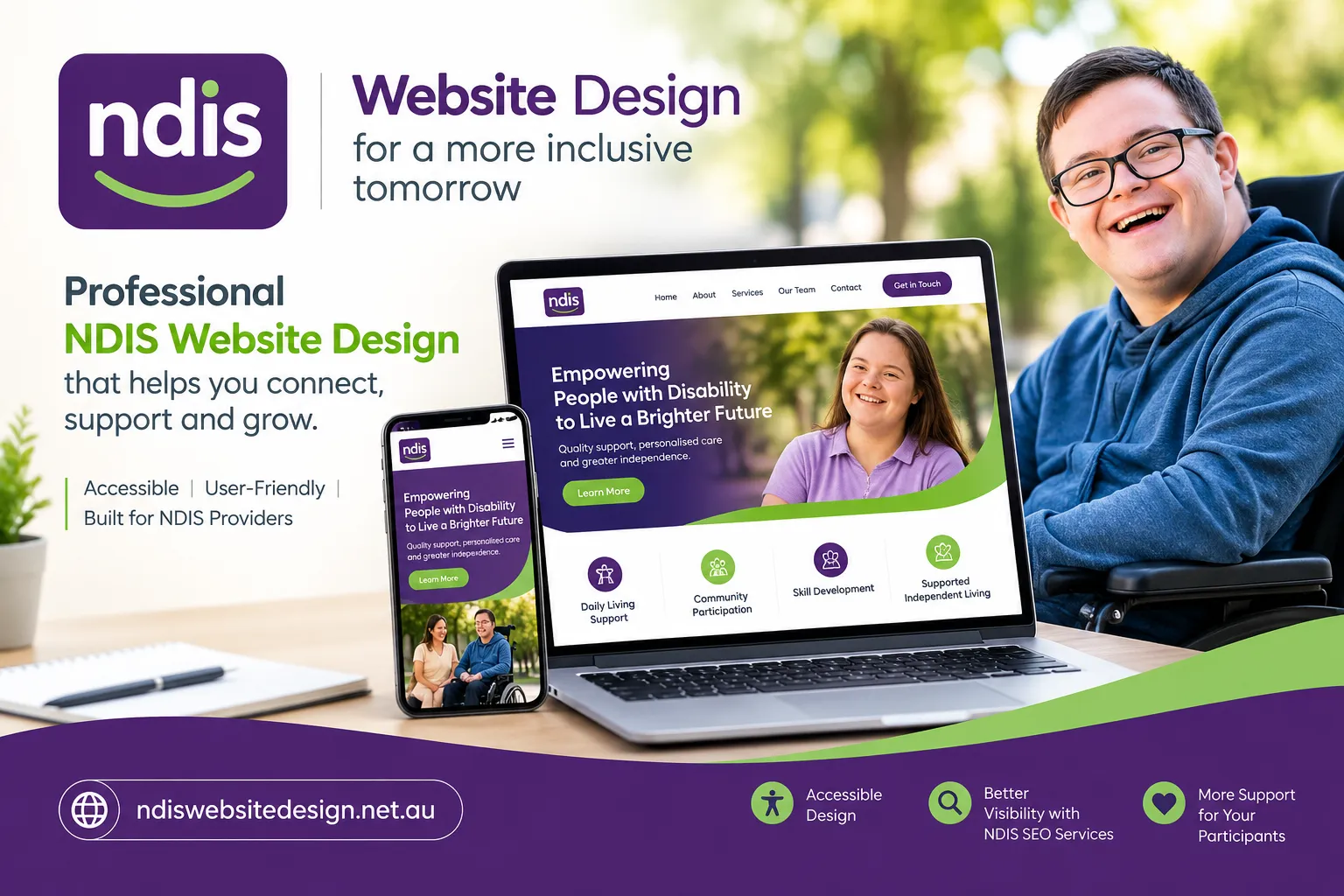

For an NDIS provider, your website is often the first place a participant, family member, support coordinator or carer goes to understand your services. A website that is difficult to navigate, slow to load or confusing to read can create doubt before someone ever contacts your business.
That is why NDIS Website Design is about more than making a website look professional. It is about creating a digital experience that is accessible, trustworthy, easy to use and built around the needs of people looking for support.
As the Australian disability services sector continues to become more digitally focused, having a strong online presence can help NDIS providers communicate their services more effectively and create more opportunities for enquiries.
What Makes a Good NDIS Website Different?
An NDIS provider website needs to serve people with different needs, abilities and levels of digital confidence. A participant may be looking for a specific support, while a family member may want to understand your approach, service areas and how to get started.
Good website design brings these needs together through clear navigation, readable content, accessible layouts and straightforward calls to action.
Instead of forcing visitors to search through multiple pages, your website should quickly answer important questions:
- What services do you provide?
- Who can access your services?
- Where do you operate?
- How can someone contact you?
- What makes your organisation trustworthy?
When these answers are easy to find, visitors can make decisions with greater confidence.
How NDIS Website Design Can Support Business Growth
A professional website can become an important part of your overall marketing strategy.
Think of your website as the centre of your online presence. Your social media profiles, Google searches, online directories and other marketing activities can bring people to your website, but the website needs to give them a reason to stay and take the next step.
A well-structured website can explain your services clearly, showcase your experience and make contacting your organisation simple.
For example, instead of placing every service on one crowded page, you can create dedicated service pages that explain what each support involves, who it may suit and how people can enquire. This creates a better experience for visitors while also giving search engines clearer information about your business.
Accessibility Should Be Part of the Design From the Beginning
Accessibility should not be treated as an optional feature added after a website has been built.
For an NDIS provider, an accessible website can make it easier for more people to interact with your business. Clear headings, sensible colour contrast, descriptive links, readable typography, keyboard-friendly navigation and useful alternative text can all contribute to a better experience.
Mobile accessibility is equally important. Many people access websites using smartphones and tablets, so pages should adapt properly to smaller screens without making text difficult to read or buttons difficult to use.
The goal is simple: people should be able to understand and use your website without unnecessary barriers.
Why SEO Matters for NDIS Providers
A beautiful website is not particularly useful if potential clients cannot find it.
This is where NDIS SEO Services can complement your website design. Search engine optimisation helps improve how your website communicates its relevance to search engines and, importantly, to the people searching for your services.
For example, someone may search for NDIS support in their local area or look for a particular type of disability support. Creating useful, specific pages around your actual services and locations can help your website become more relevant to those searches.
Effective SEO is not about repeating “NDIS” on every page. It is about understanding what your audience is searching for and creating genuinely useful content that answers those needs.
What SEO Services for NDIS Providers Should Focus On
SEO services for NDIS providers should be tailored to the organisation rather than based on a generic SEO checklist.
The process can include improving website structure, researching relevant search topics, optimising service pages, strengthening internal linking, improving page performance and developing helpful content.
Local visibility can also be particularly valuable. If your organisation provides services in specific Australian cities, suburbs or regions, your website should make those service areas clear without creating low-quality pages simply to target keywords.
The best approach is to build search visibility around real services, genuine locations and useful information.
Trust Is a Major Part of the User Experience
People looking for disability support are making an important decision. They want to know that the organisation they contact is credible, professional and genuinely understands their needs.
Your website can communicate trust through more than testimonials.
Clear information about your organisation, team experience, services, service areas, contact details and approach can help visitors understand who they are dealing with.
It is also important to keep website information accurate. Outdated service descriptions, broken links or incorrect contact details can quickly undermine confidence.
A trustworthy website should feel transparent rather than overly promotional.
Content Should Help People, Not Just Search Engines
One of the biggest mistakes businesses make with SEO content is writing primarily for keywords.
An NDIS website should instead answer real questions that participants, families and support coordinators may have.
You could explain how your services work, what someone can expect during the enquiry process, common questions about your supports or factors people may want to consider when choosing a provider.
This type of content can support both users and search visibility because it gives your website genuine value.
When keywords such as NDIS Website Design and NDIS SEO Services appear naturally within useful content, they feel like part of the conversation rather than advertisements inserted into every paragraph.
Keep the Enquiry Process Simple
Once someone decides they want to learn more, the next step should be obvious.
Your website should make it easy to find your phone number, email address or enquiry form. Important calls to action should be visible without becoming aggressive or distracting.
A simple message such as “Talk to our team” or “Make an enquiry” can be more effective than filling every section with sales-focused language.
Forms should also avoid asking for unnecessary information. The easier it is for someone to make an initial enquiry, the less likely they are to abandon the process.
Your Website Should Be Built for Long-Term Growth
Website design and SEO should not be viewed as a one-time project.
As your NDIS business grows, you may introduce new services, expand into additional areas, publish educational resources or update your team information. Your website should have a structure that makes these changes manageable.
Regularly reviewing content, checking links, monitoring website performance and updating important information can help keep your online presence useful over time.
Search behaviour also changes, so your SEO strategy should evolve based on what people are actually searching for and how your website performs.
The Bottom Line
For an NDIS provider, a website is more than an online brochure. It can be a central communication, credibility and marketing channel for your business.
Strong NDIS Web Design helps visitors find information, understand your services and take the next step with confidence. Meanwhile, strategic NDIS SEO Services can help your website become more discoverable when people are searching for relevant support.
The most effective approach is not to build a website around keywords alone. Build it around people first — make it accessible, clear, trustworthy and genuinely useful — then use SEO to help the right audience discover it.
When design, accessibility, content and SEO work together, your website can become a stronger foundation for sustainable NDIS business growth.






















Sign in to leave a comment.