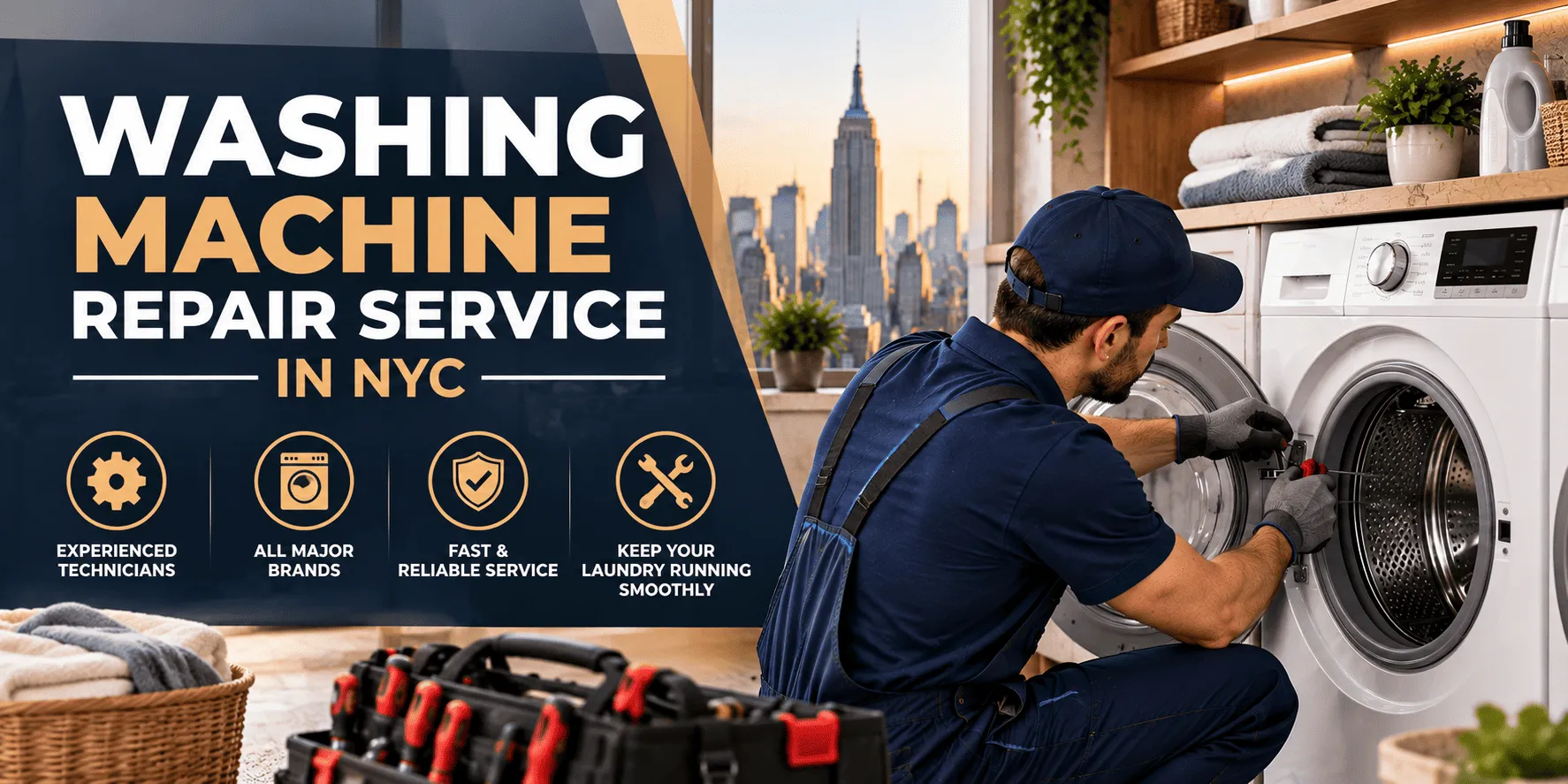

Laundry facilities play an important role in the daily running of New York City apartment buildings. For residents who rely on shared laundry rooms or in unit washing machines, even a short interruption can disrupt household routines. When a washing machine breaks down, residents may need to visit a laundrette, carry heavy bags across the neighbourhood or delay essential washing until the appliance is working again.
Laundry downtime affects more than convenience. In buildings with shared facilities, one faulty machine can increase waiting times, create queues and place extra demand on the remaining equipment. For property managers, unresolved appliance problems can also lead to tenant complaints, maintenance backlogs and additional operating costs.
Understanding why laundry downtime matters helps building managers, landlords and residents respond to faults more effectively. Prompt diagnosis, planned maintenance and reliable appliance repair can reduce disruption and help keep laundry facilities available when residents need them.
The Challenges of Shared Laundry Facilities in NYC
Space is limited in many New York City apartment buildings. Some properties have a communal laundry room with only a few washing machines and tumble dryers. Others provide laundry appliances inside individual flats. Each arrangement creates different maintenance challenges.
In a shared laundry room, several households may depend on the same equipment. When one washing machine stops working, residents often have fewer available cycles and longer waiting times. If multiple machines fail, the impact can become more serious, particularly in large buildings.
In unit laundry appliances create a different problem. Residents have less flexibility when their own washing machine fails, especially if they have young children, demanding work schedules or limited access to a nearby laundrette.
Building layouts can also complicate repairs. Laundry rooms may be located in basements, while narrow corridors, lifts and restricted access can affect how technicians transport equipment and replacement parts. These practical issues make efficient maintenance planning particularly important in urban properties.
How Washing Machine Breakdowns Disrupt Daily Routines
A working washing machine helps residents manage clothing, bedding, towels and other household fabrics. When the appliance becomes unavailable, everyday tasks can quickly accumulate.
Families may struggle to keep school uniforms and work clothes clean. Residents with busy schedules may have difficulty finding time for an alternative laundry service. People who rely on regular washing for bedding, towels or sports clothing may also face additional inconvenience.
The problem becomes more difficult when a washing machine stops mid cycle. Clothes may remain trapped inside the drum, often wet and difficult to remove if the door lock remains engaged. A drainage fault can leave water inside the machine, while an electrical problem may prevent the appliance from starting at all.
Repeated attempts to restart a faulty washing machine can make the situation worse. Residents should follow the manufacturer's troubleshooting instructions and avoid forcing a locked door or opening electrical compartments. If there is a leak, burning smell or other sign of a serious fault, the appliance should be taken out of use until it can be assessed safely.
The Financial Impact of Laundry Downtime
When a washing machine becomes unavailable, the financial impact extends beyond the cost of the repair. Residents may need to pay for laundrette services, transport and additional drying. These expenses can accumulate if the repair takes several days.
For landlords and property managers, a faulty communal appliance can create additional administrative work. Staff may need to report the issue, arrange access, contact repair providers and communicate updates to residents. If a problem remains unresolved, repeated complaints can take time away from other property maintenance responsibilities.
Commercial laundry equipment in larger residential developments may also involve more complex repairs and higher parts costs. The exact expense depends on the appliance type, fault, parts availability and labour required.
Prompt diagnosis can help limit these costs. A technician may identify a repairable fault before it affects other components. However, the quickest appointment is not always the cheapest solution. Building managers should consider the quality of diagnosis, availability of suitable parts and likely repair outcome when choosing a service provider.
Why Fast Washing Machine Repairs Matter
A quick response is especially valuable when a building has limited laundry capacity. Restoring one machine may reduce pressure on the remaining appliances and help residents return to their usual routines.
Common washing machine problems include drainage failures, water supply issues, door lock faults, excessive vibration and failure to spin. Some faults result from a blocked filter or restricted hose. Others involve a drain pump, motor, sensor or electronic control board.
The symptoms can look similar, so an accurate diagnosis is important. For example, a machine which will not spin may be struggling to drain properly rather than suffering from a motor failure. Replacing parts without identifying the underlying cause can increase costs and prolong downtime.
Property managers seeking Same day wash machine repair services in NYC should confirm whether a same day appointment is available, whether the technician works with the appliance brand and whether replacement parts may need to be ordered. Same day attendance does not always mean the repair can be completed on the first visit.
Clear communication also matters. Residents should know when a communal machine is unavailable, whether another machine can be used and when the next repair update is expected.
Preventive Maintenance Helps Avoid Unexpected Breakdowns
Preventive maintenance can reduce the risk of avoidable washing machine failures. It also gives building managers a better understanding of appliance condition and replacement needs.
Regular checks should follow the manufacturer's maintenance instructions. Accessible filters may need cleaning, detergent drawers should be kept free of residue and door seals should be inspected for damage. In shared laundry rooms, clear instructions can help residents avoid overloading machines or using excessive detergent.
Water inlet hoses and visible connections should also be checked for signs of leaks or deterioration. Excessive vibration, unusual noises and repeated drainage errors should be reported rather than ignored.
Property managers can maintain a record of faults, repairs and service dates for each appliance. These records help identify recurring problems and show whether a machine is becoming expensive to maintain. They can also support budgeting for replacement equipment. Preventive care cannot eliminate every breakdown. However, it can help identify warning signs earlier and reduce the likelihood of an unexpected interruption.
The Role of Property Managers and Landlords
Effective laundry management requires a clear process for reporting faults and arranging repairs. Residents should have a simple way to notify the building manager when an appliance stops working, leaks or displays an error code.
Managers should record the reported symptoms and establish whether the problem affects one machine or several. If multiple appliances fail at the same time, the issue may involve a shared water supply, drainage system or electrical circuit. In such cases, a broader inspection may be necessary.
Access arrangements should also be organised in advance. Technicians may need permission to enter a flat, reach a communal plant area or move equipment through restricted building spaces. Delays in obtaining access can extend the repair period even when a service appointment is available.
For further information about appliance maintenance and repair options, NYC APPLIANCE REPAIR is a useful starting point when assessing a washing machine problem.
Repair or Replace: Which Option Makes More Sense?
Not every faulty washing machine should be repaired. The decision depends on the appliance's age, condition, repair history, parts availability and estimated repair cost.
A blocked filter, damaged hose or faulty door lock may be relatively straightforward to address. A major motor or control board failure can require a greater investment. If the machine has experienced several breakdowns, replacing it may offer better long term value.
Building managers should compare the repair estimate with the cost of a suitable replacement, including delivery, installation and disposal. They should also consider energy and water efficiency, capacity and expected usage.
For communal laundry rooms, reliability is particularly important because several households may depend on the same appliance. A durable model with accessible parts and suitable service support may prove more economical over its working life than a cheaper machine with recurring faults.
Conclusion
Laundry downtime matters in NYC apartment buildings because residents depend on reliable access to clean clothes, towels and bedding. A faulty washing machine can disrupt daily routines, increase household expenses and create additional work for property managers. Prompt diagnosis, preventive maintenance and clear communication can reduce these problems. By assessing repair options carefully and planning for replacement when necessary, building managers can maintain more reliable laundry facilities and improve the day to day experience of residents.
Frequently Asked Questions
How long can a washing machine repair take?
The repair time depends on the fault, technician availability and whether replacement parts are in stock. Some minor issues can be resolved during the first visit, while complex faults may require further testing or parts ordering.
What should residents do when a communal washing machine breaks down?
Residents should report the fault to the building manager or laundry facility operator. They should avoid forcing the door, repeatedly restarting the machine or attempting unsafe repairs. If water is leaking, the area should be kept clear and the issue reported promptly.
Can preventive maintenance reduce washing machine downtime?
Yes. Regular cleaning, inspections and timely attention to unusual noises, leaks or error messages can help identify problems before they become more serious. Maintenance cannot prevent every fault, but it can reduce avoidable interruptions.
Is same day washing machine repair always possible in NYC?
No. Availability depends on the repair provider's schedule, the appliance type, the location and the parts required. Even when a technician attends on the same day, a complex repair may need a second visit.
When should a landlord replace a faulty washing machine?
Replacement may be sensible when repair costs are high, breakdowns occur frequently or suitable parts are no longer available. The decision should account for the appliance's condition, expected remaining service life and the cost of installing a replacement.



























Sign in to leave a comment.