Why Liquid Cooling Is Becoming Essential for High-Density AI Data Centers


Artificial intelligence is changing the way modern data centers are designed. AI training, inference, high-performance computing, and accelerated workloads increasingly depend on powerful GPUs and specialized processors that consume significantly more energy than conventional servers. As computing power rises, so does the amount of heat that must be removed.
This is why data center liquid cooling is moving from a specialized technology to an increasingly important part of AI infrastructure. Traditional air-based cooling can remain effective for conventional workloads, but extremely dense AI racks can create thermal loads that are difficult to manage with airflow alone. Industry deployments are already moving beyond 100 kW per rack in some advanced AI environments, making thermal management a critical engineering consideration.
1. AI Is Driving Rack Power Density Higher
Traditional enterprise data centers were generally designed around moderate rack power densities. Cooling systems could use CRAC or CRAH units, raised-floor airflow, containment, and carefully managed hot- and cold-aisle layouts to remove heat.
AI infrastructure changes that equation.
Modern GPU servers place substantial computing capacity into relatively compact spaces. When multiple high-performance servers are installed in a single rack, the resulting heat concentration can become difficult to handle through air alone. Higher temperatures can affect component reliability, increase cooling energy consumption, and create localized hot spots.
The challenge is not simply about having “more cooling.” Engineers must deliver cooling directly and consistently to the highest heat-producing components while maintaining appropriate temperature, pressure, flow, and redundancy.
Liquid is particularly effective because it can transfer heat far more efficiently than air. Instead of relying primarily on large volumes of moving air, liquid cooling brings the heat-transfer medium much closer to the processor.
2. How Data Center Liquid Cooling Works
There are several approaches to liquid cooling, including direct-to-chip cooling, rear-door heat exchangers, and immersion cooling. For many high-density AI deployments, direct-to-chip systems are becoming especially attractive because cooling plates can transfer heat directly from CPUs and GPUs into a controlled liquid loop.
A typical system separates the facility cooling infrastructure from the technology cooling loop. A coolant distribution unit serves as an important interface between these systems.
The CDU circulates coolant through the IT equipment, removes heat from the technology loop, and transfers that heat to the facility-side cooling system. It can also manage flow, pressure, temperature, filtration, monitoring, and other operating parameters.
This separation is valuable from an engineering perspective because the IT equipment can operate on a controlled secondary loop while the facility maintains its own water infrastructure.
3. Why CDU Systems Are Becoming Critical
The role of CDU systems for data centers becomes more important as rack densities increase.
A well-designed CDU can help maintain stable coolant conditions while supporting the thermal requirements of multiple high-performance racks. Depending on the architecture, CDUs can be installed at rack, row, or centralized levels, allowing designers to match cooling capacity with the size and layout of the facility.
Modern systems can also incorporate redundancy, sensors, controls, filtration, and monitoring capabilities. These features are particularly important for AI environments where an unexpected thermal event can affect a large amount of computing capacity.
For example, current CDU technologies are being developed in capacities ranging from hundreds of kilowatts to multi-megawatt systems, reflecting the rapid growth in AI cooling requirements.
For data center engineers, CDU selection therefore becomes more than an equipment decision. It is part of the overall reliability, scalability, and thermal-management strategy.
4. Liquid Cooling Can Improve Efficiency and Scalability
One of the biggest advantages of liquid cooling is its ability to remove large quantities of heat without requiring equivalent increases in airflow.
Air cooling often requires substantial fan power and carefully managed air distribution. As rack density increases, maintaining uniform airflow becomes increasingly challenging. Liquid cooling can address heat at its source, potentially reducing the burden placed on air-handling equipment.
Efficiency, however, depends on the complete system design. Engineers must evaluate supply and return temperatures, coolant flow, pump energy, heat-exchanger performance, facility-water conditions, and control strategies rather than assuming that liquid cooling automatically guarantees lower energy consumption.
The scalability advantage is equally important. AI hardware can evolve quickly, and a data center designed only around today's rack density may become constrained sooner than expected. Modular CDU architectures can allow cooling capacity to expand alongside new AI clusters.
5. Engineering Challenges That Cannot Be Ignored
Liquid cooling brings major benefits, but it also introduces new engineering responsibilities.
Water quality and coolant chemistry must be controlled. Piping materials must be compatible with the selected fluid. Pumps, heat exchangers, valves, sensors, and controls must be appropriately sized. Leak detection and isolation strategies are also essential because liquid is being introduced much closer to sensitive electronic equipment.
Redundancy requires careful consideration as well. Engineers may need to evaluate N+1 or 2N configurations for pumps, CDUs, controls, and other critical components depending on the availability requirements of the facility.
Another important consideration is maintenance. Equipment must be accessible without unnecessarily disrupting AI workloads. A successful design therefore balances thermal performance with serviceability, monitoring, physical space, reliability, and future expansion.
CDU sizing should also be based on more than total rack power. Flow requirements, supply temperature, heat-transfer duty, pump head, coolant characteristics, redundancy, and operating scenarios all influence the appropriate selection.
6. Designing the AI Data Center for the Future
The transition toward liquid cooling is ultimately part of a larger change in data center engineering. AI facilities must now be designed as integrated electrical, mechanical, thermal, and control systems rather than as separate infrastructure disciplines.
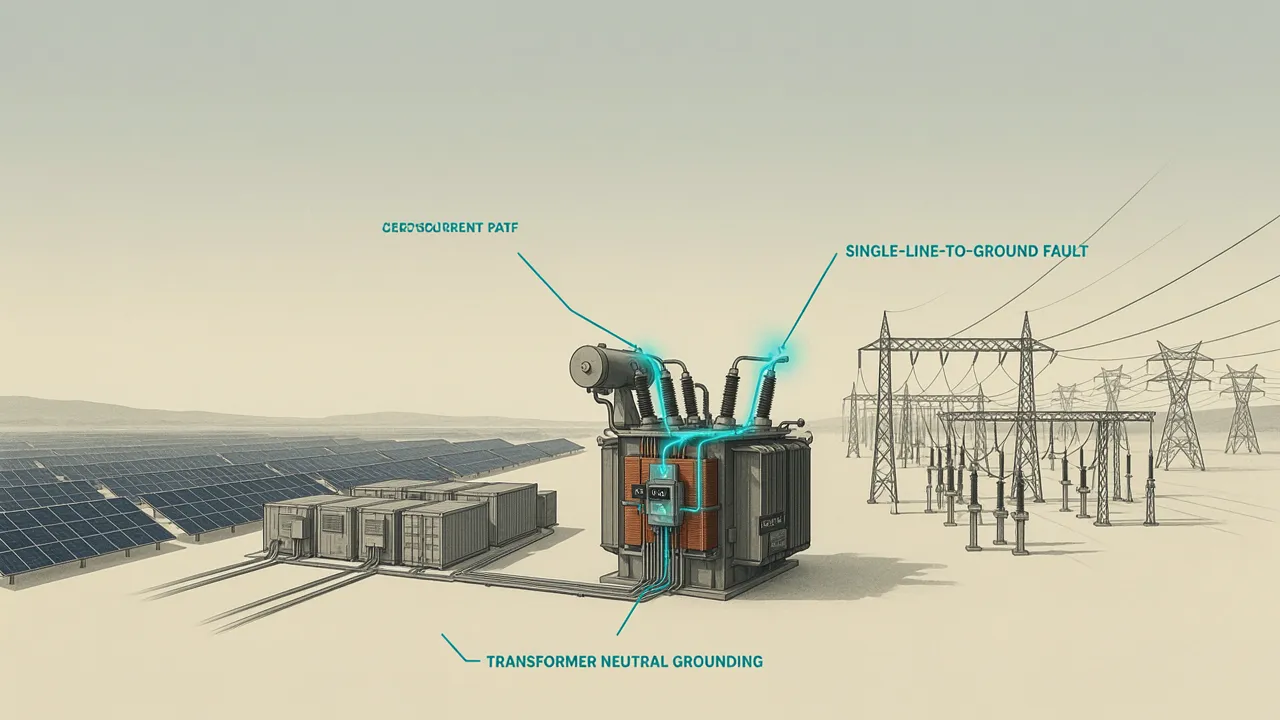
Power availability, transformer capacity, electrical distribution, cooling systems, heat rejection, controls, monitoring, and physical layouts must work together.
For new facilities, liquid cooling should be considered early in the design process rather than added after the electrical and mechanical infrastructure has already been finalized. For existing facilities, engineers can evaluate whether phased deployment, row-based CDUs, rack-level solutions, or hybrid air-and-liquid architectures provide the best path forward.
As AI workloads continue to increase computing density, thermal management will become an even greater determinant of data center performance. Liquid cooling provides a practical way to bring heat removal closer to the source while supporting higher densities and future expansion.
For organizations planning AI-ready infrastructure, the key is not simply choosing liquid cooling equipment. The goal is to develop a complete thermal-management strategy that integrates data center liquid cooling, electrical infrastructure, facility cooling, controls, redundancy, and long-term scalability.
That is where experienced engineering and careful system planning can make the difference between a data center that merely supports today's AI workloads and one that is prepared for the next generation of computing.



Sign in to leave a comment.