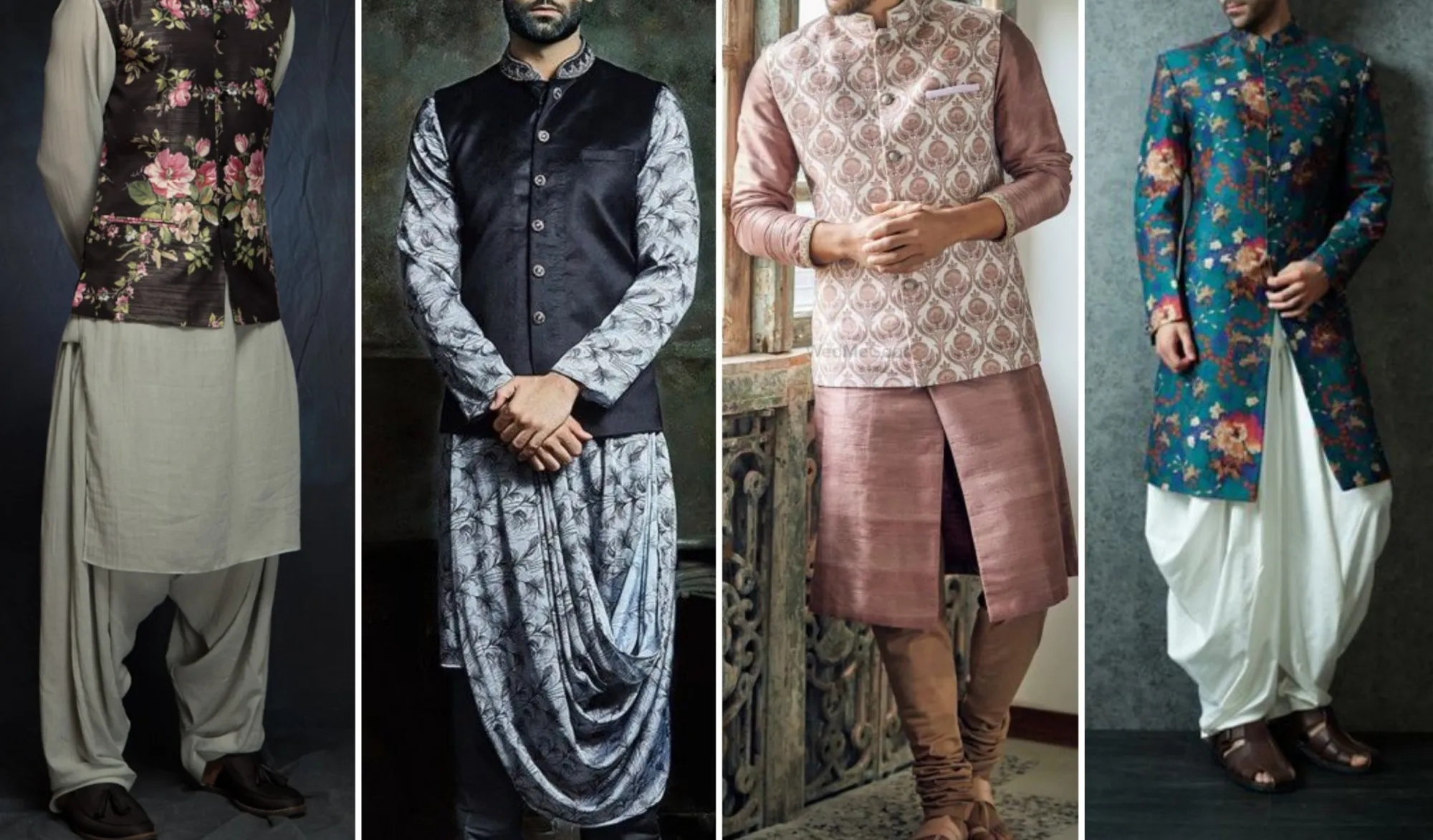


Men’s Indian wedding outfits are becoming visually cleaner. Instead of covering an entire garment with dense embroidery, many contemporary designs use detail more selectively. A decorated collar, textured fabric, tonal threadwork, or a carefully finished placket can provide enough character without dominating the outfit.
This change is shifting the look of men's Indian wedding wear, giving more importance to the material, color, silhouette and those small details which make an outfit special.
Wedding Wear Is Becoming More Selective With Detail
The embroidery is still a vital element in Indian wedding attire. What's evolving is the manner and location of the decoration.
Cleaner designs do not embellish every part of a sherwani or kurta; instead, the design is allowed to shine through. This can make it look appropriate for a celebration while making it easier to style for various wedding functions.
It also provides men with an opportunity to have a wide selection between highly ceremonial clothes and understated occasion wear.
Embroidery Is Moving, Not Vanishing
Minimal embroidery does not necessarily mean removing traditional workmanship. In many cases, it involves focusing it in specific areas.
Designers can draw attention to:
- Collars and necklines
- Cuffs and sleeve edges
- Plackets and buttons
- Borders and hems
- Selected motifs across the chest
These details can be used to frame the garment but not entirely cover it up. Tonal embroidery, where the thread stays close to the fabric color, can make the effect even more subtle.
Fabric and Texture Now Have a Bigger Role
When embroidery becomes quieter, the fabric becomes easier to notice.
Jacquard patterns, silk-like finishes, woven textures, and other surface details can give an outfit depth before extra decoration is introduced. This means visual richness does not have to come from embroidery alone.
A textured sherwani, for example, may need only limited detailing around the collar or buttons to create a formal appearance.
Color Gets More Attention in Cleaner Designs
The amount of embellishment definitely catches the eye. The more it's absent, the more color is part of the whole.
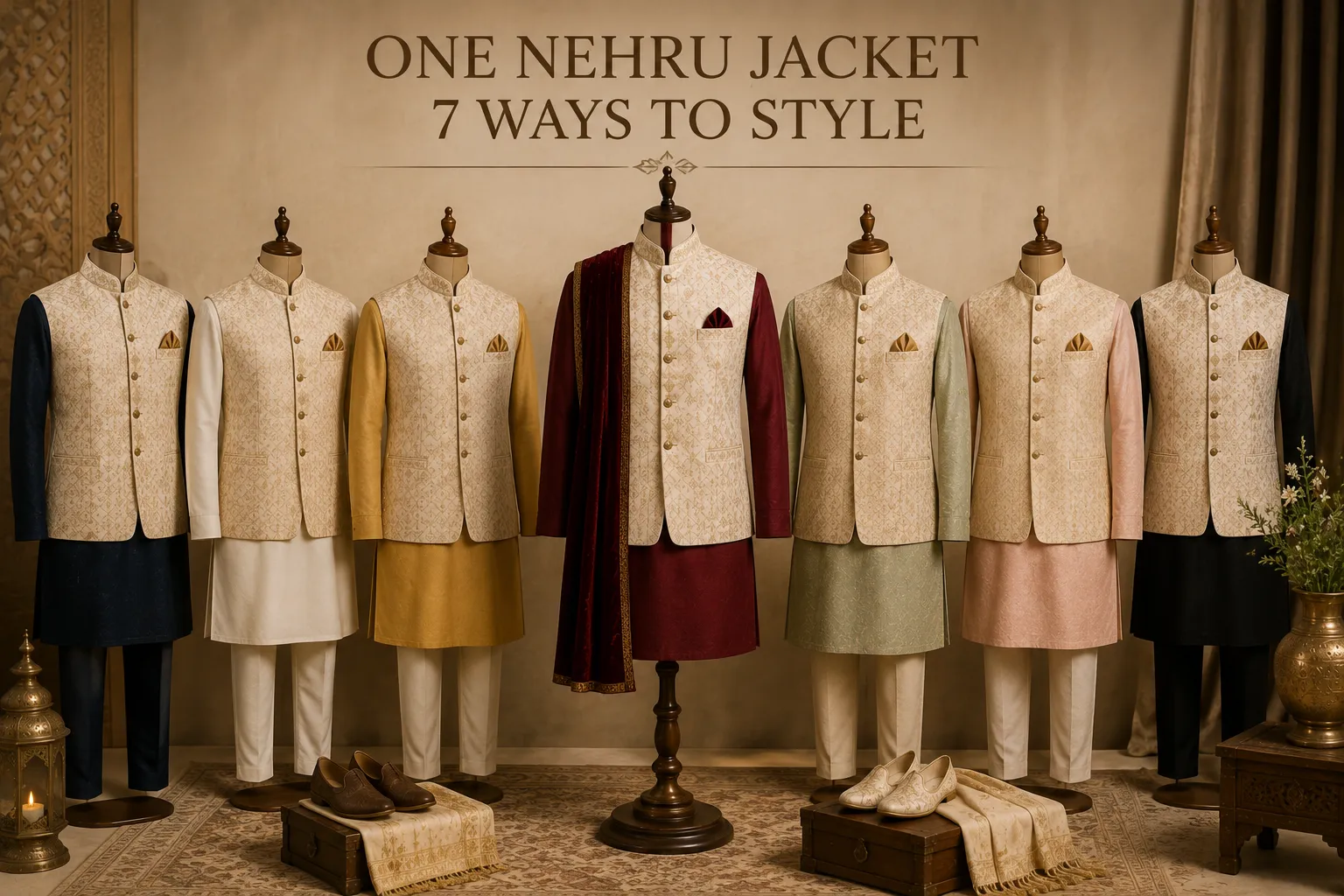
Ivory, beige, sage, navy, pastels and deeper traditional colors can all evoke a very different mood. More subtle surfaces also make combinations of tones more discernible.
Here is another way in which minimal embroidery is impacting the look of men's Indian wedding wear, the base color is no longer a plain canvas for embellishments. It can be one of the key elements.
The Silhouette Has Nowhere to Hide
Minimal design places more emphasis on the silhouette of the clothing.
There are fewer decorative details which take away the focus from this and more becomes visible such as proportions of the shoulders, length of the garment, proportion of the sleeves etc. A clean silhouette can thus help them look put-together and prepared for the wedding in a relatively simple outfit.
The reverse is equally the case. Sometimes, proportions that are not even can be overcome by embellishment.
Minimal and Traditional Can Exist Together
There is no need to sacrifice traditional Indian style by opting for less embroidery.
Restrained threadwork can be used to create a sherwani which maintains its recognizable silhouette. Traditional designs are allowed in the kurta but not all over the kurta. This can be done by wearing traditional shoes, a stole, a turban, or selecting appropriate accessories.
Minimalism can thus be better thought of as a design decision and not a rejection of tradition.
When More Embroidery Still Makes Sense
Don't feel obliged to do minimal embroidery. When the wedding is massive and the styling is also grand, the groom might opt for a very detailed sherwani for the main ceremony.
More elaborate details may also help distinguish the groom from the other guests and groomsmen.
The amount of detail that's appropriate should ultimately be a defining factor of the occasion, personal style, venue, and rest of the outfit.
Less Decoration, More Deliberate Detail
Minimal embroidery changes where the eye goes. Fabric becomes more visible, color carries more weight, and silhouette matters more.
This does not necessarily mean that Indian wedding wear becomes plain. It's a different way of decorating and a way in which the embroidered details have more room to be noticed.

















Sign in to leave a comment.