

Business software has changed dramatically over the last few decades.
What started as simple digital tools for storing records and automating repetitive office tasks has evolved into sophisticated platforms capable of managing complex workflows, analyzing large amounts of data, connecting multiple systems, and supporting business decisions.
Artificial intelligence is accelerating that transformation.
However, the most important change may not be the arrival of AI itself. It is the way businesses are beginning to rethink what software should actually do.
Modern organizations no longer want technology that simply records what happened. They increasingly want systems that help them understand what is happening, identify areas that need attention, and make everyday operations easier to manage.
This shift is creating a new generation of business software—one that is more intelligent, more connected, and increasingly focused on the experience of the people using it.
Software Is Moving Beyond Basic Automation
Automation has been one of the most important developments in business technology.
Businesses have traditionally used software to automate repetitive tasks such as generating invoices, sending notifications, processing orders, updating records, and producing reports.
These capabilities remain valuable.
But automation alone has limitations.
A system can automatically complete a task without helping a business understand whether that task is still necessary or whether the underlying process could be improved.
This is where intelligent software begins to make a difference.
Modern platforms can combine automation with analytics and artificial intelligence to provide additional context. Instead of simply completing an action, software can help users identify patterns within the information generated by those actions.
For example, an organization may have thousands of transactions recorded in its system. Traditional software can store and report those transactions. More advanced platforms can help users identify trends, unusual changes, or areas that may deserve further investigation.
The shift is subtle but important:
Software is moving from doing tasks to helping people understand their work.
Data Is Becoming a Core Business Resource
Almost every digital interaction produces information.
Customers place orders.
Users interact with applications.
Employees update records.
Businesses communicate with customers.
Marketing campaigns generate engagement data.
Payments create transaction records.
When these activities happen at scale, the amount of information can become enormous.
The challenge is no longer simply collecting data.
It is making that data useful.
A company can have extensive databases and still struggle to answer basic operational questions if its information is fragmented across multiple systems.
This is why dashboards, reporting tools, analytics platforms, and business intelligence have become increasingly important.
The objective is to transform raw information into something people can understand and act upon.
Why Context Matters in Business Intelligence?
A dashboard filled with charts is not necessarily useful.
A report containing hundreds of numbers does not automatically create insight.
Good business intelligence depends on context.
A manager needs to know which metrics matter for a particular objective. An administrator may need different information from a sales manager. A customer-support team may care about different indicators from an executive.
This means modern software needs to consider not only what information is available, but also who needs it and why.
That is where user-centered design becomes important.
The best business platforms organize information according to the user's responsibilities rather than simply displaying everything the underlying database contains.
Specialized Software Has an Important Role
As general-purpose AI tools become more powerful, it might seem that businesses could simply use one universal technology platform for everything.
In reality, specialized software remains important.
Different industries have different workflows, terminology, operational requirements, and data structures.
A healthcare platform does not operate in the same way as an e-commerce system. A logistics application has different requirements from a financial platform. A direct selling organization has its own set of operational challenges.
Specialized software is designed around these differences.
Prime MLM Software provides one example of this approach. Its platform is designed for direct selling organizations and includes capabilities covering genealogy management, e-commerce, analytics, reporting, CRM, integrations, and business intelligence.
For organizations evaluating specialized technology, Prime MLM Software provides an example of how an industry-focused platform can combine traditional operational functions with newer digital capabilities.
The important lesson is broader than one software provider.
Specialization allows technology to reflect the actual structure of the business using it.
AI Should Solve Problems, Not Just Add Features
Artificial intelligence is now appearing in an enormous number of software products.
That does not mean every AI feature is useful.
Businesses should begin with a problem rather than a technology.
Instead of asking, "Where can we add AI?" a better question is:
"Where could intelligent technology genuinely improve this process?"
Perhaps employees spend hours reviewing large amounts of information.
Perhaps managers struggle to identify important changes in operational data.
Perhaps customers need faster access to information.
Perhaps repetitive administrative processes are consuming valuable time.
These are meaningful starting points for AI adoption.
Once the problem is clear, organizations can determine whether AI is actually the right solution.
This approach prevents AI from becoming a superficial feature added primarily for marketing purposes.
Integration Is the Missing Piece in Many Digital Strategies
Modern businesses rarely depend on a single software system.
An organization might use one platform for e-commerce, another for customer management, another for payment processing, another for marketing, and another for analytics.
Each system may work perfectly well on its own.
The problem occurs when they need to communicate with one another.
Employees may have to manually transfer information from one platform to another. This consumes time and increases the possibility of inconsistencies.
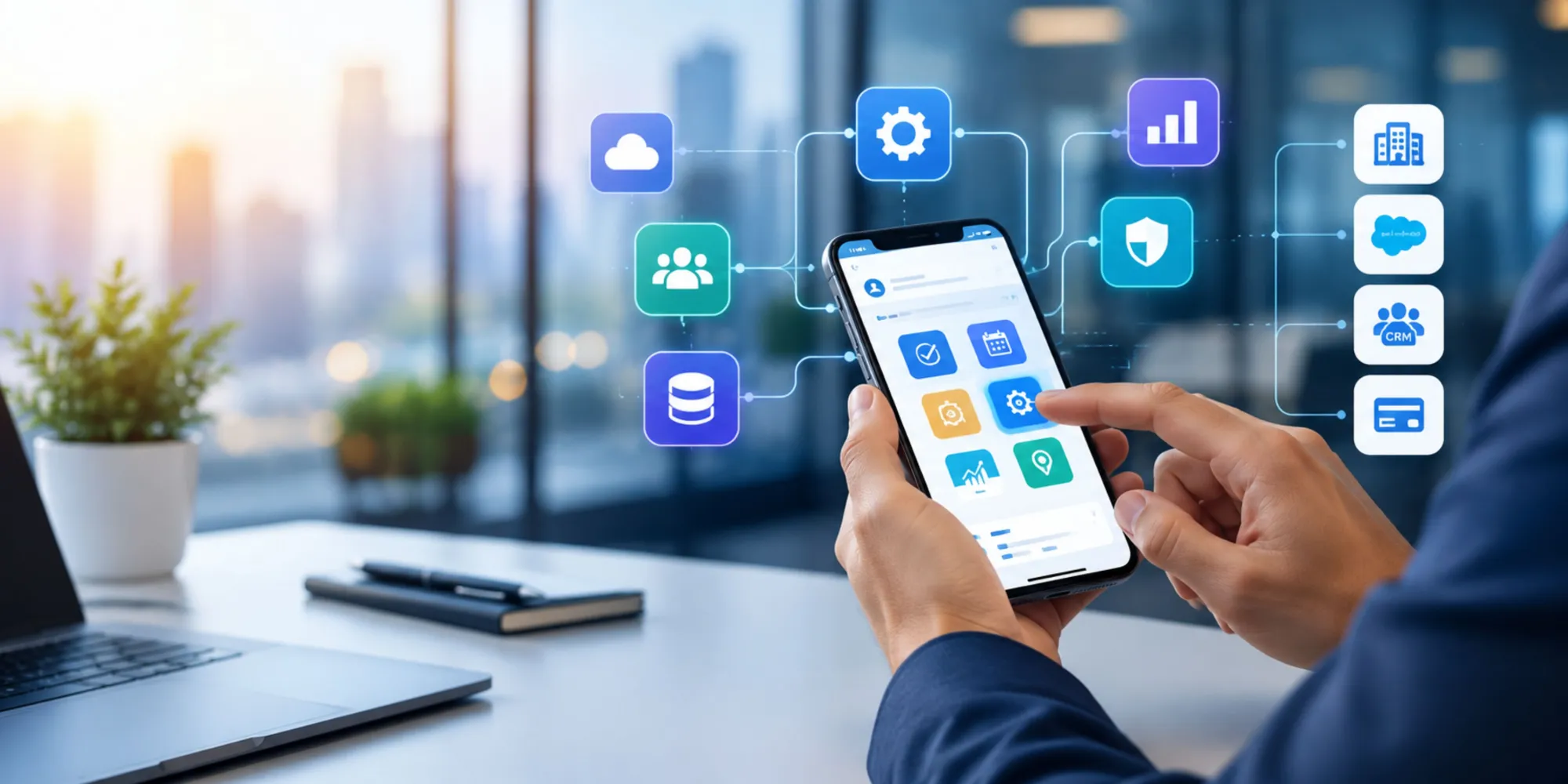
APIs and software integrations can help solve this problem.
When systems communicate properly, information can move between applications without requiring constant manual intervention.
For example, an e-commerce transaction could update a customer record while simultaneously providing information to an analytics platform.
This creates a more connected digital environment.
The goal is not simply to integrate everything with everything else.
It is to connect the systems that genuinely need to exchange information.
The Human Experience Still Matters
Technology can become so focused on automation and efficiency that businesses sometimes forget the people using the software.
A technically advanced platform can still fail if users find it confusing.
This is why usability remains important.
People should be able to understand where they are in a system, find the information they need, and complete important tasks without unnecessary friction.
Good software should reduce cognitive load rather than increase it.
That becomes especially important in complex business environments where different users have different responsibilities.
An administrator may need access to detailed configuration options.
A manager may need a high-level dashboard.
A customer may need a simple order interface.
A support employee may need quick access to customer information.
One interface does not necessarily need to expose everything to everyone.
Role-based experiences can make complex platforms significantly easier to navigate.
Mobile Access Is Becoming an Expectation
Business operations are no longer confined to offices.
Managers may review reports from a phone.
Employees may respond to customers remotely.
Customers may place orders using mobile devices.
Business participants may access their accounts while traveling.
This means modern software needs to work across different environments.
Mobile design should not simply mean shrinking a desktop interface onto a smaller screen.
The experience needs to reflect how people actually use mobile devices.
A user checking a notification on a smartphone may need a quick summary.
A manager conducting detailed analysis may prefer a larger display.
The technology should adapt to the user's situation rather than forcing users to adapt to the technology.
Security Has to Be Part of the Design
As software becomes more interconnected, security becomes increasingly important.
Business platforms may contain customer information, transaction records, operational data, authentication details, and other sensitive information.
Security therefore cannot be treated as an afterthought.
Organizations should consider access controls, authentication, data protection, monitoring, backups, and appropriate security practices when evaluating business software.
The more systems that become connected, the more important it becomes to understand how information moves between them.
Convenience and connectivity should not come at the expense of responsible data management.
AI Requires Human Oversight
There is another important consideration as AI becomes integrated into business platforms.
AI can identify patterns and produce recommendations, but that does not mean every automated output should be treated as a final decision.
The quality of an AI-generated insight depends on the information available to the system, the way the system has been designed, and the context in which the output is interpreted.
Human judgment remains essential.
A responsible organization should be able to ask:
- Where did this information come from?
- Is the underlying data reliable?
- Does the recommendation make sense in context?
- What could the system have missed?
- Who is responsible for reviewing the result?
- Can an incorrect decision be corrected?
AI works best when it supports informed decision-making rather than replacing accountability.
What Businesses Should Look for in Modern Software?
Businesses evaluating a new platform should look beyond feature lists.
A long list of capabilities does not automatically mean a product is appropriate.
Instead, organizations can consider several practical questions.
1. Does it solve a real operational problem?
Technology should have a clear purpose.
2. Can it integrate with existing systems?
Replacing every existing application may not be practical.
3. Is the interface easy to understand?
Users should not need extensive technical knowledge to perform everyday tasks.
4. Can the platform scale?
Software should be able to accommodate changing operational requirements.
5. Does it provide useful analytics?
Reports should help users understand their operations rather than simply present large amounts of data.
6. How is security handled?
Businesses should understand how information is protected and who can access it.
7. How much human oversight is required?
Especially with AI-enabled features, organizations should understand where human review remains necessary.
These questions can produce a much more useful evaluation than simply comparing the number of features offered by competing platforms.
The Future Is Not About More Technology
The future of business software will undoubtedly include more AI, automation, analytics, integrations, and cloud-based infrastructure.
But technological progress should not be measured simply by the number of features a platform contains.
The more meaningful measure is whether technology helps people accomplish important work more effectively.
A platform that removes unnecessary administrative work can create value.
A dashboard that makes complicated information understandable can create value.
An integration that eliminates repetitive data entry can create value.
An AI feature that helps a manager identify an important pattern can create value.
But technology that adds complexity without solving a meaningful problem may do the opposite.
A More Practical Approach to Digital Transformation
Digital transformation does not have to mean replacing everything at once.
In many cases, the most effective approach is gradual.
Businesses can identify their biggest operational bottlenecks, improve those processes, connect relevant systems, introduce automation where appropriate, and then evaluate whether AI can provide additional value.
This approach allows technology investments to remain connected to actual business needs.
It also gives employees time to adapt.
Digital transformation is ultimately a process rather than a single software purchase.
The Intelligent Software Era Is Just Beginning
Business software is entering an interesting period.
Traditional automation is becoming combined with analytics.
Analytics is increasingly connected to artificial intelligence.
AI is being integrated with existing workflows.
Cloud platforms are connecting teams and systems across locations.
And users are expecting software to be faster, simpler, and more intuitive.
The result is a new generation of business technology that can do more than store information.
It can help organizations understand their operations.
It can connect previously isolated systems.
It can reduce repetitive work.
And it can give people better information with which to make decisions.
The companies that benefit most from this transformation will not necessarily be those that adopt every new technology.
They will be the ones that understand which technologies solve meaningful problems and how those technologies can work together.
That is the real promise of intelligent business software: not replacing people, but giving them better tools to understand complexity, reduce unnecessary work, and make more informed decisions.


























Sign in to leave a comment.