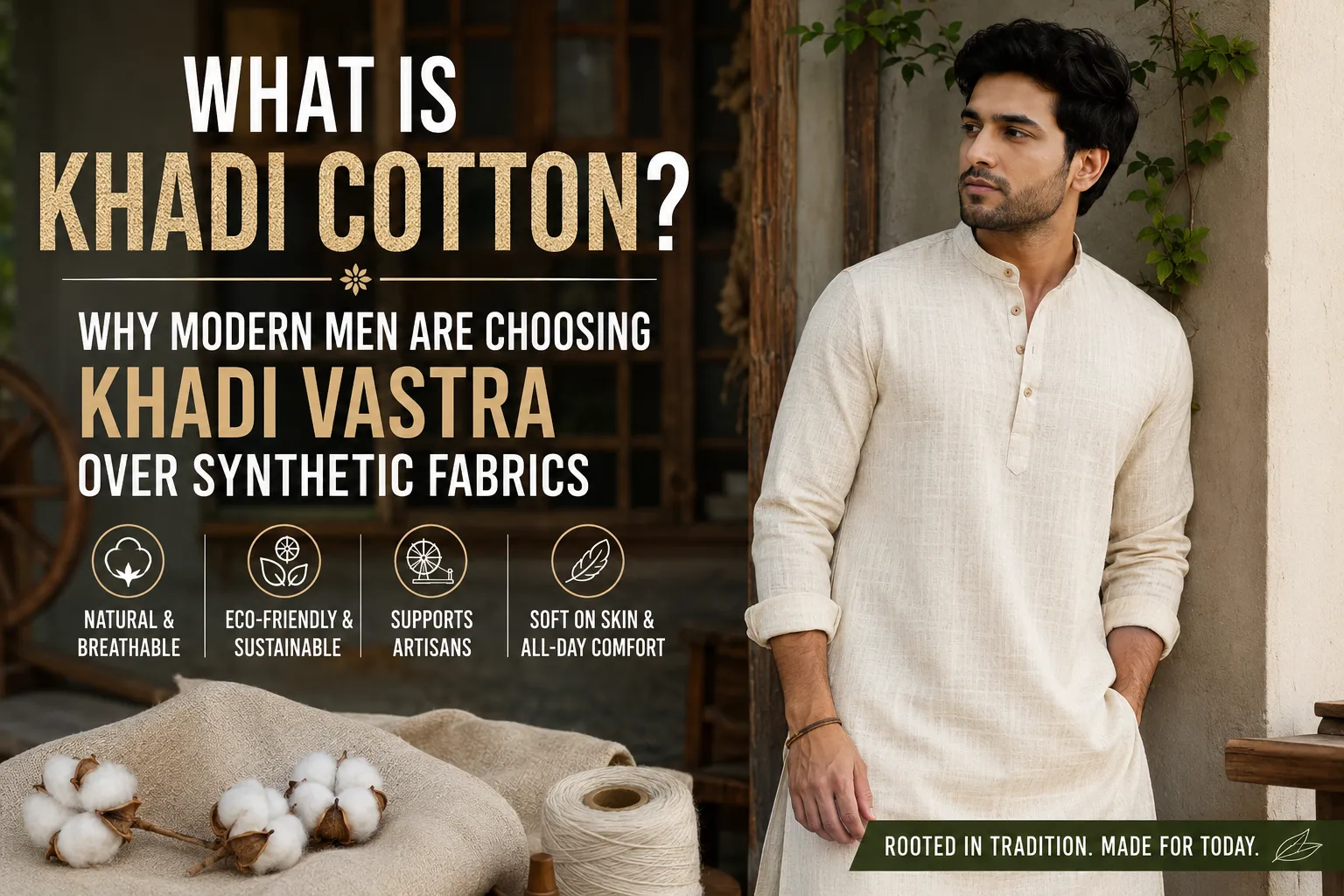

For years, clothing for men has mostly been about appearance. Branded shirts, polished trousers, trendy fabrics, everything focused on style. But recently, many men have started paying attention to something they ignored for a long time comfort- khadi cotton fabric.
Long office hours, crowded travel, rising temperatures, and stressful routines have made daily clothing more important than ever. A shirt may look expensive, but if it traps sweat and causes discomfort all day, does it really feel worth wearing?
This is one reason why Khadi Cotton is becoming popular again among modern men.
Khadi is no longer seen only as traditional wear. Today, it is becoming a practical choice for people who want breathable, comfortable, and natural clothing in their everyday life.
What Exactly Is Khadi Cotton?
Khadi Cotton is a hand-spun and handwoven fabric made using natural cotton fibers. Unlike machine-made fabrics produced in factories, Khadi is created by artisans using traditional spinning and weaving techniques.
The fabric became widely known during India’s freedom movement when Mahatma Gandhi encouraged Indians to wear Khadi as a symbol of self-reliance.
But today, people are choosing Khadi for a completely different reason — comfort.
According to the official Khadi and Village Industries Commission (KVIC), Khadi also supports local artisans and sustainable employment across India.
The Everyday Clothing Problem Most Men Don’t Talk About
Most men experience discomfort from clothing but rarely discuss it.
Sweating during meetings. Feeling exhausted in synthetic shirts. Skin irritation around the collar. Shirts sticking to the body during travel. These small frustrations slowly become part of daily life.
Rahul, a software professional from Pune, faced the same problem.
His work required sitting in an office for long hours and traveling daily in crowded traffic. Even though he wore expensive formal clothing, he constantly felt uncomfortable, especially during summer.
One weekend, he wore a simple Khadi kurta to a family event.
The difference surprised him.
The fabric felt airy and light. It didn’t cling to the skin, and for the first time in a long while, he felt relaxed in what he was wearing.
That small experience changed how he looked at clothing.
Today, Rahul prefers natural fabrics and often looks for:
Because comfort matters more to him now than flashy labels.
Why Khadi Feels More Comfortable
The biggest advantage of Khadi is breathability.
Since the fabric is handwoven, air passes through it more naturally compared to synthetic materials. This helps the body stay cooler, especially in hot and humid weather.
Khadi also absorbs sweat better, which reduces odor and discomfort during long hours.
Another reason people prefer Khadi is because it feels softer on the skin. Many synthetic fabrics contain chemical processing that can irritate sensitive skin, while Khadi feels more natural and gentle.
Over time, many people realize that comfortable clothing affects mood and confidence too.
When the body feels relaxed, the mind feels lighter.
More Than Fashion
Khadi is not only about style anymore. It also represents mindful living.
Fast fashion encourages people to buy quickly and replace clothes constantly. Khadi feels different because it values craftsmanship, simplicity, and durability.
According to the official Ministry of MSME – Government of India, the Khadi industry also helps generate employment in rural India.
That means every Khadi garment carries real human effort behind it.
Final Thoughts
Khadi Cotton is slowly becoming relevant again because people are looking for more than just fashion.
They want clothing that feels breathable, natural, and comfortable in daily life.
For men dealing with heat, sweat, and uncomfortable synthetic fabrics, Khadi offers a simple solution rooted in authenticity and comfort.
That is why more people today are exploring:
- Top khadi brands for men
- Affordable khadi kurta sets
- Authentic khadi kurta brands in India
because modern clothing should not only look good, it should also make everyday life easier and more comfortable.
Frequently Asked Questions
What is Khadi Cotton and why is it popular among men?
Khadi Cotton is a hand-spun and handwoven fabric made from natural cotton fibers. Its popularity among men has surged due to its breathability and comfort, offering a practical alternative to synthetic fabrics, especially during hot weather.
How does Khadi Cotton compare to synthetic fabrics in terms of comfort?
Khadi Cotton is known for its superior breathability and sweat absorption, making it more comfortable than synthetic fabrics that can trap heat and moisture. This results in less skin irritation and a more relaxed wearing experience throughout the day.
Can Khadi Cotton be worn for formal occasions?
Absolutely! Khadi Cotton is versatile and can be styled for formal settings. Many modern men are now opting for Khadi kurtas and shirts that maintain a sophisticated appearance while ensuring comfort.
Is Khadi Cotton more sustainable than regular clothing?
Yes, Khadi Cotton is more sustainable as it is produced using traditional methods that support local artisans and generate employment in rural areas. This contrasts with fast fashion, which often relies on mass production and can harm the environment.
Where can I find affordable Khadi kurta sets?
Affordable Khadi kurta sets can be found at various online retailers, local Khadi stores, and artisan markets. It's advisable to check trusted brands that specialize in Khadi to ensure quality and authenticity.
How does wearing Khadi affect mood and confidence?
Wearing Khadi can improve mood and confidence as it promotes comfort and relaxation. When clothing feels good on the body, it can positively influence how individuals feel throughout their day.
What are the best brands for Khadi clothing?
Some of the top brands for Khadi clothing include those recognized by the Khadi and Village Industries Commission (KVIC). Researching reviews and recommendations can also help identify trusted brands that prioritize quality and craftsmanship.





















Sign in to leave a comment.