

Quick Answer
Homeowners are increasingly looking at practical ways to strengthen fire safety beyond smoke alarms and portable extinguishers. A properly designed residential fire suppression system can provide an additional layer of protection by responding to dangerous heat and releasing water at the affected area. Professional design, installation, inspection, and maintenance help ensure the system remains prepared to perform when it is needed.
Key Takeaways
- Home sprinkler systems can provide early fire control while occupants respond and emergency services are contacted.
- Individual sprinkler heads activate when exposed to their operating temperature rather than automatically spraying throughout the entire home.
- Residential systems can be designed around the property's layout and water supply.
- Regular inspections and proper maintenance help keep the system ready for an emergency.
- Furniture, shelving, paint, or hanging objects should not interfere with sprinkler coverage.
- Local requirements can vary, so homeowners should understand applicable codes and ordinances before installation.
Why Homeowners Are Paying More Attention to Fire Protection
Fire can develop quickly, and the earliest moments of an emergency can make a significant difference. Smoke alarms provide an essential warning, but detection and suppression serve different purposes. A smoke alarm alerts people to danger, while an automatic sprinkler system is designed to release water directly over the area where sufficient heat has activated a sprinkler.
That makes residential fire suppression system planning an important consideration for homeowners who want a more comprehensive approach to protecting people and property.
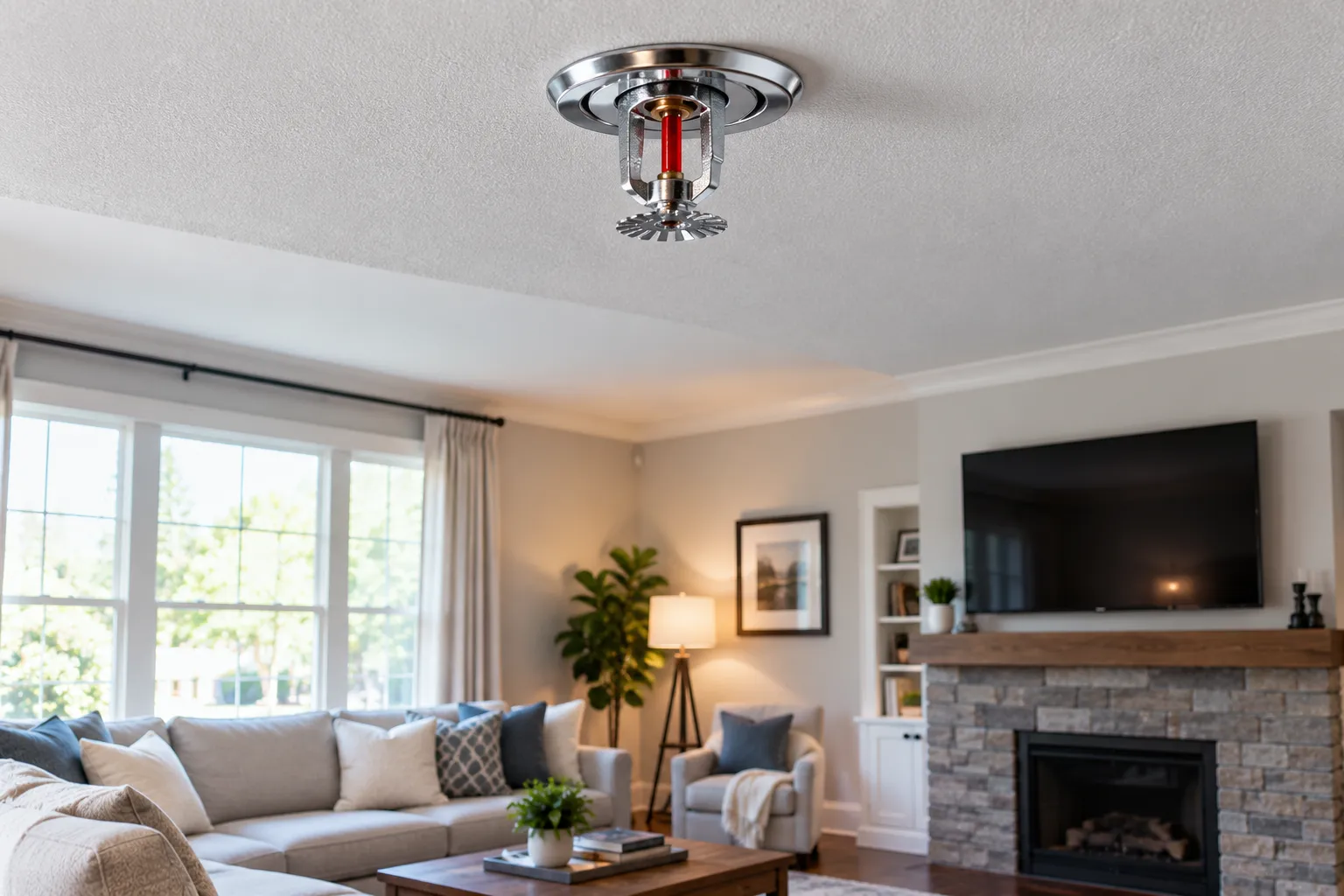
Modern residential sprinkler equipment is also designed to be less visually intrusive than many commercial sprinkler systems. The piping can sometimes be concealed within walls and ceilings, while sprinkler heads are available in smaller, lower-profile designs.
How Residential Sprinklers Respond to Fire
One common misconception is that every sprinkler head activates at the same time. Residential sprinkler systems generally work differently.
Each sprinkler head has a temperature-sensitive element. When the surrounding heat reaches the sprinkler's operating temperature, that individual head opens and releases water over the affected area. C&E Fire Protection explains that residential sprinkler heads typically operate within a temperature range of approximately 135 to 165 degrees, depending on the sprinkler.
This localized activation is an important part of the system's design. Rather than relying on someone to find an extinguisher and approach a developing fire, the sprinkler can respond automatically once the required temperature is reached.
The water supply may come from the home's water main or, depending on the system design, a dedicated storage tank. The appropriate arrangement depends on the property, system requirements, and available water supply.
What Should Homeowners Consider Before Installation?
Installing a home fire sprinkler system involves more than deciding where sprinkler heads should be placed. The system needs to work with the home's construction, layout, water supply, and applicable requirements.
1. Property Layout
Rooms, ceilings, wall construction, and potential areas of fire risk all influence sprinkler placement. A professional evaluation can help determine appropriate coverage throughout the property.
2. Water Supply
The available water source is an important part of system planning. Depending on the property and design, residential systems may use the household water supply or another approved water source.
3. Local Requirements
Residential fire safety requirements can differ between communities. C&E Fire Protection notes that many towns and cities in Illinois have adopted residential sprinkler ordinances for new single-family homes. Homeowners should check with their local authority or fire protection district to understand what applies to their property.
4. Professional Design and Installation
A properly planned system needs more than correctly positioned sprinkler heads. Pipe routing, water supply, sprinkler selection, spacing, and installation all need to work together.
Professional installation can also help ensure that the system is integrated appropriately into the home's construction rather than treated as an isolated component.
Why Maintenance Matters After Installation
Installing sprinklers is only the beginning. Like other safety equipment, an automatic fire protection system needs regular attention to remain ready.
C&E Fire Protection recommends quarterly or annual inspections and advises homeowners to report sprinkler damage immediately to a licensed fire protection company.
Homeowners should also avoid several common mistakes:
- Never paint sprinkler heads.
- Do not hang decorations, lights, or other objects from sprinkler heads.
- Keep furniture and shelving from obstructing sprinkler coverage.
- Maintain system control valves in the open position.
- Report visible damage or leaks promptly.
The company's residential guidance recommends keeping shelving and furniture at least 18 inches below sprinkler heads so that objects do not interfere with water distribution.
Residential Sprinklers and Overall Home Safety
A sprinkler system should not be viewed as a replacement for smoke alarms, fire extinguishers, an emergency escape plan, or other basic safety measures. Instead, these measures can work together.
Smoke alarms provide early warning. Escape planning helps occupants know how to leave safely. Fire extinguishers can be useful for appropriate small fires when someone has been trained to use them. Automatic sprinklers add another layer by responding to heat and releasing water at the affected location.
This layered approach can make home fire protection more comprehensive.
When Should Homeowners Consider Installation?
There is no single situation in which every homeowner must install the same type of system. However, sprinkler planning may be particularly relevant during new home construction, major renovations, or projects where local requirements call for residential sprinkler protection.
Planning early can also make installation easier because piping and other components can be coordinated with walls, ceilings, utilities, and other construction work.
For existing homes, a qualified fire protection professional can evaluate the property and explain available options based on its construction and water supply.
Frequently Asked Questions
Do residential sprinklers activate all at once?
No. Individual sprinkler heads are designed to activate when the heat around that particular sprinkler reaches its operating temperature. C&E Fire Protection specifically explains that each sprinkler has its own temperature-sensitive element.
Can sprinkler piping be hidden?
Yes. Depending on the property's construction and system design, piping can be concealed behind walls and ceilings. Residential sprinkler heads are also generally smaller and lower-profile than many commercial sprinkler heads.
How often should residential sprinklers be inspected?
C&E Fire Protection recommends regular quarterly or annual inspections. The appropriate inspection schedule should be determined according to the applicable requirements and the specific system.
Can I paint my sprinkler heads?
No. Homeowners should not paint sprinkler heads. Altering a sprinkler head can interfere with its intended operation.
What should I do if a sprinkler head is damaged?
Report the damage promptly to a licensed fire protection company. A damaged component should not simply be ignored because the system may need professional evaluation or repair.
Are residential sprinklers required in every home?
Requirements depend on the location, type of property, construction, and applicable local regulations. In Illinois, some municipalities have adopted residential sprinkler ordinances for new single-family homes. Homeowners should confirm requirements with their local authority or fire protection district.
Conclusion
Home fire safety involves more than installing smoke alarms and keeping an extinguisher nearby. Automatic sprinkler protection can add another layer of defense by responding directly to heat at the location where a fire begins.
For homeowners considering installation, professional planning is important. C&E Fire Protection provides residential fire sprinkler design and installation and serves communities throughout Chicagoland and Northwest Indiana. The company also provides inspection, maintenance, and emergency fire sprinkler services, backed by more than 35 years of industry experience.
To learn more about residential sprinkler options, system planning, and professional installation, visit C&E Fire Protection or explore its Residential Systems page.























Sign in to leave a comment.