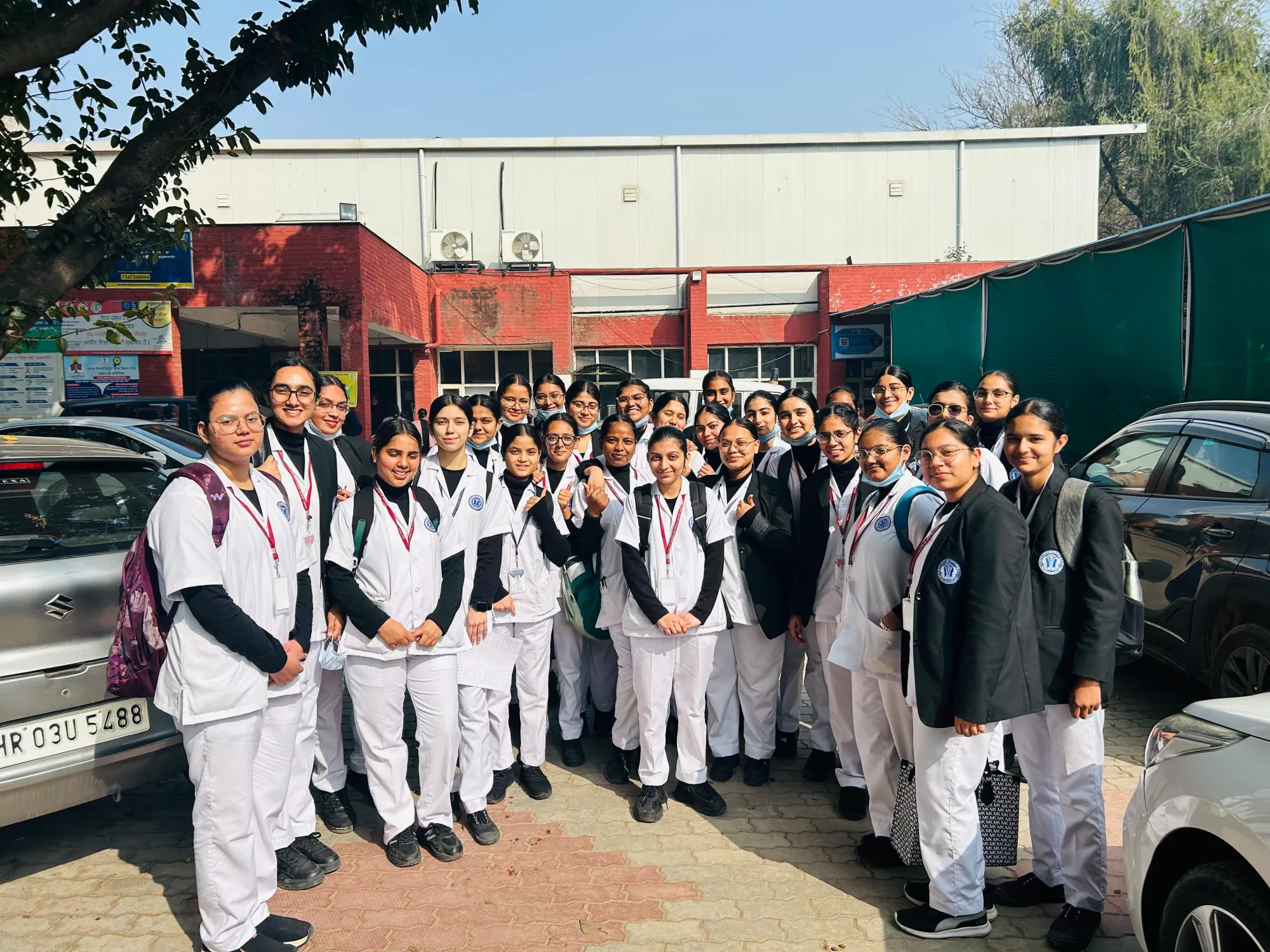
A clear-eyed look at the career everyone recommends but few actually explain.
Every year, around March, a strange kind of panic sets in for lakhs of 12th-pass students across India. Boards are done. Results are pending. And suddenly, every relative, neighbour, and family friend has an opinion on what you should do next.
Somewhere in that noise, someone usually says: "Why not nursing?"
For a lot of girls, that suggestion gets brushed aside too quickly, sometimes because of outdated ideas about the profession, sometimes because nobody explains what the career path actually looks like. This is an attempt to fix that. Not a sales pitch, just an honest breakdown of why nursing deserves a serious look, and what to actually check before you commit.
The world genuinely needs more nurses
This isn't an exaggeration used to sell a course. The World Health Organization has repeatedly flagged a global shortfall of nurses, and India is no exception. Hospitals in metro cities, smaller towns, and even abroad are actively hiring trained nursing staff. When an entire industry is short on skilled people, that translates into something very simple for you: job security that doesn't depend on the state of the economy.
Compare that to fields facing automation, hiring freezes, or oversaturation. Nursing sits in a rare category: a profession where human skill, judgement, and empathy cannot be replaced by software.
It's not "just for Science students"
One of the biggest misconceptions is that nursing is only for Biology-stream students who didn't get into medical college. That's simply false.
- B.Sc. Nursing (4 years) does require Physics, Chemistry, and Biology in 12th.
- GNM — General Nursing and Midwifery (3 years) and ANM — Auxiliary Nurse Midwifery (2 years) are open to students from any stream, including Arts and Commerce.
This means a girl who studied History and Political Science in 12th has just as real a path into nursing as someone from the Science stream. The only real differences are course duration and the depth of clinical specialization each path leads to.
What the job actually looks like, beyond the stereotype
Ask most people what a nurse does, and they'll describe someone giving injections or checking temperature. That's a fraction of the job.
Modern nursing includes patient monitoring and critical decision-making, coordinating between doctors, families, and hospital departments, community health outreach and preventive care education, specialised tracks like ICU, pediatric, oncology, or psychiatric nursing, and increasingly, roles in nursing education, hospital administration, and research.
A career that starts with a 2–4 year diploma or degree can eventually branch into leadership, academia, or highly specialised clinical work. Very few careers offer that much room to grow from a single starting qualification.
The emotional side nobody warns you about (in both directions)
Let's be honest: nursing will test you emotionally. You'll encounter patients in pain, families in distress, and situations that are hard to process at 18 or 19. That's real, and it deserves to be said plainly rather than glossed over.
But here's the flip side that often goes unmentioned: very few careers give you the chance to be the reason someone's worst day gets a little easier. Doctors diagnose. Nurses are present. They're the ones a scared patient actually talks to at 2 a.m. That presence, over years, builds a kind of quiet confidence and purpose that's hard to find in most desk jobs.
What to actually check before choosing a college
If nursing is starting to sound like the right direction, don't stop at "which college is closest" or "which college my cousin went to." A few things matter far more:
- Recognition and affiliation. Confirm the college is recognised by the Indian Nursing Council and affiliated with a proper university or state nursing council. This affects whether your degree is valid for jobs and further studies.
- Clinical training access. Ask which hospitals the college partners with for practical training. Classroom learning only goes so far, real hospital exposure is what builds competence.
- Faculty accessibility. Visit if you can. Colleges that let you interact directly with faculty and current students during admission tend to be more transparent about what student life is actually like.
- Admission process clarity. B.Sc. Nursing usually requires an entrance exam, while GNM and ANM are typically merit-based through state counselling. Every state has its own process and timeline, so check this early rather than scrambling close to the deadline.
If you're currently comparing colleges, it's worth checking the admission criteria and course details at MSK College of Nursing directly on their site, since eligibility rules and entrance requirements can shift slightly each year.
A quieter kind of ambition
Not every meaningful career comes with a viral LinkedIn post or a six-figure starting salary headline. Nursing is a quieter kind of ambition: steady, respected, and essential in a way that rarely goes out of demand.
If you're an 18-year-old still unsure what to do next, or a parent trying to help your daughter choose wisely, it's worth putting nursing back on the shortlist, not as a backup option, but as a genuinely strong first choice.
The best time to start researching is now, well before counselling deadlines close in. Talk to a working nurse if you can find one. Visit a campus. Ask hard questions. And if it feels right, don't let the noise of "safe" career opinions from people who've never worked a single hospital shift talk you out of it.























Sign in to leave a comment.