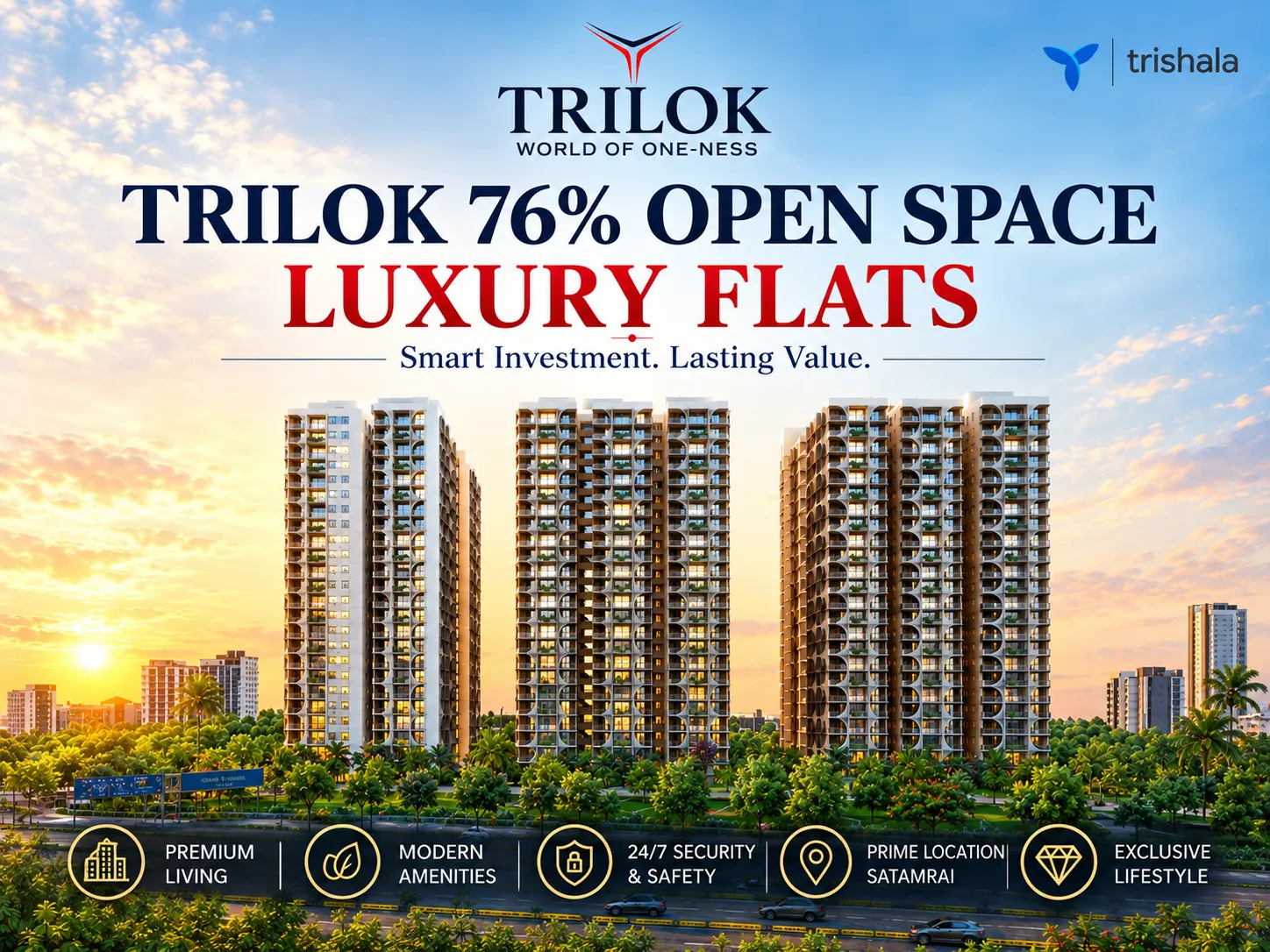

Urban living today comes with a quiet trade-off — taller buildings, denser neighborhoods, and shrinking breathing room. This is exactly why developments prioritizing greenery and open layouts are gaining attention from homebuyers who want more than just four walls. One such example is Trilok, a residential project that stands out for offering 76% open space, a figure well above the industry norm for most urban housing projects.

What Does 76% Open Space Really Mean?
In most residential complexes, open space typically ranges between 30% and 50% of the total land parcel, with the rest consumed by built-up structures, parking, and amenities. A project offering 76% open space essentially inverts this ratio — construction occupies a smaller footprint, while landscaped gardens, walkways, play areas, and recreational zones dominate the layout. This design philosophy directly impacts residents' quality of life, offering better ventilation, lower heat retention, improved biodiversity, and a genuine sense of community space.
Trishala Infra, the developer behind this initiative, has approached the project with a clear intent: to counter the concrete-heavy trend of modern real estate by designing communities around nature rather than around them. This is a meaningful shift, especially in cities where green cover is disappearing rapidly due to unchecked construction.
Why This Approach Benefits Homebuyers
Homes built within high open-space developments tend to offer better air circulation, reduced noise pollution, and cooler microclimates compared to densely packed towers. For families with children or elderly members, these open zones become functional spaces — for morning walks, evening play, yoga, or simply unwinding after a long day. From an investment standpoint, properties with generous open spaces also tend to hold their value better over time, as buyers increasingly prioritize lifestyle and wellness alongside location and price.
Additionally, projects like Trilok often incorporate sustainable elements — rainwater harvesting, native plantation, and reduced heat-island effects — that align with growing environmental awareness among urban dwellers.
A Shift Toward Mindful Urban Planning
The real estate industry is gradually moving away from cramming maximum units into minimum land. Developers like Trishala Infra, through projects such as Trilok, are demonstrating that thoughtful planning and open space allocation aren't just marketing terms — they're achievable design choices that genuinely enhance living standards.
Conclusion
As cities grow denser, the value of open, breathable spaces within residential communities becomes impossible to ignore. Trilok 76% open space model reflects a broader shift in how developers like Trishala Infra are rethinking urban housing — prioritizing wellness, sustainability, and community over sheer density. For homebuyers evaluating long-term livability, this kind of project offers a compelling alternative to the standard concrete-dominated developments seen across most cities today.
FAQs
Q1. What makes Trilok's 76% open space significant?
It's significantly higher than the industry average, allowing more landscaped and recreational areas compared to built-up structures.
Q2. Who is the developer behind Trilok?
The project is developed by Trishala Infra, known for its focus on sustainable and open-space-oriented residential planning.
Q3. Does more open space affect property value?
Yes, homes in open, well-planned communities generally see better long-term value appreciation due to rising buyer preference for green living spaces.





















Sign in to leave a comment.