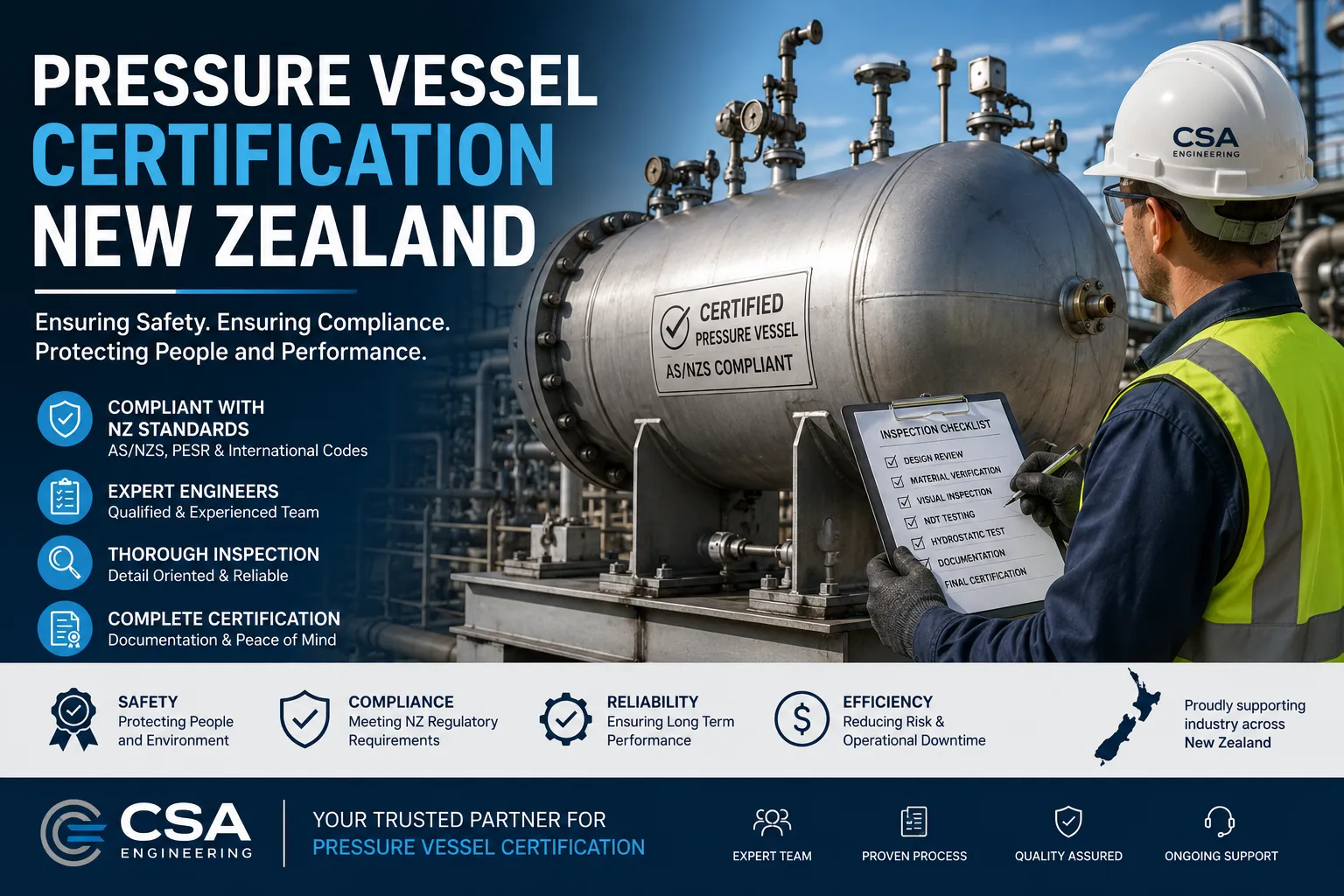

Pressure vessels are used across a wide range of industries, from manufacturing and food processing to healthcare, energy, and chemical production. These vessels are designed to store or process gases and liquids under pressure, making them critical components in many industrial operations. However, because they operate under high pressure, they also present significant safety risks if they are not properly designed, inspected, and certified.
This is why pressure vessel certification New Zealand is so important. Certification helps ensure that pressure vessels meet New Zealand's safety standards, perform reliably, and comply with legal requirements. Whether you're installing a new pressure vessel or maintaining an existing one, professional certification protects your business, employees, and equipment.
In this guide, we'll explore what pressure vessel certification involves, why it matters, and how it benefits businesses across New Zealand.
What Is Pressure Vessel Certification?
Pressure vessel certification New Zealand is the process of verifying that a pressure vessel has been designed, manufactured, installed, and tested according to applicable engineering standards and safety regulations.
The certification process typically includes:
- Design review
- Engineering calculations
- Material verification
- Structural assessment
- Pressure testing
- Inspection reports
- Compliance documentation
- Final certification
The goal is to ensure that the vessel can safely withstand its intended operating pressure throughout its service life.
Why Pressure Vessel Certification Matters
Pressure vessels store significant amounts of energy due to the pressure they contain. If a vessel fails, the consequences can include equipment damage, production downtime, environmental hazards, and serious injuries.
Professional certification reduces these risks by confirming that every aspect of the vessel has been properly evaluated before it enters service.
Certification also provides confidence to business owners, operators, and regulatory authorities that the equipment meets industry requirements.
Industries That Require Pressure Vessel Certification
Many industries rely on certified pressure vessels every day.
Manufacturing
Manufacturing plants use pressure vessels for compressed air systems, steam generation, and industrial processing.
Certification helps ensure continuous and safe production.
Food and Beverage
Food processing facilities often use pressure vessels in sterilization, pasteurization, and refrigeration systems.
Proper certification supports both product quality and workplace safety.
Chemical Processing
Chemical plants operate under demanding conditions involving high temperatures and pressures.
Certified equipment minimizes operational risks and helps maintain compliance.
Healthcare
Hospitals and laboratories use pressure vessels in medical gas systems and sterilization equipment.
Reliable certification is essential to protect both patients and staff.
The Pressure Vessel Certification Process
Professional certification follows a structured engineering approach.
Initial Assessment
The process begins with gathering important information about the vessel, including:
- Design pressure
- Operating temperature
- Vessel dimensions
- Materials used
- Intended application
- Previous inspection records
This information allows engineers to determine the most appropriate certification requirements.
Engineering Review
Qualified engineers review the vessel's design to verify its structural integrity.
This stage may include:
- Stress calculations
- Wall thickness verification
- Nozzle reinforcement checks
- Weld assessment
- Material compatibility review
Advanced engineering software is often used to validate the design before approval.
Inspection and Testing
Physical inspection is an important part of certification.
Depending on the vessel, engineers may perform:
- Visual inspections
- Hydrostatic pressure testing
- Non-destructive testing (NDT)
- Dimensional verification
- Weld inspections
Testing confirms that the vessel performs safely under expected operating conditions.
Documentation and Certification
After successful inspection, engineers prepare detailed documentation that may include:
- Engineering reports
- Inspection certificates
- Test results
- Compliance documents
- Certification records
These documents demonstrate that the vessel meets applicable standards.
Benefits of Pressure Vessel Certification
Choosing professional pressure vessel certification New Zealand offers several long-term advantages.
Improved Workplace Safety
Certification ensures that pressure vessels operate safely under pressure, reducing the likelihood of leaks, ruptures, or catastrophic failures.
A safer workplace also improves employee confidence and minimizes operational risks.
Regulatory Compliance
New Zealand has strict engineering and workplace safety requirements for pressure equipment.
Certification helps businesses meet these obligations and avoid potential compliance issues.
Increased Equipment Reliability
Properly certified pressure vessels are more likely to operate efficiently over long periods with fewer unexpected failures.
Reliable equipment contributes to smoother production and reduced downtime.
Lower Maintenance Costs
Engineering assessments often identify minor issues before they become major problems.
Early detection can significantly reduce repair costs and extend equipment life.
Signs Your Pressure Vessel May Need Inspection
Routine inspections are essential for maintaining safety.
Watch for these warning signs:
- Visible corrosion
- Pressure fluctuations
- Leaks around fittings
- Unusual noises
- Excessive vibration
- Damaged insulation
- Signs of fatigue or cracking
If any of these issues are observed, professional engineering assessment should be arranged as soon as possible.
Useful Tips for Pressure Vessel Owners
Keep Accurate Records
Maintain documentation for inspections, maintenance, repairs, and certifications.
Well-organized records simplify future inspections and demonstrate compliance.
Schedule Regular Inspections
Don't wait until problems develop.
Preventive inspections often identify issues early, reducing repair costs and downtime.
Avoid Unauthorized Modifications
Any modification to a pressure vessel can affect its structural integrity.
Always consult qualified engineers before making changes.
Work with Experienced Engineering Professionals
Certification should always be completed by experienced engineers who understand New Zealand regulations and applicable engineering standards.
Professional expertise ensures the certification process is completed correctly.
The Role of Modern Engineering Technology
Today's certification process benefits from advanced engineering tools.
Engineers commonly use:
- Computer-aided design (CAD)
- Finite Element Analysis (FEA)
- Digital inspection equipment
- Non-destructive testing methods
- Advanced material analysis
These technologies improve accuracy while providing greater confidence in certification results.
Why Professional Certification Is a Smart Investment
Some businesses see certification as simply a legal requirement, but it offers much more than compliance.
Professional certification helps:
- Protect employees
- Reduce operational risks
- Extend equipment lifespan
- Improve business reputation
- Minimize unexpected downtime
- Increase confidence during audits
Over time, these benefits often outweigh the cost of certification itself.
Final Thoughts
Pressure vessels are essential assets across many industries, but they also require careful engineering oversight to ensure safe operation. Certification provides assurance that the equipment has been properly designed, inspected, and tested to meet New Zealand's engineering and safety requirements. Whether you're installing a new vessel or maintaining existing equipment, investing in professional certification protects both your business and your workforce.
Choosing pressure vessel certification New Zealand from experienced engineering professionals helps ensure compliance, improves operational reliability, and supports long-term equipment performance. It's a practical investment that delivers safety, confidence, and peace of mind.
Ensure Your Pressure Vessels Meet New Zealand Standards
If your business relies on pressure vessels, don't leave safety and compliance to chance. CSA Engineering offers professional pressure vessel certification New Zealand services, including engineering assessments, inspections, testing, and certification. Contact their experienced team today to ensure your pressure vessels are safe, compliant, and ready for reliable long-term operation.























Sign in to leave a comment.