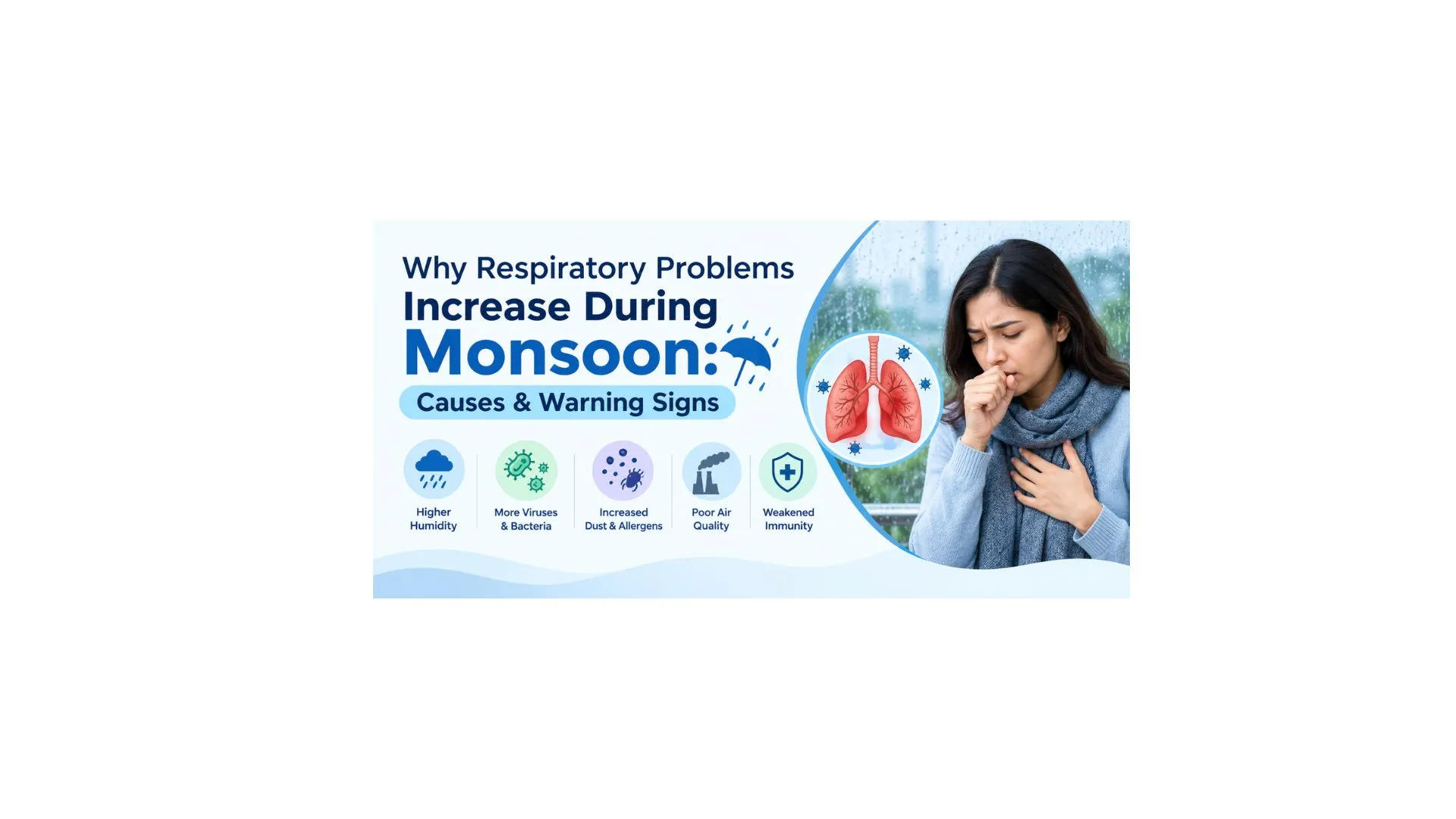
The monsoon season is a relief from the heat of the summer but the rise in humidity, dampness and sudden changes in temperature can affect respiratory health. Many people suffer from coughing, wheezing, breathing difficulties, allergies or recurrent infections during this season. Asthma, allergies, COPD or other pre-existing lung conditions might make people more sensitive to these seasonal changes.
Monsoon sees an increase in respiratory problems. Being aware of why respiratory problems are more prevalent during monsoon and identifying the signs early can help you in taking better care of your lungs.
Why Respiratory Problems Are More Common During Monsoon?
Many environmental and seasonal factors affect the respiratory system during the rainy season. Some of the more common reasons are
1. Rise in Humidity
Monsoon weather is usually associated with high humidity. High humidity will also affect the way we breathe, particularly if one is asthmatic or has any respiratory diseases. High humidity levels will also promote mold growth indoors.
2. Growth of Mold and Fungi
Mold flourishes in wet walls, moist clothes, and carpets in rooms which are not properly ventilated. Mold spores can go into the air and can affect those who are allergic to mold or have any respiratory issues.
3. Infection Bacteria & Viral
Heavy rain might make people stay indoors more, which could lead to closer contact with other people. Respiratory viruses spread more easily in crowded and poorly ventilated settings. The infection may involve the lower respiratory tract and at times be more severe.
4. Dust, Allergens & Air Pollution
Rain doesn’t always clear the pollution in the air. Dust, smoke, vehicle exhaust and other pollutants can linger in the environment. In addition to humidity, these irritants can also increase coughing, throat irritation, allergy and asthma symptoms.
5. Quick Temperature Shifts
When you go from an air-conditioned room to a humid environment outside, the temperature can change quickly. These changes could cause irritation of the airways, leading to coughing, wheezing or other respiratory symptoms in some people.
What respiratory problems flare up during monsoon?
Respiratory conditions may be affected by seasonal changes. Typical problems include:
- Asthma Attacks
- Hay fever
- Bronchitis
- Infections of the respiratory tract
- Pneumonia
- Sinus problems and breathing
- exacerbations of COPD
- Allergies to mold or fungus
Those with pre-existing lung disease should take extra care if their normal symptoms suddenly deteriorate.
What are the Signs of Respiratory Problems?
"A cough or cold does not necessarily mean something serious is wrong with the lungs. But there are some symptoms you shouldn’t ignore, particularly if they last or get worse.
Continuous Cough
If a cough lasts for several days, returns over and over, or gets worse and worse, it may need medical evaluation. Watch closely for a cough that comes with mucus, fever, or difficulty breathing.
Breathing difficulty
If you are short of breath with normal activity, at rest or at nite, it may be a sign that your lungs are not working properly. Difficulty breathing that is sudden or severe is a medical emergency.
Wheezing
The airways can sometimes get narrower and you may hear a whistling sound when you breathe. It is often associated with asthma, but can be observed in other respiratory diseases.
Chest Discomfort or Tightness
Don’t ignore a feeling of tightness, heaviness or discomfort in the chest, together with breathing problems. The cause can vary so good medical assessment is important.
High Fever and Chills
If someone has a fever and cough, weakness, chest discomfort or difficulty breathing they may have an infection that needs medical attention.
Mucus Changes
A sudden increase in mucus or a change in its color, particularly if this is accompanied by fever or worsening breathlessness, can be a sign of respiratory infection or exacerbation of an existing lung condition.
How to protect your respiratory health during monsoon?
Simple precautions can help to reduce exposure to common respiratory triggers during the rainy season.
- Make sure indoor areas are dry and well-ventilated.
- Tackle damp walls and visible mold immediately.
- Clean and dry clothes thoroughly to keep the fungi away.
- Avoid tobacco smoke and other irritants to the respiratory system.
- Keep air conditioners and air filters clean .
- Wash your hands often, especially after going outdoors.
- Keep away from people with contagious respiratory infections.
- Drink plenty of water and eat a well-rounded diet.
If you have asthma or COPD, be sure to stick to your doctor’s prescribed treatment plan.
Do not stop taking prescribed respiratory medicines without medical advice.
When to See a Pulmonologist
Any respiratory problem that causes symptoms that are persistent, recurrent, interfere with normal daily activities or become progressively worse should be evaluated. Patients with asthma, COPD, prior lung infections or any other chronic respiratory conditions should consult a doctor if they experience a change in symptoms during monsoon.
Call 911 or go to the emergency room if you have severe shortness of breath, blue lips or fingertips, confusion, severe chest pain, cough up large amounts of blood, or if your symptoms rapidly worsen.
Conclusion
Monsoon related respiratory symptoms may range from transient allergies and infections to exacerbations of chronic lung diseases. Early detection of warning signs can prevent complications and allow early treatment to begin.
A visit to a qualified pulmonologist can help determine the cause if you experience a lingering cough, wheezing, shortness of breath, frequent respiratory infections or other symptoms related to the lungs. Sarvesh Health City provides diagnostic and treatment services for several respiratory and lung diseases. For individuals, timely consultation with the Best Pulmonology Treatment Hospital in Hisar can be a crucial step toward better respiratory health.

























Sign in to leave a comment.