


Missed calls easily get avoided in the sales process, yet one cannot think of more potential sources of increasing revenues than these. It could be a missed inquiry from a prospective customer, a follow-up call from an existing client; the missed calls represent, by every measure, something missed. Tracking and managing these calls may help to prevent lost revenue, but it also gives actionable insights into the behavior of customers. Today, this blog will outline why the sales team must track their calls, its advantages to the company, and how the same can contribute to overall revenue growth.
1. The Importance of Missed Calls in Sales
In sales, every call to a client or prospect counts. Sales teams tend to ignore calls that were missed or could not be connected, meaning a great deal of the value may lie in the missed call. Every missed call is a potential sale, and if it goes without tracking and follow-up, companies are likely to miss those opportunities of sale.
In the industry, especially in B2B where sales cycles are longer and more complex, missed calls might even bring bigger consequences: delayed decision-making, loss of trust, or even a switch to a competitor.
2. Why Missed Calls Are Missed Opportunities
A missed call is not merely a failed communication attempt; it is an opportunity missed towards reaching a lead or towards retaining a customer. Each missed call is the equivalent of:
- Revenue Lost: That call could be an inquiry resulting in a sale.
- Low Customer Retention: The reason behind this is a customer wants a response within a short time frame, and one such missed call eats away at trust.
- Damaged Brand Image: The repeated missed calls can often depict the company as untouchable or unorganized.
Businesses follow these missed calls to regain the money that could have been earned, improve their client satisfaction rating, and prevent loss of their brand image.
3. Benefits of Tracking Missed Calls
A. Recovering Lost Revenue
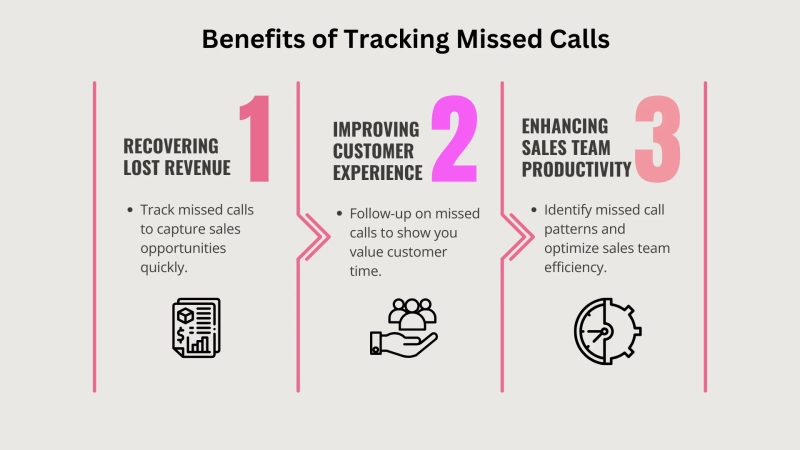
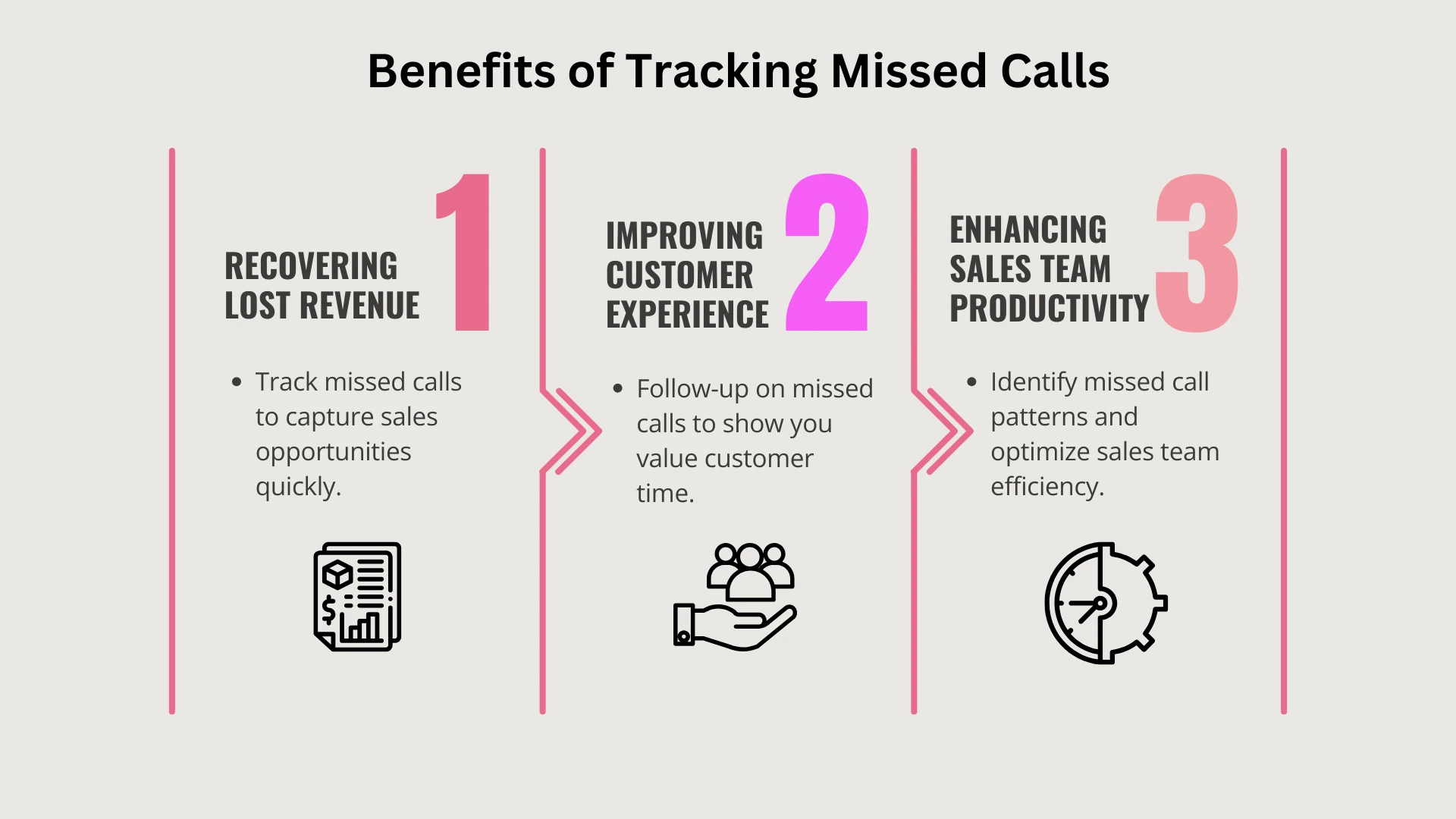
With a sales team tracking missed calls, this means that there is an opportunity to follow up quickly on potential clients who might have perhaps abandoned an inquiry. Missed calls lead to businesses salvaging sales opportunities that would otherwise be gone.
B. Improving Customer Experience
Missed call follow-up tells the customer that the business values his or her time and sentiments. This is helpful in garnering even better customer experiences and because of the good relations built with them, customers are more likely to return for repeat business.
C. Enhancing Sales Team Productivity
Missed calls tracking helps sales teams follow up on crucial leads. Proper tracking also reveals to sales managers recurring patterns about when most calls are missed, so they can make necessary adjustments to staffing or processes; this way, the team is sure to optimize every bit of time it has and focus more on high-potential leads.
4. How to Effectively Track Missed Calls
Hence, a business should manage the missed call in a systematic manner. The success factor of call tracking are as follows:-
- Automated Call Logging: Every single missed call should be logged automatically in the CRM or the tracking tool.
- Immediate Notifications: The sales teams should be intimated about the missed call in real-time so that the call can be executed in the same clock cycle.
- Categorization: Call tagging is done in the order of priority. All the high-potential sales calls should be covered first.
5. Tools and Strategies for Managing Missed Calls
There are many tools and methodologies applied to manage missed calls. Some of them include:
- CRM Integration: A powerful CRM system, when integrated with call tracking software, can automatically log the missed calls and assign it to the right sales representatives to contact on those calls.
- Call Routing: Intelligent call routing can be used to minimize missed calls by directly forwarding the customer to available agents for them based on predefined rules.
- Automated Follow-Ups: Gives messages or emails to clients who missed the call, intimating them that the business is aware of the missed connection and will follow up soon.
6. Salestrail Features to Help Track Missed Calls
It provides fully inclusive call tracking solutions that automatically log calls and send real-time notifications. From there, sales teams can track missed calls and follow up immediately to avoid lost sales opportunities. Integration with CRM platforms also goes smoothly to make sure no lead is left behind.
7. Overcoming Challenges in Missed Call Tracking
While the missed call tracking has some significant advantages, it is not devoid of challenges. The challenge includes the time-bound followup, as sometimes, due to lesser manpower, there might be difficulty at peak hours, and then there is a need for strong organizational tools and workflows when handling a high volume of missed calls.
To overcome the issue:
- Invest in Automation: It may help reduce the burden on the sales teams to a greater extent as call log and follow up tasks would be automated.
- Optimize Staffing: As there is a pattern for missed calls, that can be used to optimize the strength of people present during those peak hours.
- Use Analytics: Use analytics of call tracking to identify common causes for missed calls, then get rid of them by targeting the source.
8. Conclusion
But missed calls are more than just lost communications; they're missed opportunities that can have direct implications on revenue. By tracking and managing those calls, sales teams can recover lost revenue, improve customer relationships, and do things much better in other areas of work. Giving the right tools, such as Salestrail.io, can help businesses turn a missed call into a valuable sales opportunity.