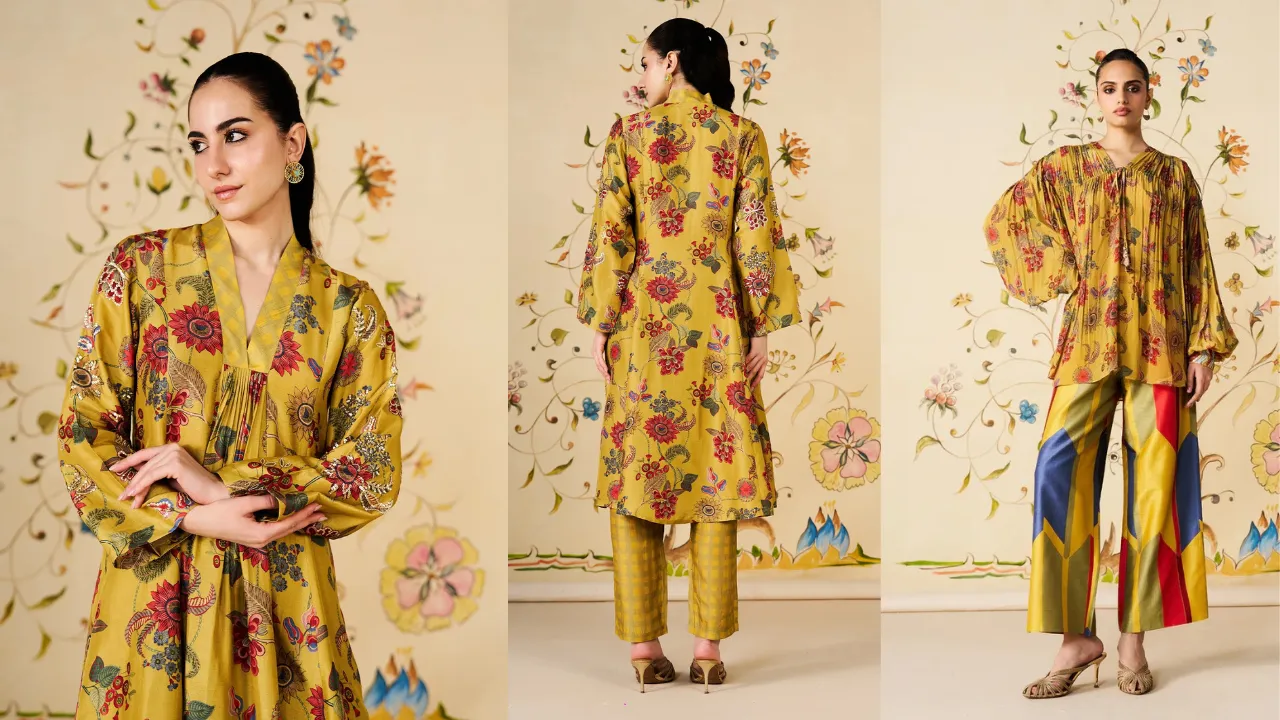

When it comes to festive dressing, fabric matters just as much as color or cut. For Raksha Bandhan, two fabrics consistently rise to the top of every shopping list: silk and Chanderi. If you're building your Rakhi outfit for this year's celebration, understanding why these fabrics work so well can help you choose a piece you'll want to wear again and again.
Silk: Timeless and Photograph-Ready
Silk has been the fabric of celebration in India for centuries, and it hasn't lost its appeal. Its natural sheen catches the light beautifully, whether you're posing for family photos or sitting through a long puja. Silk also drapes with a certain structure and weight that makes even a simple kurta look elevated, which is why it remains the default choice for sisters who want their outfit to feel special without trying too hard.
Chanderi: Lightweight Luxury
Chanderi, with its signature sheer texture and delicate zari work, offers a lighter alternative to traditional silk. It's breathable, which makes it ideal for August celebrations when the weather can still be warm and humid in most parts of India. Despite being lightweight, Chanderi carries a rich, almost translucent shimmer that feels equally festive, especially in pastel and jewel-toned palettes.
Which One Should You Choose?
If your Rakhi celebration involves a lot of movement, family visits, cooking, or an outdoor function, Chanderi's breathability will serve you better through the day. If you're attending a more formal, seated gathering, silk's structure and richness may suit the occasion more. Many of our designer kurta sets are crafted in both fabrics, so you can pick based on comfort as much as look.
Pairing Fabrics with Silhouettes
Silk works beautifully in fitted kurtas and structured anarkalis, while Chanderi's fluidity makes it a favorite for flared silhouettes. If you love a bit of movement when you walk, our designer sharara sets in Chanderi blends give you the drama of a flare with the lightness the fabric is known for.
Caring for Silk and Chanderi
Both fabrics deserve a little extra care. Dry cleaning is recommended for silk to preserve its sheen, while Chanderi should be stored folded rather than hung, to prevent the delicate weave from stretching. With the right care, either fabric can become a piece you return to for festivals for years to come.
The Cultural Significance of These Fabrics
Silk has long been considered auspicious in Indian tradition, often worn during pujas and important rituals because of its association with purity and prosperity. Chanderi, originating from Madhya Pradesh, carries its own legacy of royal patronage and fine handloom craftsmanship. Choosing either fabric for Raksha Bandhan connects your outfit to a much older tradition of dressing with intention for meaningful occasions.
Cotton Silk: A Practical Middle Ground
If pure silk feels too heavy and Chanderi feels too delicate for your plans, cotton silk offers a practical middle ground. It carries a subtle sheen similar to silk while remaining easier to maintain and more breathable through a long day of celebrations. It's an especially good choice if your Rakhi day involves travel or a lot of time outdoors.
Zari Work and Embellishments
Both silk and Chanderi take zari work exceptionally well, the metallic thread catching the fabric's natural sheen to create a richer, more festive finish. When choosing between heavier zari borders and lighter, scattered motifs, consider how long you'll be wearing the outfit, heavier embellishment looks stunning in photos but can feel weighty over several hours.



















Sign in to leave a comment.