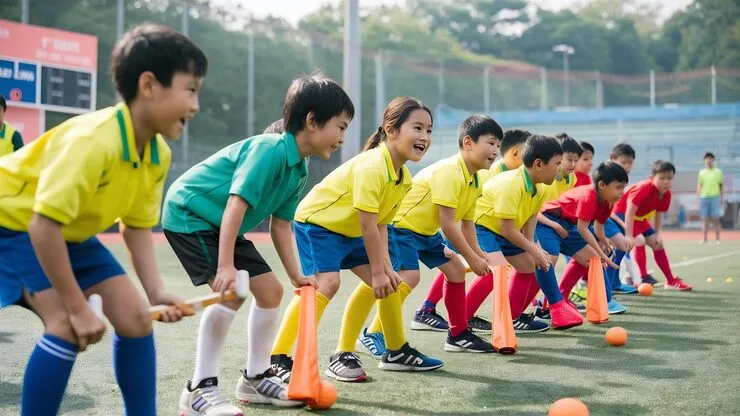

A multi sport camp gives children structured exposure to several different sports within a single programme. Rather than committing to one discipline early, children explore movement, teamwork, and coordination across varied activities. For Singapore parents looking to build well-rounded, physically confident kids, this format offers measurable developmental benefits beyond the sports field.
What Makes Multi Sport Camps Different From Single-Sport Training?
A multi sport camp is more comprehensive, with kids moving from one activity to another such as football, basketball, gymnastics and swimming all within one camp session. The variety is lively and avoids the pressure to specialize too early.
Studies have shown time and again that early diversification in sport correlates with lower burnout and long-term athletic development. Kids who play multiple sports before age 12 are more likely to stay physically active as teens.
Why Singapore Parents Are Making the Switch
According to Sport Singapore’s national physical activity guidelines, children aged 7 to 17 should undertake at least 60 minutes of moderate-to-vigorous physical activity daily. Most children of school age are far out of line.
Multi-sports in Singapore are gaining popularity as they solve a very specific parenting dilemma: how do you keep kids motivated, active and socially connected – especially during school holidays? That is exactly what a structured camp setting provides, without the hassle of trying to coordinate many separate activity schedules that parents face.
Academic Holidays Are the Perfect Entry Point
Parents are always on the lookout for purposeful activities during school holidays in Singapore especially the June and December breaks. A good holiday camp fills the gap between rest and learning and provides children with a reason to be outdoors and physically active without it feeling like a chore.
Key Benefits of a Multi Sport Camp for Growing Children
The advantages go well beyond fitness. Here is what Singapore parents consistently report after enrolling their children:
- Broader motor skill development: Each sport trains different muscle groups and movement patterns. Football builds agility. Swimming develops breath control. Gymnastics sharpens balance. Together, they create a physically versatile child.
- Social confidence: Children mix with peers from different schools and backgrounds. Group activities build communication and teamwork in a low-stakes environment.
- Discovering hidden interests: Many children discover a sport they love simply because they were exposed to it. Camps create safe, encouraging spaces for that discovery.
- Reduced screen dependency: Structured physical activity during holidays naturally fills hours that might otherwise be spent on devices.
- Resilience and adaptability: Switching between sports teaches children to handle new challenges quickly — a transferable life skill.
What to Look for in a Multi Sport Camp in Singapore
Not all holiday camps are created equal. Here are some practical questions Singaporean parents should ask as you weigh your options:
Are Coaches Qualified and Child-Focused?
Look for camps that have coaches with recognized sports coaching qualifications and experience working specifically with children. As important as the curriculum is the coaching style. Children perform best when encouraged, not pressured.
Is the Programme Age-Appropriate?
A 6 year old needs a fundamentally different kind of coaching than a 12 year old. Camps that group children by age and developmental stage have better outcomes. Look for clear groupings and adapted plans for activities.
What Is the Camper-to-Coach Ratio?
Smaller group sizes mean more personalised attention. For younger children especially, a high ratio of coaches to campers ensures safety and maximises skill development time per child.
The Long-Term Case for Early Multi-Sport Exposure
The evidence behind early sports diversification is compelling. The Long-Term Athlete Development (LTAD) model, widely referenced by sports science practitioners across Asia, recommends a "sampling phase" between ages 6 and 12 — precisely where multi sport camps operate.
Children who go through this phase are statistically more likely to find a sport they enjoy, stick with it longer, and develop healthier physical habits into adulthood. In a city like Singapore, where lifestyle diseases linked to physical inactivity are a growing concern, building these habits early carries real public health value.
| Benefit | Single Sport | Multi Sport Camp |
|---|---|---|
| Motor skill variety | Limited to one discipline | Broad, cross-sport development |
| Child engagement | Can plateau over time | Consistently high due to variety |
| Burnout risk | Higher with early specialisation | Lower with rotation-based format |
| Social exposure | Same peer group | Mixed, wider social circle |
| Holiday scheduling | Requires year-round commitment | Flexible, holiday-friendly blocks |
Making It Work for Your Family
The best first step is matching the camp format to your child's current stage. For children who have never done organised sports, a multi sport holiday camp is an ideal, low-pressure introduction. For children already active in one sport, it broadens their physical vocabulary without replacing what they already love.
Sporty Bots offers structured holiday camp programmes in Singapore designed around exactly this philosophy — active, skill-building, and genuinely fun for children across different ages and ability levels. If you are looking for a purposeful way to keep your child moving and growing this school holiday, it is worth exploring what a thoughtfully built multi sport experience can offer.
Frequently Asked Questions
What age group is a multi sport camp suitable for?
Most multi sports camp in Singapore cater to children between the ages of 5 and 14. Programmes are typically grouped by age to ensure activities are developmentally appropriate. Younger children focus on fundamental movement skills, while older campers work on more structured sport-specific techniques across multiple disciplines.
How does a multi sport camp help with my child's physical development?
Exposure to different sports trains varied muscle groups, improves coordination, and builds overall athleticism. Children develop balance, agility, strength, and spatial awareness more broadly than through single-sport training. This physical variety also reduces the risk of overuse injuries common in early sports specialisation.
Are multi sport camps in Singapore suitable for children with no prior sports experience?
Yes. Multi sport holiday camps are specifically designed to be beginner-friendly. Qualified coaches introduce each sport progressively, ensuring children learn at a comfortable pace. The goal is enjoyment and exploration first, skill-building second — making it an ideal starting point for children new to organised physical activity.
How many sports are typically covered in a multi sport holiday camp?
Most programmes rotate children through four to six different sports over the camp duration. Common activities include football, basketball, gymnastics, swimming, and racket sports. The rotation keeps sessions fresh and ensures every child gets exposure to a wide range of movement patterns and team-based activities.

























Sign in to leave a comment.