

Getting people to visit a website sounds like a clear sign of online success, but traffic by itself does not guarantee that a business will grow. A website can receive visitors every day and still generate very few enquiries, sales, bookings, or meaningful customer interactions. The real challenge is what happens after someone discovers the business. Modern customers expect a website to load quickly, answer their questions, provide a smooth experience, establish trust, and make the next step easy. When these elements are disconnected, businesses can spend considerable time and money attracting visitors without getting enough value from that attention.
This is why modern digital marketing is moving beyond the traditional idea of simply ranking pages or running campaigns. Businesses need to understand the complete journey from discovery to conversion. Search visibility may bring someone to a website, but strong content helps them understand the offer, good design makes the business feel credible, fast performance keeps the experience comfortable, and clear conversion paths help visitors take action. The goal is not simply to attract more people; it is to create a digital experience that gives the right people a reason to stay, trust the business, and move forward.

The Gap Between Visibility and Conversion
One of the biggest problems businesses face is the gap between being visible online and actually converting that visibility into results. A company may appear in search results for important keywords, publish content regularly, and maintain an active digital presence, yet still struggle to generate consistent leads. This often happens because the strategy focuses heavily on attracting attention while overlooking what happens once that attention arrives.
A successful digital presence should answer a simple question at every stage: what should the visitor do next? A product page might need stronger information, a service page may need clearer positioning, or a landing page might need a more straightforward enquiry process. Sometimes the problem is technical, such as slow loading times or poor mobile usability. In other cases, the content may not match the visitor's search intent. Looking at these issues as part of one connected customer journey can reveal opportunities that are difficult to see when SEO, design, development, and marketing are treated as completely separate activities.

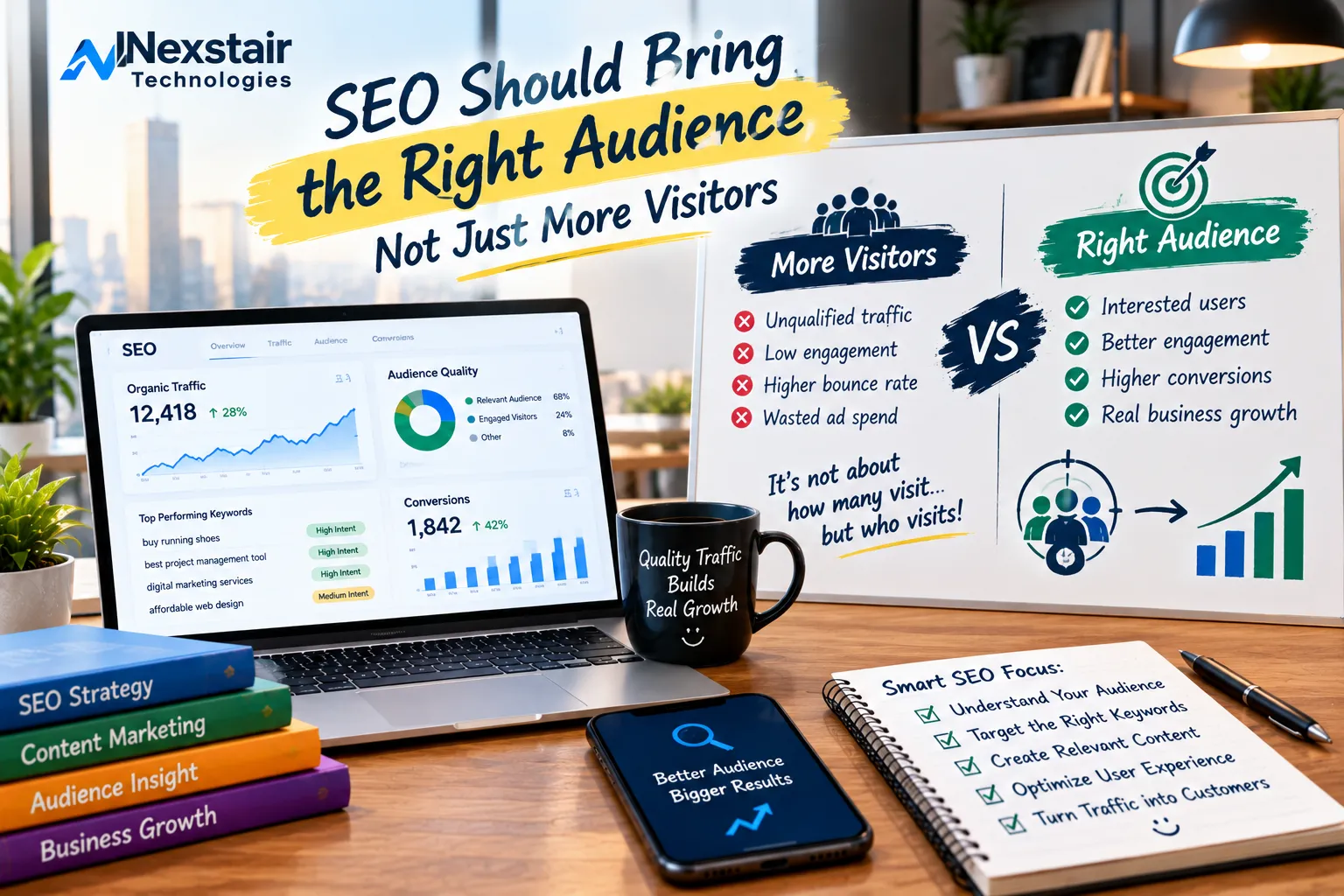
SEO Should Bring the Right Audience, Not Just More Visitors
Modern SEO is increasingly about relevance, usefulness, and satisfying search intent rather than simply placing keywords on a page. Search engines have become much better at understanding context, topics, relationships between concepts, and the usefulness of content. That means businesses need content that genuinely addresses what their potential customers are trying to understand or accomplish.
A strong SEO strategy therefore begins with understanding the audience and the questions behind their searches. Technical SEO, site architecture, internal linking, structured data, Core Web Vitals, content quality, and authority all contribute to a stronger search presence, but they should support a larger business objective. The purpose of SEO is not just to increase impressions. It should help qualified people discover the business at the right moment and guide them toward useful information and relevant services.
Your Website Is Part of the Sales Journey
A website should not be treated as a digital brochure that simply lists products or services. It is often one of the first places where a potential customer evaluates whether a business is worth trusting. Within a few moments, visitors form an impression based on the design, messaging, navigation, performance, and quality of information available to them.
This makes website development and design important parts of the growth strategy. A technically strong website should work smoothly across devices, provide clear navigation, support search visibility, and make important information easy to find. At the same time, the design should communicate the brand's value without overwhelming the visitor. When development, design, SEO, and content work together, the website becomes more than an online presence; it becomes an active part of the customer journey.
Automation Can Help Businesses Respond Faster
Another missing piece in many digital strategies is what happens after a potential customer submits a form, requests information, or shows interest in a service. If every enquiry has to be handled manually, opportunities can be delayed or lost simply because the business cannot respond quickly enough.
AI-powered automation can help businesses organize repetitive processes and create more efficient workflows. Lead notifications, customer follow-ups, data movement between systems, reporting, CRM processes, and other repetitive tasks can potentially be connected through automation. The objective is not to remove the human element from business. Instead, automation can give teams more time to focus on conversations, decisions, creativity, and customer relationships while routine processes are handled more efficiently.

Content Should Build Trust Before Asking for a Sale
People rarely make important purchasing decisions based on a single page. They often research different options, compare providers, read educational content, look for evidence of expertise, and try to understand whether a company can actually solve their problem. This is why a modern content strategy should focus on building trust throughout the customer journey.
Helpful guides, service explanations, case studies, FAQs, comparison content, industry insights, and educational resources can all contribute to this process. Instead of producing content simply because a keyword has search volume, businesses should create resources that answer real questions and remove uncertainty. This approach can make content more useful to readers while also creating stronger topical relevance for search engines.
The Better Approach Is to Connect Everything
The strongest digital strategies do not treat SEO, websites, content, design, development, marketing, and automation as isolated projects. They connect these areas around a common business objective. When a company understands its audience, creates useful content, builds a technically strong website, improves search visibility, and connects repetitive processes through automation, each part can support the others.
This integrated approach is one of the areas where Nexstair Technologies positions its services differently. Rather than looking at a website, SEO, or automation as completely separate pieces, Nexstair focuses on connecting digital presence, search visibility, technology, and business processes into a more complete growth system. The idea is simple: when the different parts of a digital strategy work together, businesses have a better opportunity to turn online attention into meaningful results.

What Businesses Should Measure Beyond Traffic
Website traffic is useful, but it should not be the only number a business watches. A better measurement approach looks at what visitors actually do after arriving. Depending on the business model, useful indicators can include qualified enquiries, conversion rates, engagement with important pages, organic visibility, lead quality, returning visitors, customer acquisition costs, and the performance of specific landing pages.
These measurements provide a much clearer picture of whether digital marketing is contributing to business growth. For example, increasing traffic while conversion rates remain weak may indicate that the business needs to improve its landing pages or messaging rather than simply pursue more visitors. On the other hand, strong engagement but poor lead follow-up could point toward an operational or automation problem. Looking at the complete journey makes it easier to identify where improvement will have the greatest impact.
The Future of Digital Growth Is More Connected
The businesses that succeed online will not necessarily be the ones that publish the most content or chase every new digital trend. They will be the ones that understand how different parts of the digital experience influence each other. Search can create discovery, content can build understanding, design can establish trust, development can improve usability, automation can improve efficiency, and analytics can reveal what needs to change.
That is the bigger shift happening in digital marketing. Instead of asking, “How can we get more traffic?” businesses should increasingly ask, “How can we create a better journey for the people we want to reach?” That change in perspective can lead to smarter decisions, better customer experiences, and a digital presence that contributes to long-term growth rather than simply generating numbers.
Frequently Asked Questions
Is website traffic enough to grow a business?
No. Traffic is valuable only when it comes from relevant visitors and contributes to meaningful actions such as enquiries, purchases, bookings, subscriptions, or other business goals. A smaller amount of highly relevant traffic can sometimes be more valuable than a large amount of visitors who have little interest in the offer.
How does SEO contribute to business growth?
SEO helps businesses become discoverable when people are actively searching for relevant information, products, or services. Modern SEO combines technical optimization, useful content, search intent, website structure, performance, internal linking, and other signals to create a stronger overall search experience.
Why is website design important for conversions?
Website design influences how easily visitors understand a business and find the information they need. Clear navigation, strong messaging, mobile usability, fast performance, and an intuitive user experience can make it easier for visitors to move from discovering a business to taking meaningful action.
Can AI automation help small businesses?
Yes. Automation can be useful for repetitive tasks such as lead management, notifications, workflow coordination, reporting, and certain customer follow-up processes. The best approach is to automate appropriate repetitive work while keeping human involvement where judgment, communication, and relationship-building matter.
What makes Nexstair different from a basic digital marketing service?
Nexstair Technologies approaches digital growth across several connected areas, including SEO, website development, design, AI automation, and digital solutions. This broader approach can help businesses address not only how people discover them online, but also what happens after those visitors arrive and how internal digital processes support growth.
Conclusion
Getting traffic is only the beginning. Real digital growth happens when visibility, content, website experience, technology, automation, and business strategy work together. Businesses that focus on the complete customer journey can move beyond chasing clicks and start building a digital presence designed around meaningful outcomes. In an increasingly competitive online environment, that connected approach can become a genuine advantage for businesses looking to grow smarter and build lasting digital value.






















Sign in to leave a comment.