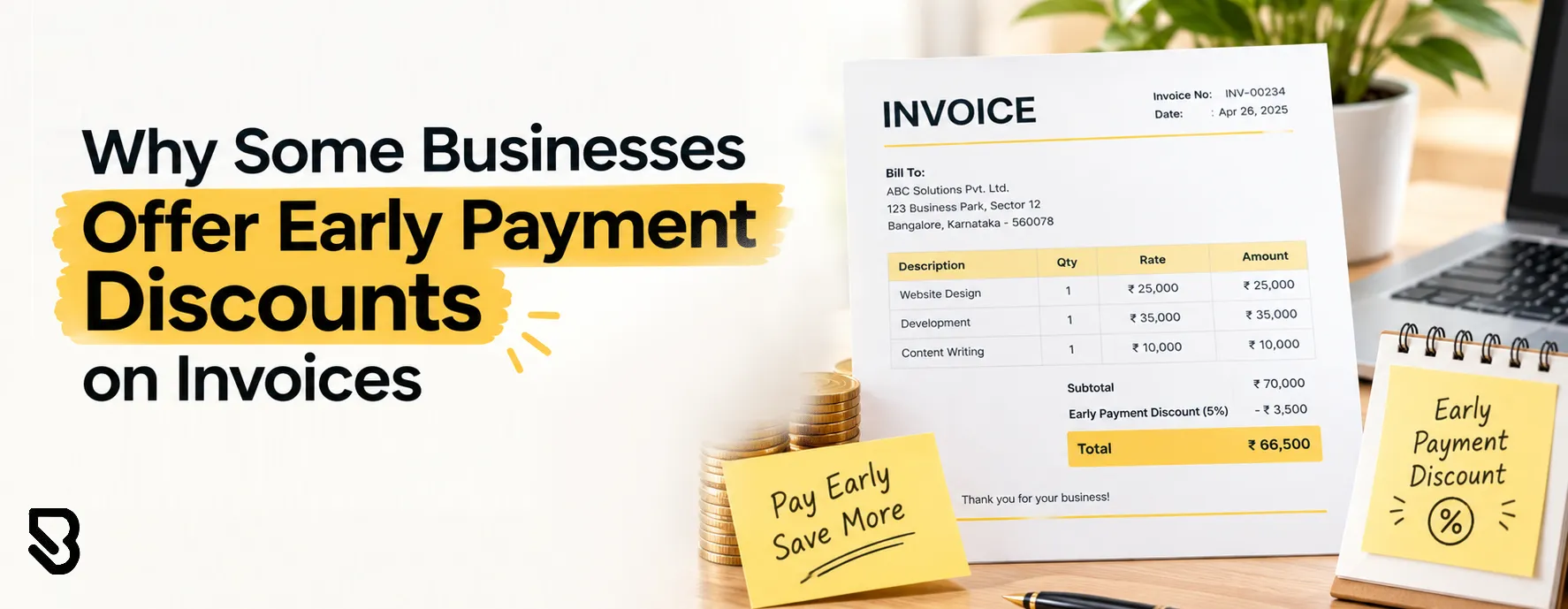

Cash flow gaps are one of the most common reasons small businesses struggle even when they're profitable on paper. An early payment discount is one of the simplest tools for closing that gap: you offer a client a small percentage off their invoice if they pay well before the due date, in exchange for getting cash in hand sooner.
How the Discount Is Usually Structured
The most common format looks like “2/10 net 30” — a 2% discount if the invoice is paid within 10 days, with the full amount due in 30 days otherwise. The numbers can be adjusted (1/10 net 30, 2/15 net 45, and so on), but the structure stays the same: a small percentage, a short early window, and a longer standard due date. This shorthand is worth stating clearly on the invoice itself, near the total, rather than assuming the client will dig through a separate terms sheet.
Is It Actually Worth Offering?
A 2% discount for paying 20 days early sounds small, but annualized it works out to a return in the high thirties percent — far more than most businesses earn parking that cash anywhere else, and more than what's typically paid in short-term borrowing costs to bridge a cash gap. For a business that regularly waits 45–60 days to get paid, offering a modest early discount can be cheaper than taking on a credit line to cover the same gap.
Weigh It Against Your Margins
The discount only makes sense if your margins can absorb it. A 2% reduction is easy to justify on a service invoice with healthy margins; on a low-margin product resale business, even a 1% discount might eat meaningfully into profit. It's worth calculating the actual rupee impact per invoice before deciding on a standard rate, rather than copying a number because it's the common convention.
Be Clear About the Deadline
Ambiguity is where early payment discounts break down in practice. “Within 10 days” needs a fixed reference point — most businesses count from the invoice date, not the delivery date or the date the client opens the email — and that reference point should be stated on the invoice, not left implied. If a client pays on day 11 expecting the discount, that's a dispute that didn't need to happen.
Keep the Math Visible
When a client does pay early, the invoice or receipt should show the original amount, the discount applied, and the final amount paid — not just a final number that doesn't match what was originally quoted. This keeps your own bookkeeping clean too, since the discount needs to be recorded correctly as a reduction in revenue rather than an expense. An invoice generator that lets you set payment terms once and have the discount calculation and both figures shown automatically removes the manual math and the risk of a mismatched total going out to a client.
Not Every Business Needs This
Early payment discounts work best for businesses with recurring B2B clients and real cash flow pressure — they're less useful for one-off retail transactions or clients who already pay promptly. Before adopting a blanket policy, it's worth checking whether the businesses you invoice would actually respond to the incentive, or whether the discount would just become a routine cost with no behavior change on the other end.
























Sign in to leave a comment.