

For a long time, strength training was closely associated with bodybuilding, muscle growth and athletic performance.
Walk into a gym and you would often see people focused on lifting heavier weights, increasing muscle size or improving their physique.
Those goals are still important. But the way people understand strength training is changing.
In 2026, strength training is increasingly being viewed as a fundamental part of overall fitness — not simply a way to build bigger muscles.
It can be used to improve physical function, support mobility, develop strength, maintain muscle, improve exercise performance and create a stronger foundation for long-term fitness.
The latest resistance-training guidance from the American College of Sports Medicine (ACSM) reinforces an important point: consistency matters more than complicated training methods. The organization's 2026 position stand reviewed 137 systematic reviews involving more than 30,000 participants and found that moving from no resistance training to regular resistance training can provide meaningful benefits.
So what does modern strength training actually look like?
And why should beginners, busy professionals and experienced gym-goers all care about it?
Let's take a closer look.
What Is Strength Training?
Strength training is a form of exercise where muscles work against resistance.
That resistance can come from:
- Dumbbells
- Barbells
- Weight machines
- Kettlebells
- Resistance bands
- Cables
- Bodyweight exercises
- Other training equipment
The objective isn't necessarily to lift extremely heavy weights.
Depending on the individual, strength training can focus on improving:
- Muscular strength
- Muscle size
- Power
- Muscular endurance
- Physical function
- Movement quality
The appropriate approach depends on the person's goals, experience and current fitness level.
This is one reason strength training can work for such a wide range of people.
A beginner doesn't need to train like an experienced bodybuilder.
Strength Training Is About More Than Muscle Size
Muscle growth is one possible outcome of resistance training, but it isn't the only reason to train.
Strength is useful in everyday life.
Think about activities such as:
- Carrying groceries
- Climbing stairs
- Picking up objects
- Getting up from a chair
- Moving furniture
- Playing sports
- Maintaining posture
- Performing household tasks
Many everyday movements require some combination of strength, balance, coordination and mobility.
This is where the concept of functional fitness becomes important.
ACSM's 2026 fitness trends place functional fitness training in the top 10. Functional training combines elements such as strength, power, mobility and endurance to improve physical performance in real-world activities.
Strength training can therefore be about making the body more capable — not simply making muscles look larger.
Why Strength Training Matters for Beginners
Someone who has never trained with weights may look at a gym and feel overwhelmed.
There may be dozens of machines, free weights and different exercises.
But strength training doesn't have to start with a complicated program.
In fact, the latest ACSM guidance suggests that complexity isn't necessary for most healthy adults to benefit from resistance training.
A beginner can start by learning fundamental movement patterns.
For example:
Squatting
Developing lower-body strength and learning to control a squat movement.
Pushing
Exercises such as presses can train the chest, shoulders and triceps.
Pulling
Rows and similar movements can train the back and upper body.
Hinging
Hip-hinge movements can develop the posterior chain when performed appropriately.
Carrying
Loaded carries can challenge grip, posture and overall body stability.
The exact exercises aren't as important as learning how to perform them correctly and progressing appropriately.
You Don't Need the Most Complicated Workout
Fitness content on social media can sometimes make exercise appear unnecessarily complicated.
You may see:
- Advanced training techniques
- Highly specific programs
- Complicated exercise combinations
- Long workout sessions
- Specialized equipment
These can have their place.
But they aren't automatically necessary for everyone.
The 2026 ACSM resistance-training guidance emphasizes that many forms of resistance training can produce meaningful results, including traditional gym exercises, resistance bands and bodyweight movements.
This is good news for beginners.
You don't need a perfect program before starting.
You need a reasonable program that you can follow consistently.
How Strength Training Can Support Muscle Growth
For people whose primary goal is building muscle, resistance training provides the stimulus required for muscle adaptation.
But muscle growth isn't simply about lifting the heaviest possible weight.
A good muscle-building program generally considers factors such as:
- Exercise selection
- Training frequency
- Weekly training volume
- Repetitions
- Resistance
- Technique
- Recovery
- Nutrition
- Consistency
ACSM's 2026 resistance-training guidance notes that training variables can be adjusted according to the goal. For hypertrophy, it highlights higher weekly training volume as one useful approach, while emphasizing that the appropriate prescription should be individualized.
This is why blindly copying another person's workout may not be the best strategy.
Strength Training and Weight Management
Strength training can also play an important role in a broader weight-management strategy.
When someone is trying to reduce body weight, exercise isn't simply about burning as many calories as possible.
Maintaining muscle and physical function also matters.
ACSM's 2026 fitness trends include Exercise for Weight Management among the leading trends, reflecting a broader understanding of exercise beyond simply pursuing weight loss.
A balanced approach can combine:
Resistance training + cardiovascular activity + appropriate nutrition + adequate recovery
rather than relying on one type of exercise.
Strength Training and Functional Fitness
Traditional strength training and functional fitness don't have to compete with each other.
They can complement each other.
A workout might include conventional resistance exercises while also incorporating movements that challenge:
- Balance
- Coordination
- Stability
- Mobility
- Core control
- Power
This broader approach can make training more applicable to everyday movement.
For example, a squat isn't simply a "leg exercise."
It is also a movement pattern that resembles actions people perform throughout everyday life.
Similarly, carrying weights can challenge the body in ways that have practical relevance outside the gym.
Why Mobility Should Be Part of the Conversation
Strength without appropriate movement quality isn't the complete picture.
Modern fitness is increasingly recognizing the importance of mobility, balance and core control.
ACSM ranks Balance, Flow and Core Strength fifth among its 2026 fitness trends, highlighting the industry's broader movement toward mobility, mind-body integration and movement quality.
This doesn't mean every strength workout needs to become a yoga session.
Instead, mobility can be incorporated where appropriate.
A workout might include:
Warm-up → mobility → strength → conditioning → recovery
The exact structure depends on the individual.
Recovery Is Part of Strength Training
One common mistake is believing that more training always produces better results.
It doesn't.
Training provides a stimulus.
Recovery allows the body to adapt.
That means sleep, nutrition, rest and sensible training volume all matter.
Someone who trains hard every day without adequate recovery may struggle to maintain performance.
A sustainable program balances challenge with recovery.
This is particularly important for people who want to make fitness part of their lifestyle rather than treating exercise as a short-term project.
Current fitness guidance increasingly emphasizes long-term health, recovery and sustainable behavior rather than simply maximizing workout intensity.
How Often Should You Strength Train?
There isn't one perfect frequency for everyone.
Training frequency depends on:
- Experience
- Goals
- Schedule
- Exercise selection
- Recovery
- Training volume
- Other physical activities
A beginner may benefit from a relatively simple full-body routine performed consistently each week.
An experienced lifter may use a more structured split.
The important thing is to choose a frequency that allows adequate training stimulus while remaining manageable.
Consistency beats an unrealistic schedule.
Strength Training for Busy People
One of the biggest advantages of resistance training is that workouts don't necessarily need to take hours.
A well-structured session can focus on major movement patterns and key exercises without unnecessary complexity.
For someone with a busy schedule, a practical routine might prioritize:
- A squat or lower-body movement
- A pushing movement
- A pulling movement
- A hip-hinge movement
- A core or stability exercise
The exact exercises can change according to the person's ability and goals.
The important thing is to make the workout efficient and repeatable.
Technology Is Changing Strength Training Too
Technology is also becoming part of modern resistance training.
Fitness trackers and smartwatches can help people monitor activity, workout duration and other measurements.
ACSM ranks wearable technology as the number-one fitness trend for 2026, while data-driven technology also remains among the top trends.
For strength training, simple tracking can often be more valuable than complicated technology.
Recording:
- Exercise
- Weight
- Repetitions
- Sets
- Training frequency
can make it easier to see whether performance is improving.
The goal isn't to collect endless data.
The goal is to use useful information to make better training decisions.
How to Start Strength Training Safely
Anyone beginning a new exercise routine should choose an appropriate starting point.
A sensible beginner approach includes:
Start gradually
Don't attempt advanced exercises or heavy loads immediately.
Learn technique
Good movement patterns are more important than impressive numbers.
Choose manageable resistance
The weight should allow controlled repetitions with appropriate form.
Progress gradually
Increase difficulty over time rather than making large jumps.
Recover
Give the body enough time to adapt.
Ask for guidance when needed
A qualified fitness professional can help beginners understand exercise technique and structure.
People with specific medical concerns or health conditions should seek appropriate professional advice before starting a new exercise program.
What Should You Look for in a Gym?
If you're considering joining a gym in Indore, equipment isn't the only factor worth considering.
Look at:
- Location
- Operating hours
- Equipment quality
- Training options
- Cleanliness
- Space
- Coaching availability
- Overall environment
- Whether the gym fits your goals
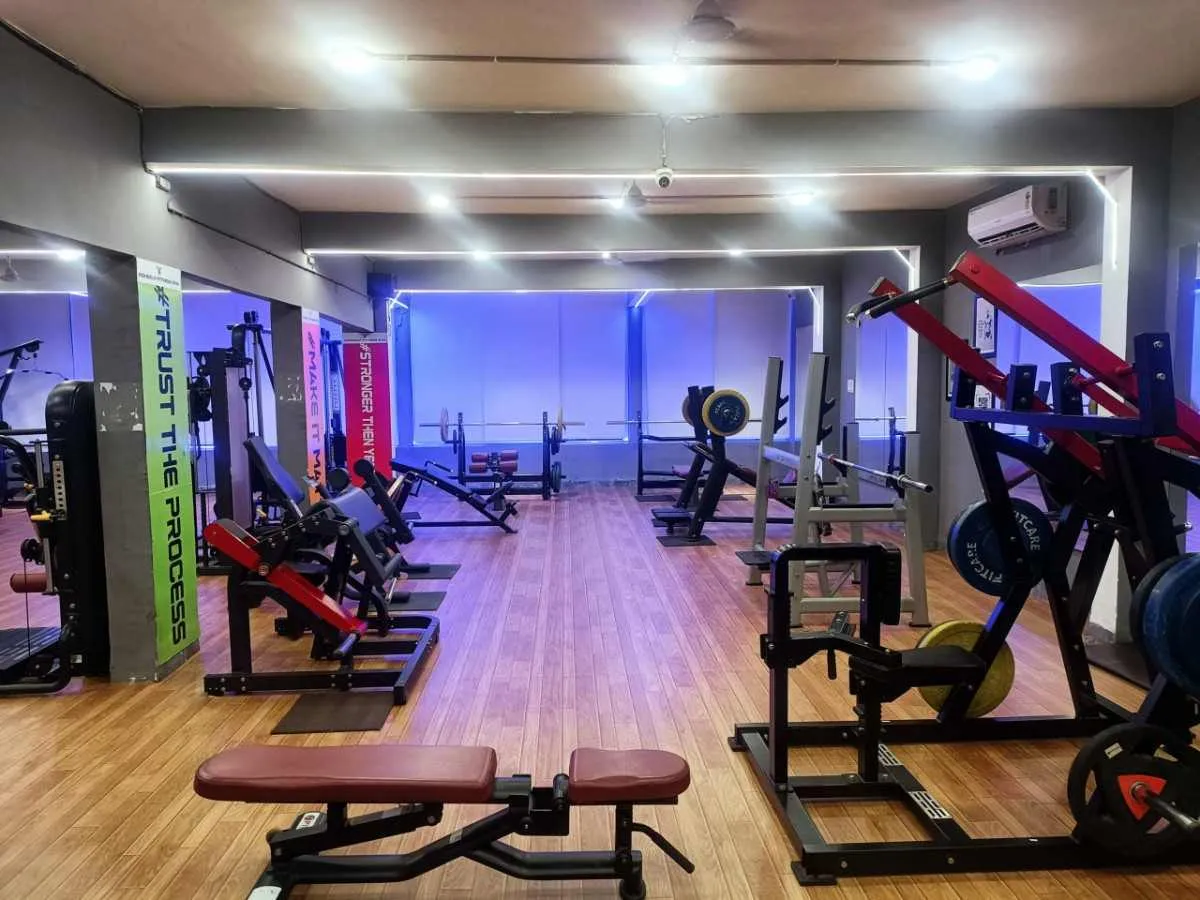
Someone interested in strength training may prioritize resistance equipment.
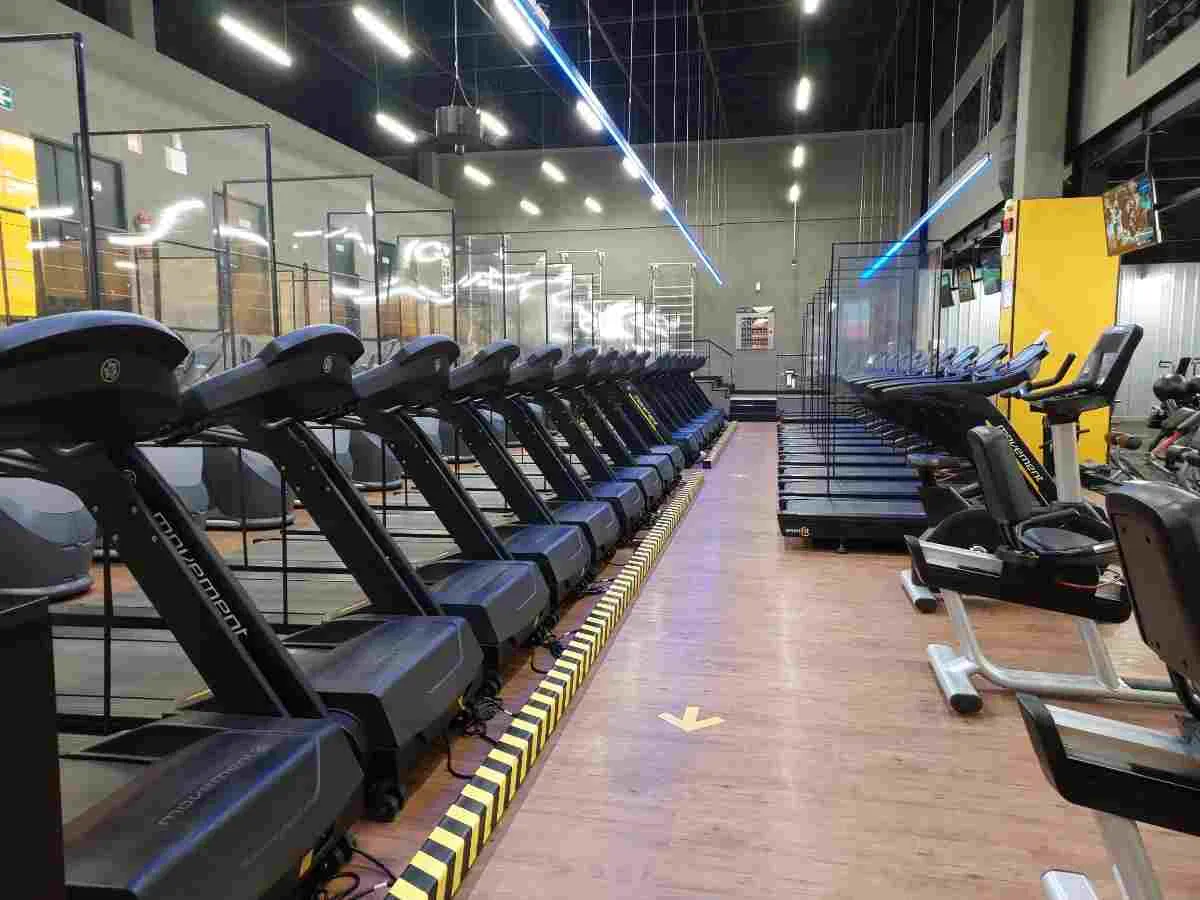
Someone focused on cardio may want a strong selection of cardiovascular machines.
Someone who wants guidance may value personal training.
The best gym is ultimately one that fits your individual needs and makes it easier to stay consistent.
Choosing a Fitness Center in Indore
For people searching for a fitness center in Indore, it can be useful to think beyond appearance.
A modern fitness facility should ideally provide an environment where members can work toward different goals.
Those goals may include:
- Building strength
- Building muscle
- Improving fitness
- Weight management
- Cardiovascular conditioning
- Functional fitness
- Personal training
- General physical activity
PowerUp Fitness Gym in Kesar Bagh, Scheme 103, Indore offers a range of training options including strength training, cardio, functional fitness, personal training, weight loss and muscle-building workouts.
You can learn more about the gym here:
https://powerupfitnessgym.com/
The Biggest Lesson From Modern Strength Training
The fitness industry will continue to introduce new exercises, machines, apps and training methods.
Some will become popular.
Others won't last.
But the basic principle remains remarkably simple:
Consistent resistance training works.
The latest ACSM guidance reinforces this idea. Rather than suggesting that everyone needs an extremely complicated program, the evidence emphasizes finding an approach that matches the individual's goals and maintaining consistency.
You don't need to make every workout perfect.
You need to keep showing up.
You need to train appropriately.
You need to recover.
And you need to give the process enough time.
Final Thoughts
Strength training has evolved far beyond the idea of simply building bigger muscles.
It can be a foundation for a stronger, more capable and more active lifestyle.
It can support muscle development, strength, physical function and movement.
It can complement cardio and functional fitness.
And it can be adapted for beginners, experienced gym-goers and people with very different goals.
The biggest change may not be the equipment we use.
It may be the way we think about strength.
Instead of asking:
"How much can I lift?"
we can also ask:
"How can I become stronger, move better and stay physically capable for the long term?"
That's the direction modern fitness is moving toward.
And for anyone beginning or continuing their fitness journey in Indore, building a consistent strength-training routine can be one of the most valuable steps toward becoming fitter and stronger.






















Sign in to leave a comment.