


Have you ever fallen in love with an outfit online, only to wear something similar and think, “Why doesn’t mine look like that?”
Sometimes, the problem isn't the design.
It isn't the colour either.
It is the fabric.
We often talk about fashion in terms of silhouettes, colours, trends and styling. But underneath all of it is something much simpler: the textile itself. The fabric determines how an outfit falls, moves, reflects light and even feels when you wear it.
That is why two outfits with almost identical designs can look completely different.
Fashion Starts With Fabric
Think about a flowing evening gown.
Would you make it from a stiff brocade?
Probably not.
Now imagine a heavily embroidered bridal blouse made from a very soft, lightweight fabric. It may look beautiful on the hanger, but the structure may not hold the way you want.
This is where fabric selection becomes important.
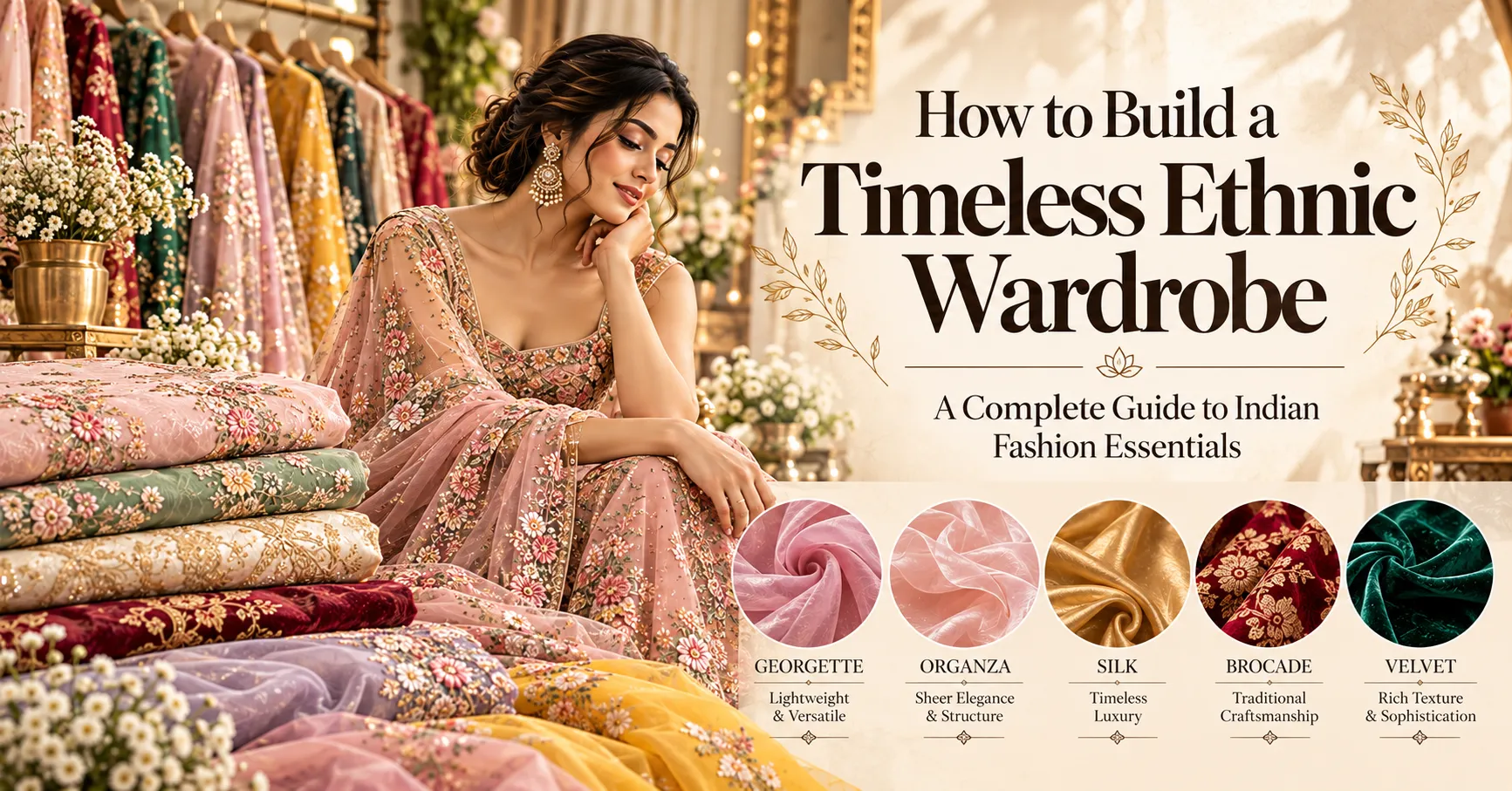
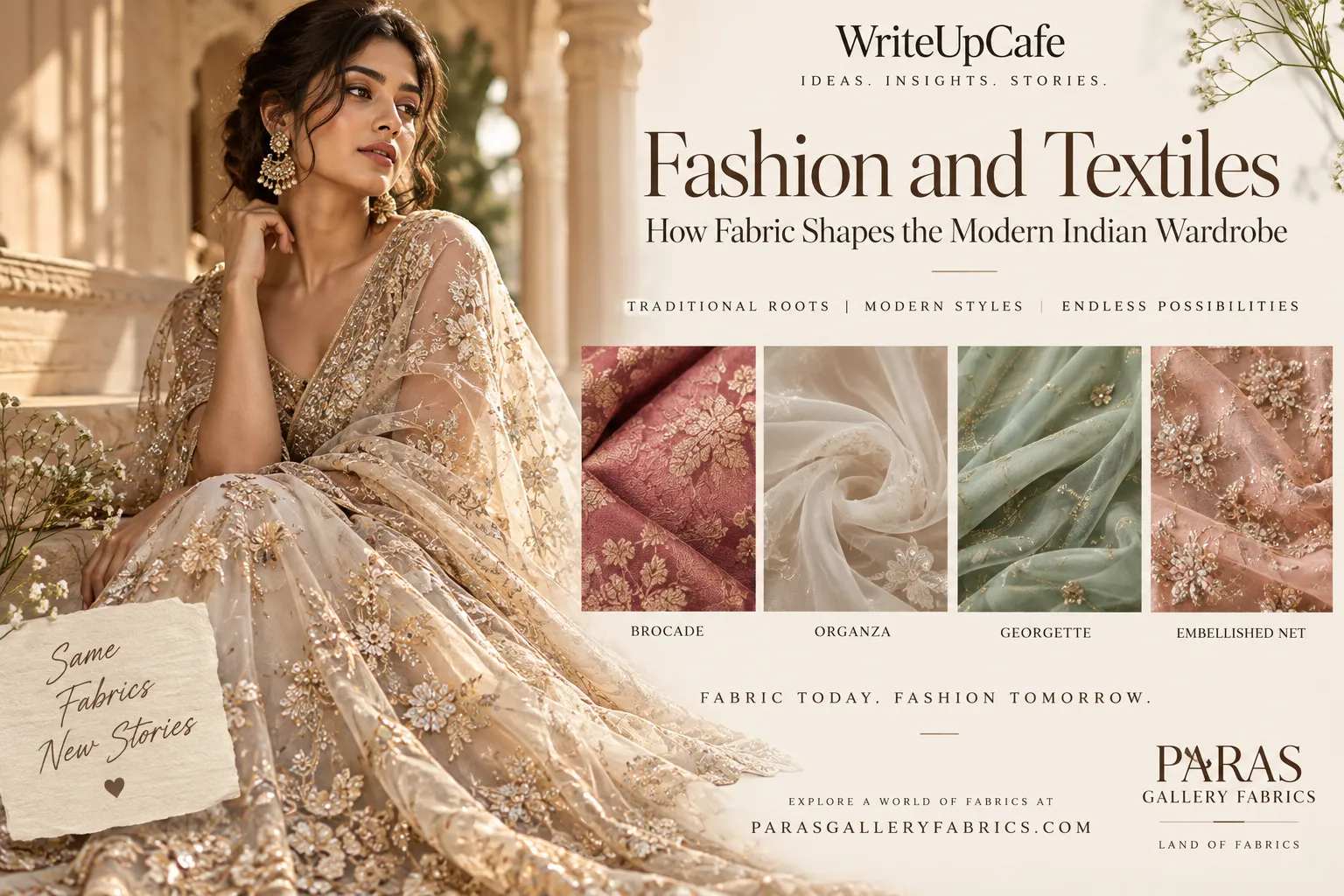
Georgette can create movement and softness.
Organza can add structure and a slightly dramatic finish.
Velvet brings depth and richness.
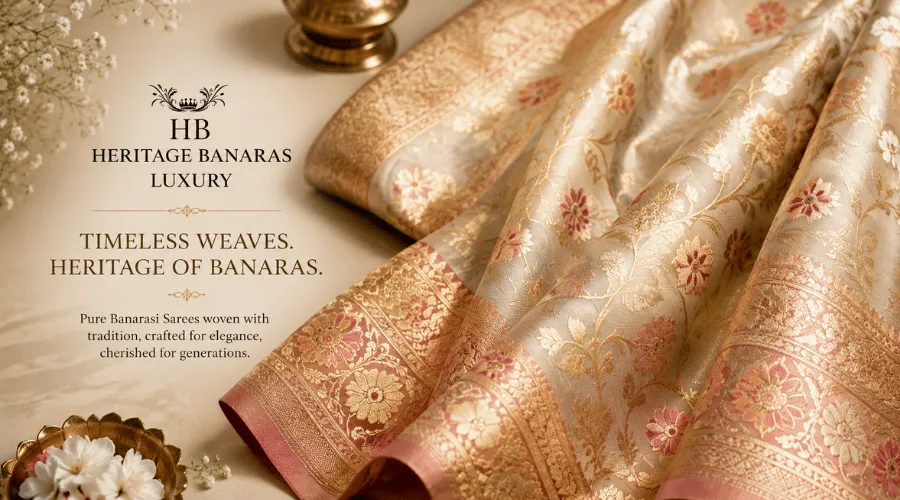
Brocade can instantly make an outfit feel traditional and luxurious.
Net can create transparency and layers.
Chanderi can give an outfit an elegant, lightweight character.
None of these fabrics is universally “better” than another.
The right choice depends on what you are trying to create.
Why Fabric Looks Different in Real Life
One of the biggest mistakes people make when shopping for fabric online is judging it only by a photograph.
A picture can show you the colour and pattern, but it doesn't always tell you how the fabric behaves.
Is it stiff or fluid?
Does it fall close to the body or hold its shape?
Is it transparent?
Does it have a natural sheen?
Does it crease easily?
Does the embroidery feel heavy?
These details become incredibly important once the fabric is turned into an actual garment.
For example, an organza fabric may look delicate and almost weightless in a photograph. But its crisp structure can give a blouse, dupatta or sleeve a very different appearance from a soft georgette.
That difference is what makes textile knowledge so valuable.
The Same Fabric Can Create Different Looks
Another fascinating thing about fashion is that fabric doesn't work alone.
The colour, weave, embroidery, finish and garment construction all change how we perceive it.
Take a simple piece of net.
Used as a heavily embroidered bridal dupatta, it can look luxurious and elaborate.
Use the same basic fabric with minimal embellishment, and it can become a lightweight evening layer.
Add sequins and it becomes partywear.
Pair it with a structured blouse and suddenly the entire outfit feels more contemporary.
The fabric is only one part of the story.
The styling completes it.
Trends Change. Good Fabric Choices Don't.
Fashion trends move incredibly quickly.
One season, everyone wants shimmer.
Then florals take over.
Then minimalism comes back.
Then suddenly traditional textiles are everywhere again.
But certain fabric principles remain relevant regardless of the trend.
If you want an outfit to drape beautifully, choose a fabric that supports movement.
If you want structure, look for fabrics with enough body.
If you want a soft, romantic appearance, lightweight flowing textiles can work beautifully.
If you want a festive or bridal look, richer surfaces, embroidery and textured fabrics can create the visual depth that simpler materials may not provide.
In other words, don't choose a fabric simply because it is trending.
Choose it because it works for the garment you have in mind.
The Rise of Fabric-Conscious Fashion
There is also a noticeable shift happening among fashion buyers.
People are becoming more curious about what they are buying.
Instead of simply asking:
“What colour is this?”
they are asking:
“What is this fabric?”
“Will it fall well?”
“Can I dye it?”
“Will it work for a summer wedding?”
“Is it suitable for a blouse or a dupatta?”
That curiosity is a good thing.
Understanding textiles gives consumers more control over their fashion choices.
It also makes the process of getting an outfit stitched much easier because you can communicate your requirements more clearly with designers and tailors.
Fabric Shopping Should Be a Conversation
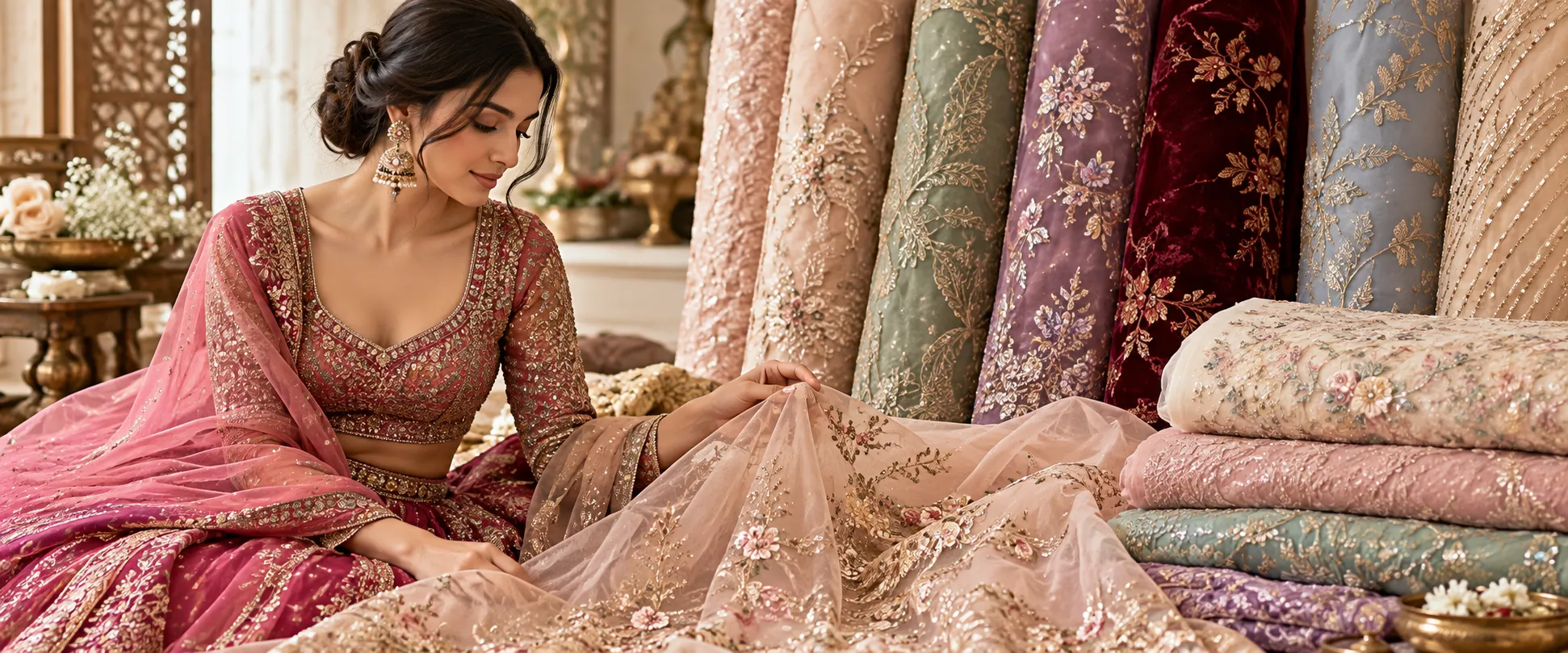
If you've ever walked into a fabric store, you probably know that buying fabric isn't always a quick decision.
You touch one fabric.
Then another.
You hold it against yourself.
You check it under different lighting.
You ask how much you need.
Then someone suggests another option, and suddenly you're comparing five fabrics for the same outfit.
And honestly, that's part of the fun.
Fabric has a tactile quality that photographs simply cannot completely reproduce.
The way a fabric feels between your fingers can tell you something about its weight, texture and finish.
That is why a good fabric-shopping experience isn't just about selling metres of material.
It is about helping someone find the textile that matches their idea.
Before You Buy Fabric, Ask Yourself These 5 Questions
Whether you're shopping online or visiting a physical store, these questions can save you from an expensive mistake:
1. What am I making?
A saree, blouse, lehenga, suit, dress or dupatta may require completely different fabric characteristics.
2. Where will I wear it?
A summer daytime event and a winter evening wedding don't necessarily call for the same textile.
3. Do I want flow or structure?
This one question can immediately narrow down your options.
4. How much embellishment will the garment have?
Heavy embroidery may require a fabric that can support the weight.
5. How do I want the final outfit to feel?
Elegant? Dramatic? Minimal? Traditional? Contemporary?
Your answer can often tell you more than a fashion trend ever will.
The Fabric Is Part of the Design
Perhaps the most important thing to remember is this:
Fabric isn't the background of fashion. It is part of the fashion itself.
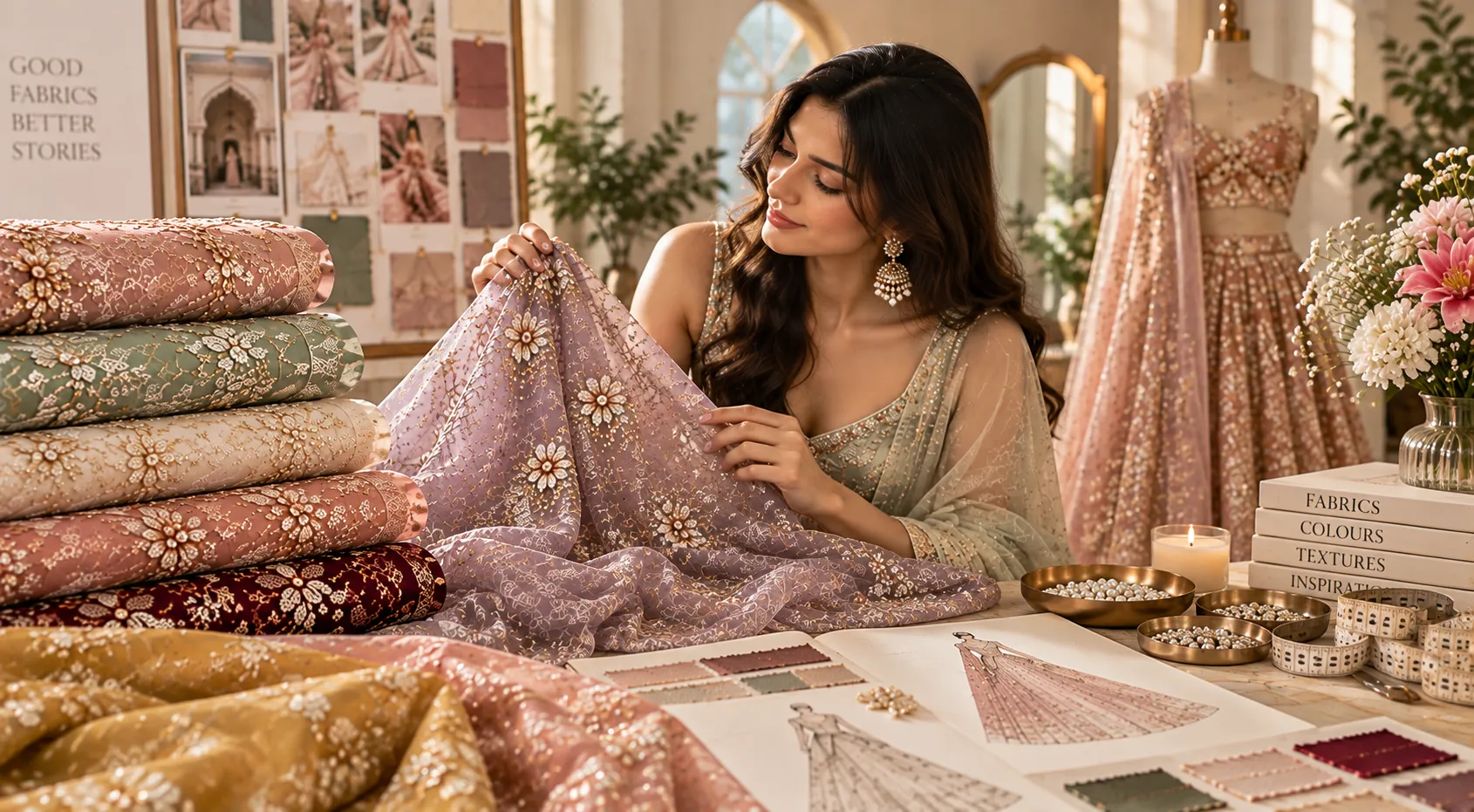
A designer can sketch a beautiful silhouette, but the final garment depends heavily on how the chosen textile behaves.
The right fabric can make a simple design look expensive.
The wrong fabric can make an otherwise beautiful design feel uncomfortable or unbalanced.
So the next time you're shopping for an outfit, don't just look at the colour or embroidery.
Touch the fabric.
Look at how it falls.
Hold it up to the light.
Think about how it will move when you walk.
Because sometimes, the difference between an ordinary outfit and one that makes you stop and look twice isn't the design at all.
It's the fabric.
If you're exploring fabrics for a wedding, festive outfit, boutique collection or custom garment, understanding the textile before choosing the design can make the entire process easier.
















Sign in to leave a comment.