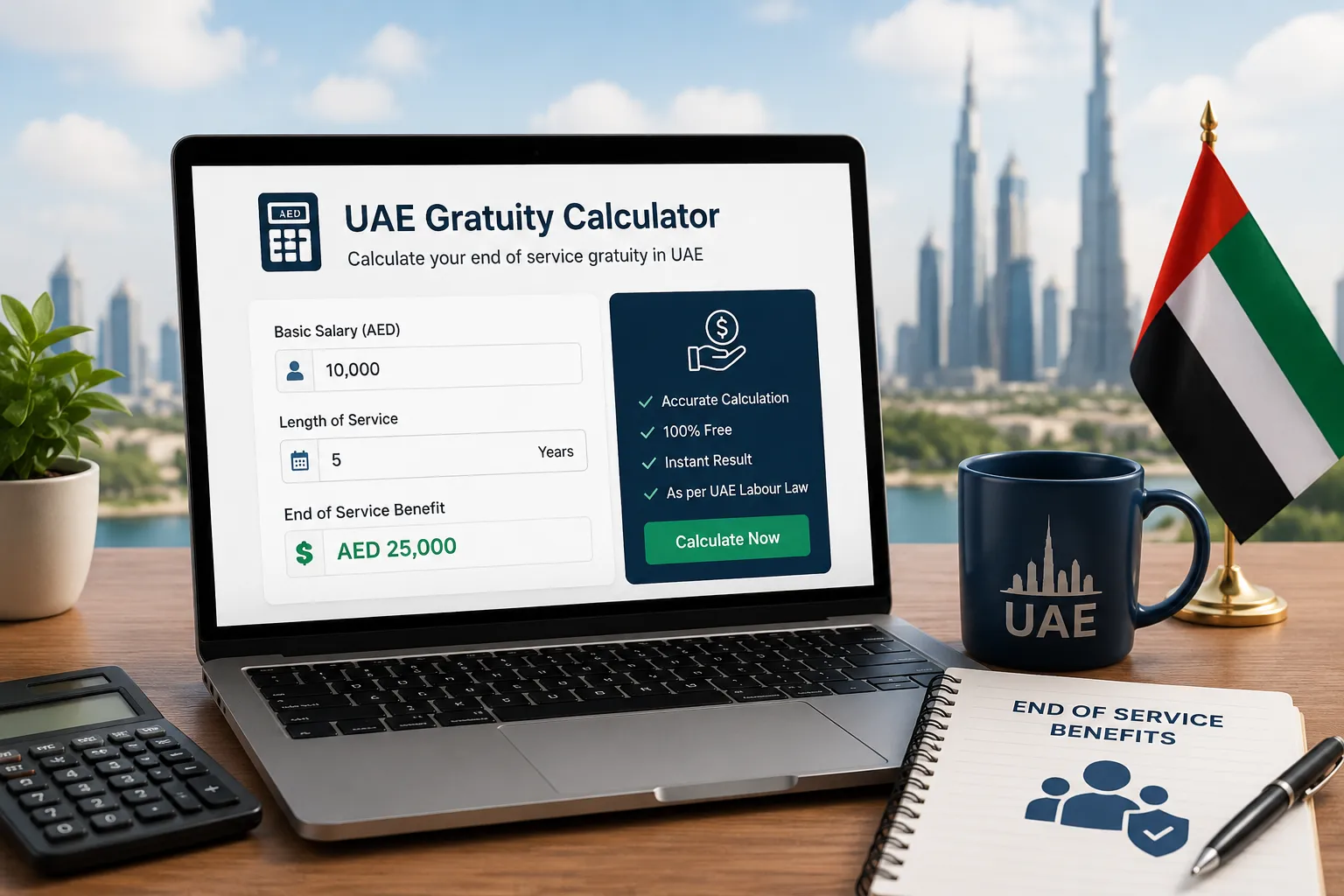

Introduction
End-of-service benefits are among the most important financial entitlements for employees working in the UAE. After spending years contributing to a company, workers naturally expect to receive a gratuity amount that reflects their service and dedication. However, many employees are surprised when they receive their final settlement because the actual gratuity amount differs significantly from what they expected.
A major reason for this confusion is a lack of understanding about how gratuity calculations work. Many employees use tools such as Gratuity Calculator UAE to estimate their benefits, but inaccurate information, misunderstandings about salary structure, and incorrect assumptions often lead to unrealistic expectations. As a result, thousands of workers across the UAE miscalculate their end-of-service benefits every year.
Understanding the reasons behind these mistakes can help employees avoid disappointment and make better financial decisions. By learning how gratuity is calculated and identifying common errors, workers can estimate their benefits more accurately and confidently.
Understanding End-of-Service Benefits
End-of-service benefits, commonly known as gratuity, are payments made to eligible employees when their employment comes to an end. These benefits are designed to reward employees for their service and provide financial support as they transition to a new job, retirement, or another phase of life.
The amount of gratuity an employee receives depends on several factors, including their basic salary and total period of service. While the concept seems straightforward, the actual calculation can be confusing for employees who are unfamiliar with labor regulations and salary structures.
Because gratuity often represents a substantial sum of money, even small calculation mistakes can have a significant impact on financial planning and expectations.
Confusion Between Basic Salary and Gross Salary
One of the biggest reasons workers miscalculate gratuity is confusion between basic salary and gross salary. Many employees naturally focus on the total amount they receive each month and assume that gratuity calculations are based on this figure.
In reality, gratuity is generally calculated using the employee's basic salary rather than the full salary package. Housing allowances, transportation allowances, and other benefits are usually not included in the calculation. Employees who mistakenly use gross salary often end up with estimates that are much higher than their actual entitlement.
This misunderstanding is extremely common and is one of the primary causes of inaccurate gratuity calculations throughout the UAE.
Incorrect Service Duration Calculations
Another frequent mistake involves calculating the length of service incorrectly. Employees often estimate their years of service instead of using exact employment dates. While this may seem like a small issue, even a few months can influence the final gratuity amount.
Some workers round up their service period to the nearest year, while others forget to account for exact joining and ending dates. These assumptions can create discrepancies between employee estimates and employer calculations.
Using official employment records and precise dates helps ensure a more accurate gratuity estimate and reduces the likelihood of misunderstandings.
Lack of Awareness About Labor Regulations
Many employees are unaware of the specific labor regulations that govern gratuity calculations in the UAE. As a result, they may rely on outdated information, advice from colleagues, or unofficial online discussions.
Labor laws can evolve over time, and relying on old information may lead employees to use formulas or assumptions that no longer apply. This often results in estimates that differ significantly from the actual gratuity amount.
Staying informed about current labor regulations is essential for anyone who wants to calculate gratuity accurately and understand their rights as an employee.
Overlooking Unpaid Leave Periods
Employees sometimes forget that unpaid leave can affect gratuity calculations. When estimating benefits, many workers assume that every day under an employment contract contributes equally toward their gratuity entitlement.
Depending on the circumstances, unpaid leave periods may influence the service duration used in the calculation. If these periods are not considered, employees may overestimate their gratuity amount and become confused when the final payment is lower than expected.
Reviewing employment records carefully helps ensure that all relevant factors are included in the calculation.
Using Inaccurate Online Information
The internet offers a vast amount of information about UAE gratuity, but not all sources are reliable. Employees frequently encounter outdated articles, unofficial calculators, and conflicting advice that can make calculations more confusing rather than less.
Some websites may use old formulas or fail to reflect current regulations. Others provide generalized information without considering individual employment circumstances.
To avoid errors, employees should rely on trusted resources and verify information before using it to estimate their gratuity entitlement.
Assuming All Employees Receive Similar Benefits
Many workers compare their gratuity expectations with those of colleagues or friends. While these comparisons may seem helpful, they often create unrealistic assumptions because every employee's situation is unique.
Factors such as salary structure, years of service, contract terms, and employment history all influence gratuity calculations. Two employees working in the same company may receive very different gratuity amounts despite having similar job roles.
Understanding that gratuity is calculated individually helps employees avoid inaccurate comparisons and better manage their expectations.
Failing to Review Employment Contracts
Employment contracts contain essential information that directly affects gratuity calculations. Unfortunately, many employees do not review their contracts regularly and may forget important details regarding salary structure or contract amendments.
Changes in salary, promotions, or revised employment terms can influence gratuity calculations. If employees fail to account for these updates, their estimates may not reflect their actual entitlement.
Regularly reviewing employment documents ensures that gratuity calculations are based on accurate and current information.
Mistakes When Using Online Calculators
Online calculators are valuable tools, but they are not immune to user error. Employees sometimes enter incorrect salary figures, approximate service dates, or incomplete information, leading to inaccurate estimates.
A calculator can only generate reliable results when supplied with accurate data. Entering gross salary instead of basic salary is one of the most common mistakes users make.
Before relying on any estimate, employees should verify all information carefully to ensure the calculation reflects their actual employment details.
The Importance of Reliable Calculation Tools
Technology has simplified gratuity calculations considerably. Employees can now obtain estimates within seconds by entering a few key details into an online calculator.
Many workers also compare estimates from a mohre gratuity calculator and other trusted tools to better understand their expected benefits. Using multiple reputable sources can improve confidence in the results and help identify potential inconsistencies.
However, even the best calculator cannot compensate for inaccurate input data. Accurate information remains the foundation of every reliable estimate.
How Employers Calculate Gratuity
Employers generally calculate gratuity using official employment records and applicable labor regulations. The process involves verifying the employee's basic salary, service duration, and any relevant employment history details.
Because employers rely on documented information rather than assumptions, their calculations may differ from employee estimates that are based on approximations or incomplete records.
Understanding how employers approach gratuity calculations helps employees appreciate why discrepancies sometimes occur and encourages more accurate personal estimates.
Financial Consequences of Miscalculations
Miscalculating gratuity can have real financial consequences. Employees who expect a larger payout may make financial commitments based on inaccurate assumptions, only to discover later that their actual entitlement is lower.
This can affect relocation plans, debt repayment strategies, investment decisions, or family budgets. Overestimating gratuity can create unnecessary stress and financial uncertainty during a career transition.
Accurate calculations help employees make informed decisions and prepare more effectively for the future.
How to Calculate Gratuity More Accurately
The first step toward accurate calculations is identifying the correct basic salary from your employment contract. Since gratuity is generally based on this figure, using the right salary is essential.
Next, verify your exact employment dates and account for any unpaid leave periods. Accurate service duration significantly improves the reliability of the estimate.
Finally, use trusted calculation tools and compare results from multiple reputable sources. Combining accurate records with reliable resources can greatly reduce the risk of errors.
Why Financial Awareness Matters
Understanding gratuity calculations is an important aspect of financial literacy for employees in the UAE. Workers who understand how end-of-service benefits are calculated are better equipped to plan for career changes and major life events.
Financial awareness reduces uncertainty and empowers employees to make informed decisions regarding employment opportunities, savings goals, and future investments.
The more employees understand about gratuity, the less likely they are to make costly calculation mistakes.
Conclusion
Thousands of UAE workers miscalculate their end-of-service benefits each year due to misunderstandings about salary structure, service duration, labor regulations, and calculation methods. While gratuity calculations may seem simple at first glance, several factors can influence the final amount.
By understanding the difference between basic salary and gross salary, reviewing employment records carefully, and using reliable calculation tools, employees can significantly improve the accuracy of their estimates. Taking a proactive approach helps reduce confusion and ensures that expectations align with reality.
Accurate gratuity calculations not only protect employees from disappointment but also support better financial planning and more confident career decisions.
Read More:
https://www.ganjingworld.com/article/1iou1r2dbl16o7fKFY6gFsGHf1rt1c/uae-gratuity-calculator-vs-manual-calculation-which-is-more-accurate
FAQs
1. Why do employees often miscalculate gratuity?
Most employees miscalculate gratuity because they use gross salary instead of basic salary, estimate service duration incorrectly, or rely on outdated information.
2. Is gratuity based on total salary?
No. Gratuity is generally calculated using the employee's basic salary rather than the full salary package that includes allowances.
3. Can unpaid leave affect gratuity calculations?
Yes. Depending on the circumstances, unpaid leave may influence the service duration used for gratuity calculations and affect the final amount.
4. Are online gratuity calculators reliable?
Reliable calculators can provide useful estimates when accurate information is entered. The quality of the estimate depends on the accuracy of the data provided.
5. How can I improve the accuracy of my gratuity estimate?
Review your employment contract, verify your basic salary and service duration, and use trusted calculation tools to generate more reliable estimates.
































Sign in to leave a comment.