

On some grids now, the old hierarchy has quietly flipped. Solar is no longer the supporting act brought in for climate targets and glossy investor decks; in several markets, it is pushing into the center of the power system. One of the clearest recent signals came from the United States, where Electrek reported on EIA data showing solar generated more electricity than coal and wind in May. That single month does not tell the whole global story, but it captures something larger: wind and solar are not growing because governments simply wish they would. They are growing because they have become increasingly hard to ignore on cost, speed, domestic energy security, and industrial strategy.
Worldwide capacity growth in wind and solar now reflects several overlapping forces. Utilities need new supply quickly. Governments want less exposure to imported fossil fuels. Manufacturers are retooling around electrification. Data centers are adding demand. Electric vehicles are pulling more load onto power systems while also strengthening the case for cleaner generation. And households, from Calgary to Chennai, are making practical decisions about bills, resilience, and rooftop economics. If you have been following the broader conversation around clean power, pieces such as How Wind and Solar Energy Capacity Is Expanding Worldwide and Wind and Solar Energy Capacity Growth Worldwide Explained sketch the broad arc. The deeper question is why this growth continues even when interest rates rise, supply chains wobble, or politics turn choppy.
The answer is not one thing. It is a stack of advantages that reinforce each other. Some are economic. Some are technical. Some are geopolitical. Together they help explain why wind and solar capacity additions keep setting the pace for new power investment around the world, and why that matters for the next phase of electric vehicles and clean energy.
Wind and solar are expanding worldwide not because they are perfect, but because they solve several urgent problems at once: cost, speed, fuel risk, and emissions.
Cost curves changed the argument, and they changed it for good
For years, critics of renewable energy treated wind and solar as technologies that might work someday if heavily subsidized and carefully protected. That framing is increasingly out of date. In many regions, utility-scale solar and onshore wind are now among the cheapest options for new electricity generation, especially when compared with new coal or gas plants exposed to fuel-price volatility. The crucial distinction here is between existing fossil assets, which may continue running for years, and new capacity decisions, where developers and utilities ask a simple question: what can deliver electricity at the lowest risk-adjusted cost over time?
Solar benefited first from a steep manufacturing learning curve. Module costs fell sharply over the past decade as production scaled, supply chains matured, and engineering improved. Wind followed a different path, with larger turbines, better siting software, and higher capacity factors making projects more productive. The result is that many power buyers no longer see renewables as niche additions. They see them as the default first option, then build storage, transmission, and flexible backup around them.
According to CleanTechnica’s coverage of global energy supply growth in 2025, renewables led by solar were the largest source of energy supply growth worldwide. Even allowing for the publication’s clean-energy lens, the larger point aligns with reporting from major agencies and financial institutions: when demand rises, renewables are now supplying a large share of the increment.
Several cost-related dynamics keep this momentum going:
- No fuel cost: once built, wind and solar are not exposed to coal, gas, or oil price spikes in the same way thermal generators are.
- Shorter development timelines: many solar projects can move faster than large thermal or nuclear plants, which matters in fast-growing markets.
- Modularity: capacity can be added in smaller blocks, reducing financing risk and matching demand growth more closely.
- Corporate procurement: long-term power purchase agreements from technology firms, manufacturers, and retailers create bankable demand.
None of this means every project is cheap or easy. Grid connection costs, curtailment, land use disputes, and local permitting can still bite. Offshore wind in particular has had a rough period in some markets due to inflation and contract design problems. But the broad cost trend remains powerful enough that setbacks in one segment have not derailed the overall buildout. Once an energy source becomes both scalable and economically persuasive, it tends to keep spreading. That is where wind and solar now sit.
Energy security turned renewables from climate policy into strategic policy
Another reason worldwide capacity growth keeps accelerating is that wind and solar now serve a national security function. The energy shocks of the early 2020s sharpened an old lesson: countries that rely heavily on imported fossil fuels are vulnerable to price spikes, shipping disruptions, sanctions, and conflict. Domestic renewable generation does not solve every energy-security problem, but it reduces exposure to fuel imports and creates more room for governments to maneuver.
This matters especially in economies with fast-growing electricity demand. India is a vivid example. Reporting from Crude Oil Prices highlighted forecasts that India’s solar capacity could grow about 22% annually through 2035. Meanwhile, Khaleej Times described India’s wind sector as poised for a new phase of growth. Those two trends are linked. India needs huge amounts of new electricity, wants to cut import dependence, and is building industrial policy around domestic clean-energy manufacturing and deployment.
Europe offers a different version of the same story. After gas-market turmoil, renewable deployment became more than an emissions strategy; it became part of resilience planning. Solar on homes, warehouses, and utility sites spread because it could be installed comparatively quickly. Wind remained central where permitting and grid access allowed it. Even where political coalitions disagreed on climate framing, they often agreed on reducing dependence on imported fuels.
That strategic shift shows up in policy design:
- Governments are pairing renewable auctions with domestic manufacturing incentives.
- Grid planning is increasingly tied to industrial policy, not just utility forecasting.
- Storage, interconnection, and transmission are being treated as security infrastructure.
- Permitting reform is moving from a niche issue to a mainstream competitiveness issue.
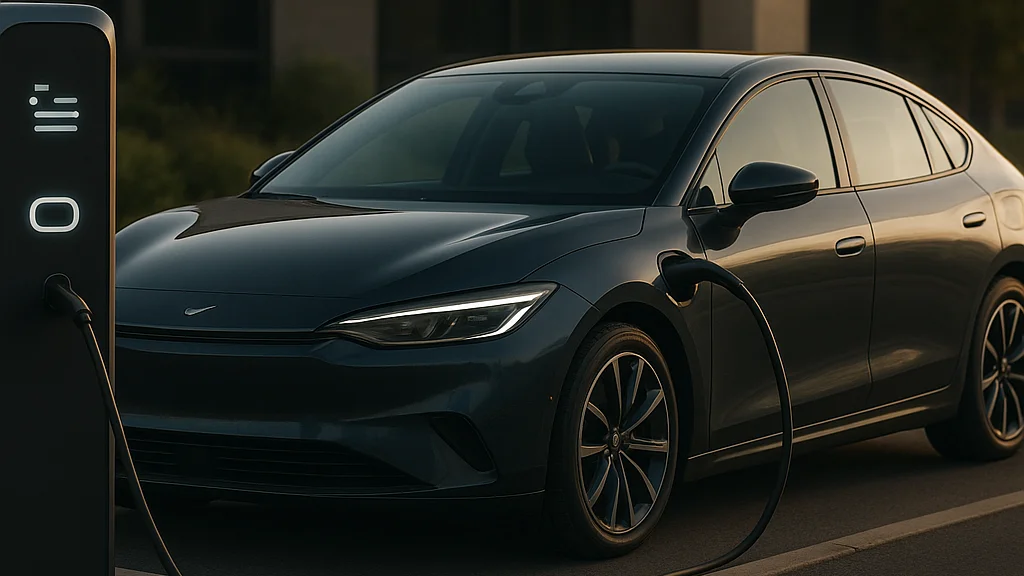
For electric vehicles, this matters deeply. EV adoption shifts energy demand away from oil and toward electricity. The cleaner and more domestic that electricity becomes, the stronger the economic and geopolitical case for transport electrification. An EV charged with high-cost imported gas power is still useful, but an EV charged increasingly by local wind and solar becomes part of a broader sovereignty story. That is one reason clean transport and clean power are no longer separate policy silos.
As transport electrifies, every additional megawatt of wind or solar does more than cut emissions; it changes who controls the energy system and where the money flows.
Technology improved faster than many grid skeptics expected
There is a fair criticism often raised in serious energy discussions: capacity growth is not the same as useful energy delivered when needed. That is true. A gigawatt of solar does not behave like a gigawatt of gas or hydro. Wind output varies. Solar fades at sunset. Capacity numbers can flatter progress if they are detached from integration realities. Yet one reason global capacity growth keeps rising is that the integration toolkit has improved enough to make much larger shares of variable renewables manageable.
Better forecasting is part of the story. Grid operators today can predict wind and solar output with far more precision than they could a decade ago, reducing balancing costs. Battery storage has become the other major unlock. In market after market, solar-plus-storage is changing the shape of the evening peak and making midday oversupply more valuable rather than wasteful. Flexible demand is also expanding, from industrial load shifting to managed EV charging.
Transmission remains the stubborn bottleneck, but even there the economics still favor continued renewable additions. Developers may face queues and curtailment, yet the pipeline remains full because the underlying demand for low-cost electricity is strong. Data centers, hydrogen projects, electrified industry, and vehicle charging all need power. If utilities cannot build enough firm low-carbon generation quickly, they often build renewables first and then add balancing resources around them.
The practical reasons deployment continues despite intermittency concerns include:
- Higher capacity factors: newer wind turbines and better solar tracking systems produce more from each installed unit.
- Cheaper storage: batteries increasingly help move solar output into higher-value hours.
- Digital controls: software improves dispatch, forecasting, and distributed energy management.
- Hybrid projects: co-locating wind, solar, and storage can smooth output profiles and improve grid connection economics.
There is also a quieter truth here. Power systems have always managed variability. Demand changes by hour, season, and weather. Conventional plants trip offline. Fuel deliveries get interrupted. Hydrology varies. Wind and solar introduce a different operational challenge, but not an impossible one. The pace of deployment suggests that utilities, investors, and policymakers increasingly view integration as a solvable engineering and market-design problem rather than a reason to stop building.
If you want a simpler primer on how these moving parts fit together, Beginner’s Guide to Wind and Solar Energy Capacity Growth is useful background. The advanced point is that grids are not static machines; they evolve around the resources being added. That adaptation is exactly what we are seeing now.
2026 is reinforcing the trend, not reversing it
By October 2026, the most important development is not a single headline but the persistence of momentum. Solar keeps posting eye-catching gains, while wind, though more uneven across regions, remains a major pillar of long-term capacity plans. In the United States, monthly records and regional milestones continue to underline how quickly solar has moved into mainstream generation. In Asia, buildout remains intense because demand growth is intense. In Europe, decarbonization goals, electrification, and energy-security concerns are still supporting additions even amid project-level friction.
One underappreciated factor in 2026 is that renewable growth is no longer only about adding new capacity to meet fresh demand. It is also about replacing aging assets and planning for lifecycle turnover. A notable industry release covered by Bluestudio Estadão discussed how replacing decommissioned renewables could push installations higher as 2.5 TW of projects reach end of life by the 2040s. The exact pace will vary, but the structural implication is clear: renewable growth is becoming self-reinforcing. Early projects will eventually be repowered, replaced with more efficient equipment, or supplemented by storage and grid upgrades.
What changed recently is the investor mindset. A few years ago, the question was whether renewables could scale. In 2026, the question is how to scale them while fixing queues, balancing supply chains, and preserving returns. That is a more mature problem set. It reflects an industry that has moved from proof-of-concept to systems integration.
Several current developments are shaping the next leg of growth:
- Repowering: older wind farms in mature markets are being reassessed for larger, more productive turbines.
- Distributed solar expansion: rooftops and commercial installations continue spreading where retail power prices make the economics work.
- Co-location: storage is increasingly paired with solar, and in some cases with wind, to improve value capture.
- Industrial load growth: AI infrastructure, manufacturing, and EV charging are all increasing pressure for new generation.
There will still be setbacks. Trade disputes can raise equipment prices. Local opposition can slow projects. Interest rates can squeeze developers. But 2026 has not produced evidence of a global retreat. If anything, it has shown that the clean-power buildout is becoming a default response to rising electricity demand.
Why this matters so much for EVs, industry, and household economics
Wind and solar capacity growth is often discussed as an electricity-sector story, but its consequences spill far beyond utility planning. For electric vehicles, the growth of clean generation improves both the climate math and the cost logic. The more grids are supplied by low-marginal-cost renewables, the stronger the case for shifting transport from gasoline and diesel to electricity. Managed charging can also become a grid asset, soaking up midday solar or responding to system needs overnight.
Industry is watching closely too. Manufacturers deciding where to place battery plants, data centers, green hydrogen facilities, or electrified process loads increasingly care about access to abundant, relatively cheap clean power. This is not just about corporate sustainability reports. It is about long-term operating costs and customer requirements. In some sectors, access to low-carbon electricity is becoming part of export competitiveness.
Households feel the shift in quieter ways. Rooftop solar, community solar, and cleaner grids can reduce exposure to volatile fuel markets. Heat pumps become more attractive when electricity supply grows. Home charging becomes cheaper relative to fueling a combustion vehicle, especially when paired with time-of-use rates or rooftop generation. The clean-energy transition can feel abstract in policy language, but in practice it often shows up as a lower monthly bill, a more stable energy budget, or a little less anxiety when global fuel markets lurch.
The links between clean power and clean transport are especially important:
- More renewable generation lowers the emissions intensity of EV charging over time.
- EVs can provide flexible demand that helps absorb variable renewable output.
- Battery supply chains benefit from manufacturing ecosystems built around electrification.
- Fleet operators can sign power deals that align vehicle charging with renewable generation.
There is also a social dimension that economists sometimes understate. Wind and solar are visible. People see panels on schools, turbines near highways, charging stations in grocery parking lots. That visibility changes public expectations. Once communities begin to experience clean energy as ordinary infrastructure rather than futuristic policy, adoption can gain a cultural momentum of its own. It becomes part of how a place imagines progress.
For readers wanting a broader companion perspective, Wind and Solar Energy Capacity Growth Worldwide in 2026 offers another useful angle on the present moment. The central takeaway is steady: capacity growth is not happening in isolation. It is rewiring decisions across transport, housing, manufacturing, and trade.
What could slow growth, and why the outlook still points upward
Any honest analysis has to spend time with the obstacles. Transmission shortages remain severe in many countries. Permitting can drag on for years. Supply chains for transformers, cables, and specialized components are tight. Offshore wind has faced painful cost resets. Some electricity markets still reward legacy generation in ways that undervalue flexibility and clean capacity. And in lower-income countries, financing costs can make otherwise economic renewable projects difficult to close.
Those are not small issues. They shape where growth happens fastest and who benefits first. Yet they have not changed the underlying direction of travel because the alternative options face problems of their own. New fossil generation is exposed to fuel-price risk and climate policy risk. Nuclear can offer firm low-carbon power, but large projects often require long lead times and substantial state support. Hydropower is constrained by geography, drought risk, and ecological conflict. Efficiency helps, but it does not eliminate the need for new supply in electrifying economies.
That leaves wind and solar in a strong structural position. They are not singular solutions, but they are the fastest scalable building blocks available to many systems right now. The most likely future is not one where renewables do everything alone; it is one where they provide a growing share of electricity while storage, transmission, demand flexibility, hydro, nuclear, geothermal, and some thermal backup fill in the rest.
What to watch over the next few years:
- Grid reform: interconnection queues and transmission approvals may matter more than headline generation costs.
- Battery deployment: storage growth will determine how much solar can keep expanding without steep value erosion.
- Emerging-market finance: concessional capital and risk-sharing tools could unlock major additions outside wealthy economies.
- Repowering cycles: replacing older assets with more productive equipment could create a second wave of growth.
- Industrial demand: electrified factories, hydrogen, and data centers may keep pulling renewable capacity higher.
The worldwide rise of wind and solar is not a fad, and it is not simply a moral preference dressed up as economics. It is the product of technologies that became cheaper, more deployable, and more strategically useful at the same time. That combination is rare. It is why capacity keeps growing even when the headlines turn skeptical for a season. And it is why the future of electric vehicles, cleaner industry, and more resilient homes is increasingly tied to what happens in fields of panels and ridgelines of turbines.
I think that is the hopeful part, softly held: progress here is not magic, only thousands of practical decisions adding up. If you are watching this shift with equal parts curiosity and fatigue, you are not alone. Be gentle with yourself, and keep a little room for good news.



























Sign in to leave a comment.