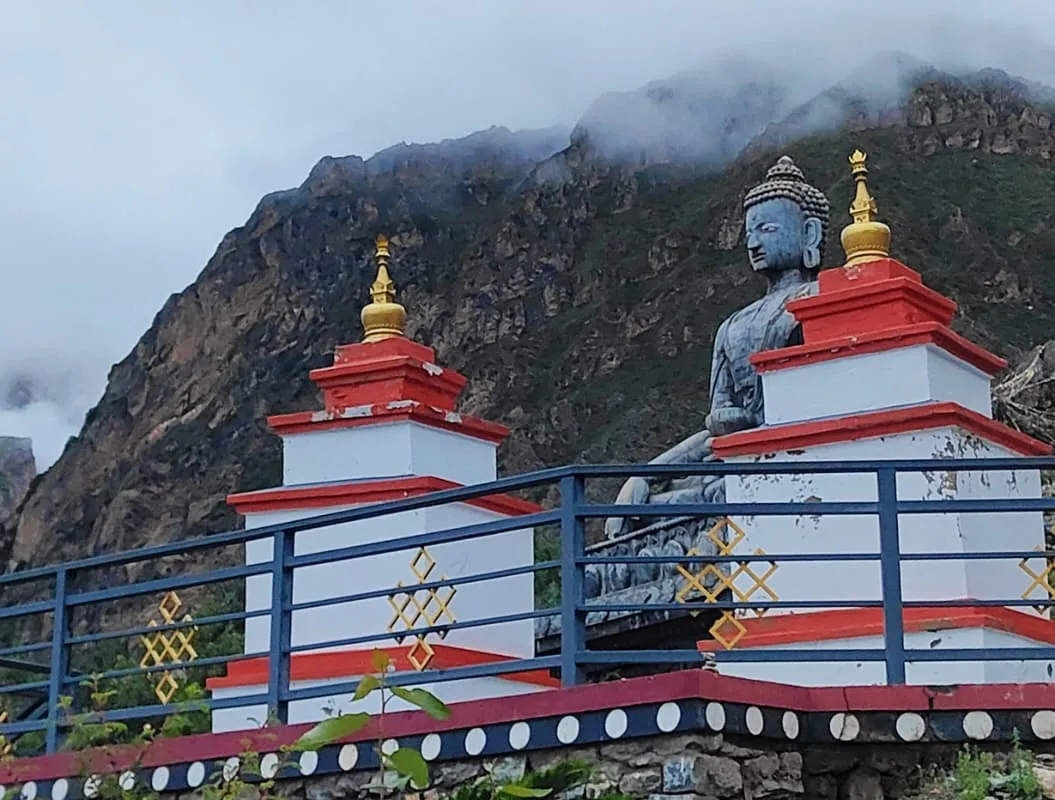


Nepal offers something rare in the world of yoga today: a chance to practice in the exact environment, lineage, and rhythm the tradition was originally built around. Here is why so many practitioners eventually find their way to the Himalayas.
1. This Is Where the Practice Was Born
Yoga developed over thousands of years in the foothills and river valleys of the Himalayas, shaped by sages who lived and practiced in that exact terrain. Nepal is one of the places the tradition actually grew out of.
Practicing in the Himalayas means practicing in the same geography, and often under teaching lineages, that the earliest yogis themselves belonged to. That context is hard to recreate anywhere else.
2. Altitude and Air Change How Pranayama Feels
Pranayama, or breath control, is central to yoga, and its effects shift noticeably depending on the air you're breathing. Himalayan foothill villages sit at elevations around 1,000 to 1,500 meters, with clean, thin, mountain air.
Breathing exercises done at altitude, in genuinely fresh air, tend to feel sharper and more noticeable. Many practitioners describe a real clarity in pranayama sessions in the mountains, a feeling that's tied directly to the environment itself.
3. An Unbroken Lineage of Teachers
A significant part of what makes yoga more than a physical routine is lineage, the direct transmission of teaching from master to student, generation after generation. Nepal's Himalayan yogic traditions, including schools rooted in the Nath lineage, have preserved this chain for centuries.
Learning from teachers trained inside that lineage gives students access to the deeper layers of yoga, including philosophy and meditation, not just postures.
4. Silence Is Built Into the Environment
Rural Nepal offers something increasingly hard to find: real quiet. No traffic, no notifications, no background noise. In a mountain village, the loudest sound most mornings is birdsong.
This is not a minor detail. The nervous system needs quiet to actually settle, and sustained silence tends to produce a noticeably calmer, clearer state of mind, often faster than people expect.
5. Small Groups, Real Attention
Many yoga schools and ashrams in Nepal are small, family run operations, which naturally keeps class sizes small. Teachers can observe alignment, correct posture individually, and adapt sequences to each student's body and pace.
6. Food as Part of the Practice
Traditional Himalayan ashrams typically serve sattvic food, vegetarian meals cooked simply and often grown on site or sourced from the surrounding village. Diet is treated as part of the yogic discipline itself, not a side detail of the trip.
7. It's More Accessible Than People Assume
A common misconception is that a Himalayan yoga trip requires weeks of planning and a difficult journey. In practice, most travelers land in Kathmandu on a visa on arrival, take a short domestic flight or scenic drive to Pokhara, and are picked up directly from the airport. Many guests reach their ashram the very same day they land in the country.
The Bigger Picture
There is real value in practicing yoga anywhere, at any time. But there is also something distinct about practicing it in the environment, lineage, and silence it was originally shaped by. For anyone curious about that deeper layer, whether through a short retreat, a meditation focused stay, or a full Yoga Teacher Training in Nepal, the Himalayas remain one of the few places where the practice and the setting are still the same thing.
If you're weighing whether a trip like this is right for you, it's worth seeing what a lineage based Himalayan ashram experience actually looks like day-to-day, from morning pranayama to evening meditation. You can explore how one such ashram, Bodhidham in Pokhara, structures that experience.
Have you practiced yoga somewhere that changed how you thought about the practice itself? I'd love to hear about it in the comments.

























Sign in to leave a comment.