

Regular cleaners are usually trained for homes, offices, and already-finished spaces. Construction sites are different. They contain fine dust, building residue, sharp debris, unfinished surfaces, and areas that may still be active. Using a general cleaner on a construction site can lead to missed hazards, damaged finishes, poor results, and extra work before handover.
For builders, project managers, and contractors, the issue is not whether someone can wipe down a surface. The real question is whether they understand construction cleaning, site conditions, sequencing, and how to work around new materials without causing damage.
Construction Sites Create a Different Kind of Mess
A normal cleaner may deal with dust, fingerprints, spills, and everyday dirt.
A construction site creates far more complex contamination.
Common examples include plaster dust, grout haze, silicone residue, paint spots, adhesive, timber dust, packaging, protective films, cable offcuts, screws, and fine particles that settle into tracks, vents, fittings, and joinery.
That type of mess takes different tools and methods.
Sweeping alone can push fine dust back into the air. A standard household vacuum may not cope well with large amounts of construction dust. Strong chemicals can also damage fresh finishes if they are used without understanding the surface.
Regular Cleaning Equipment Is Often Not Enough
Construction cleaning often requires commercial-grade equipment.
Industrial vacuums, HEPA filtration, proper dust-control systems, floor equipment, scrapers, and specialist tools may be needed depending on the project.
A domestic vacuum, mop, and general-purpose spray will not always handle the job properly.
Fine construction dust is a good example. It can settle again after cleaning if it is not removed carefully. It can also work its way into window tracks, shelving, air vents, and cabinet edges.
Professional construction cleaners use equipment suited to those conditions instead of treating the site like a normal occupied property.
Construction Residue Can Damage New Surfaces
One of the biggest risks of using inexperienced cleaners is surface damage.
New materials often need careful treatment.
Glass, stone, timber, tiles, cabinetry, stainless steel, painted surfaces, and coated fixtures can all react differently to cleaning chemicals and tools.
For example, aggressive scraping may scratch glass. Strong chemicals may dull natural stone. Too much moisture can affect some timber finishes. Abrasive pads can mark new cabinetry or polished surfaces.
Construction cleaners know that residue removal is not just about force. It is about identifying the material first, then choosing a safe method.
Active Sites Require Better Safety Awareness
Construction sites can still contain hazards even when the project is close to completion.
There may be uneven floors, tools, temporary barriers, exposed edges, active trades, wet paint, electrical work, or restricted areas.
A regular cleaner may not be used to working around those conditions.
Professional construction cleaners understand that cleaning must fit around site rules, access controls, and active work zones.
They also know when an area is not ready to clean.
That matters because cleaning an unfinished zone too early can create rework and increase risk for everyone on site.
Professional Construction Cleaning Follows the Build Sequence
One of the biggest differences is timing.
General cleaners usually work in spaces that are already finished.
Construction cleaners often work in stages.
A rough clean may happen during the build. A detailed builders clean comes later. A final or sparkle clean happens close to handover. Touch-up cleaning may follow defect work or final trade visits.
This staged approach keeps the cleaning aligned with the construction programme.
If cleaners arrive before sanding, painting, or cutting work finishes, the site may need to be cleaned again.
That wastes time and money.
Regular Cleaners May Miss Handover-Level Detail
A basic clean can make a room look better. A professional builders clean should make it ready for inspection.
That requires attention to details that general cleaners may not expect.
These can include window tracks, frame edges, tops of doors, skirting boards, cabinet interiors, appliance film, switch plates, grout haze, silicone marks, floor edges, and residue around fixtures.
Clients often notice these small things during a walkthrough.
A site can look clean from the doorway and still fail the closer inspection that happens during practical completion.
Construction Cleaners Understand Recontamination Risk
One of the most common problems on a building site is cleaning too early.
Imagine a room is cleaned in the morning. Later that day, a carpenter makes adjustments, a painter completes a touch-up, or a contractor drills into a wall.
Dust returns immediately.
Professional construction cleaners plan around this problem.
They work with site managers to confirm which trades are finished and which zones are ready.
This reduces re-cleaning and protects the final presentation.
The Wrong Cleaner Can Slow Down Handover
Using a cheaper general cleaner can look like a saving at first.
The problem appears when the work needs to be done twice.
Missed dust, damaged finishes, poor residue removal, or incomplete detailing can delay client walkthroughs and final inspections.
That can create extra labour for the builder and more pressure near the handover date.
A proper construction cleaning plan reduces those risks by matching the cleaning scope to the project stage.
Specialist Cleaners Work Better With Site Managers and Trades
Construction cleaning is not an isolated job.
Cleaners need to know which areas are complete, which surfaces are sensitive, where waste should go, and when they can access each zone.
Good communication matters.
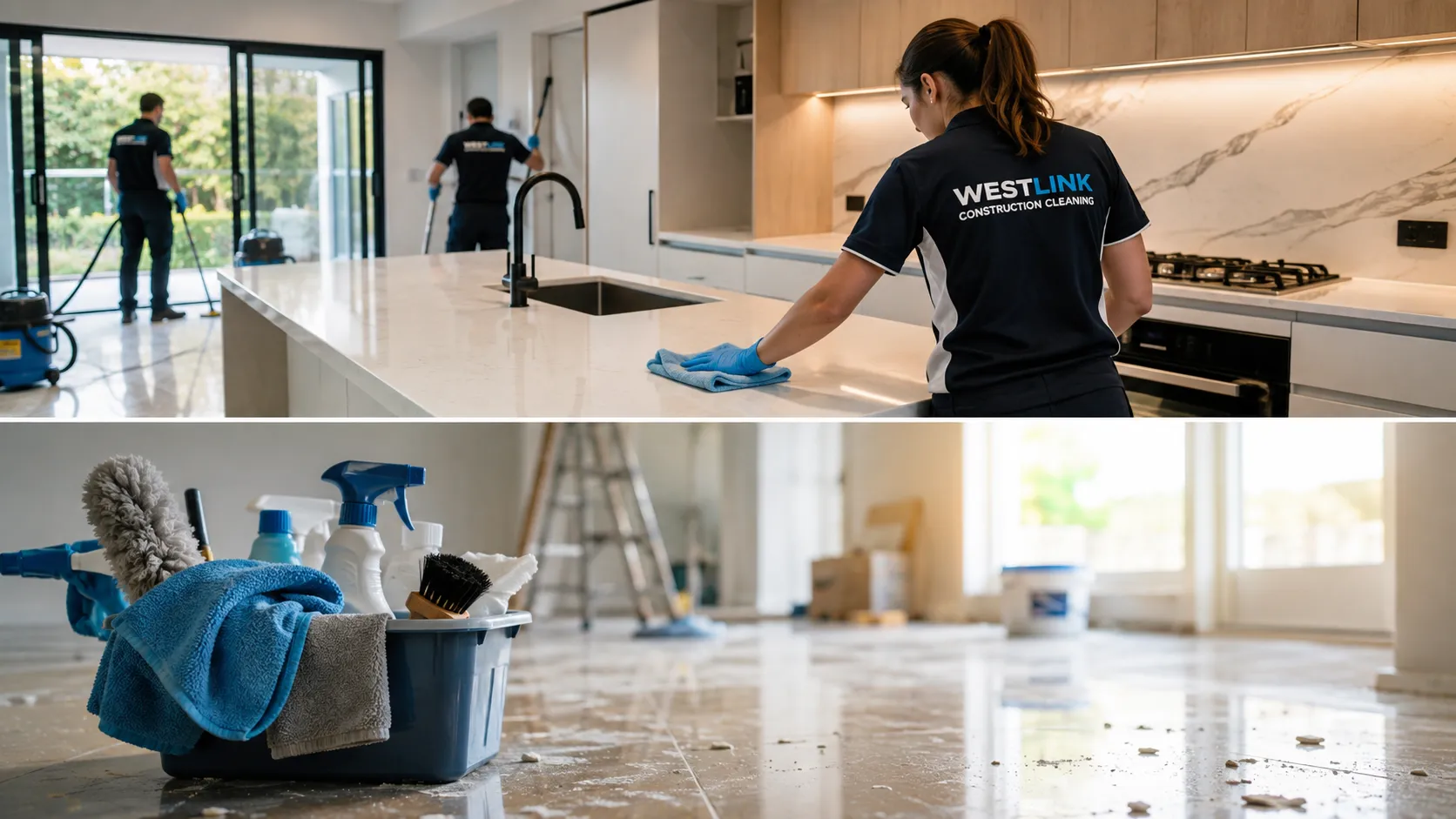
Westlink Construction Cleaning works with site teams to coordinate cleaning around trade completion, access, and handover requirements.
That kind of planning makes a big difference on larger builds, where one area may be ready while another still has active work.
Construction Cleaning Needs a Clear Scope
Another problem with general cleaners is scope confusion.
A normal cleaner may assume they only need to wipe surfaces and vacuum floors.
A construction cleaning scope may include far more.
Typical tasks can include debris removal, dust extraction, glass cleaning, window tracks, bathrooms, kitchens, floors, fittings, joinery, residue removal, and final presentation work.
Some tasks may also sit outside the standard scope, such as hazardous waste, heavy rubble, high-access work, or specialist stain removal.
Setting this out before work begins helps avoid disputes and missed tasks.
Frequently Asked Questions About Construction Site Cleaners
Can a regular cleaner clean a construction site?
They can handle some basic cleaning tasks, but most construction sites need specialist knowledge, equipment, and safety awareness. A professional construction cleaner is usually better suited to detailed builders cleans and handover preparation.
What is the difference between a regular cleaner and a construction cleaner?
A regular cleaner usually works in occupied homes or offices. A construction cleaner deals with building dust, residue, debris, new finishes, active-site conditions, and staged cleaning around trades.
Do construction cleaners use different equipment?
Yes. They may use industrial vacuums, HEPA filtration, commercial floor equipment, specialist residue-removal tools, and other equipment suited to building-site conditions.
Can inexperienced cleaners damage new surfaces?
Yes. Incorrect chemicals, scraping methods, abrasive pads, or too much moisture can damage glass, stone, timber, cabinetry, and other new finishes.
When should construction cleaners start work?
That depends on the project stage. Rough cleaning can happen during construction, while detailed cleaning should happen after major dust-producing work is complete and before final inspection or handover.
Why Specialist Construction Cleaning Is Worth It
The cheapest cleaning option is not always the lowest-cost option.
If work has to be repeated, surfaces are damaged, or the handover is delayed, the original saving can disappear quickly.
A specialist construction cleaning Sydney brings the right process, equipment, and site awareness to the job. They understand that the goal is not just to make the site look cleaner. The goal is to prepare the project for the next stage without creating new problems.
Westlink Construction Cleaning supports builders and project teams that need structured cleaning from active construction through to final handover. Bringing the right cleaning team in at the right time helps protect finishes, reduce rework, and present the completed project properly.




























Sign in to leave a comment.