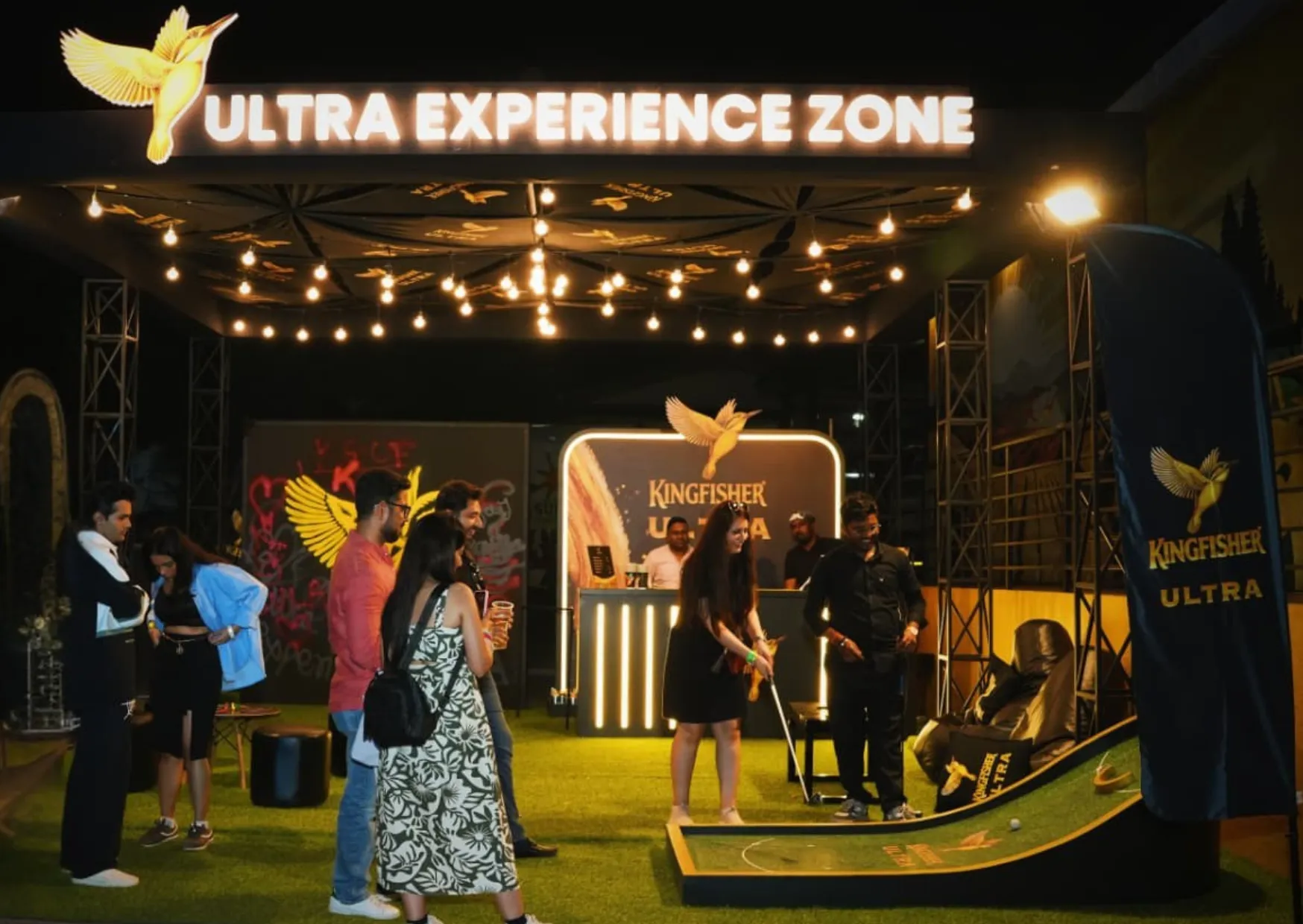

Footfall is the easiest number to feel good about on the show floor. A steady stream of badges scanned, business cards collected, a queue near the demo station — it looks like the booth is working. Then the follow-up emails go out three weeks later, and the reply rate tells a very different story. Getting visitors to your booth and getting real engagement from them are two different problems — and closing that gap is exactly the job of a brand experience agency, not just a booth contractor.
Why a Busy Booth Can Still Be an Empty One
The average trade show attendee visits somewhere between five and eight exhibitor booths in a single day, and roughly nine in ten say their main reason for attending is to explore new products — not to have a deep conversation with any one exhibitor. That means a visitor stopping at your booth is competing for attention with five to seven others on the same walk.
If your booth's engagement is limited to a badge scan and a brochure handout, you're not losing to a competitor's better product. You're losing to the sheer number of other booths asking for the same thirty seconds.
What a Brand Experience Agency Designs For Instead
A brand experience agency treats footfall as the starting point, not the goal. The real design question is: what happens in the ninety seconds after someone stops walking?
- A reason to stop that isn't the logo. Visual scale, movement, or illusion earns a second look before a single word is spoken.
- A short, physical interaction. Something to touch, try, or solve — not just watch.
- A staff-led conversation, not a staff-led pitch. The booth team's job is to ask a question, not deliver a script.
- A lightweight way to capture real interest, separate from the standard badge scan, tied to the specific moment that engaged them.
Case Study: Cashfree's Booth at Global Fintech Fest 2026
Global Fintech Fest 2026 brought together fintech leaders, banks, regulators, and investors across three days at Jio World Convention Centre — a floor with hundreds of exhibitors, an AI Zone, and a dedicated B2B Lounge, all competing for the same finite attention. Cashfree Payments exhibited at Booth K2 in the middle of that competition.
On a floor this dense, a booth's physical footprint stops being the main differentiator — what happens at the booth in the first few seconds is. StepOn Experience designs exhibition presence around that first moment of contact: giving a fintech brand a way to be noticed and understood on a crowded floor, in the time it actually takes an attendee to decide whether to stop. Their Cashfree Global Fintech Fest 2026 case study goes into how that plays out on the ground.
Examples of Experiential Marketing That Helped B2B Brands
- StepOn Experience's work with HR-tech names Deel, BIPO, and Atlas at HRM Asia shows the same principle applied to a different sector — B2B booths succeed by giving a technical product a physical, understandable moment, not just a screen demo.
- Trade show research finds that roughly eight in ten attendees at B2B shows have real buying authority, and about two in three represent a brand-new prospect walking into the booth for the first time — exactly why the first impression matters more on a B2B floor than almost anywhere else.
- Exhibitors say sales staff, not senior leadership, make the most effective booth representatives, because the conversation matters more than the title of the person having it.
Tips to Create Memorable Interactive Installations
- Use scale or illusion — a large-format anamorphic screen, a forced-perspective build, a visual that only resolves from one angle — to earn a second look before anyone has to explain the product. This is one of the most reliable ways to stop foot traffic on a crowded floor, because it works on curiosity alone, before a single word of pitch is spoken.
- Keep the core "wow" moment under 90 seconds; anything longer creates a queue that kills momentum for everyone behind it.
- Give visitors something to do with their hands, not just their eyes — physical interaction is remembered longer than a screen.
- Brief staff to open with a question about the visitor's problem, not a description of your product.
- Capture contact information at the point of highest interest, right after the interaction, not at a separate sign-up desk.
What Retail Brands Gain from Immersive Marketing Activation
Retail offers a useful parallel. Sephora's AR mirror installation at its Times Square flagship generated thousands of interactions, averaging close to nine engaged users an hour — proof that a well-designed physical interaction can hold attention even in one of the busiest retail environments in the world. The same in-store activations built around real product trial have shown conversion lifts of 30 to 60% during the activation window. The lesson transfers directly to a booth: an interaction people willingly queue for outperforms a display people just glance at.
Turn Booth Traffic Into Real Conversations With an Experiential Marketing Agency
A crowded booth photo looks great in a post-event recap. It's a poor substitute for a pipeline of people who actually remember what you do.
StepOn Experience, as a working brand experience agency, designs exhibition presence around the interaction that happens after someone stops walking, not just the visual that gets them to stop. If your last show floor delivered good footfall numbers and a disappointing follow-up list, talk to StepOn Experience about what the booth should actually be asking visitors to do.























Sign in to leave a comment.