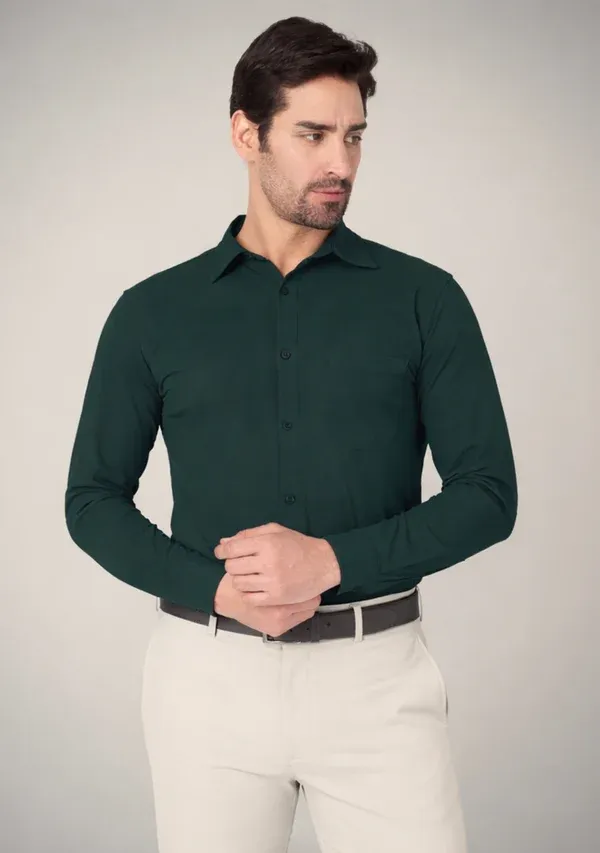

Walk into any office around mid-afternoon and you'll spot the same thing on half the men in the room: a shirt that looked crisp at 9 AM and now looks slept in. Collars have gone soft, sleeves are creased at the elbow, and there's a faint sweat patch forming along the back. It's such a common sight that most men have simply accepted it as the cost of wearing formal clothing for eight-plus hours a day. But it doesn't have to be that way, and the reason has less to do with how you wear a shirt and everything to do with what it's made of.

The real problem is the fabric, not the fit
Most men troubleshoot the wrinkle-by-lunchtime problem by buying a better iron, switching to a stronger starch spray, or simply resigning themselves to a mid-day touch-up in the office restroom. These are all reasonable reactions to the symptom, but they don't address the cause. Standard cotton, especially the lower-thread-count cotton used in mass-market formal shirts, simply isn't built to hold a pressed shape under movement and heat. The fibers absorb moisture readily, which is great for breathability in theory, but in practice means the fabric goes limp the moment you start sweating even slightly — during a commute, a stressful meeting, or just a warm afternoon with the office AC running low.

Add in a few washes, and the problem compounds. Cheaper cotton blends lose their structure over time, meaning a shirt that was passable in month one starts looking tired by month three. For something worn five days a week, fifty weeks a year, this isn't a minor inconvenience — it's a wardrobe that requires constant replacement and constant maintenance just to look acceptable.
Why fabric technology is the actual fix
The shift happening in menswear right now isn't about new colors or cuts — it's about the fabric itself. Performance-oriented weaves now blend breathability with genuine wrinkle resistance, using finishing treatments that let a shirt spring back into shape rather than crease and stay creased. Quick-dry properties matter just as much: fabrics that wick moisture away from the skin and evaporate it quickly prevent the visible sweat-through that plagues traditional cotton, especially in humid climates or during Indian summers where AC-to-outdoor temperature swings are constant.
UV-protective finishes are the third piece of this puzzle, and they're becoming more relevant as men spend more time commuting, traveling for work, or attending outdoor client events in formal wear. None of these properties show up if you're just looking at a shirt on a hanger — you only notice the difference once you've worn it through an actual working day.
What to look for when rebuilding your wardrobe
If you're in the process of replacing your office shirts, it's worth treating fabric composition as seriously as fit and color. Look specifically for wrinkle-free finishes, quick-dry synthetic blends or treated cotton, and UV protection if you're often outdoors. Full-sleeve shirts in particular benefit from these treatments, since sleeves see the most friction and creasing over a workday.

Brands built specifically around this problem are worth a look if you're rebuilding your office wardrobe from the ground up. The Manatomy designs full-sleeve and half-sleeve formal shirts using wrinkle-free, quick-dry, UV-protected fabric technology — aimed squarely at men who want a sharp, professional look that survives a full workday without requiring a midday touch-up or a trip to the dry cleaner every week.
Bringing it all together
A shirt is only one part of the equation, of course. Pair a performance-fabric shirt with well-fitted trousers that hold their shape and the right pair of shoes, and you've solved close to 90% of the "comfortable vs. professional" tradeoff that most office wardrobes struggle with. The remaining 10% is just knowing your color combinations and building outfits that don't require decision fatigue every morning — something worth covering in a separate styling guide.
The bigger point is this: if your shirts are failing you by 3 PM, the issue probably isn't your ironing technique. It's time to look at what's actually woven into the fabric.




















Sign in to leave a comment.