

On some grids now, the old order is quietly breaking. A summer afternoon that once belonged to coal or gas is increasingly carried by sunlight, while night-time demand is more often steadied by wind than by fuel shipped across oceans. One of the clearest recent signals came from the United States, where Electrek, citing U.S. Energy Information Administration data, reported that solar generated more electricity than coal and wind in May 2026. That single month does not rewrite the whole power system, but it captures a global truth: wind and solar are no longer niche technologies waiting for their moment. In many markets, they are already shaping the daily rhythm of electricity supply.
The story is not simply that capacity is rising. It is that growth has become geographically broad, industrially significant, and politically difficult to reverse. China continues to dominate manufacturing and deployment. India is adding at a pace that would have seemed improbable a decade ago. Europe, even amid policy uncertainty and grid bottlenecks, has built a far larger renewable base than it had before the energy shock of the early 2020s. Across Latin America, the Middle East, Africa, and parts of Southeast Asia, developers are pairing cheaper solar modules with better transmission planning and storage.
If you have been following clean energy for a while, you can feel the shift in tone. The question used to be whether wind and solar could scale. Now the harder and more interesting questions are about integration, pricing, curtailment, manufacturing stress, and whether grids can keep up with the volume of projects being announced and built. For readers wanting a companion overview, WriteUpCafe has also explored why wind and solar energy capacity keeps rising worldwide and how wind and solar energy is expanding worldwide. What follows is a closer look at what the numbers mean, what changed recently, and what deserves your attention next.
Wind and solar growth is no longer a side story in energy. It is the main structural change around which power markets are reorganizing.
How the world reached this phase of renewable expansion
The roots of today’s growth run through three overlapping shifts: falling technology costs, energy security concerns, and industrial policy. Solar module prices declined dramatically over the past two decades as manufacturing scaled, especially in China. Wind turbines also benefited from larger machines, improved capacity factors, and more experienced developers. Those cost declines mattered, but they were not enough on their own. Governments had to build markets first through feed-in tariffs, tax credits, renewable portfolio standards, auctions, and grid access rules.
Then came the energy disruptions of the early 2020s. Russia’s invasion of Ukraine sharpened Europe’s focus on domestic energy sources. Volatile gas prices made the economics of renewables more compelling, even where permitting remained slow. In the United States, the Inflation Reduction Act created long-duration visibility for tax incentives across generation, manufacturing, storage, and hydrogen. China, already the largest clean-energy builder, expanded further as local governments and state-backed firms pushed utility-scale solar, distributed solar, and both onshore and offshore wind.
At the same time, electricity demand itself began to change. Data centres, electric vehicles, heat pumps, and industrial electrification all increased the appeal of building generation that could be deployed relatively quickly. A solar project can often move from financing to operation faster than a large fossil plant. Wind, while more exposed to permitting and supply-chain pressures, still offers a powerful route to bulk low-carbon electricity in many regions. That combination of speed and scale has become central.
Another quiet change has been financial maturity. Pension funds, infrastructure investors, and sovereign-backed vehicles now treat many renewable assets as a recognizable investment class. That lowers the barrier to expansion, even when interest rates rise. The result is a sector that is no longer dependent on novelty. It is built into utility planning, corporate procurement, and national industrial strategy.
For a broader primer on the mechanics behind this build-out, the related WriteUpCafe piece on wind and solar energy capacity growth worldwide explained offers a useful baseline. The key point is simple: this expansion was years in the making, but recent shocks accelerated it.
What the latest capacity growth tells us about the market
Capacity additions are not the same thing as electricity generation, but they are still the clearest indicator of where capital, policy, and industrial capability are heading. Recent reporting suggests that solar remains the fastest-growing major power technology worldwide, with wind still adding substantial volume even as some markets face slower permitting and higher equipment costs. According to CleanTechnica’s coverage of global energy supply growth in 2025, renewables led by solar were the largest source of energy supply growth globally. That matters because it frames renewables not merely as climate tools, but as the leading source of incremental energy entering the system.
Solar’s momentum comes from several advantages. Modules are modular, manufacturing is vast, and projects range from rooftop systems to multi-gigawatt utility parks. Wind’s economics remain strong in the right geographies, but the sector has had a rougher time with inflation, turbine reliability concerns in some fleets, and slower approval timelines, especially for offshore projects. Even so, the global picture remains one of expansion rather than retreat.
- Solar is benefiting from lower equipment costs, quicker construction timelines, and strong demand from utilities and commercial buyers.
- Onshore wind remains competitive in regions with good resources and available land, though margins for manufacturers have been under pressure.
- Offshore wind still offers enormous long-term potential, but financing and supply-chain discipline have become more important after project repricings.
- Hybrid projects combining solar, wind, and storage are gaining attention because they smooth output and improve grid value.
There is also a more nuanced trend beneath the headline growth. As wind and solar penetration rises, the value of each additional megawatt increasingly depends on location, interconnection, and time of production. Midday solar can flood a market and push prices down. Strong wind output at night can displace thermal generation very effectively, but only if transmission exists to move that power. So capacity growth is now inseparable from system design.
That is why grids with the largest pipelines are also investing in batteries, flexible demand, and transmission corridors. Developers are not just chasing the best resource anymore. They are chasing the best combination of resource quality, grid access, policy certainty, and local market pricing. Capacity growth, in other words, is becoming smarter as well as bigger.
The next phase of renewable growth will be won less by headline ambition and more by execution: permits, wires, storage, and market rules.
China, India, and the geography of scale
No serious analysis of global wind and solar capacity can avoid China. It remains the central force in renewable manufacturing and one of the largest deployment markets by a wide margin. Chinese firms dominate large parts of the solar supply chain, from polysilicon through modules, and the country has also built extensive wind manufacturing capability. This scale has lowered global costs, but it has also created fragility. When Chinese manufacturers overexpand and margins collapse, the shock travels across the whole industry.
That tension became more visible in 2026. Reporting from newfortunetimes on China’s solar sector described a reality check as major manufacturers cut jobs amid intense competition and pricing pressure. Even if one treats any single report with caution, the broader pattern is familiar: extraordinary manufacturing growth can produce oversupply, and oversupply can crush weaker players. For buyers, cheaper modules may look like an uncomplicated win. For producers, it can be brutal.
India, meanwhile, has become one of the most closely watched growth markets. According to ET EnergyWorld, citing BloombergNEF, India remained the world’s second-largest market for solar and wind capacity additions in 2025. That is a significant marker. India’s electricity demand is rising, its industrial ambitions are broad, and its renewable build-out now has implications far beyond domestic climate policy. It affects supply chains, investment flows, and the future balance between imported fuels and local generation.
- China sets the pace on manufacturing scale and continues to add huge volumes of capacity.
- India is emerging as a critical demand centre and policy laboratory for rapid deployment.
- Europe remains influential in regulation, market design, and offshore wind expertise, even when growth rates fluctuate.
- The United States matters because tax incentives, domestic manufacturing support, and grid investment can reshape project economics across the continent.
The geography of scale matters for another reason as well. When a few giant markets move, the rest of the world feels it through pricing, component availability, financing benchmarks, and political expectations. Smaller countries no longer have to prove the technologies work. Their challenge is choosing how to fit them into local systems with limited capital and, often, weaker grids.
Europe and North America are growing, but the constraints are changing
Europe’s renewable story has become more complicated than the simple boom narrative of a few years ago. The region built a powerful growth cycle after the gas crisis sharpened the value of domestic renewable power. Yet by 2026, some analysts were warning that the pace could moderate. The European publication The European reported on expectations for a two-year slowdown in Europe’s solar boom after record growth. A slowdown is not the same as reversal. It often reflects a market maturing into harder problems: permitting delays, weaker power prices during sunny hours, grid congestion, and uncertainty around support schemes.
That shift is healthy to understand. Early-stage growth is often about proving demand exists. Later-stage growth is about integrating abundance. Europe has reached the stage where adding more capacity still makes sense, but the surrounding infrastructure matters more than ever. Transmission links between countries, faster interconnection queues, and greater battery deployment are becoming essential if the next wave of projects is to deliver full value.
North America presents a different mix. In the United States, policy support remains strong, but project developers have dealt with transformer shortages, local opposition in some counties, and long waits to connect to regional grids. Even so, the combination of tax credits, state mandates, corporate procurement, and manufacturing incentives has kept the pipeline robust. Canada, my home country, has its own regional patchwork. Alberta and Saskatchewan have excellent wind and solar resources, while hydro-rich provinces face different planning choices around flexibility and exports.
What is changing on both sides of the Atlantic is the nature of the bottleneck. The most urgent question is less about whether wind and solar are affordable enough to build. In many places, they are. The urgent question is whether institutions can adapt quickly enough to absorb them. Planning law, wholesale market design, balancing rules, and transmission investment are now as important as turbine and module prices.
For readers tracking current momentum, WriteUpCafe’s piece on wind and solar energy capacity growth worldwide in 2026 complements this picture by focusing on the latest market shifts. The broad takeaway is calm but consequential: mature markets are still expanding, though the obstacles are increasingly administrative and electrical rather than technological.
Why capacity growth does not automatically mean smooth decarbonization
There is a gentle temptation in clean-energy coverage to treat every new gigawatt as uncomplicated progress. Real systems are messier. Capacity growth is necessary for decarbonization, but it does not by itself guarantee lower emissions at the speed policymakers want. A solar farm can be built and still face curtailment if the grid cannot absorb its output. A wind project can secure financing and then wait years for transmission upgrades. In some markets, coal plants remain online as back-up because flexibility resources have not scaled fast enough.
This is where the conversation becomes more technical and, frankly, more honest. The value of wind and solar depends on at least four surrounding conditions:
- Transmission capacity to move power from resource-rich regions to demand centres.
- Storage deployment to shift excess solar and stabilize short-term fluctuations.
- Flexible demand such as EV charging, industrial load management, and smart appliances.
- Market reform so price signals reward clean flexibility rather than just installed capacity.
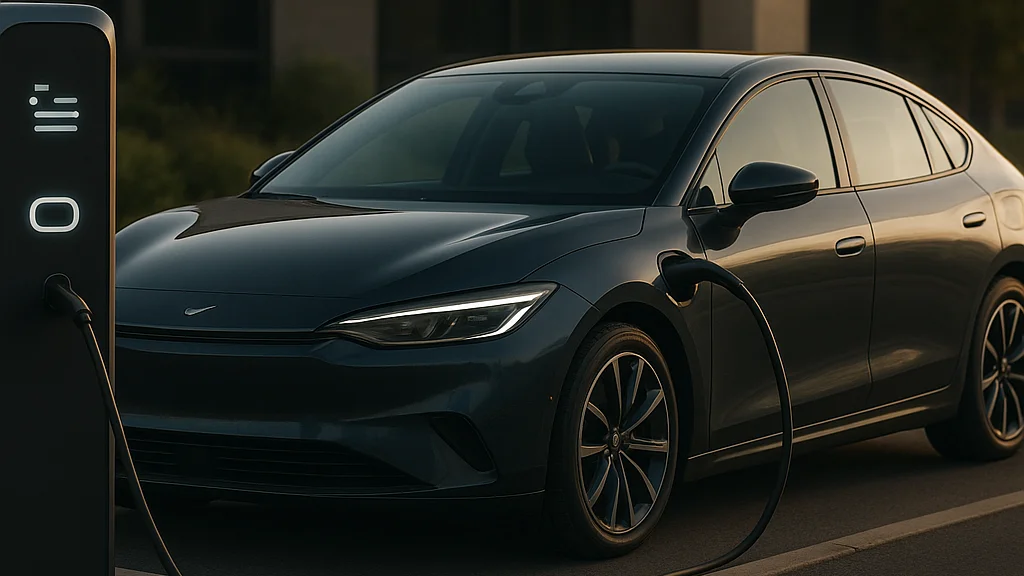
Electric vehicles fit directly into this picture. As EV adoption rises, charging can become a source of flexible demand that soaks up midday solar or overnight wind. Done well, that reduces curtailment and lowers system costs. Done poorly, it can intensify evening peaks. This is why the clean-energy and EV stories are increasingly inseparable. One changes transport demand; the other changes how that demand is served.
There is also a social dimension. Communities hosting large renewable projects want jobs, local tax revenue, and meaningful consultation. Supply chains raise labour, trade, and environmental questions of their own. A transition that looks smooth in an investor presentation can feel uneven on the ground. That does not weaken the case for renewables. It simply asks us to be precise about what build-out requires.
According to Reuters and the International Energy Agency in recent years, renewables have repeatedly outperformed many expectations. Yet even optimistic agencies stress that grids, storage, and permitting must accelerate alongside generation. That is the hinge point now. The cheapest megawatt is not always the most useful one unless the system around it is ready.
What has changed recently in 2026
By October 2026, three developments stand out. First, solar’s role in actual electricity generation is becoming more visible in major economies, not just in capacity announcements. The U.S. example of solar overtaking coal and wind in a spring month is symbolically powerful because it shows how fast the generation mix can shift when enough projects come online. Similar seasonal surges are appearing in other markets with strong solar fleets.
Second, the economics of manufacturing are under strain even while deployment remains strong. That sounds contradictory, but it is not. Developers may benefit from lower component prices while manufacturers face margin compression severe enough to trigger layoffs, consolidation, or state intervention. China’s solar industry is the clearest case, though not the only one. This matters because a healthy transition needs resilient supply chains, not just cheap products.
Third, the conversation about slowdown has become more sophisticated. When Europe discusses slower solar growth after record expansion, that does not mean the boom was a mirage. It means the easy phase is over. Future gains require more storage, more transmission, and more adaptive market rules. The same is true in parts of the United States, where interconnection queues have become a defining obstacle.
Recent developments also reinforce a broader truth: the clean-energy transition is now uneven in a different way than before. A decade ago, unevenness meant some countries had renewables and others did not. In 2026, many countries have them, but they are at different stages of system integration. One market may struggle with oversupply at noon. Another may still be trying to finance its first utility-scale wind project. Both are part of the same global story, just at different chapters.
That is why trend lines matter more than single headlines. Capacity growth worldwide remains strong, but the centre of gravity is shifting from proof of concept to system management. If that sounds less glamorous, it is. It is also the point where transitions become durable.
What to watch next for investors, policymakers, and ordinary consumers
The next few years will probably not be defined by whether wind and solar continue growing. They almost certainly will. The more important question is how well power systems absorb that growth and who captures the benefits. Investors should watch interconnection reform, battery economics, and regional transmission plans as closely as module or turbine pricing. Policymakers should pay attention to permitting discipline, local consent, and industrial competitiveness. Consumers, including EV owners, may see the effects through time-of-use tariffs, rooftop solar economics, and more dynamic electricity pricing.
Several signposts will matter more than the breathless daily news cycle suggests. Watch whether storage deployment keeps pace with solar additions. Watch whether offshore wind contracts are repriced in ways that restore developer confidence without pushing costs too high for consumers. Watch India’s policy execution, because sustained build-out there would reshape global demand expectations. And watch whether China manages manufacturing consolidation without destabilizing supply.
There is also a deeper measure of success worth holding onto: whether renewable growth makes electricity cleaner and more dependable. The best systems will not simply add megawatts. They will coordinate generation, storage, demand response, and grid expansion so that low-carbon power arrives when people actually need it.
If I were to leave you with one practical lens, it would be this:
- Ask not only how much capacity was added, but where it connected and when it generates.
- Look for policies that support transmission, storage, and flexible demand alongside generation.
- Distinguish between temporary industrial pain and long-term structural momentum.
- Remember that renewable growth is a power-system story, not just a technology story.
Wind and solar are growing worldwide because they have moved from hopeful alternatives to foundational infrastructure. The work ahead is less romantic and more important: wires, permits, batteries, contracts, and public trust. Still, there is something quietly heartening here. A system that once seemed too heavy to change is changing, one project, one grid rule, one bright afternoon at a time. If you are reading this over tea or between errands, I hope that lands as a small steadying thought. Be gentle with yourself.


























Sign in to leave a comment.