
Introduction
Searching for a wire rope company usually means you already have a real problem to solve. Maybe you're specifying cable for a crane, sourcing railing cable for a construction project, or trying to replace a worn hoist line before it becomes a safety issue. Whatever the reason, the wire rope company you choose determines far more than price. It determines whether the wire rope cables you receive actually perform the way your project needs them to.
Not every supplier operates the same way. Some simply trade in wire rope, buying and reselling without much visibility into how it was made. Others manufacture it directly, controlling everything from raw wire to final testing. That difference matters more than most buyers realize until something goes wrong on site.
This guide walks through what a wire rope company actually does, the types of wire rope available, how construction and material choices affect performance, what quality and testing should look like, and how to evaluate a manufacturer before you commit to an order.
What Does a Wire Rope Company Do?
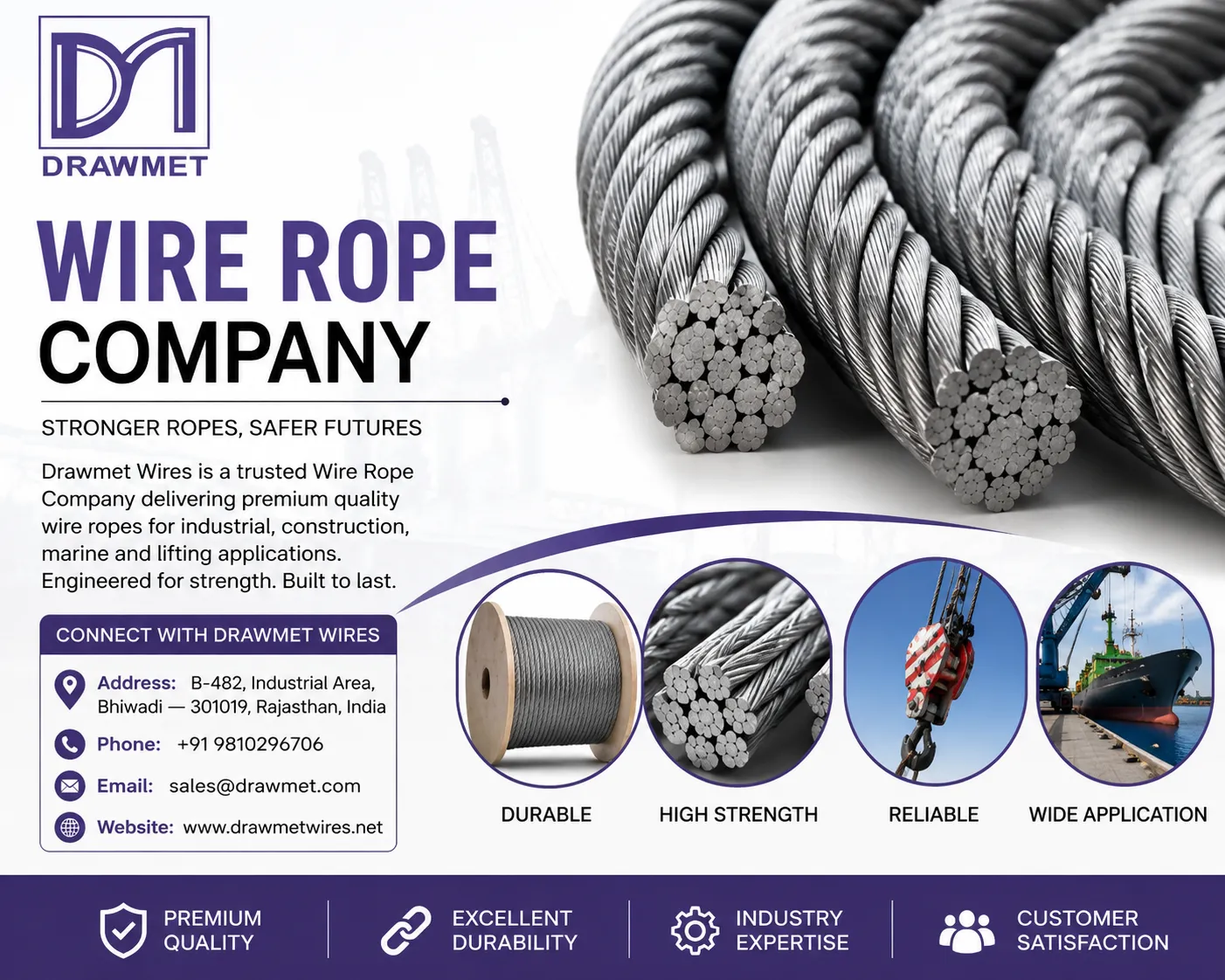
A wire rope company manufactures, tests, and supplies wire rope and wire rope cables for industrial, marine, construction, and architectural use. Depending on the company, this can range from basic trading and distribution to full in-house production covering wire drawing, stranding, closing, and quality testing.
A genuine wire rope manufacturer typically handles:
- Sourcing and drawing raw steel wire to the required diameter and tensile grade
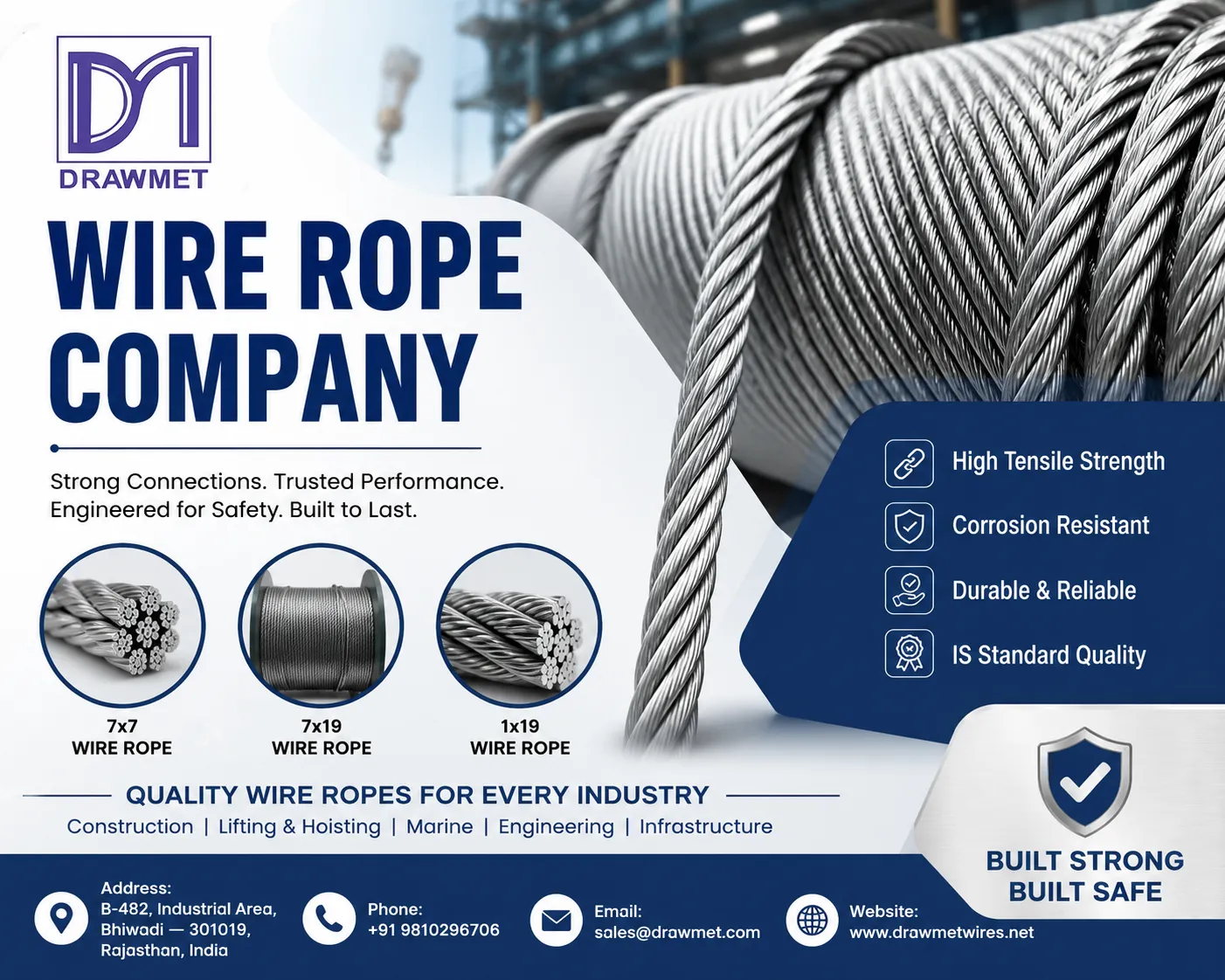
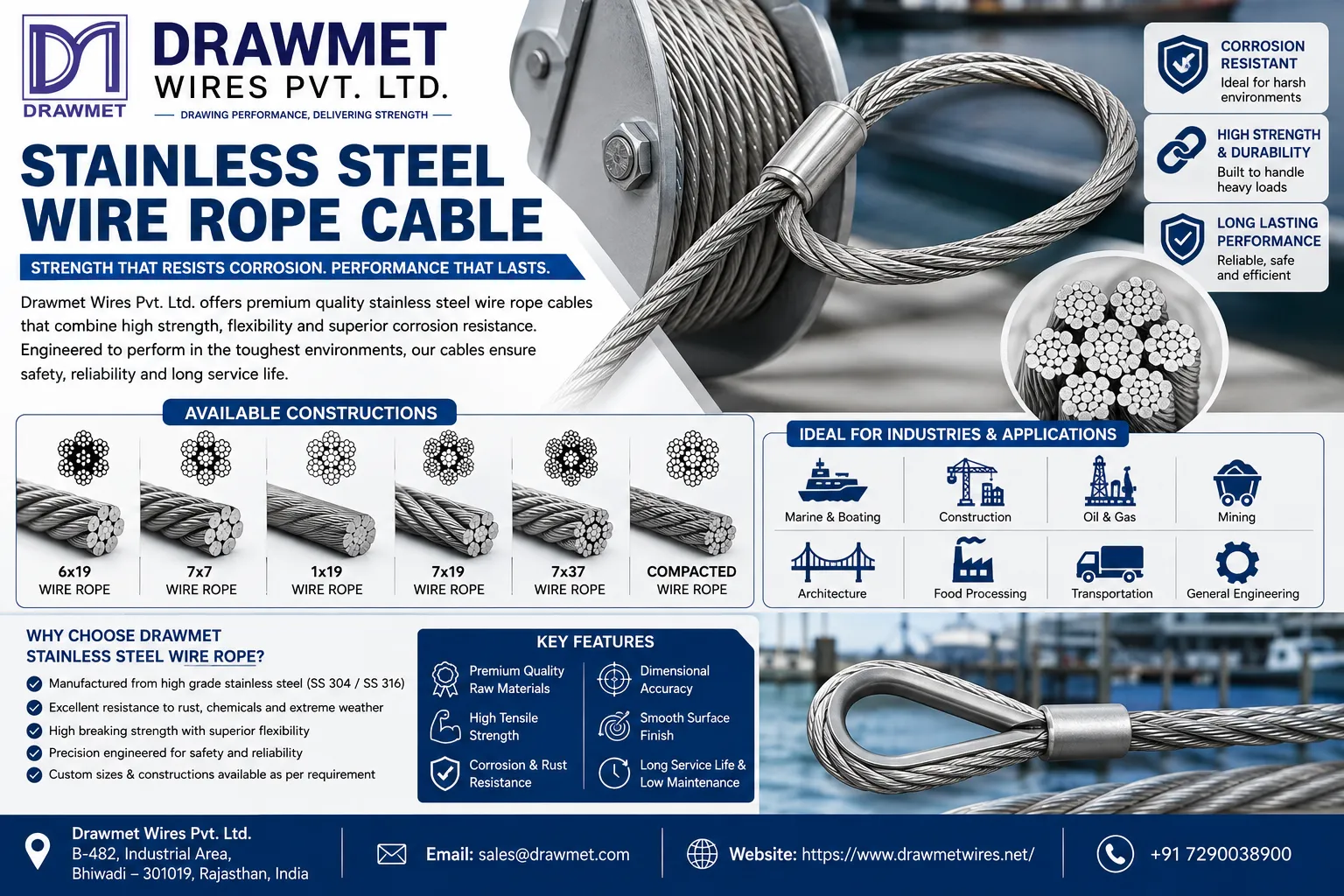
- Stranding wires into the correct construction (such as 7x7, 7x19, or 1x19)
- Closing strands around a core to form the finished rope
- Testing samples for breaking strength and dimensional accuracy
- Certifying coils with traceable documentation for structural, marine, or compliance-driven projects
- Supplying standard stock sizes as well as custom lengths, diameters, and constructions
The distinction between a manufacturer and a pure distributor is worth understanding before you buy. A manufacturer controls the process from raw material to finished coil, which generally means tighter consistency and clearer traceability. A distributor is reselling someone else's output, with less direct insight into how that rope was actually produced.
Understanding Wire Rope Cables: The Basics
Wire rope cable is built from individual wires twisted into strands, which are then laid around a central core to form a flexible, high-strength rope. This layered structure is the entire point. A single thick wire would be strong but rigid, prone to fatigue cracking under repeated bending. Multiple thinner wires, stranded correctly, distribute stress evenly and flex without breaking, which is the core engineering principle behind every wire rope ever made.
The terms "wire rope" and "cable" are used interchangeably across the industry, and both refer to this same basic construction.
Types of Wire Rope
Different environments and applications call for different wire rope types:
- Galvanized wire rope – zinc-coated carbon steel wire rope, offering cost-effective corrosion protection for general outdoor and industrial use
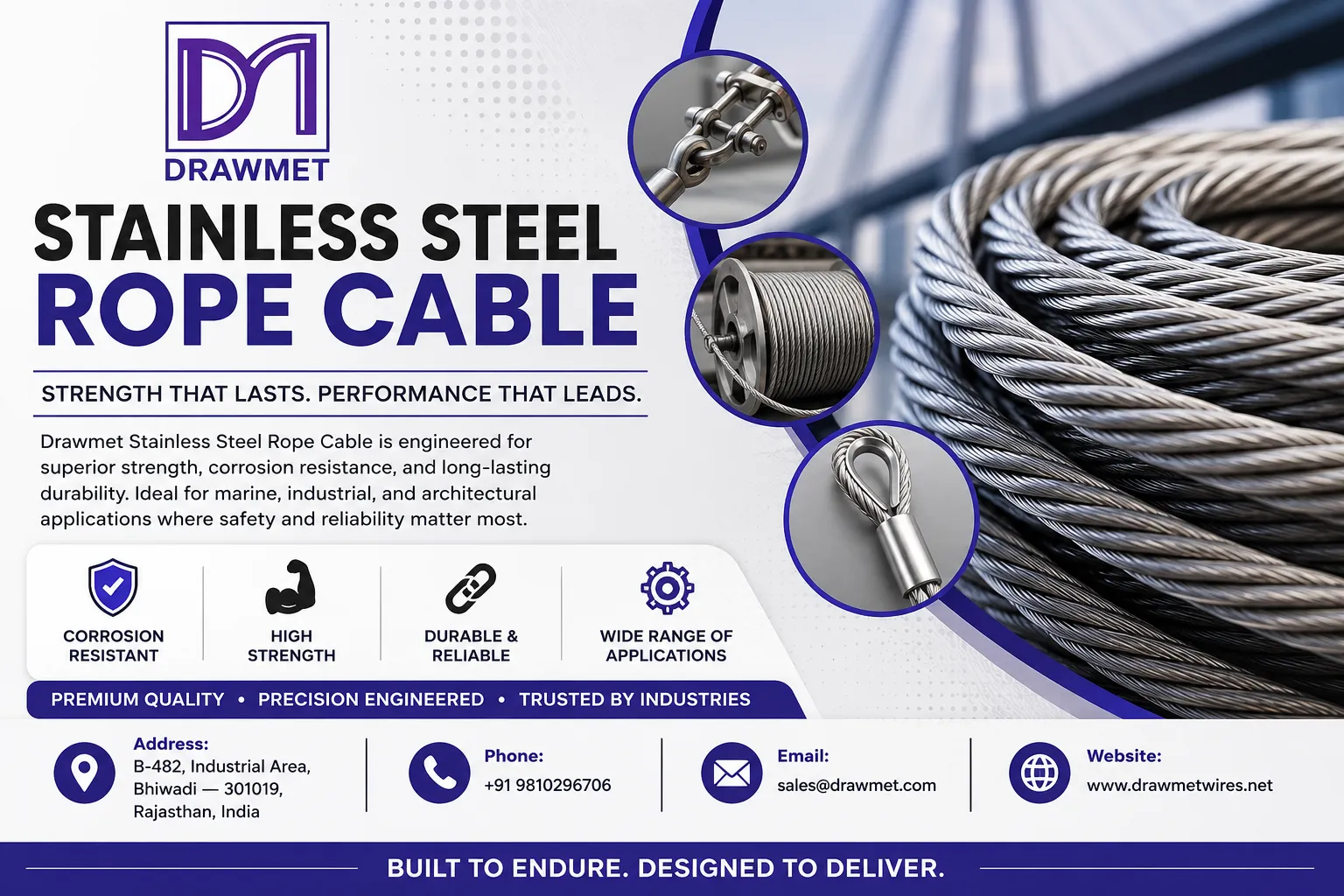
- Stainless steel wire rope – corrosion-resistant through the alloy itself rather than a surface coating, suited to marine, coastal, and chemically active environments
- Coated wire rope cable – PVC or nylon-coated for additional abrasion resistance and surface protection
- Aircraft cable – a compact, high-flex construction commonly used in control systems and precision rigging
Each type solves a slightly different problem, which is why a reliable wire rope supplier should be able to explain the tradeoffs rather than pushing a single default product.
Wire Rope Construction Explained
Construction refers to how many wires make up each strand and how many strands are laid around the core. It's usually written as two numbers, such as 7x19, where the first number is strand count and the second is wires per strand.
1x19 Construction
A single strand of 19 wires, offering minimal stretch and strong dimensional stability. This makes it a common choice for cable railing and balustrade systems, where the rope needs to hold tension across a long span without sagging.
7x7 Construction
Seven strands of seven wires each, a semi-flexible construction that balances strength and bendability for general-purpose applications.
7x19 Construction
Seven strands of 19 wires each, offering the highest flexibility of the standard constructions. This makes it well suited to sheaves, pulleys, and any application involving repeated flexing, since it resists work-hardening better under constant movement.
Core Types
Core choice affects flexibility, strength, and heat resistance:
- Fiber core – adds flexibility and cushioning, with a slight reduction in overall strength
- Steel core (IWRC) – increases strength, heat resistance, and crush resistance, generally preferred for heavy-duty industrial applications
Matching construction and core to the actual application, rather than defaulting to whatever is in stock, is one of the clearest signs of a wire rope company that knows its product.
Materials and Grades: Galvanized vs Stainless Steel Wire Rope
Material selection is often the single biggest factor in how long wire rope actually lasts once installed.
Galvanized wire rope relies on a zinc coating for corrosion protection. It performs well in general outdoor and industrial conditions, but that coating wears away over time and doesn't regenerate once damaged.
Stainless steel wire rope resists corrosion differently, through a passive chromium oxide layer on the wire surface that naturally reforms when scratched or damaged. This self-healing property is why stainless steel outperforms galvanized rope in consistently wet, humid, or chemically active environments.
Within stainless steel, grade matters:
- SS304 offers solid general corrosion resistance and suits indoor settings or general atmospheric outdoor conditions where salt exposure isn't a major concern.
- SS316 contains added molybdenum, giving it noticeably stronger resistance to chloride-driven pitting. It's the standard recommendation for marine environments, dockside hardware, pool fencing, and any application exposed regularly to salt water or chlorinated water.
Applications of Wire Rope Cables
Wire rope cables show up across a wide range of industries, which is why "wire rope company" search intent covers such varied buyers:
- Crane wire rope and hoist cable for material handling and lifting systems
- Construction wire rope for scaffolding support, safety barriers, and structural cable
- Mining wire rope for haulage, winching, and heavy-duty industrial pulls
- Marine rigging, dock lines, and mooring cable assemblies
- Elevator and lift cable assemblies
- Architectural cable railing and stair balustrades
- Agricultural fencing and tensioned cable applications
- Conveyor pull cable and emergency stop cable runs
Each application calls for a different balance of flexibility, tensile strength, and corrosion resistance, which is exactly why construction and grade selection matter as much as simply specifying "wire rope" on a drawing.
How Wire Rope Cables Are Manufactured
Understanding the manufacturing process helps explain what separates a dependable wire rope manufacturer from one cutting corners.
- Wire drawing – stainless steel or carbon steel rod is cold-drawn through a series of dies to reach the target wire diameter. This process work-hardens the wire, building tensile strength as diameter reduces.
- Stranding – individual wires are stranded around a core on stranding machines, following the required construction.
- Closing – strands are closed into the final rope construction on closing machines.
- Dimensional checks – confirming the finished rope holds its specified diameter.
- Visual surface inspection – checking for die marks, wire breaks, or surface defects.
- Sample breaking-load testing – pulling a sample to failure on a calibrated tensile rig to verify rated strength.
- Spooling, tagging, and certification – finished rope is spooled, tagged with its heat number for traceability, and accompanied by a mill certificate.
This heat-number traceability matters considerably when a structural engineer or marine surveyor requests documentation before signing off on an installation.
Quality and Testing: What to Look for in a Wire Rope Supplier
Not every supplier tests to the same standard, so it's worth confirming a few things before ordering:
- Recognized testing standards, such as ASTM A492 or EN 12385, referenced against the specific product
- Mill test certificates tied to the coil's heat number, particularly important for structural, marine, or compliance-driven projects
- Sample breaking-load verification, rather than relying purely on calculated ratings
- Consistent dimensional accuracy across production runs, not just isolated samples
A wire rope company that can produce this documentation on request is generally a stronger long-term partner than one that can only quote a price.
Safe Working Load and Fittings
Safe working load is typically calculated using a safety factor, commonly around 5:1, applied against the rope's rated breaking strength. However, the actual safe rating for a complete assembly also depends on the fitting and termination used. Swage terminals, thimbles, or mechanical fittings can lower the effective capacity below the rope's own breaking strength.
For any lifting application specifically, safe working load should always be confirmed against the fitting manufacturer's specifications and applicable local lifting regulations, rather than relying solely on the rope's rated figures.
Customization: Why It Matters When Choosing a Wire Rope Company
Standard sizes cover a lot of ground, but real projects often need something specific. A wire rope company worth working with should be able to supply:
- Custom diameters, from fine control cable up to heavy-duty rigging cable
- Custom cut lengths and spooled orders matched to project requirements
- A choice of constructions and grades rather than a single default product
- Direct technical guidance on sizing, construction, and grade selection
This flexibility is particularly relevant for fabricators, riggers, and OEMs who need cable matched precisely to an application rather than adapted from whatever happens to be in stock.
Why Businesses Should Choose a Reliable Wire Rope Company
Wire rope is rarely a purchase you get to reconsider after installation. It's holding weight, resisting weather, or running through machinery, often in locations that aren't easy to inspect or replace on short notice. That makes supplier reliability a genuine business decision, not just a procurement formality.
A dependable wire rope company matters because:
- Consistency reduces risk. Rope that performs exactly as specified, batch after batch, means fewer surprises during installation or inspection.
- Traceability supports compliance. Structural engineers, marine surveyors, and safety auditors often require documentation before sign-off, and that's only possible with proper heat-number tracking.
- Correct grade selection prevents premature failure. A supplier who understands the difference between SS304 and SS316, or between fiber core and steel core, helps avoid costly early replacement.
- Direct manufacturer relationships simplify custom orders. Working with the actual producer, rather than through layers of distribution, generally means clearer communication and more accurate lead times.
How to Choose the Right Wire Rope Company
For buyers evaluating options, a few practical questions help narrow the field:
- Does the company manufacture in-house, or resell? In-house production generally means better process control and traceability.
- What testing standards do they reference? Look for recognized benchmarks like ASTM A492 or EN 12385, backed by actual test documentation.
- Can they provide mill certificates tied to heat numbers? This is essential for structural, marine, or compliance-driven work.
- Do they offer the specific construction and grade your application needs? A company offering only one or two standard products may not be the right fit for specialized work.
- Can they support custom sizing and cut-to-length orders? Useful for fabricators and OEMs with project-specific requirements.
- How experienced is the company in this specific product category? Longevity in wire rope manufacturing specifically, rather than general metal trading, is a reasonable indicator of process maturity.
Why Drawmet Wires Is Worth Considering
Drawmet Wires Pvt. Ltd. is a Rajasthan-based wire rope company manufacturing stainless steel and galvanized wire rope cables for marine, architectural, and industrial buyers. Wire is drawn, stranded, and closed in-house, and rope is tested against ASTM A492 and EN 12385 standards before shipping.
The product range covers 1x19, 7x7, and 7x19 constructions in SS304 and SS316 grades, from 1 mm control cable up to 12 mm heavy-duty rigging cable, with intermediate sizes available on request. Every coil is traceable to its heat number and mill certificate, which matters directly when a structural engineer or marine surveyor requires documentation before sign-off.
Based in Bhiwadi, Rajasthan, Drawmet Wires has operated as a stainless steel wire and wire rope manufacturer for over three decades, supplying bulk project quantities as well as custom cut-to-size or spooled orders directly to fabricators, riggers, and OEMs.
Conclusion
Choosing a wire rope company is ultimately about trust in a component you rarely get to double-check once it's installed. The right supplier understands construction, grade, and core selection well enough to recommend the right rope for your specific application, backs that rope with real testing and traceable documentation, and can support both standard and custom orders without treating every job as identical.
Whether you're sourcing crane wire rope for a lifting system, stainless steel cable for a marine rigging job, or construction wire rope for scaffolding support, the manufacturer behind that rope matters as much as the specification sheet. A wire rope company like Drawmet Wires, with in-house production and mill-certified testing, represents the kind of documented, application-matched approach that serious industrial and marine projects require.
FAQs:
Q1. What does a wire rope company actually manufacture? A wire rope company produces wire rope and wire rope cables by drawing steel wire, stranding it, and closing it into finished rope constructions such as 7x7, 7x19, or 1x19, often in galvanized or stainless steel grades.
Q2. What is the difference between a wire rope manufacturer and a wire rope supplier? A manufacturer produces the rope in-house, controlling wire drawing, stranding, and testing directly. A supplier or distributor typically resells rope produced elsewhere, with less direct visibility into the production process.
Q3. Which type of wire rope is best for marine applications? Stainless steel wire rope, particularly SS316 grade, is generally recommended for marine and coastal use due to its stronger resistance to chloride-driven corrosion compared with galvanized or SS304 wire rope.
Q4. What does the construction number like 7x19 mean? It describes the rope's build: the first number is the strand count, and the second is the number of wires per strand. A 7x19 rope has 7 strands, each made of 19 wires, offering high flexibility.
Q5. How is the safe working load of wire rope cable determined? Safe working load is typically calculated by applying a safety factor, commonly around 5:1, against the rope's rated breaking strength, with the fitting and termination also affecting the assembly's actual safe capacity.
Q6. Why does heat number traceability matter when buying wire rope? Heat number traceability links a coil back to its production batch and mill certificate, which structural engineers and marine surveyors often require before approving an installation.
Q7. Can a wire rope company supply custom sizes and lengths? Yes, many wire rope manufacturers, including Drawmet Wires, supply custom diameters, cut lengths, and spooled orders in addition to standard stock sizes.
Q8. What industries commonly use wire rope cables? Wire rope cables are used in marine rigging, crane and hoist lifting, construction and scaffolding, mining, elevators, architectural
Drawmet Wires Pvt. Ltd.
B-482, Industrial Area, Bhiwadi – 301019, Rajasthan, India
Email : [email protected]
Website : https://www.drawmetwires.net/
























Sign in to leave a comment.