
Wireless Charging IC Market: Strategic Trends and Commercial Opportunities in a Rapidly Maturing Landscape
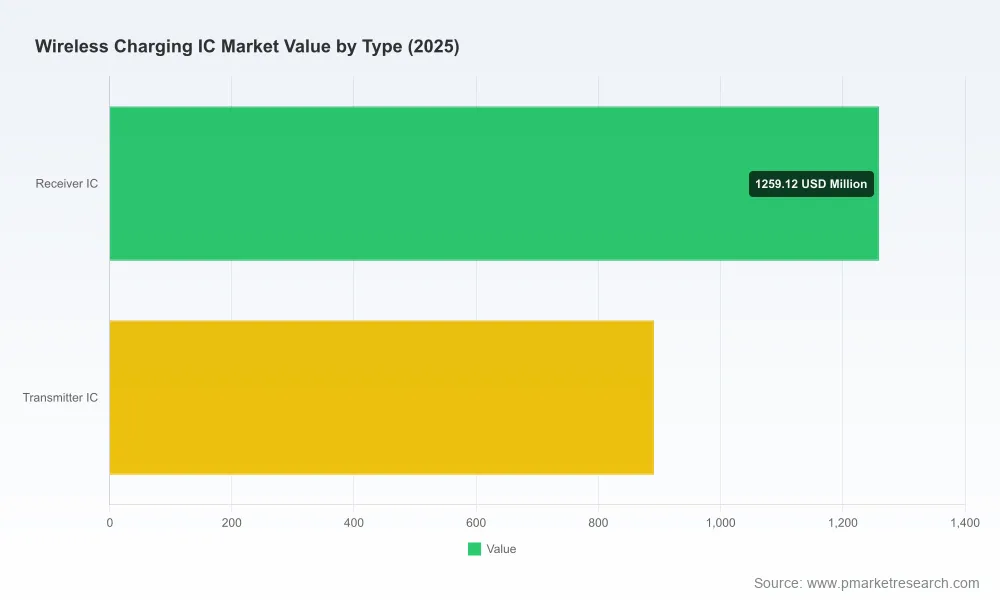
The wireless charging integrated circuit market has transitioned from a niche value proposition into a critical hardware layer underpinning consumer electronics, automotive electrification, industrial IoT, and medical device design. Between 2020 and 2025, the sector expanded at a robust compound trajectory, with total revenue scaling from approximately $1.2 billion to $2.15 billion within the same timeframe. The forward outlook through 2032 points to sustained momentum, with a projected compound annual growth rate of 20.54 percent. By the end of the forecast horizon, market revenue is expected to approach nearly $8 billion, reflecting a structural shift rather than a cyclical uptick. This growth trajectory is not merely a function of incremental device adoption; it signals a deeper realignment in how power delivery, device form factors, and ecosystem compatibility are being engineered across multiple verticals.
For executives and strategy teams, the strategic question has shifted from whether wireless charging will gain mainstream relevance to how quickly IC suppliers, OEMs, and system integrators can align their portfolios with evolving technical standards, cost structures, and application-specific requirements. The market’s expansion is now driven by converging forces: more capable silicon architectures, regulatory harmonization around interoperability, and demand-side expectations that increasingly treat cable-free power as a baseline user experience rather than a premium feature.
Market Landscape and Core Challenges
A Market Growing on Structural Demand, Not Prototype Hype
The scale and pace of expansion indicate that wireless charging IC adoption is now embedded in mainstream product roadmaps. Revenue growth over the past half-decade has been broad-based, but the composition of demand is shifting as power levels, efficiency targets, and device densities increase. The market is no longer defined by early-adopter experimentation in smartphones alone; it now spans higher-power automotive infrastructure, precision-driven medical instruments, ruggedized industrial equipment, and ultra-compact wearable form factors that demand radically different IC characteristics.
This diversification creates an important strategic reality: the market is large enough to support multiple technology pathways, but also fragmented enough that success depends on matching IC capabilities to very specific use-case constraints. A transmitter designed for multi-device desk charging has little in common with a receiver optimized for a sub-milliwatt smart ring, even though both sit within the same market taxonomy. Recognizing where value is being created—and where differentiation is eroding—is now central to portfolio planning.
Key Challenges at the Current Inflection Point
Despite strong top-line momentum, three structural challenges are shaping how companies are positioning themselves:
- Efficiency and thermal management at higher power levels. As system designers push beyond the low-to-mid wattage range, the burden shifts from simply enabling wireless transfer to maintaining acceptable efficiency, managing heat dissipation, and preserving user-safety margins. ICs that cannot balance power delivery with compact thermal profiles are increasingly difficult to justify in high-volume consumer and automotive designs.
- Interoperability and compliance complexity. Multi-device charging, magnetic alignment, and advanced authentication are becoming table stakes in premium segments. Meeting evolving specifications while preserving flexibility for OEM branding and regional certification requirements is pressuring IC vendors to deliver more than basic power transfer capability. The compliance burden now extends into firmware, security, and communication layers.
- Footprint, cost, and supply chain constraints in wearables and IoT. Ultra-compact devices require receiver ICs that can operate within extremely tight PCB real estate while still supporting reliable power transfer. At the same time, industrial and medical customers demand predictable availability and qualification cycles. The combination of miniaturization, cost sensitivity, and long lifecycle reliability is narrowing the set of viable supplier configurations.
These challenges are not temporary bottlenecks; they define the criteria by which winning designs will be selected over the next several years. The companies that navigate them effectively will be those able to align chip architecture with the practical constraints of final product integration, rather than competing solely on headline specifications.
Key Drivers Reshaping the Wireless Charging IC Market
Technology Innovation and Breakthroughs
The pace of IC development is increasingly determined by how well transmitter and receiver designs can converge higher power handling, tighter footprints, and smarter control logic. Recent product trajectories demonstrate a clear pattern: vendors are moving beyond one-dimensional power scaling and investing in integrated functionality that reduces system complexity. This includes more sophisticated in-band communication, embedded firmware for device management, and architectures that combine transmitter and receiver capabilities in ways that simplify product design.
PW Consulting Information & Electronics Research Center
Innovation is also visible in the shift toward standards-aligned interoperability. Advanced magnetic alignment and authentication are becoming essential, particularly for ecosystems that expect multiple devices to charge simultaneously without manual positioning. This is pushing IC designers to embed features that support compliance, alignment, and secure identification directly into the power management layer. For end-product makers, that integration reduces engineering risk and shortens time to certification.
Policy and Regulatory Environment
Standards bodies and compliance frameworks are playing a more active role in shaping market architecture. The maturation of specifications around magnetic alignment, multi-device support, and interoperability testing is reducing fragmentation and creating clearer expectations for what a “compatible” wireless power IC must deliver. This is beneficial for scale, but it also raises the bar for entry. Compliance is no longer a final validation step; it is becoming part of the architectural baseline in transmitter ICs.
A notable example is the progress of multi-device transmitters using magnetic power profiles that have passed full compliance and interoperability testing. This signals that magnetic alignment and authentication are now embedded in the market’s operational expectations rather than treated as optional premium features. At the same time, standards enabling NFC-based wireless power transfer are opening new use cases in ultra-compact wearables and IoT, expanding the addressable design space beyond conventional inductive charging. These regulatory and standards dynamics are effectively narrowing the set of viable design approaches while expanding the number of applications that can be served.
Demand-Side Shifts in Consumer and Enterprise Behavior
Demand is being reshaped by expectations rather than by early novelty. In consumer electronics, users increasingly assume cable-free convenience as a default feature, and OEMs are responding with designs that integrate charging into furniture, peripherals, vehicles, and wearables. In automotive contexts, the ability to support higher power transfer with robust compatibility is becoming relevant to interior electrification and device integration strategies. Industrial and healthcare applications, meanwhile, are prioritizing reliability, safety, and precision power delivery over pure charging speed.
This divergence matters because it means the “best” IC depends less on maximum wattage alone and more on the fit between power handling, safety architecture, communication features, and physical constraints. A healthcare device may require different isolation, thermal, and calibration characteristics than a consumer laptop dock, even if both operate in wireless charging architectures. Understanding where demand is moving—and what trade-offs customers are willing to make—is central to designing relevant IC portfolios.
Supply Chain and Cost Structure Dynamics
Cost and supply resilience continue to shape competitive positioning. As demand scales across regions and applications, IC suppliers are under pressure to deliver designs that reduce component count, simplify certification, and maintain predictable availability. There is also a growing emphasis on architectures that can leverage advanced materials and packaging to improve efficiency while reducing footprint. These factors are not independent; they reinforce one another. A smaller, more integrated IC with built-in safety and communication features can lower total system cost, reduce board complexity, and improve qualification throughput.
At the same time, the market is beginning to see more emphasis on wide-bandgap and precision power management approaches in higher-power and specialized applications. This reflects an effort to improve efficiency and thermal performance without expanding system size. For procurement and design teams, the implication is that supplier selection is increasingly about total system economics and reliability risk, not just unit pricing.
Competitive Landscape and Leading Strategies
Diverse Player Profiles, Converging Strategic Priorities
The competitive environment includes a mix of large diversified semiconductor manufacturers and more specialized contributors, each pursuing distinct advantages. The differentiation is now less about claiming presence in wireless charging and more about which applications, power ranges, and integration models a vendor can dominate with credible silicon and ecosystem support.
Several patterns stand out across leading offerings:
- Ultra-compact, standards-aligned solutions for wearables and small devices. Some suppliers are targeting the extreme miniaturization end of the market with receiver and transmitter chipsets designed for low power, small footprint, and embedded firmware support. Mass production of such components signals that the market is moving from proof-of-concept wearables to commercially scalable products, including smart rings, bands, and input devices.
- High-power, high-efficiency transmitter and receiver ICs for premium consumer and automotive use. Other vendors are emphasizing multi-watt transfer, broad standards support, and compatibility testing across large device ecosystems. The strategic intent is clear: enable OEMs to design charging systems that support higher power without sacrificing interoperability or safety.
- Integrated MCU-based architectures with authentication and multi-device capability. A growing set of transmitter and receiver families combines power management with on-chip authentication, memory options, and support for modern multi-device profiles. This positions these ICs as more complete system enablers rather than single-function power components.
- Precision and specialist ICs for healthcare, industrial, and specialized applications. Some players are building reputations around precision power management, ruggedized performance, and application-specific support. In these segments, differentiation often comes from reliability, calibration quality, and support for long product lifecycles.
- Cost-effective, regionally scalable transmitter solutions. Cost-sensitive high-power transmitter ICs with programmable analog blocks and protection features are gaining relevance where price, flexibility, and supplier accessibility matter as much as performance.
Strategic Positioning and Differentiation
The most defensible positions appear to be emerging where silicon capability aligns with a clearly defined integration advantage. For example, a chipset that enables very small form-factor devices can become central to product identity in wearables, especially when it supports recognized standards for NFC-based power transfer and interoperability. On the other end of the spectrum, a high-power PMIC that demonstrates broad manufacturer compatibility and completed pre-testing can reduce adoption risk for OEMs seeking dependable multi-device or high-wattage charging solutions.
Another competitive vector is security and authentication. As magnetic alignment and multi-device profiles become more common, transmitters increasingly need on-chip capabilities that support compliance and secure device identification. IC vendors that integrate these features directly into the transmitter architecture are better positioned to serve premium consumer and automotive applications where brand integrity and interoperability are crucial.
The strategic differences also extend to memory, flexibility, and support breadth. Some families offer a range of memory options and compliance support that make them adaptable across automotive, consumer, and IoT contexts. That adaptability can be a significant advantage for suppliers trying to capture demand across multiple verticals without fragmenting their own product lines.
Market Evolution: Consolidation, Specialization, and New Entrants
Three directional trends are shaping how the competitive landscape is likely to evolve:
- Consolidation around broad ecosystem support. Large players with diversified portfolios can bundle wireless charging ICs with broader power management, security, and connectivity offerings. That breadth can strengthen their value proposition for OEMs seeking fewer, more integrated supplier relationships.
- Specialization in high-value niches. Ultra-compact wearables, medical devices, and demanding industrial applications are creating room for suppliers that can win on footprint, precision, or compliance readiness rather than scale alone. These niches may be smaller in revenue but can command strong differentiation.
- New entrants and design wins as catalysts. Product launches and pre-testing milestones often serve as market signals, indicating which technologies are reaching commercial readiness. When a component earns adoption in a recognizable end product or completes compatibility testing across a broad manufacturer base, it can accelerate broader adoption and reorder sourcing priorities.
The practical takeaway is that the market is becoming more segmented in value capture even as it grows in aggregate size. Competitive advantage is increasingly about application fit, integration depth, and the ability to reduce system-level friction during design and certification.
Wireless Charging Market
Future Trends and Commercial Opportunities
Trend 1: Multi-Device, Magnetic-Aligned Charging Becomes Standard in Premium Segments
Magnetic alignment and multi-device support are moving from differentiators to baseline expectations in higher-value charging scenarios. The commercial opportunity lies in transmitters and receivers that can deliver robust interoperability, secure identification, and efficient power distribution across multiple devices simultaneously. For suppliers and OEMs, the winning designs will likely be those that can simplify multi-device deployment without forcing users into proprietary accessories or manual alignment. This creates a clear premium segment opportunity for IC architectures that integrate authentication, profile support, and reliable communication into the power chain.
Trend 2: Wearables and IoT Drive Demand for Ultra-Compact, Standards-Compliant Receivers
As smart rings, bands, pens, and small IoT devices become more commercially viable, the demand for receiver ICs that combine minimal footprint with recognized interoperability standards will intensify. The opportunity is two-sided: chip vendors can capture growth by delivering receiver designs that meet both efficiency and compliance expectations, while product manufacturers can expand into form factors that were previously difficult to power wirelessly. This trend also raises the strategic importance of firmware, NFC compatibility, and system-level size reduction, since the end-product value often depends on how unobtrusive and reliable the charging experience is.
Trend 3: Higher-Power, Efficiency-Focused ICs Gain Centrality in Automotive and Premium Consumer Systems
As wireless charging extends into higher-wattage environments, efficiency, thermal behavior, and system-level safety become decisive purchasing criteria. The commercial opportunity here is in ICs that can handle higher power while maintaining compatibility, reducing heat-related design constraints, and supporting fast, dependable charging across broad device ecosystems. In automotive and premium consumer contexts, this can translate into stronger product differentiation and broader adoption of wireless charging as an integrated interior or device-support feature. Suppliers that can demonstrate high efficiency, broad standards coverage, and strong compatibility validation are well positioned to benefit from this shift.
Risk Factors and Uncertainties
Several risks could influence the pace and shape of growth:
Bluetooth Audio Ic Market
- Standards fragmentation or slow harmonization in niche applications. While mainstream consumer and multi-device charging are converging around clearer expectations, specialized segments may continue to face uneven certification and compliance requirements, complicating long-term design planning.
- Efficiency and thermal limits at higher power. If the industry pushes power levels faster than IC and system-level thermal solutions can support, adoption could slow in applications where safety and heat management are critical.
- Cost pressure in price-sensitive categories. In consumer and industrial segments where margin discipline is tight, highly integrated ICs may face competition from lower-cost alternatives that trade off features or performance.
- Adoption variability across regions and end markets. Demand growth will not be uniform; some applications may scale quickly, while others will depend on longer qualification cycles, regional adoption patterns, or OEM prioritization.
Strategic Recommendations for Decision-Makers
For Manufacturers and Product Developers
Prioritize IC selection based on total system integration rather than isolated power ratings. In practice, that means evaluating how well a solution supports compliance, authentication, thermal performance, footprint constraints, and manufacturer compatibility within the target application. If the product roadmap includes multi-device charging, premium consumer features, or ultra-compact wearables, the chosen IC should reduce downstream engineering risk rather than create additional validation work. Aligning early with chip architectures that already demonstrate standards alignment and broad compatibility can shorten development cycles and improve the probability of smooth certification.
For Investors and Strategic Planners
Focus on the segments and technology adjacencies where differentiation is most durable. Ultra-compact receiver IC roadmaps, high-power transmitter designs with strong compatibility validation, and MCU-integrated transmitter families with authentication capabilities all point to different risk-return profiles. The market’s growth is broad, but value capture will likely concentrate where IC vendors can solve system-level friction: efficiency, security, footprint, and interoperability. Monitoring product launch milestones, compatibility testing outcomes, and standards compliance progress can provide early signals about which suppliers and architectures are moving from technical readiness to commercial traction.
For Procurement and Sourcing Leaders
Treat supplier selection as a long-term reliability and integration decision, not only a unit-cost comparison. In wireless charging, the hidden costs often emerge in certification, thermal design, compatibility troubleshooting, and lifecycle support. Suppliers with proven compliance alignment, transparent product roadmaps, and clear support for the target application class can reduce total project risk. It is also prudent to assess how a chosen IC will perform across product generations, especially in applications with long deployment windows or strict qualification requirements.
Detailed segmentation data, company-level positioning, and application-specific forecasts can sharpen these decisions significantly. A deeper dive into regional demand patterns, type-based growth dynamics, and competitive performance metrics provides the granularity needed to prioritize investments, select suppliers, and time product transitions with greater confidence. For teams evaluating market entry, portfolio expansion, or sourcing strategy, a full structured research report offers the detailed breakdown required to move from high-level direction to executable planning.
For detailed analysis of this topic, please visit the official page: Wireless Charging IC Market
Lacy Lee
Senior Marketing Manager
[email protected]
PW Consulting: www.pmarketresearch.com
























Sign in to leave a comment.