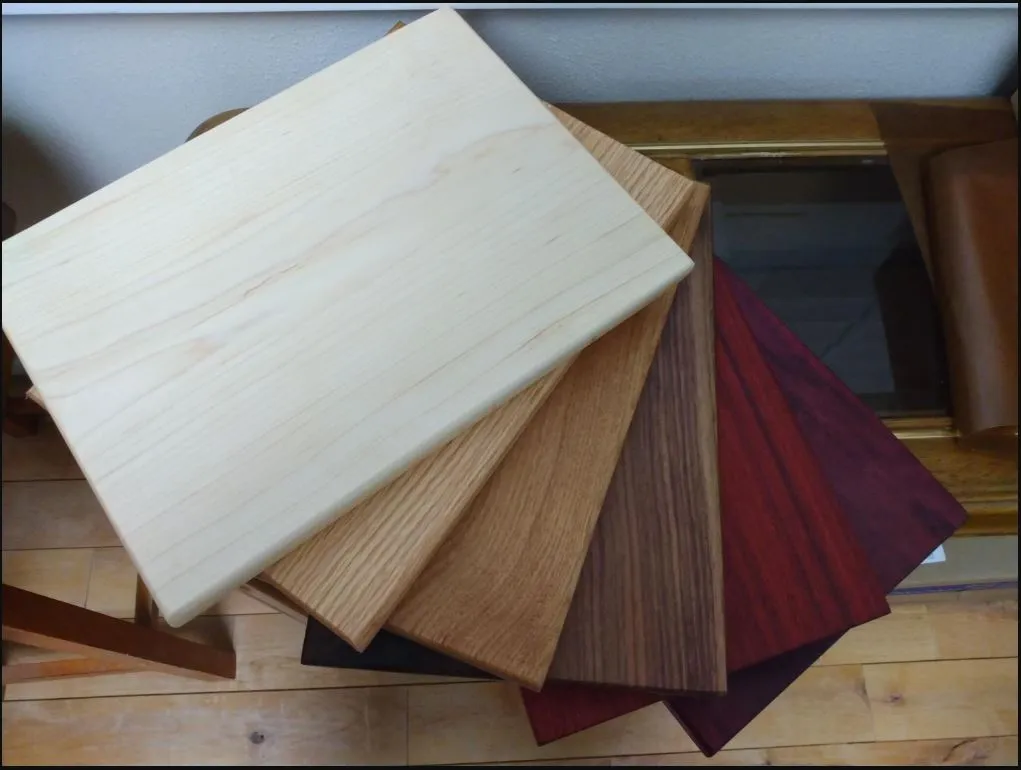

Wood cutting boards have been a kitchen staple for generations, and for good reason. They offer a durable cutting surface, are easier on knife edges than many harder materials, and can last for years when properly maintained.
But not all wood cutting boards are the same.
The type of wood, construction method, thickness, size, and finish can all affect how a cutting board performs in the kitchen. Whether you're replacing an old board or buying your first quality wooden cutting board, understanding these differences can help you choose one that fits how you actually cook.
Why Choose a Wood Cutting Board?
One of the biggest advantages of a wood cutting board is its balance between durability and knife friendliness.
A good cutting board needs to withstand repeated chopping, slicing, and food preparation without being excessively hard on a knife's edge. Many hardwoods provide that balance.
Wood cutting boards also have several practical advantages:
- Available in many sizes and wood species
- Can be resurfaced after years of use
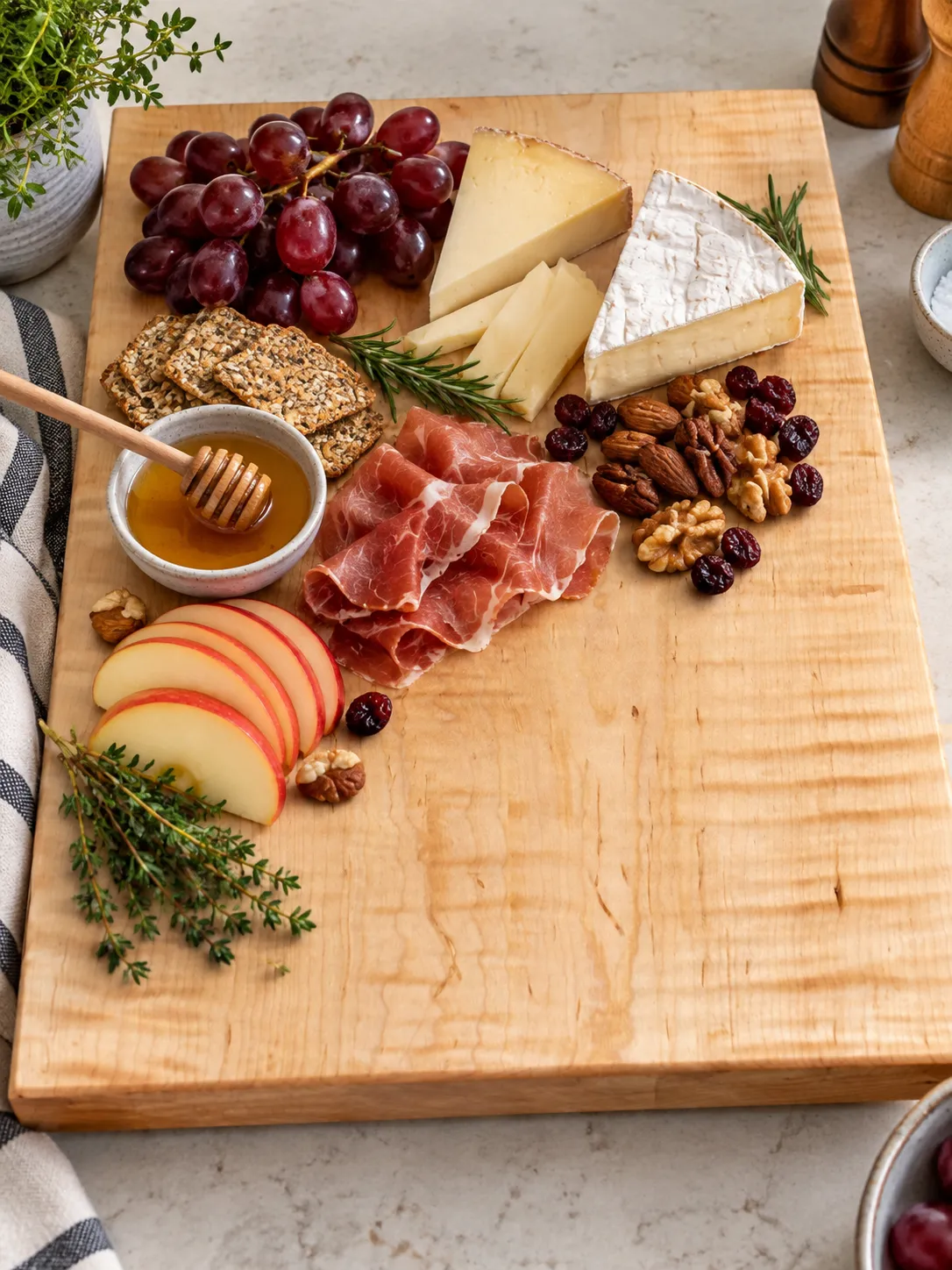
- Naturally attractive enough for serving
- Gentle on quality kitchen knives
- Capable of lasting for many years with proper care
- Renewable compared with many synthetic materials
A quality solid wood cutting board can become a long-term kitchen tool rather than something that needs to be frequently replaced.
What Is the Best Wood for a Cutting Board?
The best woods for cutting boards are generally hardwoods that are durable, relatively tight-grained, and suitable for repeated food preparation.
Some of the most popular options include maple, walnut, and cherry.
Maple Cutting Boards
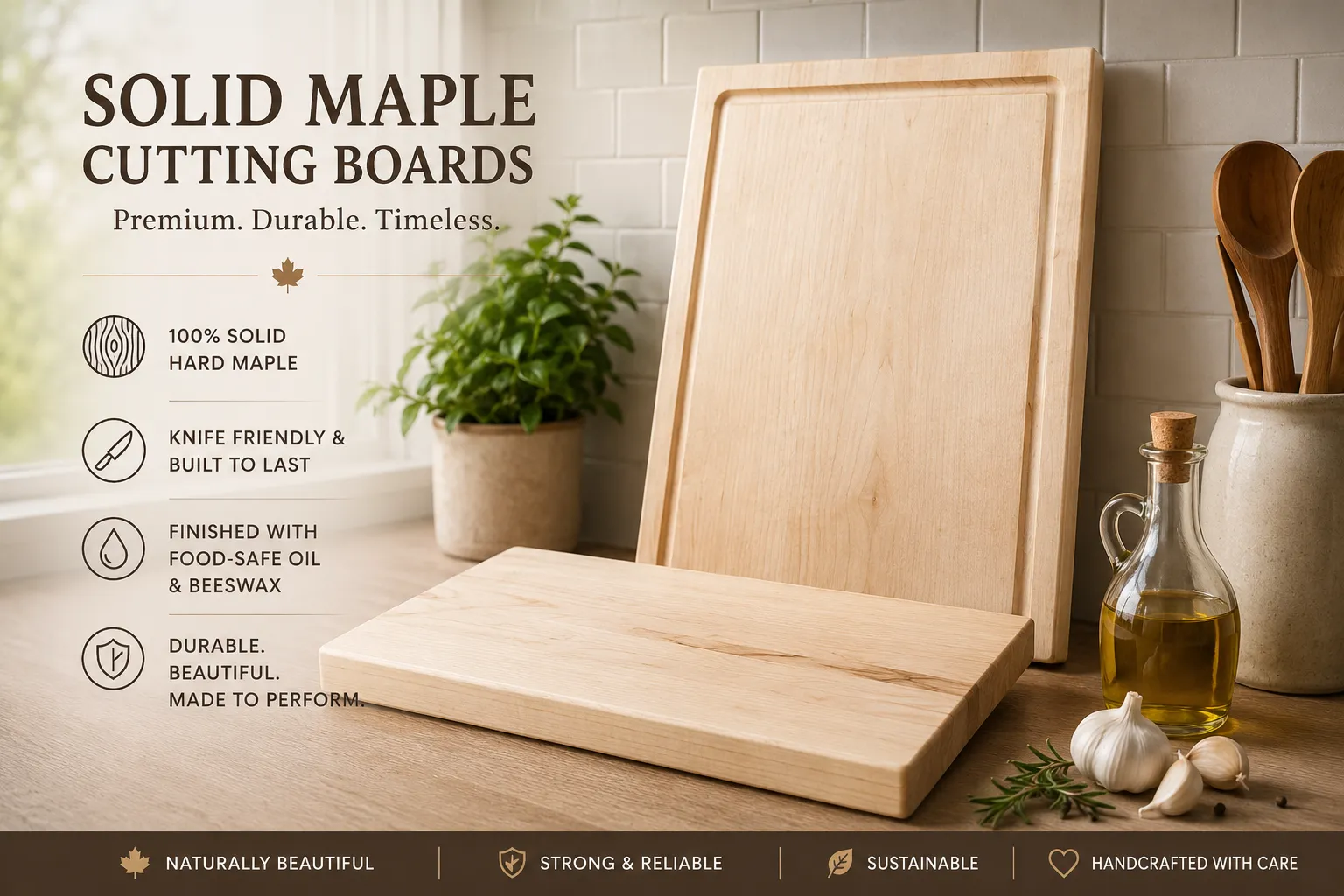
Hard maple is one of the classic choices for wood cutting boards.
Its dense grain and durable surface make it well suited for everyday chopping, slicing, and meal preparation. Maple's light natural color also gives it a clean, traditional appearance that works in many kitchens.
For someone looking for a versatile everyday cutting board, a solid maple cutting board is often an excellent place to start.
Walnut Cutting Boards
Walnut provides a noticeably darker appearance.
Its rich brown tones make walnut cutting boards popular with people who want a board that can double as an attractive serving surface.
Walnut is also relatively comfortable under a knife, making it useful for regular food preparation in addition to presentation.
The tradeoff is that walnut is typically more expensive than some domestic hardwood alternatives.
Cherry Cutting Boards
Cherry falls somewhere between maple and walnut aesthetically.
Fresh cherry can have lighter reddish-brown coloring, but the wood tends to develop deeper, warmer tones as it ages and is exposed to light.
Cherry cutting boards are a good option for cooks who want something distinctive without moving to the much darker appearance of walnut.
Maple vs. Walnut vs. Cherry Cutting Boards
There isn't one wood species that is right for every kitchen.
Maple is a strong choice when durability and a traditional appearance are priorities. Walnut provides a darker, premium look, while cherry offers warm coloring that develops additional character over time.
All three can make excellent wood cutting boards when the lumber is properly dried, constructed, sanded, and finished.
That last point is important.
The quality of a cutting board depends on more than the species printed on the product description.
Solid Wood vs. Cheap Cutting Boards
When shopping for wood cutting boards, look beyond appearance.
Thickness, lumber quality, construction, sanding, and finishing all influence how the board performs.
A properly made solid wood cutting board can often be maintained and resurfaced as it ages. Light knife marks can be sanded away, and the surface can be reconditioned with food-safe oil and board wax.
This reparability is one reason quality wooden cutting boards can have such a long useful life.
Instead of treating a cutting board as disposable kitchenware, a well-made board can be maintained much like other wooden kitchen tools.
What Size Wood Cutting Board Should You Buy?
The right size depends heavily on available counter space and what you normally prepare.
Small boards around 8 × 10 inches can be useful for fruit, garnishes, cheese, or other quick preparation.
A board around 10 × 15 inches provides substantially more working space while remaining relatively easy to move and store.
Larger boards measuring roughly 12 × 20 inches or more can provide the room needed for bigger meal-preparation jobs.
When choosing a size, consider three things:
Counter space: A large cutting board isn't particularly useful if it constantly has to be moved.
Food preparation: Someone regularly preparing large meals may benefit from substantially more cutting area.
Storage: Make sure the board can be stored somewhere that allows it to dry properly.
For many kitchens, a medium-size wood cutting board provides the best compromise between usable surface area and easy storage.
Does Cutting Board Thickness Matter?
Yes.
A thicker cutting board generally feels more substantial and may be less prone to movement during use. Thick boards can also provide additional material for future resurfacing.
However, thickness also increases weight.
A large two-inch-thick board can be excellent for a permanent prep station but inconvenient for someone who needs to pull the board from a cabinet every time they cook.
A board around one inch thick can provide a useful middle ground for many home cooks.
Edge Grain vs. End Grain Cutting Boards
Another distinction you'll encounter when shopping for wooden cutting boards is grain orientation.
Edge-Grain Cutting Boards
Edge-grain boards expose the long edges of the wood strips.
They tend to be simpler to manufacture and can provide an excellent everyday cutting surface. They are also frequently less expensive than comparable end-grain boards.
End-Grain Cutting Boards
End-grain boards orient the wood fibers vertically.
When a knife contacts the surface, the blade interacts differently with the exposed fibers. End-grain construction is commonly associated with butcher blocks and premium cutting boards.
However, end-grain construction usually requires more individual pieces and glue joints, which increases manufacturing time and cost.
Neither design automatically makes a cutting board good or bad. Material quality and construction still matter.
How to Care for Wood Cutting Boards
Even a high-quality board can develop problems if it isn't properly maintained.
Wood naturally responds to changes in moisture. Repeatedly soaking one side, leaving the board wet, or allowing it to become extremely dry can contribute to warping or cracking.
Basic wood cutting board care is relatively simple.
Wash the board after use with mild dish soap and warm water. Avoid leaving it submerged in water. Dry it thoroughly, preferably allowing airflow around both sides.
Periodically apply food-grade mineral oil when the wood begins looking or feeling dry.
Board conditioner containing beeswax and mineral oil can also be applied after oiling to help condition the surface.
Most importantly, don't put a wood cutting board in the dishwasher.
The prolonged water exposure and high heat can be extremely hard on natural wood.
Can You Restore an Old Wood Cutting Board?
Often, yes.
This is one of the overlooked advantages of buying a quality wood cutting board.
Years of knife marks don't necessarily mean the board has reached the end of its useful life.
Depending on its condition, a solid wood board can often be sanded to expose a fresh surface before being re-oiled and conditioned.
Deep cracks, structural separation, severe warping, or other damage may be different matters. But normal surface wear can often be addressed.
What Should You Look for When Buying a Wood Cutting Board?
Instead of shopping solely by price, look at how the board was made.
Consider:
- Wood species
- Board thickness
- Overall dimensions
- Grain orientation
- Surface finish
- Edge construction
- Care requirements
- Whether the board can be resurfaced
- Where and how the board is manufactured
A cutting board is a working kitchen surface. Construction quality matters much more over several years than it does during the first few weeks of ownership.
American-Made Wood Cutting Boards
For shoppers interested in American-made kitchen products, smaller woodworking businesses are another option alongside mass-produced cutting boards.
For example, Utah-based Woods & Wax produces solid wood cutting boards using hardwoods including maple, cherry, and walnut. Its boards are made from kiln-dried lumber, progressively sanded, soaked in food-grade mineral oil, and finished with a protective board wax.
The company focuses on straightforward solid-wood construction and offers multiple sizes so buyers can choose a board based on their available workspace and cooking needs.
This type of small-batch woodworking approach can be particularly appealing to shoppers who care about knowing how and where their kitchen tools are produced.
A Good Wood Cutting Board Should Get Better With Use
A quality wood cutting board doesn't need to remain perfectly free of knife marks.
It's a working kitchen tool.
Over time, the surface will develop evidence of countless meals, chopped vegetables, sliced fruit, holiday dinners, and everyday cooking. With occasional oiling, conditioning, and resurfacing when necessary, a well-made hardwood cutting board can continue performing for years.
Whether you prefer the light appearance of maple, the warmth of cherry, or the dark richness of walnut, focus on quality wood, solid construction, appropriate sizing, and proper care.
Those characteristics matter far more than simply choosing the most expensive board on the shelf.




























Sign in to leave a comment.