
Navigating the Global Contract Logistics Landscape: Strategic Trends and Commercial Opportunities
Market Dynamics at a Crossroads
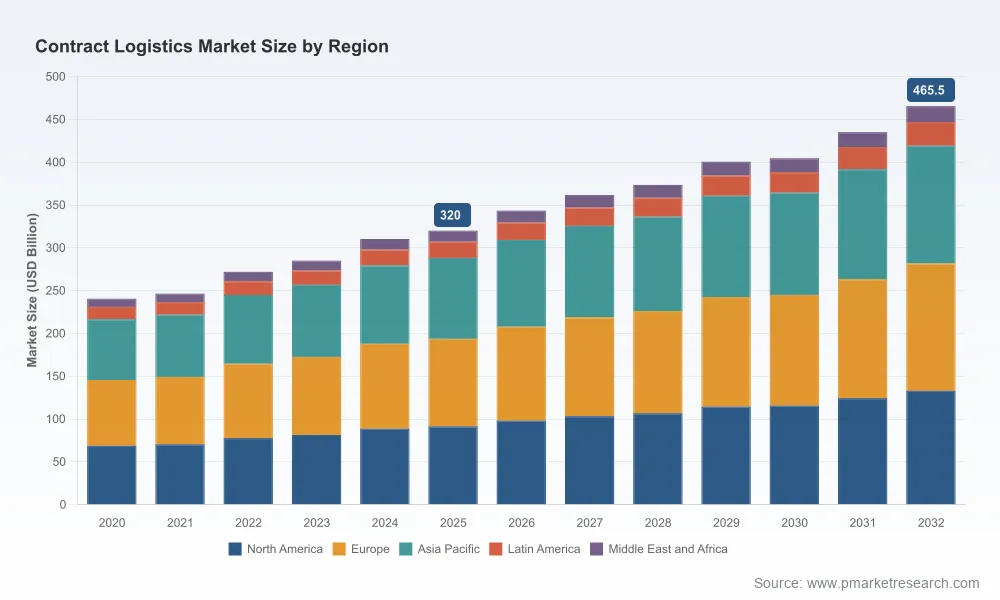
The global contract logistics market has demonstrated remarkable resilience and growth over the past five years, evolving from a traditional support function into a strategic capability that shapes competitive advantage across industries. The sector expanded from approximately $240.5 billion in 2020 to $320.0 billion in 2025, reflecting a compound annual growth rate of 5.5 percent during this period. Looking ahead, the market is projected to reach $465.5 billion by 2032, driven by structural shifts in supply chain architecture, technology adoption, and evolving customer expectations.
Vacuum Capacitor Market
Despite this positive trajectory, contract logistics providers and their clients face a complex set of challenges that demand strategic repositioning. The market remains moderately fragmented, with the top three players commanding a combined market share of 19.5 percent and the top five holding 27.8 percent. This concentration pattern indicates that while scale advantages matter, specialized capabilities, technological differentiation, and regional expertise continue to create meaningful opportunities for both incumbents and focused competitors.
Three critical challenges define the current inflection point for the industry. First, labor costs have become a dominant cost pressure, accounting for approximately 50 to 60 percent of logistics operations expenses in contract logistics settings. Wages for drivers and warehouse personnel have surged 15 to 20 percent across major markets since 2021, compressing margins and forcing providers to rethink workforce strategies. Second, capacity constraints and labor shortages persist, contributing to higher tender rejection rates and limiting the ability of providers to absorb sudden demand spikes without compromising service quality. Third, regulatory complexity is intensifying, with the EU Emissions Trading System expansion to transport sectors in 2026 increasing operational costs for carbon-intensive transportation methods. Simultaneously, data privacy regulations such as GDPR and CCPA require robust safeguards for client data and information flows, adding compliance costs that ripple through warehousing and distribution operations.
For enterprise decision-makers, these dynamics signal that contract logistics can no longer be treated as a purely transactional cost center. The operators who thrive in this environment will be those who balance operational efficiency with strategic flexibility, invest in technology that multiplies labor productivity, and build partnerships that align incentives across the value chain.
Key Drivers Redefining the Market
The growth trajectory of contract logistics is being shaped by several interconnected forces that are fundamentally altering how goods move, how inventory is managed, and how service providers create value. Understanding these drivers is essential for organizations that want to anticipate where the market is heading and position themselves accordingly.
Technology Innovation and Automation
Automation and digitalization are no longer optional enhancements; they have become core profitability levers. The labor cost pressure described above is accelerating investment in warehouse automation, robotics, and artificial intelligence-driven optimization tools. Providers are deploying automated storage and retrieval systems, autonomous mobile robots, and predictive analytics to reduce dependency on manual labor while improving throughput, accuracy, and scalability. GXO Logistics, recognized as the world's largest pure-play contract logistics provider, has built its competitive identity around technology-driven supply chain solutions, emphasizing automation and e-commerce fulfillment capabilities that directly address labor intensity and volume volatility. Similarly, DSV has demonstrated the financial impact of integration and operational efficiency, reporting Q1 2026 contract logistics EBIT growth of 180.1 percent year-over-year, supported by Schenker integration and higher warehouse utilization. This performance underscores how technology-enabled consolidation and optimized asset use can translate into meaningful margin expansion.
For clients, the implication is clear: contract logistics partners that embed technology into their service design can offer faster turnaround, greater visibility, and more predictable costs. The question is no longer whether to adopt automation, but how to structure contracts and service level agreements that capture the ROI of these investments over multi-year partnerships.
Regulatory Pressure and Sustainability Mandates
The regulatory environment is reshaping cost structures and operational priorities. The EU ETS expansion to transport sectors in 2026 introduces new compliance costs for carbon-intensive transportation, pushing providers toward electric vehicles, route optimization, and efficiency improvements. Beyond environmental regulation, rising compliance costs related to cybersecurity, emissions reporting, and sustainable packaging requirements are driving investment in technology and alternative fuels. These mandates create a dual effect: they increase near-term operational costs, but they also establish a framework that rewards providers who can demonstrate measurable sustainability performance and regulatory compliance.
Sustainability is increasingly becoming a competitive differentiator rather than a checkbox. Retail and e-commerce clients, in particular, face downstream pressure from consumers and investors to reduce the carbon footprint of their supply chains. Contract logistics providers that can offer transparent emissions tracking, greener transportation options, and sustainable packaging solutions position themselves as strategic partners rather than commodity vendors. This alignment between regulatory compliance and client-driven sustainability goals opens opportunities for providers to command premium positioning and longer-term contracts.
Demand-Side Shifts in Retail, E-commerce, and Healthcare
Demand patterns across industry verticals are evolving in ways that reshape logistics requirements. Retail and e-commerce remain dominant forces, with consumers expecting faster delivery, greater flexibility, and seamless returns experiences. These expectations translate into complex last-mile demands, inventory fragmentation across multiple nodes, and the need for highly responsive fulfillment networks. At the same time, healthcare and pharmaceuticals represent a high-growth, high-compliance segment where temperature control, traceability, and regulatory adherence are non-negotiable. The growth in this vertical reflects broader trends in personalized medicine, biologics, and global distribution of sensitive products, all of which require specialized contract logistics capabilities.
ID Logistics illustrates how providers are responding to these demand-side shifts through targeted geographic and sector expansion. In 2026, the company secured new contracts including with SVR cosmetics in France, opened a 60,000 square meter facility for Michelin in Italy, expanded with Nutrabolt in the United States, and launched operations with a major e-commerce player in Brazil exceeding 40,000 square meters. These moves highlight a strategy of combining sector-specific expertise with geographic diversification, particularly into markets where e-commerce growth and industrial demand are accelerating. ID Logistics' 2025 revenues of €3.737 billion, up 14.2 percent, alongside underlying operating income growth of 11.8 percent, demonstrate that disciplined expansion into high-demand segments can deliver both top-line growth and margin improvement.
Supply Chain Reconfiguration and Cost Structure Evolution
The broader supply chain environment is undergoing structural reconfiguration. Companies are reevaluating the balance between resilience and efficiency, often diversifying sourcing, nearshoring critical components, and building redundancy into logistics networks. This reconfiguration increases demand for contract logistics services that offer flexibility, multi-region coverage, and the ability to adapt to shifting volume patterns. At the same time, transportation and warehousing cost structures continue to evolve, with fuel volatility, carrier capacity fluctuations, and regional labor market differences creating a more complex pricing environment.
CEVA Logistics' renewal of a long-term relationship with Ocado Retail illustrates how providers secure stable demand streams by embedding themselves deeply into clients' operational models. Long-term contracts reduce revenue volatility and create opportunities for continuous improvement investments that benefit both parties. For providers, the strategic imperative is to balance contract longevity with the flexibility to adapt to changing client needs, while for clients, the focus is on structuring agreements that incentivize innovation and cost discipline rather than locking in rigid, inflexible terms.
Competitive Landscape and Strategic Positioning
The contract logistics market features a diverse set of global players, each navigating the competitive environment with distinctstrategic approaches. DHL Supply Chain, headquartered in Bonn, Germany, provides comprehensive contract logistics services including warehousing, distribution, supply chain management, and value-added services, leveraging a global network and recognized leadership in third-party logistics. Kuehne + Nagel, based in Schindellegi, Switzerland, offers integrated contract logistics solutions with a focus on warehousing, distribution, and end-to-end supply chain optimization, supported by strong multimodal capabilities. CEVA Logistics, headquartered in Marseille, France, delivers multimodal contract logistics, warehousing, distribution, and customized supply chain services with particular strengths in automotive, consumer, and technology sectors. DB Schenker, based in Essen, Germany, provides global contract logistics including land, air, and ocean freight integration, warehousing, and industry-specific supply chain management solutions. UPS Supply Chain Solutions, in Atlanta, Georgia, offers end-to-end contract logistics, freight forwarding, customs brokerage, and distribution services, leveraging extensive parcel and global network capabilities. Ryder System, in Miami, Florida, specializes in dedicated contract carriage, warehousing, and supply chain solutions with a strong focus on transportation management and fleet services. GEODIS, in Levallois-Perret, France, provides contract logistics, freight forwarding, and supply chain optimization services with a broad international footprint. ID Logistics, headquartered in Orgon, France, is a European leader in contract logistics offering warehousing, distribution, and high-technology supply chain services across multiple continents. XPO Logistics, based in Greenwich, Connecticut, focuses on contract logistics with emphasis on transportation, warehousing, and last-mile solutions, with particular strength in North America and Europe. DSV, in Hedehusene, Denmark, delivers contract logistics solutions with significant growth through acquisitions, including the integration of Schenker operations for enhanced global capabilities.
These companies illustrate several strategic archetypes within the market. Pure-play specialists like GXO Logistics differentiate through deep expertise in warehousing, e-commerce fulfillment, and technology-driven solutions, building their identity around operational excellence in specific service domains. Integrated freight and logistics players such as DHL Supply Chain, Kuehne + Nagel, and DB Schenker leverage multimodal capabilities and global networks to offer end-to-end solutions that span transportation, warehousing, and value-added services. Acquisition-driven consolidators like DSV have used strategic M&A to expand geographic reach and service breadth, with the Schenker integration serving as a prominent example of how consolidation can create scale, improve utilization, and strengthen market position.
Market concentration data reveals that despite the presence of large global players, the top three providers collectively hold 19.5 percent of the market and the top five hold 27.8 percent. This indicates a landscape where scale matters but does not dominate, and where regional specialists, sector-focused providers, and innovation-driven entrants can compete effectively by offering differentiated value. The market is evolving through a combination of consolidation and specialization: larger players pursue acquisitions to broaden capabilities and geographic coverage, while mid-sized and regional providers compete on agility, niche expertise, and closer client relationships.
Worldwide Military Helmet Mounted Displays Market
Recent company-level developments highlight how these strategic positions are being reinforced in practice. GXO Logistics announced a strategic partnership as the Official Partner of Arrow McLaren IndyCar Team, supporting logistics for the Indianapolis 500 entry, a move that signals brand visibility and operational credibility in high-performance, time-critical environments. CEVA Logistics renewed its long-term relationship with Ocado Retail, reinforcing the value of sustained partnerships in high-volume retail logistics. DSV's strong Q1 2026 contract logistics performance, with EBIT growth of 180.1 percent year-over-year, reflects the financial impact of integration synergies and improved warehouse utilization. ID Logistics' contract wins and expansions across cosmetics, automotive, consumer goods, and e-commerce in multiple regions demonstrate the continued appeal of sector-aligned growth and geographic diversification.
PW Consulting
For decision-makers evaluating contract logistics partners, the competitive landscape suggests that the optimal provider depends on the specific strategic priority. Organizations seeking end-to-end global coverage and multimodal integration may find value in large integrated players, while those prioritizing technology-driven fulfillment, automation, and e-commerce specialization may gravitate toward pure-play leaders. Companies in regulated or specialized sectors such as healthcare, automotive, or temperature-controlled logistics may benefit from providers with deep vertical expertise and proven compliance capabilities. The market's evolution toward both consolidation and specialization means that the range of viable partners is broadening, but the importance of matching provider capabilities to specific business requirements is increasing.
Future Trends and Strategic Implications
Looking ahead to the next three to five years, several trends are likely to shape the trajectory of the contract logistics market and create new commercial opportunities.
Automation and AI as Margin and Service Level Drivers
Automation and artificial intelligence will transition from discretionary investments to baseline operational requirements. As labor costs remain elevated and workforce availability remains constrained, providers that successfully deploy automation, predictive analytics, and digital control towers will achieve superior throughput, accuracy, and cost efficiency. The opportunity for clients lies in structuring partnerships that share the benefits of these investments, such as performance-based pricing models that reward productivity improvements and service level enhancements. However, the risk is that automation investments are capitalized without clear operational integration, leading to underutilized assets and disappointing returns. The providers who succeed will be those who align technology deployment with specific workflow pain points and client demand patterns.
Sustainability as a Commercial and Compliance Imperative
Sustainability will increasingly influence contract logistics procurement decisions and provider economics. Regulatory mandates such as the EU ETS expansion will raise the cost of carbon-intensive transportation, while client-driven sustainability goals will reward providers that can offer greener solutions and transparent emissions reporting. This convergence creates opportunities for providers to differentiate through electric vehicle fleets, optimized routing, sustainable packaging, and verifiable carbon accounting. The uncertainty lies in the pace and scope of regulatory changes across regions, which may create uneven cost pressures and require flexible compliance strategies. Organizations that proactively integrate sustainability into their logistics strategy will be better positioned to manage regulatory risk and meet evolving stakeholder expectations.
Regional Diversification and Supply Chain Resilience
Demand for regional diversification and supply chain resilience will continue to drive contract logistics growth in emerging markets and secondary hubs. ID Logistics' expansion into Brazil and its continued European growth reflect a broader pattern where providers build presence in markets with strong e-commerce momentum, industrial demand, and favorable logistics economics. For clients, this trend offers access to new capacity, closer-to-market fulfillment, and greater flexibility in the face of global disruptions. The challenge is that operating across diverse regulatory, labor, and infrastructure environments requires localized expertise and robust risk management. Providers and clients alike will need to invest in understanding regional nuances rather than assuming that global templates can be applied uniformly.
These trends intersect in ways that create both opportunity and complexity. Technology enables sustainability and resilience improvements, while regional diversification increases the need for standardized yet adaptable operational models. The organizations that navigate this landscape effectively will be those that treat contract logistics as a strategic capability, invest in partnerships that align incentives, and build the analytical capability to evaluate trade-offs across cost, service, risk, and sustainability.
Strategic Recommendations for Decision-Makers
For manufacturers and industrial companies, the priority is to treat contract logistics as an integral component of supply chain resilience and customer satisfaction. Evaluate providers not only on cost but on their ability to scale with demand fluctuations, integrate with production and inventory planning systems, and offer sector-specific capabilities such as dedicated carriage, temperature control, or customized packaging. Long-term partnerships with clear innovation clauses can unlock continuous improvement and reduce the risk of capacity constraints during demand spikes.
For investors and industry stakeholders, the market's moderate concentration and ongoing consolidation create a dynamic environment where differentiation drives valuation. Look for providers with demonstrated technology adoption, disciplined margin management, and a clear strategy for geographic or sector expansion. Financial performance signals such as DSV's Q1 2026 EBIT growth and ID Logistics' consistent revenue and operating income growth illustrate how integration, utilization, and targeted contract wins can translate into strong operational results. Monitor regulatory developments and labor market trends, as these will influence cost structures and competitive positioning across regions.
For procurement and supply chain leaders, the focus should be on structuring contracts that balance stability with flexibility. Multi-year agreements can secure capacity and align incentives, but they should include mechanisms for technology-driven efficiency gains, sustainability performance, and service level adjustments as business needs evolve. Evaluate providers on their ability to offer visibility, data integration, and measurable improvements in cost, speed, and reliability. The complexity of today's logistics environment means that generic benchmark comparisons are insufficient; detailed segmentation data, regional cost structures, and provider-specific capability assessments are essential for informed decision-making.
Accessing comprehensive, granular market intelligence can sharpen these decisions significantly. Detailed breakdowns of regional dynamics, service-type economics, industry vertical requirements, and provider-specific positioning provide the foundation for prioritizing investments, selecting partners, and anticipating shifts before they become apparent in headline market data. For organizations that want to move beyond broad trends and into actionable detail, deeper research resources can help translate market intelligence into concrete strategic choices and tailored recommendations.
For detailed analysis of this topic, please visit the official page: Worldwide Contract Logistics Market
Lacy Lee
Senior Marketing Manager
[email protected]
PW Consulting: www.pmarketresearch.com
























Sign in to leave a comment.