
Navigating the Global Medical Multi-Axis Adjustable Device Market: Strategic Trends and Commercial Opportunities
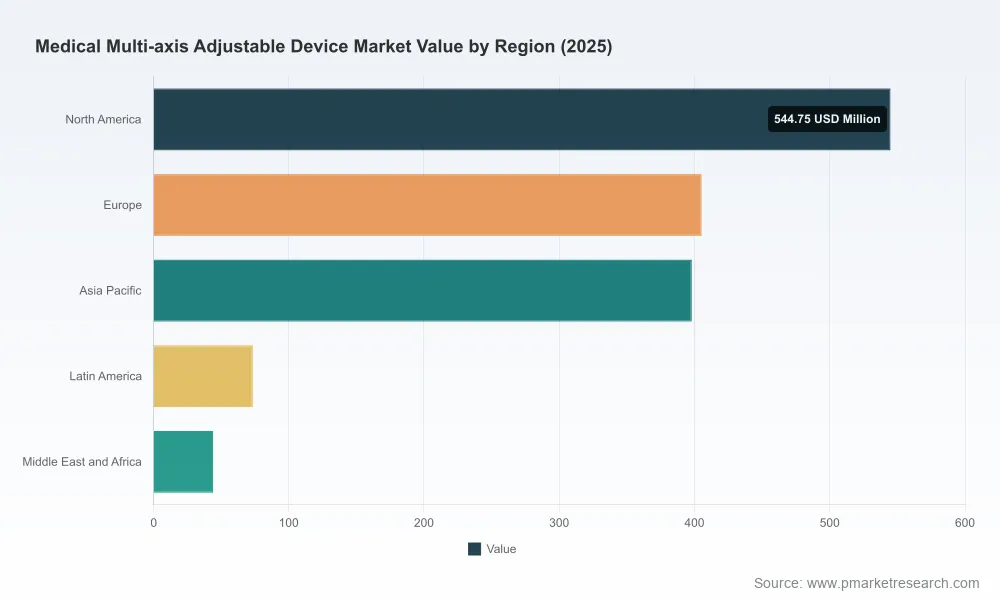
The worldwide medical multi-axis adjustable device market has entered a phase of structured expansion, grounded in steady capital reinvestment across healthcare facilities. In 2025, the sector reached approximately 1,465.4 million USD, with a historical trajectory that reflects consistent year-over-year growth from 2020 through 2025. The forecast window to 2032 points to a compound annual growth rate of 6.45%, signaling a market that will exceed 2.26 billion USD by the end of the period. This level of sustained growth is rarely accidental. It reflects a structural shift in how surgical workflows, diagnostic imaging, and therapeutic positioning are being designed, upgraded, and optimized. Multi-axis adjustable systems are no longer peripheral accessories; they are becoming integral to procedural throughput, patient safety, and hybrid operating room architectures.
Despite the favorable trajectory, the industry is navigating several transition points that will define competitive positioning over the next decade. The first challenge lies in aligning capital deployment with hospital budgeting cycles. Healthcare systems are under continuous pressure to modernize aging infrastructure while maintaining operational margins, meaning procurement timelines for advanced positioning technologies frequently stretch or re-prioritize around acute needs. The second challenge involves the regulatory calibration of increasingly complex devices. As adjustability, modularity, and robotic integration deepen, manufacturers face more rigorous scrutiny around safety, repeatability, and clinical validation. A third pressure point is the widening gap between advanced procedure centers and lower-resource settings. High-flexibility equipment delivers clear value in high-volume specialties, but the cost of ownership, training requirements, and maintenance demands can limit accessibility outside concentrated procedural hubs. These dynamics create a market that rewards precision in product design, value-based commercialization, and deployment models tailored to real operating environments.
For executives and investors, the implication is clear: growth is real, but it is uneven across adoption curves. Companies that treat multi-axis adjustability as a workflow enabler rather than a hardware specification will be better positioned to capture demand across surgical, radiology, and orthopedic applications. The next phase of expansion will favor those who understand how to translate mechanical versatility into clinical efficiency, staff ergonomics, and long-term total cost of ownership.
Key Drivers Shaping Market Evolution
Technological Innovation and the Shift Toward Precision Positioning
The core of market momentum comes from a continuing evolution in how devices enable motion, alignment, and patient access. Multi-axis systems are increasingly designed to support not only basic repositioning but refined, repeatable adjustments that reduce variation in complex procedures. Advances in articulation mechanisms, modular accessory platforms, and integration with imaging or surgical workflows are turning positioning equipment into active components of procedural strategy. In minimally invasive surgery especially, where access windows are narrow and operator visibility is tightly constrained, the value of stable yet highly adjustable support systems has become more pronounced.
This technological trajectory is also reshaping product expectations around precision and ease of control. Systems that allow rapid transitions between patient postures, fine-tuned angular adjustments, and consistent locking performance help surgical teams reduce setup time and improve consistency across cases. The broader trend is toward equipment that can adapt to multiple disciplines without requiring a full room reconfiguration. That versatility is becoming a defining competitive factor, particularly in facilities that want to maximize asset utilization without building single-purpose environments.
Regulatory Standards and the Burden of Clinical Confidence
Regulatory expectations continue to influence both product development pace and market entry strategy. Devices in this category are subject to clearance pathways that emphasize safety, performance reliability, and appropriate use in patient positioning and procedural support. For manufacturers, this means that innovation must be paired with documentation rigor and clinical logic. It is no longer sufficient to demonstrate mechanical capability alone; the device must support consistent outcomes in real clinical contexts.
The regulatory environment also affects downstream purchasing behavior. Clinical and facilities teams increasingly evaluate multi-axis equipment through the lens of risk management, training burden, and compliance traceability. This reality pushes manufacturers to invest earlier in validation studies, clearer user workflows, and service documentation that supports adoption. In practice, the most successful players are those that treat regulatory rigor not as a barrier but as a credibility layer that strengthens procurement confidence.
Demand-Side Shifts in Surgical and Diagnostic Workflows
Demand patterns are being shaped by changing procedure volumes and the broader move toward procedures that are less invasive, more image-dependent, and more time-sensitive. Hospitals and ambulatory settings alike are investing in equipment that supports shorter turnover, flexible patient positioning, and interdisciplinary use. As surgical care continues to migrate toward settings that emphasize efficiency and patient throughput, adjustable positioning technology becomes a lever for better room utilization and more predictable workflows.
Worldwide Automotive Stabilizer Bar Link Market
On the demand side, there is also a growing appreciation for staff ergonomics and patient stabilization. Adjustable support structures that help maintain proper alignment without excessive manual handling can reduce strain on clinical teams while improving consistency in patient positioning. In applications where imaging and procedure overlap, the ability to maintain alignment across multiple positions becomes especially valuable. These demand dynamics support adoption beyond high-cost flagship centers, provided the equipment is presented with a clear operational case.
Capital Cycles and Supply-Side Realities
The market’s growth is being reinforced by a broader capital spending environment that has shown renewed willingness to invest in surgical and diagnostic infrastructure. Hospital capex intensity has moved to elevated levels relative to depreciation, with spending increasingly directed toward technology upgrades and facility modernization. That environment creates favorable conditions for positioning equipment, particularly when organizations can frame acquisitions as long-term productivity investments rather than isolated device purchases.
At the same time, supply-side considerations remain important. Component complexity, manufacturing consistency, and service readiness all affect how quickly a product can scale and how reliably it can be supported across geographies. Companies that build disciplined supply chains and strong technical support ecosystems tend to convert initial purchase interest into stable installed bases. In a market where precision matters and downtime carries operational penalties, service capability is arguably part of the product itself.
Competitive Landscape and Leading Strategies
The competitive field is shaped by a core group of manufacturers that combine scale, procedural specialization, and differentiated positioning capabilities. The top three players account for a meaningful share of the market, while the top five consolidate a majority, indicating an environment where incumbents retain strong influence but space remains for differentiated segment leadership. Rather than competing purely on adjustability breadth, leading companies are differentiating through ecosystem fit: how well their systems support specific procedural categories, how intuitively they integrate into operating room workflows, and how consistently they can be deployed across multi-disciplinary settings.
Stryker Corporation has positioned its surgical table portfolio around broad procedural value, emphasizing height ranges, longitudinal movement, and versatile positioning for general surgery, orthopedics, and imaging. Getinge AB, through its Maquet brand, has focused on multi-axis inclination, tilt, and lateral or longitudinal shifts that support hybrid operating room settings and multidisciplinary procedures, a direction that aligns well with the trend toward procedure flexibility. STERIS plc stands out with armboard designs that use multi-axis pivot joints to support patient arm positioning across supine, prone, lateral, and seated postures, highlighting how even accessory-level products can differentiate through ergonomic and positioning precision. Hill-Rom, now part of Baxter, emphasizes surgical tables and precision positioning accessories that support patient alignment across surgical disciplines, reinforcing a value proposition centered on consistency and interoperability within broader clinical workflows.
In more specialized segments, Mizuho OSI has built a reputation around modular surgical tables and head positioning systems tailored for spine, imaging, orthopedic, and trauma applications, an approach that appeals to centers seeking targeted performance in complex procedural categories. SchureMed and David Scott Company address adjacent positioning needs with multi-axis arm positioners and gearless adjustable arm boards, where differentiation comes from rotational freedom, rail-mounted flexibility, and compact mechanical design. These companies demonstrate that competitive advantage is not limited to large table platforms; it can also emerge from accessories and subsystems that solve specific positioning pain points.
The landscape is evolving along several directions. First, integration is becoming more important as operating rooms increasingly combine surgical, imaging, and positioning functions in shared environments. Products that can interoperate cleanly with other room systems are gaining a practical advantage. Second, there is room for new entrants and niche specialists that focus on underserved postures, specialized procedures, or accessories that improve ergonomics and setup speed. Third, consolidation pressure may continue, particularly for companies that can merge complementary portfolios to offer more complete positioning ecosystems. A recent example of the innovation environment is Medtronic Plc, which received FDA clearance in early 2024 for a multi-axis adjustable robotic platform designed for neurosurgical interventions. Whether or not every company pursues robotic integration, that milestone underscores how multi-axis equipment is converging with advanced procedural technology.
For decision-makers, the strategic lesson is that leadership in this market is increasingly earned through workflow integration, procedural specificity, and service reliability rather than adjustability alone. Companies that clearly map their hardware advantages to real operating-room benefits are best placed to defend margin and win replacement-cycle demand.
Future Trends and Commercial Opportunities
Over the next three to five years, the most visible trend will be the continued blending of positioning technology with procedural and imaging ecosystems. Multi-axis adjustable devices will be evaluated less as standalone tables or supports and more as components of integrated workflows that span surgical setup, intraoperative alignment, and imaging access. This creates an opportunity for manufacturers that design for interoperability and can articulate how their products reduce setup friction, improve repeatability, and support hybrid use cases.
PW Consulting
A second trend is likely to be broader adoption beyond flagship surgical centers, provided the value proposition is framed around throughput, staff efficiency, and patient-specific positioning advantages. Ambulatory expansion and focused technology investment in healthcare organizations suggest that demand will not be limited to large academic or tertiary hospitals. Commercial models that make deployment easier, training more structured, and total cost of ownership more transparent will be important enablers of wider uptake.
Worldwide Laminated Densified Wood Market
A third trend concerns the growing interaction between mechanical adjustability and intelligent control. Even where full robotic integration is not involved, devices that offer more intuitive adjustment interfaces, stronger locking feedback, and better compatibility with procedural protocols will stand out. This is where commercial opportunity intersects with product design: small usability gains can translate into meaningful differences in case turnover and staff confidence.
These trends do carry uncertainty. Capital spending enthusiasm may fluctuate if organizational budgets tighten or if procurement priorities shift back toward near-term operational needs. Regulatory expectations can also slow introduction of more complex designs if validation requirements expand. In addition, organizations may vary significantly in their readiness to adopt advanced positioning solutions, particularly where training capacity or service coverage is limited. Companies should therefore treat market growth as directional rather than automatic, and plan for variation in adoption speed across geographies and care settings.
Actionable Guidance for Decision-Makers
For manufacturers, the priority is to strengthen the link between product capability and procedural value. Differentiation should be expressed in terms of setup efficiency, patient alignment stability, multidisciplinary use, and service reliability. Product roadmaps that anticipate integration needs, ergonomic pressures, and replacement-cycle expectations will be more resilient than those focused only on incremental mechanical expansion.
For investors, the opportunity lies in identifying companies that combine credible procedural relevance with disciplined commercialization. Interest should extend beyond headline product features to include service infrastructure, segment focus, and the ability to convert capital investment trends into installed-base growth. Monitoring how firms respond to regulatory complexity and workflow integration demands can offer early signals about long-term positioning strength.
For procurement leaders and healthcare organizations, the practical focus should be on total value rather than specification coverage alone. Multi-axis systems should be evaluated against real operational criteria: case setup time, positioning consistency, staff workload, compatibility with existing room setups, and support responsiveness. Where purchasing decisions are anchored in workflow outcomes instead of component lists, adoption is more likely to deliver lasting benefit.
Given the pace of change across surgical workflows, regulatory expectations, and capital investment patterns, leaders who want to act with precision will benefit from deeper segmentation intelligence, competitive comparisons, and deployment-oriented forecasting. A detailed research report can provide the granular view needed to evaluate segment opportunities, regional demand patterns, and product-specific positioning strategies before the next major procurement or investment decision.
For detailed analysis of this topic, please visit the official page: Worldwide Medical Multi-axis Adjustable Device Market
Lacy Lee
Senior Marketing Manager
[email protected]
PW Consulting: www.pmarketresearch.com


























Sign in to leave a comment.